Tsim Sha Tsui Promenade: Skyline Walk & Light Show Tips
Tsim Sha Tsui Promenade delivers Hong Kong's most accessible harbor views: 1.4 kilometers of waterfront where you'll watch ferries slice through Victoria Harbour while towers pulse with light. Free to walk, best at sunset, and the city's central viewing spot for the nightly Symphony of Lights.
Quick Facts
- Location
- Victoria Harbour waterfront, Kowloon, from the Clock Tower next to the Star Ferry Pier to Hung Hom
- Getting There
- Tsim Sha Tsui MTR (Exit A1), 5-min walk
- Time Needed
- 1.5-2 hours for full promenade walk
- Cost
- Free (light show viewing)
- Best for
- Sunset views, skyline photography, light show
Quick Snapshot: What You Need to Know
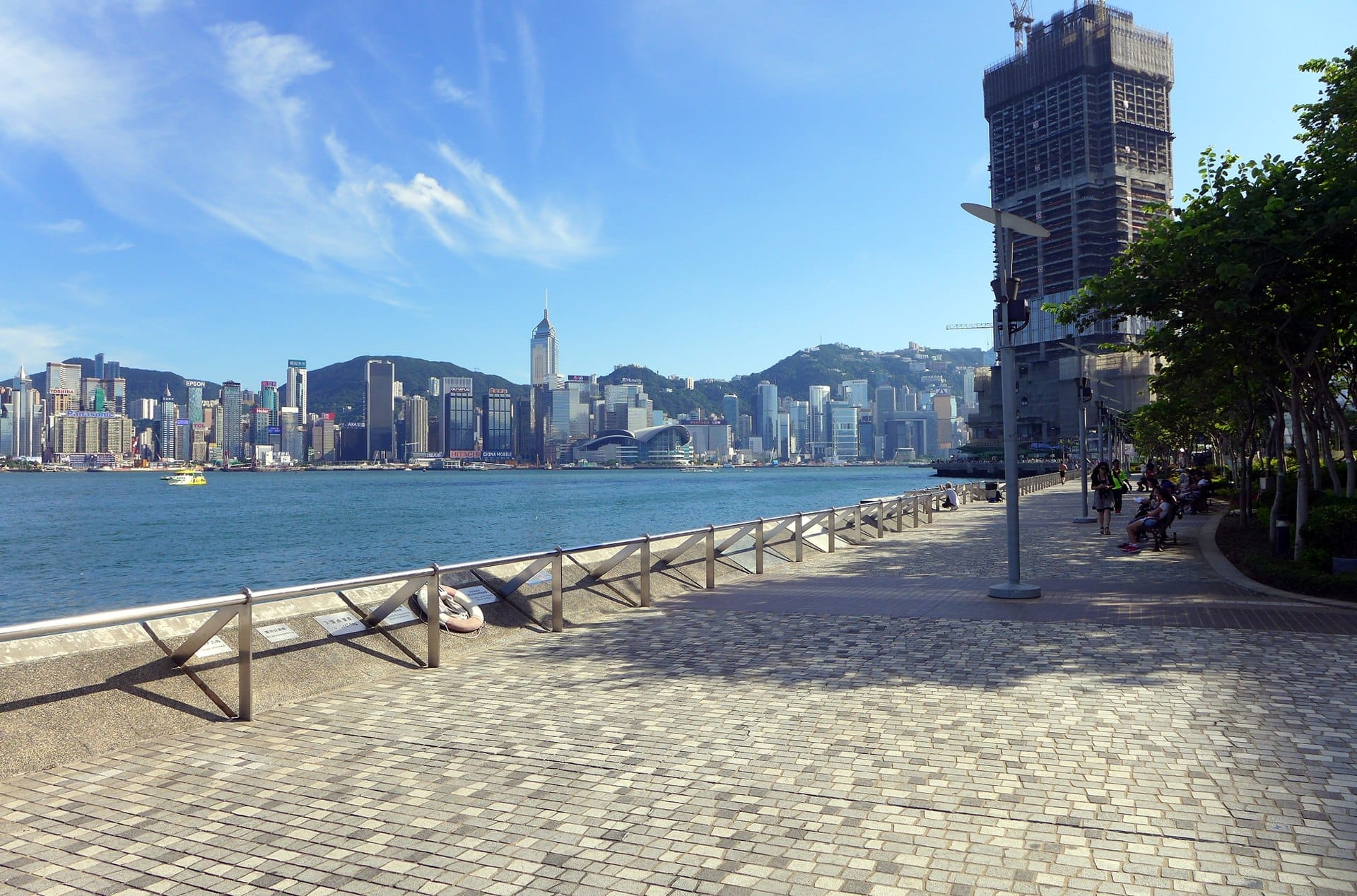
Tsim Sha Tsui Promenade is a 1.4-kilometer waterfront walkway along Victoria Harbour in , Kowloon. It's Hong Kong's premier free viewing platform for the harbor skyline and the nightly Symphony of Lights show at 8pm. The promenade runs from the colonial-era Clock Tower westward past the Avenue of Stars to Hung Hom, connecting Star Ferry terminals, cultural institutions, and shopping complexes along the way.
You're here for the skyline: specifically, the unobstructed view across Victoria Harbour to Hong Kong Island's towers stacked against green peaks. Best visited between 6pm and 9pm when temperatures cool, the skyline lights up, and crowds arrive for the light show. Budget 90 minutes to walk the full length, or 45 minutes if you're just positioning for the 8pm show. Completely free. Zero friction for first-time visitors.
Ideal for: First-timers needing the defining Hong Kong visual, photographers chasing golden hour reflections, couples seeking waterfront atmosphere, and anyone avoiding paid observation decks. Time needed: 1.5–2 hours for a full walk with photo stops. Cost: Free. Best time: Sunset through evening, October–December for clearer skies.
What Is Tsim Sha Tsui Promenade Actually Like?
The promenade is less a single attraction and more a connective thread: a wide, paved waterfront path threading through Kowloon's densest tourist zone. You'll walk past selfie-stick vendors, buskers, seated elderly watching ferries, and tour groups clustering near the Bruce Lee statue. The path itself is unremarkable: concrete, benches, occasional planters. The draw is what's in front of you: uninterrupted harbor, constant boat traffic, and Hong Kong Island's skyline rising across the water.
Approaching from Tsim Sha Tsui MTR Exit A1, you emerge onto Nathan Road's chaos: neon, crowds, humidity, then walk south toward Salisbury Road. The harbor opens up suddenly. The red-brick Clock Tower (a colonial remnant, dating to 1915) next to the Star Ferry Pier marks the western anchor. From here, the promenade stretches east: first past the Hong Kong Cultural Centre's angular white bulk, then the Avenue of Stars with its handprint plaques and statues honoring Hong Kong cinema, then K11 Musea, followed by the Rosewood Hotel. The eastern section toward Hung Hom sees fewer crowds but maintains the same skyline angle.
Sensory notes: Salty harbor air cuts through Kowloon's urban density. Diesel exhaust from passing ferries mingles with fried street food from Nathan Road. In summer (May–September), afternoon humidity makes the walk sticky and draining; most locals avoid midday entirely. October through March, the promenade becomes pleasant: cool breezes, lower humidity, sharper skyline visibility. Evenings transform the space: towers light up, the harbor darkens, and the crowd density shifts from casual strollers to light-show spectators.
Tickets & tours
Live prices and dates from our booking partner. If you book, we may earn a commission at no extra cost to you.
Aftertaste of Sham Shui Po with public transportation
From 85 €Instant confirmationFree cancellationHong Kong audio guide with TravelMate app
From 8 €Instant confirmationHong Kong Tour with Peak Tram, harbour cruise and dim sum dinner
From 85 €Instant confirmationFree cancellationHong Kong night tour with Peak Tram and Symphony of Lights
From 63 €Instant confirmationFree cancellation
Is Tsim Sha Tsui Promenade Worth Visiting?
Yes, if you're visiting for the first time. This is the single most accessible way to experience the harbor-and-skyline combination that defines the city's identity. You're seeing the same view that appears in every Hong Kong postcard, film establishing shot, and tourist brochure: but experiencing it in real scale, with real harbor activity, at your own pace. The promenade delivers this without requiring tickets, queues, or vertical transport.
For photographers, the promenade offers flexible angles on Hong Kong Island's skyline. Golden hour (roughly 6pm in winter, 6:30pm in summer) provides warm light on the towers. The Symphony of Lights show (8pm nightly, 13 minutes) adds synchronized LED displays and lasers across 47 buildings. While the show itself is more civic spectacle than artistic achievement, it concentrates crowds and creates a shared viewing moment that feels distinctly Hong Kong.
Value proposition: This is Hong Kong's best free experience. Observation decks like Sky100 or Victoria Peak Tower charge HK$188–398 for similar (though elevated) skyline views. Harbor cruises start around HK$200. The promenade delivers the essential visual for zero cost, accessible 24 hours, with no booking required.
Who Should Visit?
- First-time visitors needing the signature Hong Kong skyline experience
- Photographers hunting golden hour reflections and light show compositions
- Budget travelers maximizing free attractions
- Couples seeking waterfront atmosphere without paying for harbor cruises
- Families wanting accessible, flat terrain with bathrooms and nearby food options
- Film enthusiasts interested in Hong Kong cinema history at Avenue of Stars
Who Should Skip This?
- Repeat visitors who've already seen the skyline: your time is better spent in neighborhoods like Sham Shui Po or hiking Dragon's Back
- Nature seekers prioritizing trails over urban waterfront: Hong Kong's hiking network offers far more dramatic landscapes
- Travelers visiting only during summer midday when heat and humidity make the walk uncomfortable
- Crowd-averse visitors during Symphony of Lights hours (7:30pm–8:30pm): weekday mornings offer the same skyline with 90% fewer people
- Those with mobility limitations uncomfortable with staircases between certain promenade sections near Hung Hom
How Long Should You Spend at Tsim Sha Tsui Promenade?
Budget 90 minutes to 2 hours for the full promenade experience. This allows time to walk from Clock Tower past the Cultural Centre to the Avenue of Stars (roughly 800 meters), pause for photos, watch ferry traffic, and position for the 8pm light show. Most visitors don't walk the entire 1.4-kilometer length to Hung Hom: the central section between the Clock Tower and K11 Musea captures the best skyline angles and harbors the densest activity.
If you're specifically coming for the Symphony of Lights, arrive by 7:45pm to secure a good viewing spot along the railing. The show runs 8pm–8:13pm. Crowds disperse quickly afterward. Total time commitment: 45 minutes including walk from MTR station and post-show exit.
Combining the promenade with nearby attractions extends your visit: the adds 30 minutes, Hong Kong Museum of Art requires 1–2 hours, and a Star Ferry crossing to Central takes 10 minutes on the water plus queue time. For a comprehensive Tsim Sha Tsui waterfront afternoon: MTR arrival → promenade walk → Avenue of Stars → museum visit → dinner at waterfront restaurant → light show. Total: 4–5 hours.
Best Time to Visit Tsim Sha Tsui Promenade
Sunset to evening (6pm–9pm) is the optimal window. You'll experience the skyline in three phases: golden hour warmth on the towers, the blue-hour transition as lights begin glowing, then the full illuminated cityscape. Arriving around 6pm positions you for this progression, with the 8pm Symphony of Lights as a natural endpoint.
Seasonally, October through December offers the most comfortable conditions: temperatures in the low 20s Celsius, lower humidity, and clearer skies that sharpen skyline visibility. January and February bring cooler evenings (15–18°C) requiring a light jacket but maintain good air quality. Avoid May through September when afternoon heat and summer monsoon humidity make the walk draining; if visiting during summer, come after 7pm when temperatures drop slightly.
Weekday evenings see fewer crowds than weekends, particularly avoiding Sunday when local families and mainland tour groups pack the promenade. If you're flexible, Tuesday through Thursday between 6pm and 7:30pm offers the best balance: pleasant light, manageable crowds, and positioning time before the 8pm show.
⚠️ What to skip
⚠️ Heads up: Typhoon season (May–September) can disrupt promenade visits with heavy rain, poor visibility, and harbor ferry suspensions. Check the Hong Kong Observatory forecast before heading out: Typhoon Signal 3 or higher means ferries stop and the waterfront empties.
Common Mistakes to Avoid
- Visiting only during daytime in summer. The combination of heat, humidity, and harsh overhead light makes midday promenade walks uncomfortable and photographically flat. The skyline reveals itself at dusk.
- Positioning too close to the Star Ferry piers during the light show. Ferry traffic blocks skyline views. Stand between the Clock Tower and Avenue of Stars for unobstructed sightlines.
- Skipping the eastern promenade sections past Avenue of Stars. Crowds thin dramatically beyond the tourist zone, but the skyline angle remains excellent. The walk toward Hung Hom offers the same views with far fewer people.
- Arriving exactly at 8pm for Symphony of Lights. You'll compete with crowds for railing space. Come by 7:45pm to secure your spot and watch the pre-show skyline.
- Expecting a curated attraction. The promenade is public waterfront infrastructure, not a themed destination. There are no ticket gates, guided routes, or interpretive signage. It's self-directed walking.
How to Get to Tsim Sha Tsui Promenade
MTR: Take the Tsim Sha Tsui station (Tsuen Wan Line or other lines serving it) and exit via Exit A1. Walk south down Nathan Road, cross Salisbury Road, and continue toward the harbor. The Clock Tower appears ahead: the promenade starts here. Walk time from MTR exit: 5–7 minutes.
Star Ferry: If coming from Hong Kong Island, take the Star Ferry from Central Pier 7 (10-minute crossing, HK$4.9 upper deck / HK$4.2 lower deck). You'll disembark directly at Tsim Sha Tsui Star Ferry Pier, adjacent to the Clock Tower and the western end of the promenade.
Bus: Routes 1A, 2C, 6C, 6F, 9, 26, 81C, and 215X stop along Salisbury Road near the promenade. Check route maps for stops nearest the Clock Tower or Avenue of Stars depending on your starting point.
Note: The promenade has multiple access points. If you're combining your visit with shopping at , or dining at , you can join the promenade mid-route near K11 Musea rather than starting at the Clock Tower.
What Else Should You Know?
Bathrooms: Public toilets available inside the Hong Kong Cultural Centre (near the Clock Tower) and at K11 Musea. Both are clean and accessible during venue hours.
Food: The promenade itself has limited food vendors. Walk one block inland to Nathan Road for cha chaan teng (Hong Kong-style cafés), noodle shops, and convenience stores. For waterfront dining, K11 Musea's upper floors house restaurants with harbor-view terraces: expect premium pricing.
Accessibility: Most of the promenade is flat, paved, and wheelchair accessible. The section between Avenue of Stars and Hung Hom includes some staircases with no elevator alternatives: wheelchair users should stay within the Clock Tower-to-K11 Musea zone.
Connectivity: Free Wi-Fi available at cultural institutions along the route. Coverage is spotty on the open promenade itself. If you need directions or want to afterward, duck into the Cultural Centre or a nearby shopping complex.
💡 Local tip
💡 Local tip: For the best light show photos, position yourself along the railing between the Clock Tower and the Avenue of Stars with a wide-angle lens. Arrive by 7:45pm to secure your spot. Avoid using flash: it reflects off the glass barriers and ruins the shot.
What to Combine with Your Promenade Visit
The promenade sits at the center of Tsim Sha Tsui's tourist infrastructure, making it easy to chain with other experiences. (30 minutes) runs directly along the promenade's central section: handprints, statues, and cinema history plaques. If you're interested in Hong Kong film culture, this is a natural extension.
Star Ferry (10-minute harbor crossing, HK$4.9 upper deck) connects the promenade to Central on Hong Kong Island. Taking the ferry at sunset combines two signature Hong Kong experiences: you'll see the Kowloon skyline from the water while crossing the harbor. Many visitors structure their evening as: ferry from Central → promenade walk → light show → return ferry.
Hong Kong Museum of Art (HK$20 standard entry, closed Thursdays) sits adjacent to the promenade near the Cultural Centre. Contemporary and traditional Chinese art across multiple floors. Budget 1–2 hours. The museum offers air conditioning and bathrooms, making it a useful midday break before the evening promenade walk.
Kowloon Park (free, 10-minute walk inland) provides green space, shaded paths, and a swimming pool complex if you need a break from waterfront concrete. The park's northwestern edge connects to the Mosque, a notable architectural landmark for Hong Kong's Muslim community.
Insider Tips
- ✵ The eastern promenade past K11 Musea toward Hung Hom sees 80% fewer crowds but offers identical skyline views. Walk this section if you want the harbor atmosphere without the tourist density.
- ✵ Symphony of Lights is better experienced as ambient background than as a focused show. Position yourself for skyline photos, let the lights and music play, then move on. Don't expect narrative or choreography.
- ✵ If you're visiting during Chinese New Year or National Day (October 1), special fireworks displays replace the regular light show. Arrive by 6pm for any viewing spot: crowds are intense.
- ✵ Combine the promenade with a Star Ferry crossing at sunset for HK$4.9 upper deck: you'll experience the harbor from both Kowloon and the water in one continuous loop.
Who Is Tsim Sha Tsui Promenade For?
- First-time visitors
- Photographers
- Couples
- Budget travelers
- Film enthusiasts
- Families
Nearby Attractions
Other things to see while in Tsim Sha Tsui:
- Avenue of Stars
Avenue of Stars runs 440 meters along the Tsim Sha Tsui waterfront where handprints and plaques honor Hong Kong film stars. Reopened in 2019 after renovations, the promenade features Bruce Lee and other cinema icons embedded in the walkway. It's a brief photo stop combined with harbor views, not a standalone destination.
- Chungking Mansions
Chungking Mansions fills a 17-story block on Nathan Road where budget guesthouses, currency exchanges, mobile phone dealers, and South Asian restaurants occupy five interconnected towers. Built in 1961, it's become Hong Kong's densest multicultural hub and a base for African and South Asian traders. The ground floor is chaotic, the elevators are slow, and the atmosphere is uniquely intense.
- Harbour City
Harbour City stretches 700 meters along the Tsim Sha Tsui waterfront where four interconnected zones contain 450+ shops spanning luxury brands, mid-range fashion, electronics, and dining. Built incrementally since the 1960s, this is Hong Kong's largest shopping mall by area. Navigation is complex, crowds are constant, but retail variety is unmatched.
- Hong Kong Museum of History
Hong Kong Museum of History traces the territory's development from prehistoric geology through British handover in eight chronological galleries. Well-designed dioramas and artifacts make Hong Kong's complex history accessible.
- Knutsford Terrace
A pedestrian hillside packed with bars and restaurants just off Tsim Sha Tsui MTR. Quieter than Lan Kwai Fong, lively after dark, and easy for casual drinks.
Planning a trip? Discover personalized activities with the Nomado app.