Hong Kong Park: Mid-Levels Green Space Above Central
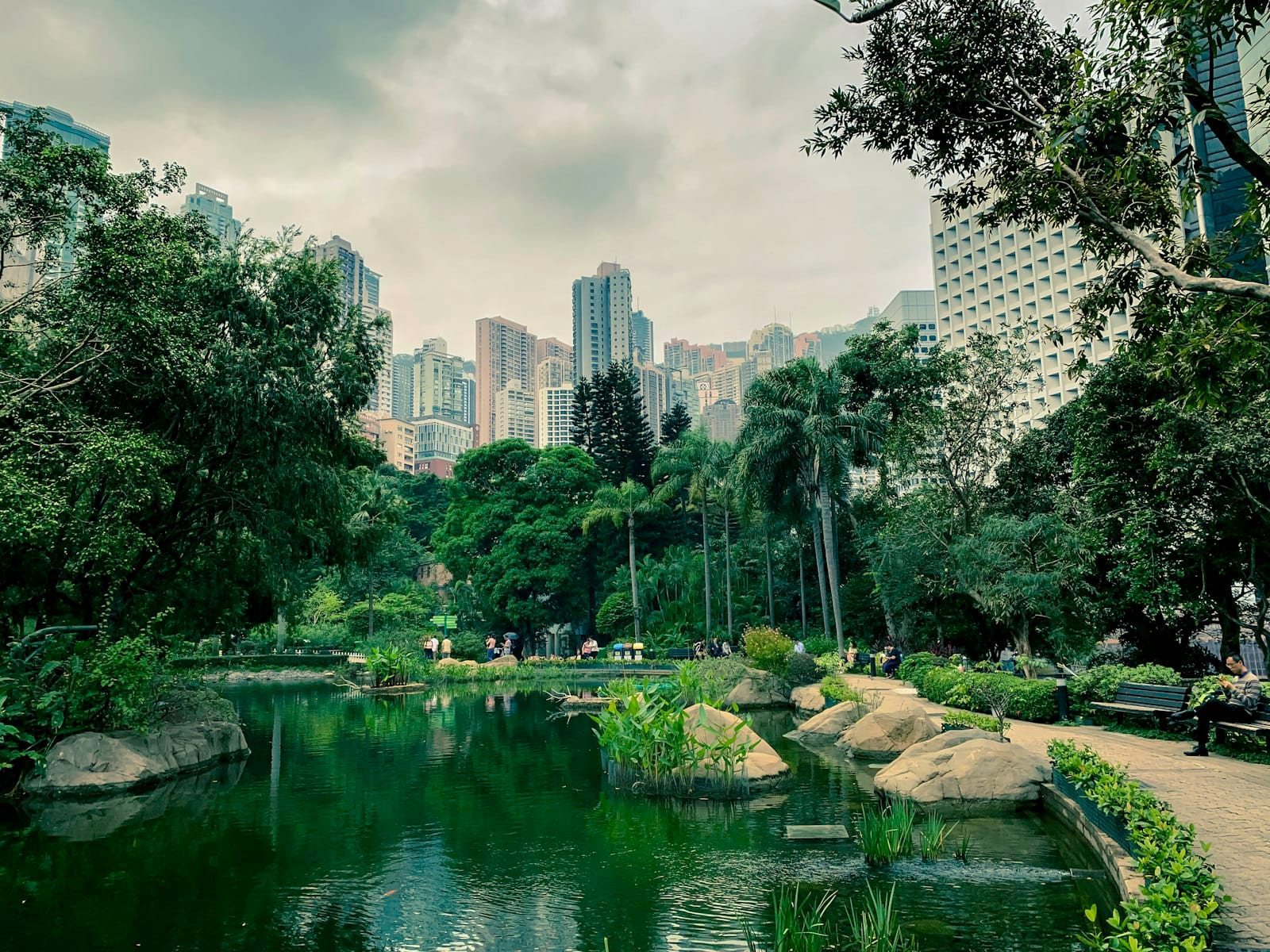
Hong Kong Park covers eight hectares on the Mid-Levels slope where waterfalls, a walk-through aviary, and terraced gardens occupy former British military barracks. The Edward Youde Aviary houses 90 bird species, Flagstaff House Museum displays Chinese tea ware, and elevated walkways provide skyline views filtered through greenery.
Quick Facts
- Location
- Cotton Tree Drive, Central, Hong Kong
- Getting There
- Admiralty Station Exit C1 (5-min walk)
- Time Needed
- 1-2 hours (3+ with museum)
- Cost
- Free entry & facilities
- Best for
- Urban nature seekers, photographers, families
What Hong Kong Park Offers (and What It Doesn't)
Hong Kong Park sits on eight hectares of terraced hillside above Central, occupying what used to be Victoria Barracks. The British military left in the mid-1980s; the park opened in 1991. Today it functions as a green buffer zone between the financial district below and the residential Mid-Levels above, layering artificial waterfalls, tropical landscaping, and colonial-era buildings into a space that feels deliberately engineered for calm. This is not wilderness. It's urban design at work, and it shows: pathways are paved, signage is multilingual, and every viewing platform has been positioned to frame something intentional.
The Edward Youde Aviary dominates the northern section. You enter through a double-door airlock into a 3,000-square-meter mesh enclosure where 90 bird species from Southeast Asia fly, nest, and scream above an elevated wooden walkway. The structure rises 30 meters at its highest point, creating three vertical layers: ground-level ponds where herons stalk, mid-level shrubs where sunbirds dart, and canopy perches where hornbills survey. The walkway puts you at mid-canopy height, close enough to see plumage detail but rarely close enough for a good phone photo unless you bring patience or a zoom lens.
Flagstaff House Museum of Tea Ware occupies a whitewashed colonial building at the park's eastern edge, built in 1846 and now filled with Yixing teapots, celadon tea bowls, and scholarly explanations of tea ceremony traditions. Entry is free. The collection is small but focused, and the second-floor balcony offers an unobstructed view down Cotton Tree Drive toward the harbor, useful if you want skyline context without hiking up to Victoria Peak.
The rest of the park cascades downhill in controlled terraces: a tai chi garden with a red pavilion, rock pools where turtles sun themselves on humid mornings, a greenhouse conservatory that usually underwhelms, and a series of artificial waterfalls that provide the ambient hum of moving water. The Hong Kong Visual Arts Centre (a converted barracks block) hosts rotating exhibitions, usually contemporary work by local artists, always free, occasionally worth 20 minutes if you're already in the area.
Why Visit Hong Kong Park (or Why Skip It)
This park earns its place on a Hong Kong itinerary if you value spatial relief from the density. Central's glass towers and underground shopping malls produce a specific kind of sensory overload, and Hong Kong Park counters that with shade, birdsong, and the illusion of elevation. You're only 100 meters above sea level, but the slope creates psychological distance from the street grid. The aviary works as intended: you walk through it in 15 to 25 minutes, depending on whether you stop to identify species or just absorb the novelty of magpie-robins and hornbills coexisting under the same netting.
The park also functions as connective tissue for a longer Central-to-Mid-Levels route. Many visitors combine it with a Peak Tram ascent (the tram's lower terminus is a five-minute walk east) or use it as a transit point when descending from the Mid-Levels Escalator. If you're staying near Lan Kwai Fong or Soho and want morning greenery before the city heats up, the park delivers without requiring MTR transfers or bus schedules.
Skip it if your time in Hong Kong is limited and you're prioritizing natural landscapes over manicured ones. Dragon's Back trail on Hong Kong Island's eastern ridge offers better views and actual topography. Kowloon Walled City Park in Kowloon City has deeper historical texture. Hong Kong Park is convenient, not essential. It's also less impressive if you visit during midday heat or on weekday lunch hours when office workers claim every shaded bench. The park was designed for lingering, but it doesn't always permit it.
Tickets & tours
Live prices and dates from our booking partner. If you book, we may earn a commission at no extra cost to you.
Hong Kong audio guide with TravelMate app
From 8 €Instant confirmationHong Kong Tour with Peak Tram, harbour cruise and dim sum dinner
From 85 €Instant confirmationFree cancellationHong Kong night tour with Peak Tram and Symphony of Lights
From 63 €Instant confirmationFree cancellationLantau Cable Car and Big Buddha Guided Tour with Lunch in Hong Kong
From 85 €Instant confirmationFree cancellation
Best Time to Visit (and When to Avoid)
Early morning yields the most functional version of this park. The aviary opens at 9am, and birds are most active in the first two hours after sunrise when humidity is high and insects are plentiful. Arrive by 9:15am and you'll have the walkway largely to yourself, with clear light filtering through the mesh and birds vocalizing at higher volume than they will by noon. Mid-morning also works for turtle spotting near the rock pools, assuming the day is sunny enough to pull them out of the water.
Late afternoon between 4pm and 5:30pm is the second-best window, particularly for photography. The Vantage Point viewing platform above the Tai Chi Garden catches slanted light that softens the skyline and throws the foreground greenery into higher contrast. This is when locals with telephoto lenses stake out positions, framing IFC Tower and the Bank of China through gaps in the foliage. By 5:30pm the sun drops behind Mid-Levels, and the lighting flattens.
Avoid weekday lunch hours, roughly 12pm to 1:30pm, when the park absorbs overflow from Central's office towers. The main pathways congest, benches fill, and the ambient noise shifts from birdsong to Cantonese phone conversations and food wrappers. Weekend mornings bring families, which changes the aviary dynamic but doesn't ruin it. Weekends after 2pm can feel crowded without offering compensatory atmosphere.
Weather matters. The park drains well after rain, but high humidity makes the aviary's interior feel oppressive, and overcast skies neutralize the skyline views that justify the terraced layout. November through March offers the most comfortable conditions: lower humidity, cooler temperatures, and better visibility across the harbor.
How to Navigate Hong Kong Park Efficiently
From Central MTR Station, take Admiralty Station Exit C1 and walk north along Garden Road. The park entrance is signposted. Alternatively, take Exit C1 and walk through Chater Garden, which deposits you at the park's southern edge near the Flagstaff House Museum. Both routes take under five minutes from the MTR platform.
The park's layout follows the hillside contour, so most movement is either uphill or downhill rather than lateral. The aviary sits at the highest accessible point. Enter from the southern gate near Cotton Tree Drive and walk the elevated circuit counterclockwise, which keeps the harbor views on your right and positions you to exit near the Forsgate Conservatory. From there, descend through the Tai Chi Garden and waterfall terraces toward the museum or loop back to the sports center plaza at the park's southern edge.
A complete circuit covering the aviary, museum, and main terraces takes 60 to 90 minutes at a moderate pace with occasional stops. Add 30 minutes if you linger in the Visual Arts Centre or explore the smaller side paths near the greenhouse. Families with young children should budget closer to two hours, factoring in playground time and pond-watching.
Restrooms are located near the aviary entrance, inside the sports center at the southern end, and adjacent to the museum. Water fountains are sparse; bring a bottle if you're visiting between April and October when temperatures regularly exceed 30°C.
What Visitors Consistently Get Wrong
Many first-time visitors overestimate the park's size. Eight hectares sounds expansive, but the usable pathways cover less ground than you'd expect, and the terraced design funnels movement along a limited number of routes. You won't get lost, but you also won't discover hidden corners that other tourists miss. The park is too small and too well-maintained for exploration to feel rewarding.
The aviary disappoints visitors expecting zoo-level proximity. The birds are wild within the enclosure, and many species stay high in the canopy or cluster near feeding stations that aren't visible from the walkway. Bring binoculars if bird identification matters to you. Without them, you'll see movement and color but struggle to appreciate plumage detail.
The Flagstaff House Museum reads as optional on most itineraries, and that's mostly accurate. The tea ware collection is niche. But the building itself offers air-conditioned refuge with historical context, and the second-floor balcony provides one of the best free skyline vantage points in Central. Worth 15 minutes even if ceramics don't interest you.
Don't treat this park as a substitute for Hong Kong's hill trails or harbor promenades. It occupies a middle category: more substantial than a pocket park, less immersive than actual nature. Set expectations accordingly, and it delivers. Expect wildness or dramatic topography, and you'll leave underwhelmed.
Who Should Visit vs Who Should Skip
Hong Kong Park makes sense for travelers staying in Central or Admiralty who want morning green space without commuting. It also works for families with children under 10 who need a playground, open space, and low-cost activity between museum visits or shopping. Birdwatchers with a checklist will find enough species diversity to justify the aviary, though serious birders would do better at Mai Po Marshes or Tai Po Kau.
Photographers benefit from the skyline-framed compositions available from the Vantage Point platform, especially during late afternoon. The park also serves as a functional rest stop for anyone hiking or escalating up to the Mid-Levels, offering bathrooms, benches, and shade before continuing uphill. Anyone planning a broader Hong Kong itinerary that includes both urban and natural elements can slot this in as a quick transition space between the two.
Skip it if your schedule prioritizes iconic landmarks or authentic neighborhood texture. The park is pleasant but not memorable. It won't teach you much about Hong Kong's culture, history, or urban character beyond demonstrating that the city values green infrastructure. Travelers with only two or three days in Hong Kong should allocate that time to Victoria Peak, the Star Ferry, Temple Street Market, or an outlying island before considering Hong Kong Park.
Also skip if you're visiting during high summer (June through August) or immediately after heavy rain. The humidity inside the aviary becomes stifling, and the artificial waterfalls lose their aesthetic appeal when competing with actual weather. The park's appeal depends heavily on comfortable walking conditions, and Hong Kong's subtropical climate doesn't always cooperate.
💡 Local tip
Combine your visit with the Peak Tram terminus five minutes east, or walk north to the Mid-Levels Escalator entrance near Caine Road. Both routes extend the park visit into a longer Central exploration loop without backtracking.
Insider Tips
- Aviary at 9am opening for active birds and minimal crowds
- Hidden seating nook behind the waterfall (access via left-side path at base)
- Vantage Point above Tai Chi Garden for skyline-framed photography at 4:30pm
- Visit Hong Kong Visual Arts Centre for free rotating exhibitions
- Turtle spotting near rock pools mid-morning on sunny days
- Avoid lunch hours (12pm to 1:30pm) on weekdays when office workers flood the park
Who Is Hong Kong Park For?
- Urban nature seekers
- Photographers chasing skyline-greenery contrasts
- Families with young children
- Birdwatchers and nature enthusiasts
- Budget travelers (free admission)
- Urban design and architecture students
Nearby Attractions
Other things to see while in Central:
- Peak Tram: Funicular to Victoria Peak
Peak Tram rises to 396 meters above sea level from Central to Victoria Peak via a funicular railway operating since 1888. The steep gradient creates dramatic views as the tram ascends through Mid-Levels. However, queues often exceed 90 minutes at peak times, and buses offer faster, cheaper alternatives with comparable scenery.
- IFC Mall
IFC Mall occupies four floors beneath the International Finance Centre towers in Central where 200+ shops sell luxury brands, electronics, and international fashion. Connected directly to Hong Kong Station and the Airport Express, the mall serves business travelers and Hong Kong's upper-income shoppers. Architecture is modern and air-conditioned, atmosphere is polished and expensive.
- Mid-levels Escalator
The Central-Mid-Levels Escalator is a 800-metre covered moving walkway system that climbs from Central up through SoHo and the Mid-Levels. It doubles as a commuter lifeline and an accidental sightseeing route through some of Hong Kong's most characterful streets.
- Star Ferry
For less than the price of a coffee, the Star Ferry carries you across Victoria Harbour on a route that has run continuously since 1888. The views of Hong Kong Island's skyline from the Kowloon side are among the most photographed in Asia, but the ferry itself, with its wooden benches and swinging chains, is worth the trip on its own terms.
- Victoria Peak
At 552 metres above sea level, Victoria Peak offers one of the most recognisable urban skylines on earth. But the experience varies enormously depending on when you go, how you get there, and how far you walk once you're at the top.
Planning a trip? Discover personalized activities with the Nomado app.