Kowloon Park: 13-Hectare Green Break in Tsim Sha Tsui
Kowloon Park occupies 13 hectares between Nathan Road and Canton Road where locals swim laps in public pools, watch flamingos at the aviary, and practice tai chi on shaded lawns. Built on former British army barracks land, the park mixes sports facilities with ornamental gardens. It's functional urban green space, not scenic parkland.
Quick Facts
- Location
- Tsim Sha Tsui, Kowloon
- Getting There
- Tsim Sha Tsui MTR (Exit A1), 5-min walk
- Time Needed
- 30 min-1.5 hours depending on activity
- Cost
- Free entry (swimming pool charges fees)
- Best for
- Green breaks, swimming, bird watching, tai chi
Quick Snapshot
Kowloon Park occupies 13 hectares between Nathan Road and Canton Road where locals swim laps in public pools, watch flamingos at the aviary, and practice tai chi on shaded lawns. Built on former British army barracks land, the park mixes sports facilities with ornamental gardens. It's functional urban green space, not scenic parkland.
The park contains swimming pools (indoor and outdoor), an aviary with flamingos and other birds, Chinese garden with ponds and pavilions, children's playground, fitness trail, and open lawn areas. Mature trees provide shade along pathways. The atmosphere is utilitarian: people come for exercise, swimming, or quick rest, not leisurely picnics or romantic strolls.
Budget 30 minutes for a quick walk-through or 60-90 minutes if using facilities like the swimming pool. Entry is free. Kowloon Park (Outdoor Facilities) is open 5:00 - 24:00. Access from Tsim Sha Tsui MTR (Exit A1) takes five minutes on foot, or enter directly from Nathan Road or Haiphong Road.
Kowloon Park works if you need green space during a Tsim Sha Tsui shopping or museum day, want to use the public swimming pool, or observe morning tai chi. It's not a tourist attraction. For broader area context, see .
What Actually Happens in Kowloon Park?
The swimming pool complex attracts the most users. Indoor and outdoor pools operate year-round with lanes for lap swimming, leisure pools, and diving facilities. Fees are modest (around HK$17-19). Pools get crowded weekends and summer afternoons but remain accessible. Locals use these pools regularly for exercise.
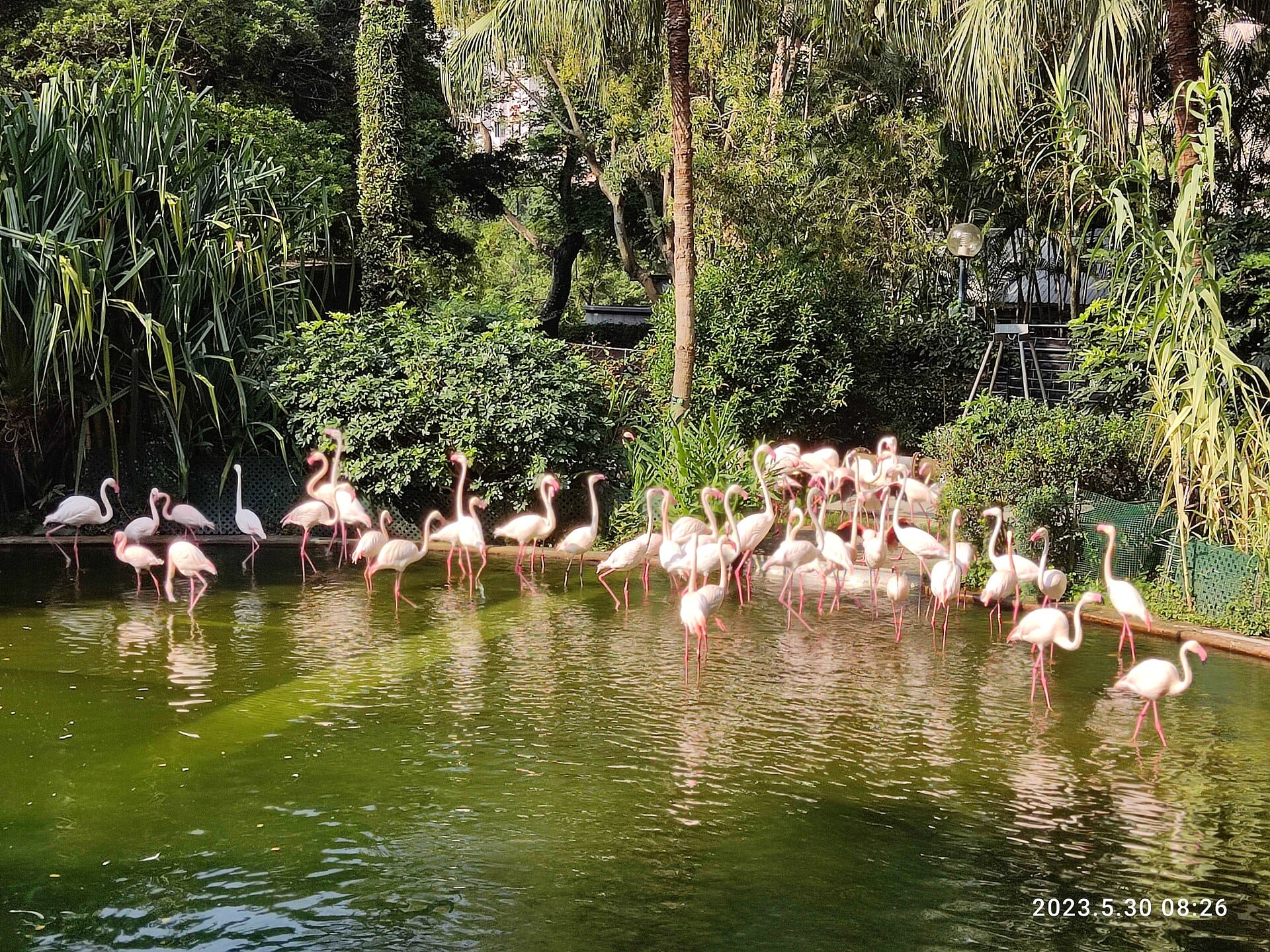
The aviary houses flamingos, parrots, peacocks, and various waterfowl in walk-through enclosures. It's small but well-maintained. The flamingos are the main attraction, often standing near the viewing areas. Kids enjoy the bird section, though it's not a zoo-scale experience.
Morning tai chi sessions run 6 AM to 8 AM daily on the main lawn areas. Groups of mostly older residents practice synchronized movements. The activity is informal, similar to Victoria Park. You can watch from benches or pathways without intrusion.
Chinese garden section features ornamental ponds, stone bridges, pavilions, and carefully arranged landscaping. This area feels more designed than the rest of the park. It's photogenic and provides a different aesthetic from the sports-focused zones.
Sculpture Walk displays contemporary sculptures along a designated path. The collection rotates occasionally and features work by Hong Kong and international artists. Quality varies but it adds cultural interest beyond pure recreation.
Tickets & tours
Live prices and dates from our booking partner. If you book, we may earn a commission at no extra cost to you.
Hong Kong audio guide with TravelMate app
From 8 €Instant confirmationHong Kong Tour with Peak Tram, harbour cruise and dim sum dinner
From 85 €Instant confirmationFree cancellationHong Kong night tour with Peak Tram and Symphony of Lights
From 63 €Instant confirmationFree cancellationLantau Cable Car and Big Buddha Guided Tour with Lunch in Hong Kong
From 85 €Instant confirmationFree cancellation
When Should You Visit Kowloon Park?
Early morning between 6 AM and 8 AM offers the most distinctive experience: tai chi practice, cooler temperatures, and peaceful atmosphere before tourist groups arrive in Tsim Sha Tsui. This timing works if you're jet-lagged or prefer early starts.
Weekday midday between 11 AM and 2 PM sees lighter crowds than weekends. The park provides a quiet break from Nathan Road shopping or before/after visiting the Hong Kong Museum of History next door.
Avoid weekend afternoons if you prefer uncrowded spaces. Families fill playgrounds, swimming pools operate at capacity, and the lawns become packed with picnickers and exercise groups.
October through March offers comfortable temperatures for outdoor time. April through September brings heat and humidity that reduce the appeal of walking, though the swimming pool becomes more attractive.
How Do You Get to Kowloon Park?
Tsim Sha Tsui MTR Station (Exit A1) places you at the park's eastern edge via Nathan Road. Walk north briefly, cross to the park side, and enter through one of several gates. The walk takes about five minutes.
Multiple entrances puncture the park's perimeter: Nathan Road (east), Haiphong Road (south), Canton Road (west), and Austin Road (north). Choose the entrance closest to your starting point in Tsim Sha Tsui.
Bus routes along Nathan Road and Canton Road include numerous options serving Kowloon and New Territories destinations. Check route maps for connections.
The park sits directly adjacent to the Hong Kong Museum of History on Chatham Road South. Combining both in a single outing makes logistical sense.
Common Mistakes and How to Avoid Them
- Expecting scenic mountain or harbor views. Kowloon Park is flat, urban, and surrounded by buildings. It offers green space and facilities, not picturesque landscapes. Kowloon Walled City Park or Lion Rock provide better scenery.
- Missing the aviary section with flamingos. The bird enclosures are in the northern section near Austin Road. Don't leave without walking through if you're visiting with kids or enjoy wildlife.
- Visiting midday during summer without a swimming plan. Heat and humidity make summer midday walks uncomfortable. Either use the swimming pool or visit early morning/evening.
- Allocating significant time if you're not exercising or using facilities. The park is a pass-through green space. Walk across in 15-20 minutes if you're just seeking shade between Tsim Sha Tsui activities.
How Does Kowloon Park Fit Into a Tsim Sha Tsui Day?
Kowloon Park works as a midday break during shopping. Spend morning hours in Harbour City or along Nathan Road, then cut through the park around noon for shade and rest before continuing with afternoon activities. The green space provides mental relief from retail density.
Combine with the Hong Kong Museum of History next door. Visit the museum (budget 90-120 minutes), then walk through the park afterward for fresh air and movement before returning to urban Tsim Sha Tsui.
For swimmers maintaining routines while traveling, the pool complex offers convenient exercise. Visit the pool in the morning, then continue with standard Tsim Sha Tsui touring (waterfront, museums, shopping).
Who Should Visit Kowloon Park?
Travelers needing green breaks during Tsim Sha Tsui shopping or museum days find the park convenient without requiring transit to distant parks.
Swimmers wanting to maintain exercise routines benefit from the public pool's modest fees and year-round operation. The facility is accessible and well-maintained.
Families with children appreciate the playground, aviary with flamingos, and open lawns where kids can run. The park provides kid-friendly space in a dense urban district.
Early risers interested in observing Hong Kong morning exercise culture can watch tai chi sessions between 6 AM and 8 AM, similar to Victoria Park but in Kowloon.
Who Should Skip This?
Tourists prioritizing scenic parks with mountain backdrops or waterfront views should visit Victoria Peak, Bowen Road, or Kowloon Walled City Park instead. Kowloon Park is functional urban space.
Travelers with limited Hong Kong time (one to two days) shouldn't allocate priority to Kowloon Park. It's green space that serves residents, not a must-see attraction.
Visitors seeking tranquil, contemplative nature experiences will find the urban surroundings (traffic noise, high-rises) disruptive. Hong Kong's country parks offer actual nature.
If you're not swimming, not watching tai chi, and not providing kids with playground time, the park offers limited value beyond a quick walk-through for shade.
Insider Tips
- Visit the aviary in the northern section near Austin Road to see flamingos and other birds. It's small but well-maintained and kids enjoy it.
- Arrive between 6 AM and 8 AM to observe morning tai chi practice on the main lawns before tourist crowds enter Tsim Sha Tsui.
- The swimming pool complex offers year-round indoor and outdoor facilities for around HK$19. Good option for maintaining exercise routines.
- Walk through the Chinese garden section for ornamental ponds and pavilions. More photogenic than the sports-focused areas.
- Combine with Hong Kong Museum of History next door. Visit the museum, then walk the park for fresh air before continuing your day.
Who Is Kowloon Park For?
- Green breaks between shopping
- Public swimming pool
- Morning tai chi observation
- Bird watching (flamingos, aviary)
- Playground for children
Nearby Attractions
Other things to see while in Tsim Sha Tsui:
- Avenue of Stars
Avenue of Stars runs 440 meters along the Tsim Sha Tsui waterfront where handprints and plaques honor Hong Kong film stars. Reopened in 2019 after renovations, the promenade features Bruce Lee and other cinema icons embedded in the walkway. It's a brief photo stop combined with harbor views, not a standalone destination.
- Chungking Mansions
Chungking Mansions fills a 17-story block on Nathan Road where budget guesthouses, currency exchanges, mobile phone dealers, and South Asian restaurants occupy five interconnected towers. Built in 1961, it's become Hong Kong's densest multicultural hub and a base for African and South Asian traders. The ground floor is chaotic, the elevators are slow, and the atmosphere is uniquely intense.
- Harbour City
Harbour City stretches 700 meters along the Tsim Sha Tsui waterfront where four interconnected zones contain 450+ shops spanning luxury brands, mid-range fashion, electronics, and dining. Built incrementally since the 1960s, this is Hong Kong's largest shopping mall by area. Navigation is complex, crowds are constant, but retail variety is unmatched.
- Hong Kong Museum of History
Hong Kong Museum of History traces the territory's development from prehistoric geology through British handover in eight chronological galleries. Well-designed dioramas and artifacts make Hong Kong's complex history accessible.
Planning a trip? Discover personalized activities with the Nomado app.