Getting Around Las Vegas: The Complete Transport Guide
Las Vegas is surprisingly easy to navigate once you understand how its transport options actually work. This guide covers everything from Harry Reid International Airport transfers to the RTC Deuce, the Strip monorail, taxis, rideshare, and driving tips, with clear cost breakdowns and time-of-day advice.
Plan and book this trip
Tools from our partner Travelpayouts help you compare flights and hotels. If you book through them, we may earn a commission at no extra cost to you.
Flights
Hotels map
TL;DR
- Harry Reid International Airport (LAS) sits 3-5 miles from the Strip; rideshare costs $12-25 off-peak, taxis $15-35, and the RTC bus around $4-6.
- The Deuce bus runs 24/7 along the Strip, but a 2-hour Strip/All-Access pass costs $6, not the $2 residential fare many visitors assume.
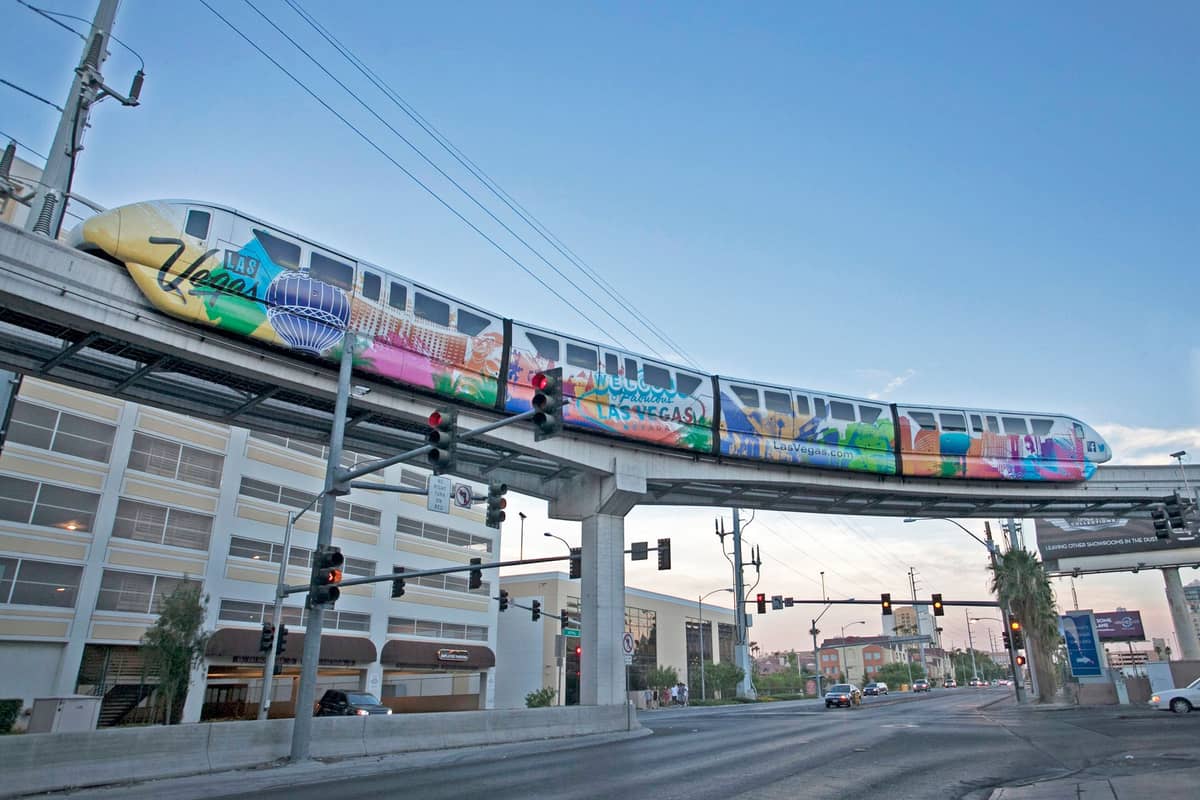
- The Las Vegas Monorail runs along the east side of the Strip and is useful for skipping traffic, but it does not connect to the airport. See the Las Vegas Strip guide for resort-by-resort navigation tips.
- Rideshare (Uber/Lyft) is the most flexible option for most visitors, but surge pricing during events and weekend nights can push fares to $30-50+.
- For a full trip-planning framework, check the 3-day Las Vegas itinerary to understand how transport fits into your schedule.
Getting from Harry Reid International Airport to the Strip
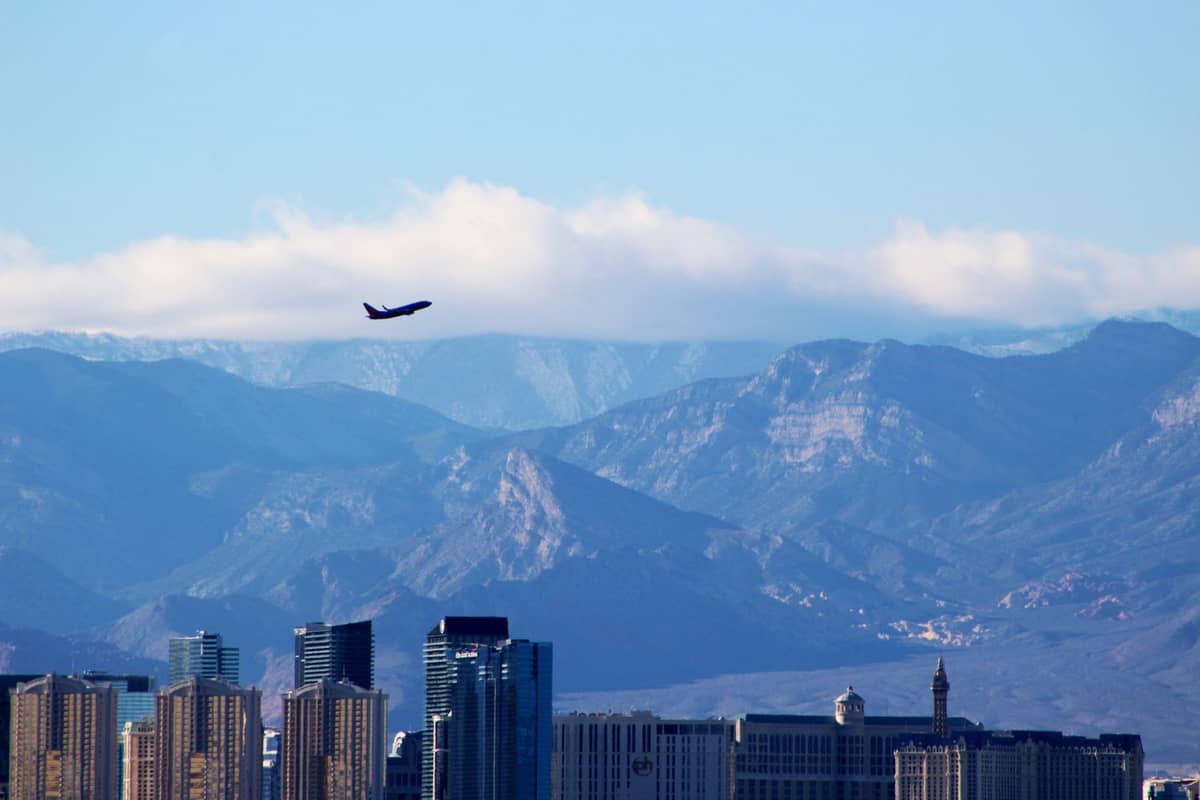
Harry Reid International Airport (IATA: LAS), renamed from McCarran International in late 2021, sits at the southern end of the Las Vegas Strip in the unincorporated community of Paradise. The distance to most Strip hotels is roughly 3-5 miles, which sounds short but can take anywhere from 10 minutes to 45 minutes depending on your chosen transport and the time of day.
- Rideshare (Uber/Lyft) The most popular option. Off-peak fares run $12-25 to the Strip; expect $30-50+ during major events, weekend nights, or after concerts. Pick up from designated rideshare zones outside baggage claim, not the taxi stands.
- Taxi Metered fares typically land between $15-35 to Strip hotels, plus tip (plan on 15-20%). Taxis are readily available curbside and don't surge price, which makes them worth considering during busy event nights when rideshare spikes.
- Pre-booked sedan or car service Fixed-rate services range from $35-55 for a standard sedan to $150+ for a black car. Worth considering for groups or if you want a guaranteed rate for a late arrival.
- Hotel shuttles A handful of Strip and off-Strip properties offer complimentary or low-cost shuttles (up to around $9). Call your hotel before arrival to confirm availability, since many discontinued this service post-2020.
- RTC public bus The Red Line BRT on Maryland Parkway connects toward the South Strip Transit Terminal, where you can transfer to the Deuce heading north along the Strip. Fares are $4 for a single ride or $6 for a 2-hour pass. Expect 30-60 minutes total travel time including the transfer.
⚠️ What to skip
The Las Vegas Monorail does NOT serve the airport. There is currently no direct rail link between Harry Reid International and the Strip. Anyone selling you a 'monorail to the airport' connection is mistaken, or worse. Your airport options are bus, rideshare, taxi, shuttle, or your own rental car.
The RTC Deuce and Public Buses: What Visitors Actually Need to Know
The Regional Transportation Commission of Southern Nevada (RTC) operates all public bus service in the Las Vegas Valley. For tourists, the most relevant service is the Deuce, a double-decker bus that runs the full length of the Strip, from Mandalay Bay in the south to the Fremont Street area in downtown Las Vegas. It runs 24 hours a day, 7 days a week, which is one of its biggest advantages.
Here is where many visitors get caught out: there are two separate fare tiers. The residential network across the broader valley charges $2 per one-way ride. But the Deuce and Strip/All-Access products use a different pricing structure. As of 2026, a 2-hour Strip/All-Access pass costs $6, a 24-hour pass $8, and a 3-day pass $20. If you plan to use the Deuce multiple times in a day, the 24-hour pass is almost always better value than paying per ride.
💡 Local tip
Buy your RTC pass through the rideRTC app or at ticket machines at major stops before boarding. Having the app loaded also lets you plan routes across the full RTC network, including connections to areas like downtown or the Arts District.
The Deuce is genuinely useful for covering long stretches of Las Vegas Boulevard without a car, but it has a real limitation: on Friday and Saturday evenings, and during major conventions or events at the Las Vegas Convention Center, traffic on the Strip slows to a crawl. A journey that takes 15 minutes at noon can take 45 minutes at 10 p.m. on a Saturday. For time-sensitive trips during peak hours, the monorail or rideshare will serve you better. If you're exploring downtown Las Vegas and the Fremont Street area, the Deuce connects directly and is one of the cheapest ways to make that trip from Strip hotels.
The Las Vegas Monorail: Fast but Limited
The Las Vegas Monorail runs along the east side of the Strip, parallel to Las Vegas Boulevard but tucked behind the resort buildings. It connects seven stations: MGM Grand, Horseshoe/Paris Las Vegas, Flamingo/Caesars Palace, Harrah's/The LINQ, Las Vegas Convention Center, Westgate Las Vegas, and SAHARA Las Vegas. One full run end-to-end takes about 15 minutes.
The monorail is most useful for skipping two or three casino-to-casino traffic jams in a row, particularly during the central and north Strip stretch. A single ride costs $6 at stations (around $5.50 with online discounts), with day and multi-day passes available at a discount through the official Las Vegas Monorail website. Operating hours as of 2026 run Monday from 7:00 a.m. to midnight, Tuesday through Thursday from 7:00 a.m. to 2:00 a.m., and Friday through Sunday from 7:00 a.m. to 3:00 a.m.
✨ Pro tip
Monorail stations are not always visible from the street. They're typically accessed through or alongside resort buildings. At the Flamingo/Caesars Palace stop, for example, you walk through the Flamingo's casino floor to reach the platform. If you're not staying at a connected resort, add 5-10 minutes to account for navigating the property.
The monorail's biggest weakness is its coverage gap in the south. Mandalay Bay, Luxor, Excalibur, New York-New York, and Park MGM are all south of the MGM Grand station and not directly served. The south Strip remains rideshare and taxi territory for most visitors. Similarly, the monorail does not reach Fremont Street or downtown Las Vegas.
Taxis, Rideshare, and When to Use Each
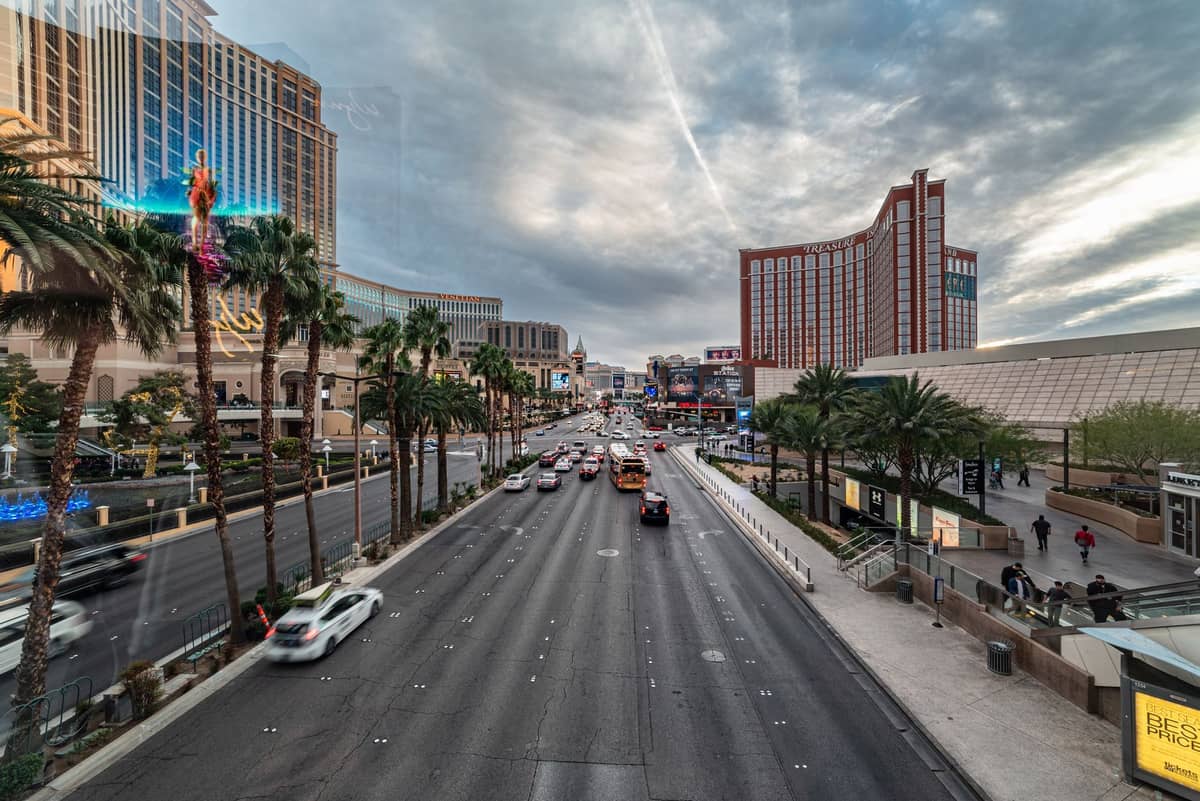
Uber and Lyft both operate freely throughout Las Vegas and are the default choice for most visitors moving between specific hotels, restaurants, or attractions. For most short Strip hops during off-peak hours, a rideshare will cost $8-15 and arrive within a few minutes. The issue is event pricing. Las Vegas hosts the F1 Grand Prix, major boxing matches, New Year's Eve, and countless conventions throughout the year. During these windows, surge pricing is aggressive, and $40-60 fares for what would normally be a $15 ride are not unusual.
Taxis use meters and cannot legally surge-price, which makes them a more predictable choice during major events. The tradeoff is that taxis are only available at designated taxi stands outside hotels and the airport; you cannot hail one on the street. For a group of four splitting a fare, a taxi to the airport at $25-35 is often comparable to or cheaper than two rideshare accounts.
- Use rideshare for flexibility and speed during off-peak hours and weekday evenings.
- Use taxis during major events when rideshare surge pricing makes apps expensive.
- Use the Deuce or monorail for multi-stop Strip days when you want to avoid paying per ride.
- Use the RTC bus from the airport when you're on a strict budget and have time to spare.
- Pre-book a fixed-rate sedan for early-morning flights when rideshare availability may be patchy.
Walking the Strip: More Complicated Than It Looks
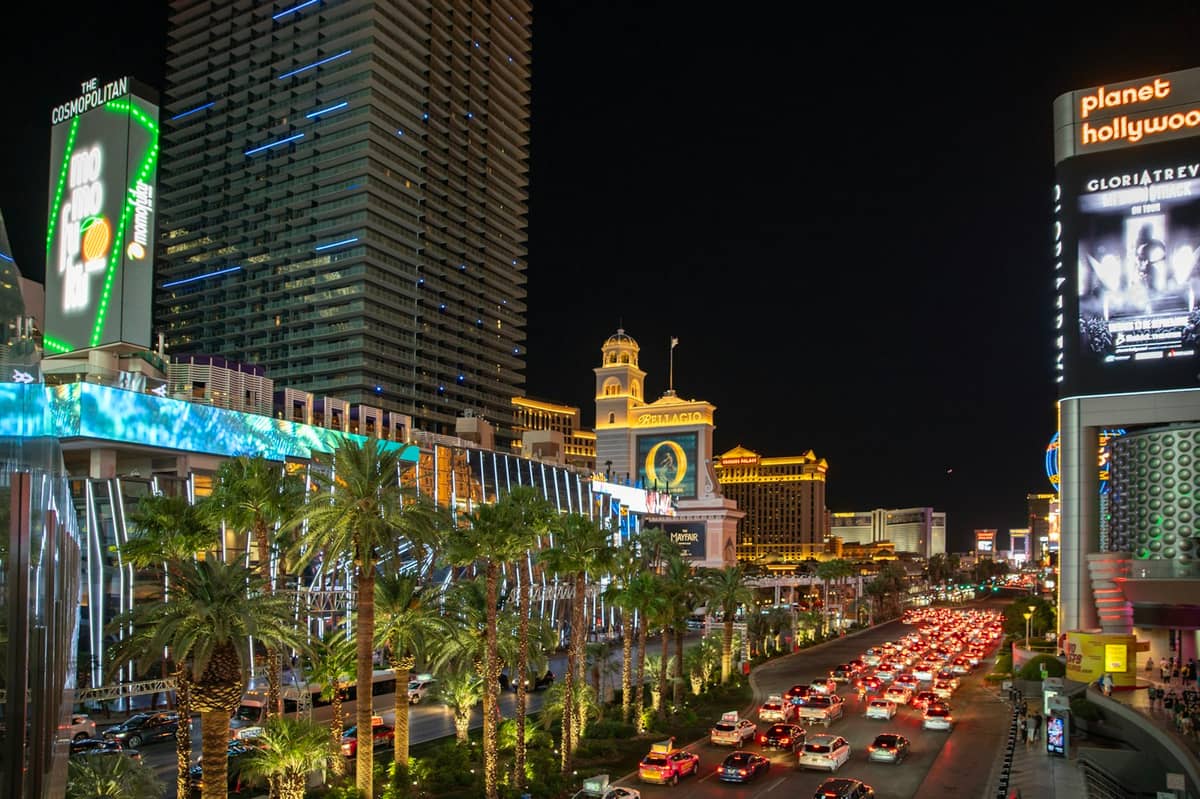
The Strip looks compact on a map. It isn't. The stretch from Mandalay Bay to the SAHARA is approximately 4.2 miles. Most visitors significantly underestimate distances because the mega-resorts are deceptively large. Walking from the front of Caesars Palace to the front of the Bellagio, which appear adjacent on maps, involves crossing a major intersection and easily covers half a mile. The Las Vegas Strip walking guide breaks down the route section by section, including covered walkways and casino shortcuts that can save you time and sun exposure.
In summer, when temperatures regularly exceed 104°F (40°C), walking more than two or three blocks on Las Vegas Boulevard without shade becomes genuinely uncomfortable and can be dangerous for children or elderly visitors. Many resorts are connected by elevated pedestrian bridges and indoor corridors, but these are not always obvious. Planning your walking route in advance, using covered bridges at Flamingo Road and Tropicana Avenue crossings, cuts sun exposure considerably. In October through April, the Strip is pleasant to walk for extended stretches.
ℹ️ Good to know
Several resorts operate their own internal trams. The most visitor-useful is the tram between Mandalay Bay, Luxor, and Excalibur on the south Strip, which runs free of charge. There's also a free trams on the south Strip (Mandalay Bay–Luxor–Excalibur) and the Aria Express (Bellagio–Crystals–Park MGM). These fill the gap where the monorail and Deuce don't reach.
Renting a Car and Driving in Las Vegas
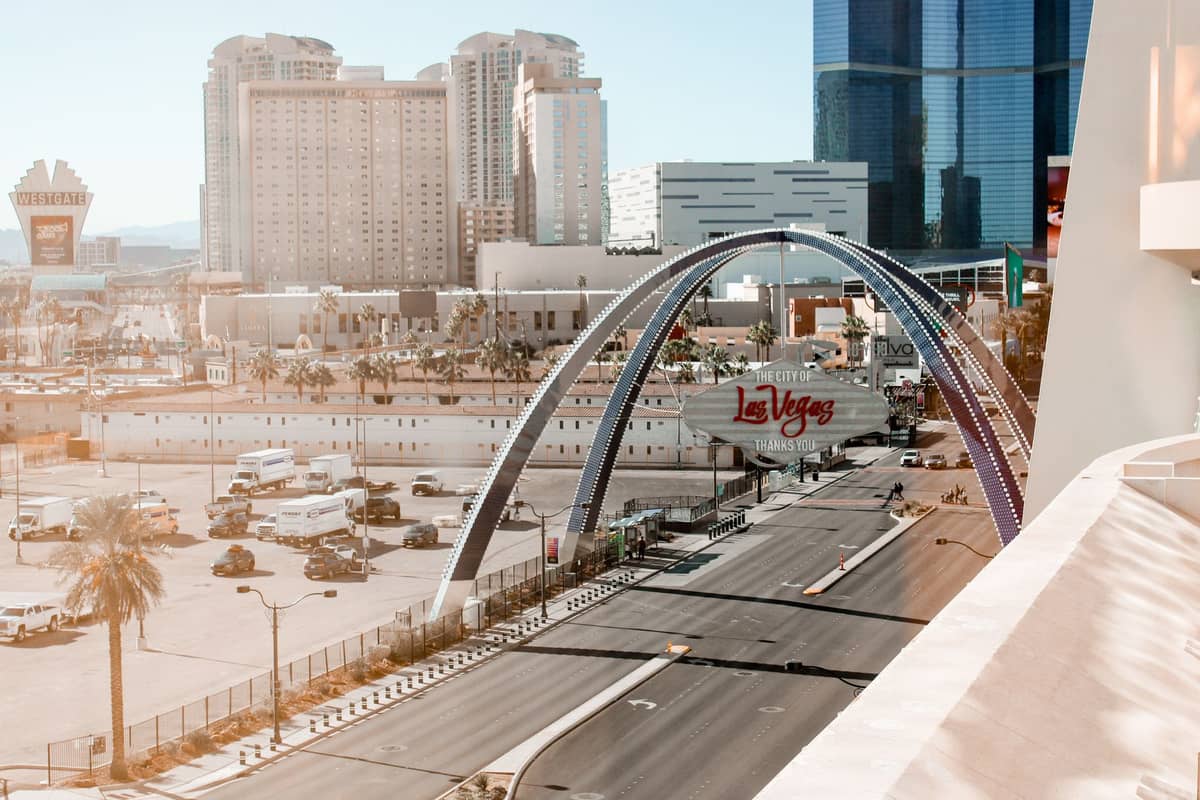
A rental car is largely unnecessary for visitors spending their time entirely on the Strip or in downtown Las Vegas. Parking at resort casinos used to be universally free; most major properties now charge $15-25 per day for self-parking, with validation discounts sometimes available for dining or hotel guests. Factor that into any calculation of whether a rental makes financial sense.
Where a rental car genuinely earns its keep is for day trips. Las Vegas sits within driving distance of some remarkable destinations: Red Rock Canyon is about 30 minutes west, Valley of Fire State Park is roughly an hour northeast, and Hoover Dam is about 45 minutes southeast. Without a car, you'd need to book a tour or shuttle for each of these. If day trips are part of your plan, a car rental for two or three days often makes more sense than multiple tour bookings.
Las Vegas road traffic is manageable by U.S. city standards, with one exception: I-15 heading north out of the city on Sunday afternoon and evening can back up significantly as weekend visitors return to Southern California. If you're heading toward Zion National Park or other Utah destinations, plan to leave by noon on a Sunday or push your departure to Monday morning.
FAQ
Is there a train or subway in Las Vegas?
Las Vegas has no underground metro or subway system. Public transport is bus-based, operated by RTC, with the Las Vegas Monorail serving a limited stretch of the east Strip. Several proposals for rail connections have been discussed over the years but none are operational as of 2026.
How long does it take to get from the airport to the Strip?
By rideshare or taxi, roughly 10-20 minutes in normal traffic. By RTC bus (Red Line plus a Deuce transfer), expect 30-60 minutes. During major events or weekend evening rush, all surface transport times increase.
Does the Las Vegas Monorail go to the airport?
No. The monorail's southernmost station is MGM Grand, which is about 2 miles from the airport. There is no direct rail link between Harry Reid International Airport and the Strip. You'll need a bus, rideshare, taxi, or shuttle for the airport connection.
What is the cheapest way to get around Las Vegas?
The RTC Deuce is the cheapest option for Strip travel. A 24-hour Strip/All-Access pass costs around $8 and covers unlimited rides on the Deuce for the day. For airport arrivals, the Red Line BRT plus a Deuce transfer is the cheapest airport-to-Strip bus option.
Is the Deuce bus pass the same as the regular RTC fare?
No, and this is the most common transport mistake visitors make. The residential RTC fare is $2 per ride, but that fare does NOT apply to the Deuce or Strip/All-Access passes. Strip service uses a separate, higher fare structure: around $6 for 2 hours, $8 for 24 hours, and $20 for 3 days.