Zion National Park: The Essential Day Trip from Las Vegas
Just 160 miles northeast of Las Vegas, Zion National Park delivers one of the American Southwest's most dramatic canyon landscapes. Towering walls of Navajo sandstone, a free canyon shuttle, and trails ranging from flat riverside walks to exposed ridgeline scrambles make it an accessible yet genuinely wild escape from the Strip.
Quick Facts
- Location
- Springdale, UT 84767 — approximately 160 miles northeast of Las Vegas via I-15 and UT-9
- Getting There
- No direct public transit from Las Vegas. Drive (~2.5–3 hrs by rental car) or book a guided day tour. Free Zion Canyon Shuttle operates March–November inside the park.
- Time Needed
- Full day minimum for a day trip from Las Vegas; overnight in Springdale recommended to see more
- Cost
- Private vehicle 7-day pass: $35 | Per person on foot/bike (age 16+): $20 | Youth 15 and under: free | America the Beautiful Annual Pass: $80 | Non-U.S. residents 16+ add $100 per person unless admitted with an annual or America the Beautiful pass
- Best for
- Hikers, road trippers, photographers, nature seekers, families with older children
- Official website
- www.nps.gov/zion/index.htm
What Zion National Park Actually Is
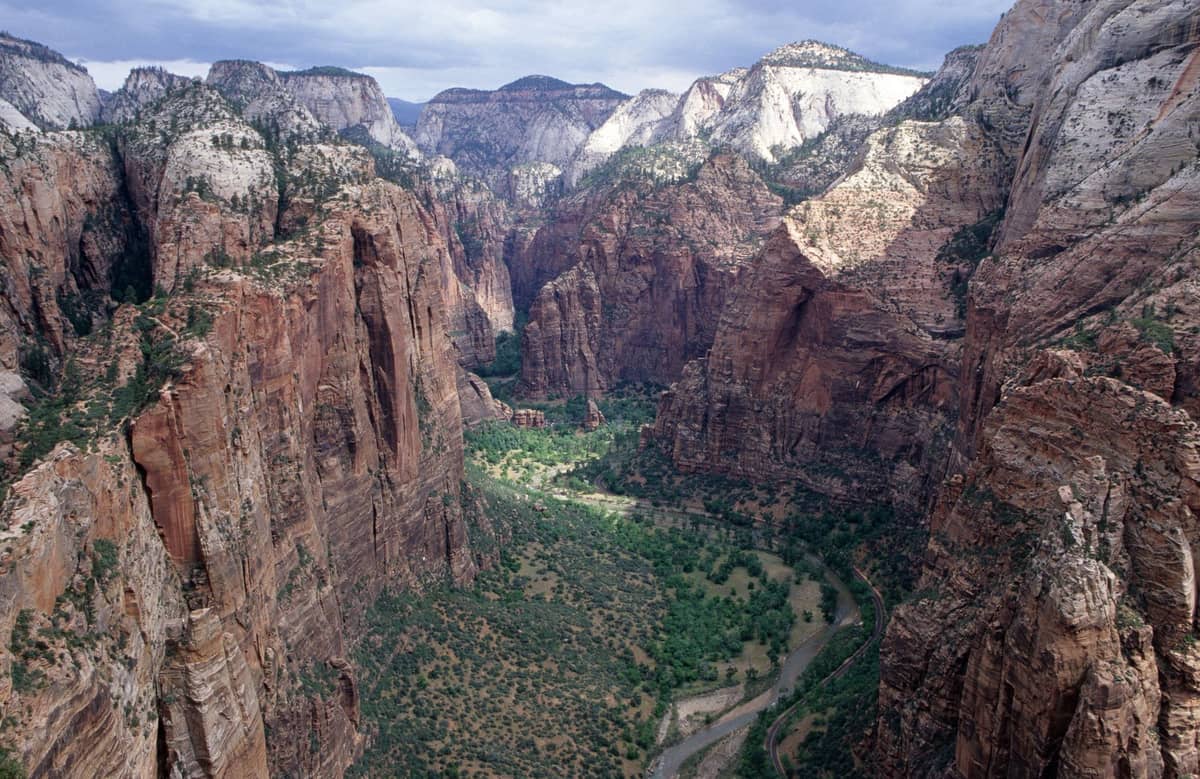
Zion National Park is a 232-square-mile (148,732-acre) canyon wilderness in southwestern Utah, managed by the U.S. National Park Service and open 24 hours a day, 365 days a year. The park's centerpiece is Zion Canyon, a narrow gorge carved over millions of years by the Virgin River through layers of Navajo sandstone that now rise 2,000 feet above the canyon floor. The rock walls shift from deep amber at midday to a burnt crimson at sunset, and in spots they lean so close together overhead that the sky narrows to a ribbon of blue.
The park was first protected as Mukuntuweap National Monument in 1909, and redesignated Zion National Park in 1919, making it Utah's oldest national park. The name Zion comes from early Mormon settlers who found spiritual resonance in the landscape. Before them, the Southern Paiute people lived and traveled through the canyon for centuries, and evidence of even earlier Ancestral Puebloan presence exists throughout the region.
For Las Vegas visitors, Zion represents the single most rewarding natural destination within a half-day's drive. It pairs naturally with a broader Southwest road trip itinerary, and those who have already visited should consider branching out to Valley of Fire State Park or Red Rock Canyon for a closer, shorter alternative.
Getting from Las Vegas to Zion
There is no direct scheduled public bus or train from Las Vegas to Zion National Park. The practical options are a rental car or a guided tour. By rental car from the Strip, the drive takes approximately 2.5 to 3 hours in normal conditions, heading north on I-15 into Utah before turning east on UT-9 through the town of Hurricane and into Springdale, the small gateway community that borders the park's main entrance.
The drive itself is worth noting: the final 20 miles along UT-9 begin climbing through red rock formations, and the moment Zion Canyon comes into view from the park's south entrance feels like a genuine arrival, not just a parking lot. Leave Las Vegas no later than 7:00 a.m. if you want to reach the park before the main shuttle queues build. Summer weekends see the visitor center parking lots fill before 9:00 a.m.
💡 Local tip
If you drive a rental car, note that during shuttle season (typically March through late November), private vehicles cannot drive the full Zion Canyon Scenic Drive. You park at the visitor center or in Springdale and take the free Zion Canyon Shuttle. Plan your day around shuttle stops, not a personal vehicle itinerary.
Several Las Vegas-based tour operators run guided day trips to Zion, which typically include transportation, a guide, and structured hike plans. These are worth considering if you do not have a car or prefer not to drive the return leg after a full day of hiking. Check operator credentials, group sizes, and included activities carefully before booking, as trip quality varies considerably.
Tickets & tours
Hand-picked options from our booking partner. Prices are indicative; availability and final rates are confirmed when you complete your booking.
Bryce Canyon and Zion day tour from Las Vegas
From 237 €Instant confirmationFree cancellationZion National Park tour from Las Vegas
From 225 €Instant confirmationFree cancellationZion and Bryce National Park 2-day tour with camping
From 333 €Instant confirmationFree cancellationZion and Bryce National Park 2-day tour with lodging
From 484 €Instant confirmationFree cancellation
Inside the Park: What You'll Actually See and Do
The Zion Canyon Visitor Center sits near the south entrance and is the logical starting point. Rangers staff it daily during operating hours, trail maps are available free at the door, and the adjacent outdoor exhibit area gives a solid 15-minute orientation to the geology and ecology before you commit to any trail. The Virgin River runs just steps away, shallow enough in summer to wade through, and cool enough on a hot afternoon to provide real relief.
From the visitor center, the free Zion Canyon Shuttle runs along the main canyon road, stopping at nine named sites from Canyon Junction to the Temple of Sinawava at the canyon's end. Most day visitors use a combination of shuttle stops and short walks. The Riverside Walk, a paved path totaling 2 miles round trip from the Temple of Sinawava to the beginning of the Narrows, is accessible to almost everyone and follows the Virgin River beneath 1,000-foot walls. At the trail's end, where the canyon walls close in and the river becomes the trail itself, you're at the entrance to the Narrows, one of the most recognizable slot canyon hikes in North America.
The Narrows involves wading into the Virgin River with the water running anywhere from ankle-deep to waist-high depending on season and recent rainfall. Waterproof footwear, a hiking pole for stability, and awareness of flash flood risk are all essential. The park posts current water levels and conditions at the visitor center daily. Do not enter the Narrows if thunderstorms are forecast anywhere upstream.
⚠️ What to skip
Flash floods in Zion Canyon, particularly in the Narrows, can arrive without warning from storms many miles away. Always check the weather report and the park's flash flood advisory board at the visitor center before entering any slot canyon or river-bottom trail.
For hikers who want elevation and views, Angels Landing is Zion's most famous high trail: a 5.4-mile round trip with about 1,488 feet of elevation gain, finishing on a narrow sandstone fin with chains bolted into the rock for the final half-mile. The National Park Service now requires a permit to hike Angels Landing, available via a seasonal lottery at recreation.gov. Day-of permits are also available on a limited basis. Do not attempt the chains section in wet conditions or if you are uncomfortable with significant exposure and heights.
How the Experience Changes by Time of Day
Early morning, roughly 7:00 to 9:00 a.m., is the canyon at its best for most visitors. The light enters from the east and catches the upper canyon walls in warm tones while the canyon floor stays in soft shadow. The shuttle lines are short, the trails are quiet, and the air temperature is manageable even in July. Deer are frequently visible along the Riverwalk in the early hours, and the sound of the river dominates rather than the hum of other visitors.
By late morning, the park fills steadily. Shuttle wait times at popular stops like Zion Lodge and the Grotto can stretch to two or three cycles, especially on weekends from April through October. Midday in summer is genuinely harsh: temperatures in the canyon floor regularly exceed 100°F, and shade is limited on most exposed sections of trail. If you arrive mid-morning in peak season, prioritize either the shaded river hikes or a longer lunch break at Zion Lodge before continuing.
Late afternoon brings the canyon's most dramatic light. The west-facing walls of the canyon glow orange-red from around 4:00 p.m. onward, and the crowds thin as day-trippers begin their drives home. If you are staying overnight in Springdale, this is the window to linger. The air cools noticeably after 5:00 p.m., and the canyon takes on a stillness that feels entirely different from the busy midday hours.
Practical Details Worth Knowing Before You Go
The park entrance fee for a private vehicle is $35 for a 7-day pass. Individuals arriving on foot or bicycle pay $20 per person (age 16 and older). Motorcycles are $30. If you hold an America the Beautiful Interagency Annual Pass ($80), it covers the entrance fee. The Zion Annual Pass is $70 and valid for one calendar year from the month of purchase. Youth aged 15 and under enter free. In addition, non-U.S. residents aged 16 and older must pay a $100 per-person nonresident fee unless admitted with an annual or America the Beautiful pass. Fees are collected at the entrance stations and can also be paid online in advance.
Cell service is limited to nonexistent in much of the canyon. Download offline maps before you leave Las Vegas, and carry a paper trail map from the visitor center. The park's free shuttle is accessible and accommodates wheelchairs. The Riverside Walk is paved and relatively level, making it one of the more accessible canyon experiences in the American Southwest. The visitor center and main facilities are also designed for accessibility; the official park accessibility guide is available at the visitor center and through the NPS website.
Springdale, the town immediately outside the south entrance, has restaurants, outfitters renting Narrows gear (wetsuit bottoms, neoprene socks, trekking poles), and a range of accommodation from budget motels to canyon-view lodges. Staying overnight allows you to explore Kolob Canyons, the park's less-visited northwest section accessible separately via I-15. For a broader overview of planning a desert day trip from Las Vegas, the day trips from Las Vegas guide covers Zion alongside other regional options.
Photography Tips for Zion Canyon
The canyon's orientation means that full sunlight reaches the floor only for a narrow window around midday in summer. Photographers targeting the upper walls should plan for morning (east-facing walls lit) or late afternoon (west-facing walls lit). The Court of the Patriarchs viewpoint, Stop 4 on the shuttle, gives an unobstructed view of three named sandstone peaks and photographs well in early morning light from the short path below the shuttle stop.
Inside the Narrows, the light is consistently soft and filtered, making it actually easier to photograph in the middle of the day than in open terrain. A wide-angle lens handles the towering walls better than a telephoto. Protect your camera gear from water spray and be prepared for wet hands throughout the hike. A dry bag or a basic waterproof case for your phone is not optional if you plan to enter the river section.
ℹ️ Good to know
Drone use is prohibited in all National Park Service areas, including Zion. Attempting to fly a drone in the park can result in fines and confiscation of equipment.
Who Should Reconsider This Trip
Zion is not ideal for every visitor. Travelers who want a quick scenic stop without committing a full day will likely find the 5-to-6-hour round-trip drive from Las Vegas consuming more time than the payoff justifies for a 30-minute walk. Those with limited mobility should know that while the Riverside Walk and visitor center are accessible, the park's most iconic experiences involve uneven terrain, water crossings, and significant elevation. In that case, Red Rock Canyon's scenic drive offers remarkable desert scenery within 30 minutes of the Strip and with far less physical commitment.
Peak summer visits (mid-June through August) can be genuinely unpleasant for heat-sensitive travelers. Canyon floor temperatures regularly exceed 100°F, shuttle lines are long, and the most popular trails feel crowded. If summer is your only option, start at dawn, carry at least 3 liters of water per person, and plan to be off exposed trails by noon. The park does not overstate the heat risk; it is real.
Families with young children can absolutely enjoy Zion, particularly the Riverside Walk and the shuttle ride itself, which children tend to enjoy. The Emerald Pools trail system offers shorter options with waterfall views. For other family-friendly options closer to Las Vegas, the Las Vegas with kids guide covers indoor alternatives when desert heat is a concern.
Insider Tips
- Reserve your Angels Landing permit well in advance through recreation.gov. The seasonal lottery for popular dates fills quickly, and last-minute day-of availability is limited. Check the NPS website for the current lottery schedule before your trip.
- The free Springdale town shuttle picks up at multiple stops along Zion Park Blvd and drops riders at the park's pedestrian entrance, bypassing visitor center parking entirely. This saves significant time during peak season when main lots fill before 9:00 a.m.
- Narrows gear rentals in Springdale (wetsuit bottoms, neoprene socks, and a trekking pole) cost roughly $40–50 per person and make a meaningful difference in comfort and safety in water above knee height. The park's rental shops open early, so pick up gear before you board the first shuttle.
- The Kolob Canyons section in the park's northwest corner, accessed separately from I-15, sees a fraction of the main canyon's visitors. The 5-mile Kolob Canyons Road ends at a viewpoint overlooking red canyon fingers with almost no crowds, even on busy weekends.
- Carry more water than you think you need. The visitor center has water bottle filling stations, and so do several shuttle stops, but there is no potable water on most trails beyond those points. A minimum of about 1 liter per hour of hiking in summer is the standard recommendation from park rangers.
Who Is Zion National Park For?
- Hikers of all levels, from flat riverside walks to permit-required ridge scrambles
- Road trippers building a Southwest loop from Las Vegas
- Photographers who want canyon light without the crowds of the Grand Canyon's South Rim
- Travelers looking to balance a Las Vegas trip with genuine time in nature
- Families with older children or teenagers comfortable with moderate trails
Nearby Attractions
Combine your visit with:
- Antelope Canyon
Antelope Canyon is a series of sculpted slot canyons carved into Navajo Sandstone near Page, Arizona, and one of the most visually striking natural formations in the American Southwest. Accessible only on guided tours led by licensed Navajo guides, it requires advance planning but rewards visitors with an experience unlike anywhere else within day-trip range of Las Vegas.
- Area 51 & Extraterrestrial Highway
Nevada State Route 375, officially designated the Extraterrestrial Highway in 1996, is a 98-mile desert drive skirting the perimeter of the most famous restricted military installation on Earth. It costs nothing to drive, demands serious preparation, and delivers a genuinely remote American landscape that few Strip visitors ever see.
- AREA15 Immersive Entertainment Complex
AREA15 is a 35-acre immersive entertainment and events district just off the Las Vegas Strip, packed with art installations, bizarre interactive experiences, bars, and ticketed attractions like Omega Mart. Daytime entry is free, but the real substance costs extra — and it's worth understanding the pass tiers before you arrive.
- Death Valley National Park
Just two hours from the Las Vegas Strip, Death Valley National Park is the hottest, driest, and lowest national park in the United States. From the salt flats of Badwater Basin to the sculpted dunes of Mesquite Flat, it rewards early risers and well-prepared visitors with landscapes found nowhere else on Earth.