Antelope Canyon: The Complete Day Trip Guide from Las Vegas
Antelope Canyon is a series of sculpted slot canyons carved into Navajo Sandstone near Page, Arizona, and one of the most visually striking natural formations in the American Southwest. Accessible only on guided tours led by licensed Navajo guides, it requires advance planning but rewards visitors with an experience unlike anywhere else within day-trip range of Las Vegas.
Quick Facts
- Location
- Near Page, Arizona — approx. 4.5 hours from Las Vegas by road
- Getting There
- Organized coach/minibus tours from Las Vegas, or self-drive via US-93 and US-89 to Page, then US-98
- Time Needed
- Full day (12–14 hours if departing from Las Vegas); canyon tour itself is 1–1.5 hours
- Cost
- Guided tours from Page: approx. US$80.50 (Lower) to US$149+ (Upper). Las Vegas day trips: US$189–209+ per person
- Best for
- Photography, geology enthusiasts, Southwest bucket-list travelers
- Official website
- navajonationparks.org/navajo-tribal-parks/lake-powell/
What Antelope Canyon Actually Is
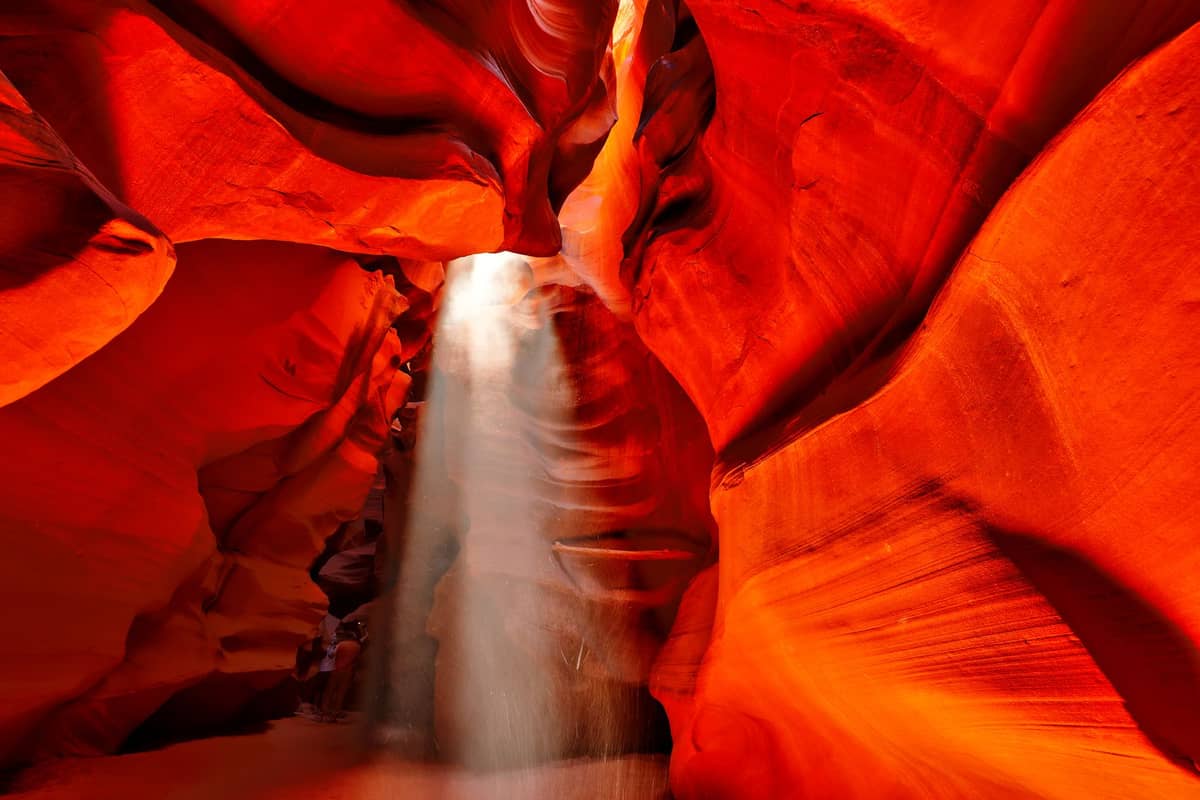
Antelope Canyon is not a single canyon but a collection of narrow slot canyons carved over thousands of years into Navajo Sandstone by flash flooding and windborne erosion. The rock walls twist and taper overhead, creating corridors that are sometimes barely shoulder-width but soar dozens of meters above the sandy floor. The striations in the stone record the direction of ancient water flows, layered in bands of orange, rust, amber, and deep plum.
The canyon sits on Navajo Nation land and is managed as part of Navajo Nation Parks and Recreation. It is divided into three main sections: Upper Antelope Canyon (Navajo name: Tsé bighánílíní, meaning 'the place where water runs through rocks'), Lower Antelope Canyon (Hasdestwazi, meaning 'Spiral Rock Arches'), and the newer Antelope Canyon X. Each section has a different character, a different entry price, and a different crowd level.
⚠️ What to skip
You cannot enter Antelope Canyon independently. Entry is permitted only with a licensed Navajo guide, and all tours must be booked in advance — especially for Upper Canyon midday light-beam tours, which sell out weeks or months ahead.
Upper vs. Lower vs. Canyon X: Which One to Choose
Upper Antelope Canyon
Upper Antelope Canyon is the most photographed section and the most crowded. The canyon floor is essentially level with the surrounding desert, so you walk straight in without climbing. The ceiling narrows to a slit of sky above, and around midday between roughly April and October, shafts of sunlight cut vertically through the opening and illuminate columns of sand drifting through the air. These 'light beams' are the images you've seen on postcards and wallpapers. They last only a few minutes at peak sun angle and are best between 11 a.m. and 1 p.m.
Because of this, Upper Canyon 'light beam' tour slots fill rapidly. Guided tours from Page cost approximately US$90+ per person, though specialized photography tours run higher. Expect groups of 15 to 20 people moving through the canyon together during busy months. The experience is real and worth it, but managing expectations around the crowds is important: this is not a solitary wilderness moment.
Lower Antelope Canyon
Lower Antelope Canyon requires descending into the earth via steep metal staircases — a different physical experience that some visitors find more adventurous. The corridor is longer and arguably offers more complex rock formations. Light is more diffuse throughout the day, meaning you are not chasing a narrow time window. Tours cost approximately US$80.50 from Page, and groups tend to be smaller. If you are visiting with limited flexibility on arrival time, Lower Canyon is the more forgiving option.
Antelope Canyon X
Canyon X is the newest and least crowded of the three. It is more physically demanding, involving ladders and narrow scrambles, and is typically recommended for visitors who want a quieter experience and don't mind working a little harder for it. Tour prices and schedules vary by operator, so check directly with Navajo-licensed tour companies.
Tickets & tours
Hand-picked options from our booking partner. Prices are indicative; availability and final rates are confirmed when you complete your booking.
Antelope Canyon and Horseshoe Bend tour from Las Vegas
From 198 €Instant confirmationFree cancellationAntelope Canyon X and Horseshoe Bend Tour from Las Vegas
From 161 €Instant confirmationFree cancellationUpper Antelope Canyon and Horseshoe Bend Tour from Las Vegas
From 210 €Instant confirmationFree cancellationLower Antelope Canyon and Horseshoe Bend tour from Las Vegas
From 217 €Instant confirmationFree cancellation
How to Get There from Las Vegas
Antelope Canyon sits near Page, Arizona, roughly 270 miles northeast of Las Vegas. The drive takes approximately 4 to 4.5 hours each way via US-93 North and US-89. Either route traverses stretches of open desert highway with limited fuel and food stops, so plan accordingly.
Most visitors from Las Vegas choose organized full-day tours, which include hotel pickup, round-trip coach or minibus transport, a guided slot canyon tour, and often a stop at Horseshoe Bend, located just five minutes from Page. These combined tours typically run US$189 to US$209 per person and depart very early — often between 5 a.m. and 6:30 a.m. — to allow enough time at the canyon before making the return journey. Check exact inclusions carefully, as some tours list transport but not the canyon entry fee.
If you prefer to drive yourself, you can arrange your own canyon tour directly with a licensed operator once you arrive in Page. This gives you more flexibility to time your visit and perhaps pair it with other stops along the way, including a detour through Valley of Fire State Park on the way back, or an extended trip to Zion National Park if you have more days available.
💡 Local tip
Book your canyon tour before you book your transport. Upper Canyon light-beam slots sell out first — sometimes months in advance during spring and summer. Confirm your tour time, then plan your departure from Las Vegas around it.
What the Experience Feels Like Inside
Stepping into the canyon for the first time is disorienting in the best way. The temperature drops noticeably as you descend into the shade of the rock walls. The air smells of fine sandstone dust. Sound changes too: the wind outside disappears, and what remains is the shuffle of footsteps on the sandy floor and the murmured commentary of the guide explaining the geology and Navajo cultural significance of the space.
The rock surface is smooth and layered, worn into flowing curves that look less like stone and more like frozen liquid. Colors shift as you move deeper: the same wall that appears orange in direct light looks violet in shadow. During midday hours in Upper Canyon, when sand particles catch the light beams, the entire scene has an almost theatrical quality — which is partly why photographers have made it one of the most replicated natural images in North America.
Tours move at a steady pace and do not linger long in any single spot. The canyon is narrow enough that groups must pass through in single file in places. If photography is a priority, communicate with your guide beforehand. Some operators offer dedicated photography tours with smaller groups and more time at key vantage points.
Best Time to Visit and Weather Considerations
For the iconic light beams in Upper Canyon, the window runs roughly from late March through October, with peak light conditions around the summer solstice period in late June. Midday tours between 11 a.m. and 1 p.m. offer the best chance of seeing them clearly, though cloud cover can reduce or eliminate the effect on any given day.
Spring and autumn offer the best combination of manageable temperatures and good light. Summer brings intense heat outside the canyon — Page routinely exceeds 100°F (38°C) in July and August — but the canyon interior itself stays cooler. Winter visits are quieter and less expensive, but the light quality inside Upper Canyon is lower.
Flash flood risk is real and not hypothetical. The canyon has experienced fatal flooding events. Tours are cancelled without notice when conditions in the wider watershed area indicate flood risk, even if skies above Page appear clear. Your tour operator makes the safety call, and refunds or rescheduling policies vary. Always check weather forecasts for the broader Colorado Plateau region before your visit.
⚠️ What to skip
Do not attempt to enter the canyon without a licensed guide under any circumstances. Flash floods can arrive with almost no warning and fill the narrow corridors rapidly. All tours are led by Navajo guides who monitor conditions and can exit quickly if needed.
Photography Tips and Practical Preparation
Antelope Canyon is one of the most-photographed natural sites in the world, and the conditions inside are genuinely challenging. Contrast between bright light beams and deep shadow is extreme. Most smartphone cameras will handle the midday light beams adequately, but exposure settings matter: automatic modes often overexpose the highlights. If using a DSLR or mirrorless camera, shoot in RAW and bracket your exposures.
Tripods are restricted or prohibited during standard tours. Wear clothes you do not mind getting dusty — fine red sandstone silt settles on everything. Flat, closed-toe shoes with grip are appropriate for Upper Canyon; sturdy shoes with ankle support are better for Lower Canyon, where the descent on metal stairs can feel awkward in sandals. Bring water, as Page offers limited shade outside the canyon and temperatures can be severe.
Accessibility is limited. Upper Canyon has a flat sandy floor but the entrance is uneven, and the interior path narrows significantly in places. Lower Canyon requires navigating steep staircases with metal railings. Neither section is wheelchair accessible in practice. Visitors with significant mobility concerns should contact tour operators in advance to discuss current options.
Cultural Context and Navajo Significance
Antelope Canyon is located within the Navajo Nation, the largest Native American reservation in the United States. The park and tours are operated under Navajo Nation Parks and Recreation, with all guides required to be licensed Navajo tribal members. Entry fees support Navajo Nation Parks and Recreation. This is not simply a scenic backdrop: the canyon holds cultural and spiritual significance, and guides often share aspects of Navajo history and relationship with the landscape during tours.
Treating the space with respect — following guide instructions, not touching the walls, not removing any material from the canyon — is both a legal requirement and a basic courtesy. For broader context on Southwest day trips from Las Vegas, see the day trips from Las Vegas guide, which covers additional options ranging from the Grand Canyon to Zion.
Who Should Skip This Trip
Antelope Canyon is a long day, and visitors who are not comfortable with 9 to 10 hours of travel (plus the tour itself) may find it exhausting rather than rewarding. The canyon experience itself lasts only about one hour. If your primary interest is spending time in the canyon rather than the journey, consider whether a flight or overnight stay in Page makes more sense than a Las Vegas coach tour.
Visitors with claustrophobia should be aware that parts of the canyon narrow to very tight passages, and the walls can feel extremely close in a large group. It is worth checking with your tour operator about group sizes and typical pinch points before booking. Those with significant mobility limitations will find the experience difficult or inaccessible, particularly in Lower Canyon.
If you are looking for a dramatic landscape experience that is closer to Las Vegas and more physically accessible, Red Rock Canyon Scenic Drive or Valley of Fire State Park offer striking geology and color without the long journey.
Insider Tips
- Book Upper Canyon light-beam tours at least 4 to 6 weeks ahead in spring and summer — popular operators sell out entirely. If you find Upper Canyon sold out, book Lower Canyon first and join a waitlist for Upper.
- Many Las Vegas day-tour operators include Horseshoe Bend in the same itinerary. Horseshoe Bend is a 1.5-mile round-trip walk from the parking area, so wear sun protection and bring at least one liter of water per person — the exposed trail offers no shade.
- For the best light beam photos, aim for the 11 a.m. to 1 p.m. window in Upper Canyon between late March and October. Ask your guide to throw sand into the beam — this makes the column of light visible and dramatically improves photos.
- Antelope Canyon X (the third section) is operated separately and typically has far smaller group sizes. If Upper Canyon is sold out and Lower Canyon feels too crowded in reviews, Canyon X is a legitimate and often superior alternative for visitors who prioritize space over the famous light beams.
- Fuel up in Las Vegas before leaving. Gas prices along US-89 and near Page can be noticeably higher than in the city. The same applies to food: Page has limited dining options, and many day-tour operators do not include meals.
Who Is Antelope Canyon For?
- Photography enthusiasts seeking dramatic natural light and color
- Geology and natural history travelers interested in erosion-formed landscapes
- Southwest bucket-list visitors combining the canyon with Horseshoe Bend or Zion
- Travelers willing to invest a full day for a genuinely singular natural experience
- Cultural travelers interested in Navajo Nation heritage and guided interpretation
Nearby Attractions
Combine your visit with:
- Area 51 & Extraterrestrial Highway
Nevada State Route 375, officially designated the Extraterrestrial Highway in 1996, is a 98-mile desert drive skirting the perimeter of the most famous restricted military installation on Earth. It costs nothing to drive, demands serious preparation, and delivers a genuinely remote American landscape that few Strip visitors ever see.
- AREA15 Immersive Entertainment Complex
AREA15 is a 35-acre immersive entertainment and events district just off the Las Vegas Strip, packed with art installations, bizarre interactive experiences, bars, and ticketed attractions like Omega Mart. Daytime entry is free, but the real substance costs extra — and it's worth understanding the pass tiers before you arrive.
- Death Valley National Park
Just two hours from the Las Vegas Strip, Death Valley National Park is the hottest, driest, and lowest national park in the United States. From the salt flats of Badwater Basin to the sculpted dunes of Mesquite Flat, it rewards early risers and well-prepared visitors with landscapes found nowhere else on Earth.
- Fire Wave Trail
Fire Wave Trail leads hikers across open desert to a swirling formation of red, pink, and white Aztec Sandstone bands inside Valley of Fire State Park. At roughly 1.5 miles round trip, the hike itself is short, but the landscape it crosses is severe and spectacular. Located about 50 miles northeast of Las Vegas, this is one of the most visually arresting short hikes within reach of the city.