Valley of Fire State Park: Nevada's Ancient Red Desert, One Hour from Las Vegas
Valley of Fire State Park puts 46,000 acres of blazing red sandstone formations, 3,000-year-old petroglyphs, and surreal desert geology within an hour's drive of the Las Vegas Strip. Nevada's oldest state park rewards early risers and photographers with landscapes that feel genuinely otherworldly.
Quick Facts
- Location
- 29450 Valley of Fire Road, Overton, NV 89040 — approx. 1 hour northeast of the Las Vegas Strip via I-15 and NV-169
- Getting There
- Private vehicle or guided tour only — no public transit serves the park. Drive I-15 north, exit toward NV-169 (Valley of Fire Highway)
- Time Needed
- 3 to 5 hours for a thorough day visit; allow a full day if hiking multiple trails
- Cost
- $15 per vehicle (out-of-state); $10 for Nevada-registered vehicles. America the Beautiful passes not accepted. Camping from ~$20–25/night, plus ~$10/night for utility hookups at selected sites.
- Best for
- Photographers, hikers, geology enthusiasts, families seeking an escape from the Strip, and anyone needing real desert perspective
- Official website
- parks.nv.gov/parks/valley-of-fire
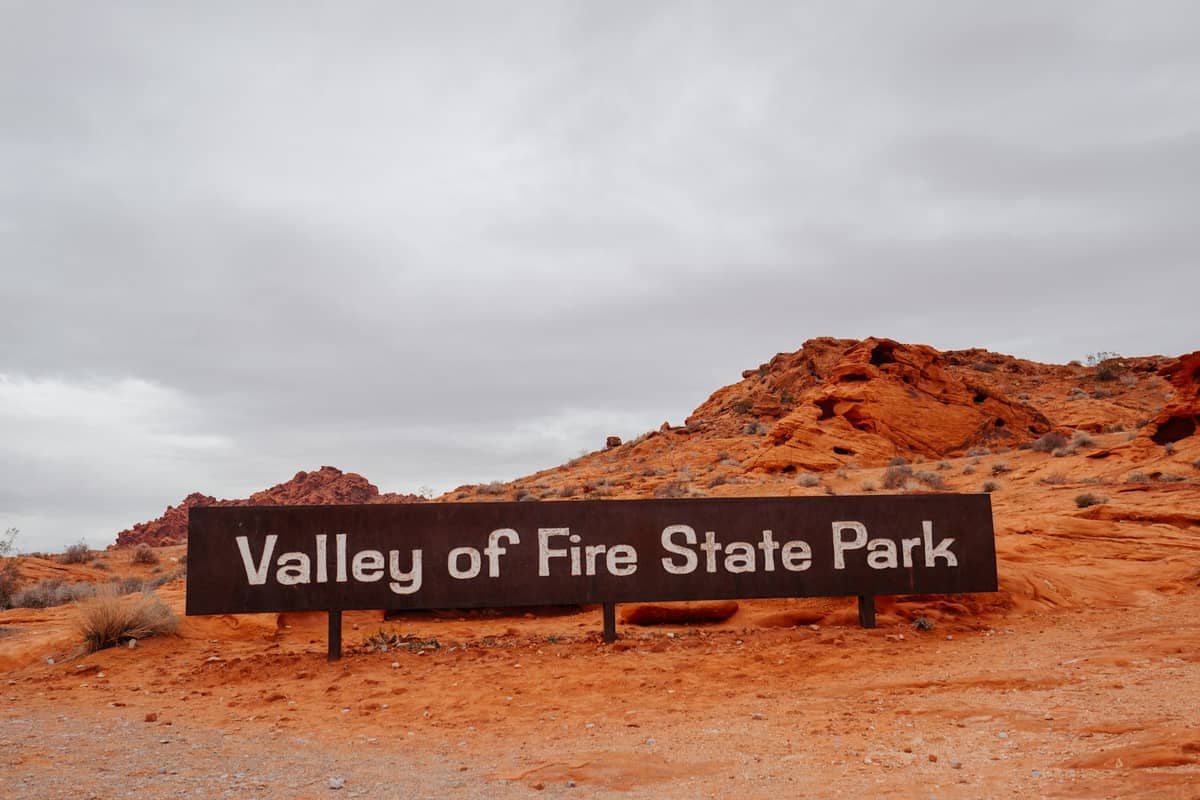
What Valley of Fire Actually Is
Valley of Fire State Park is Nevada's oldest state park, established as a protected area decades before the casino corridor existed in its current form. The park covers nearly 46,000 acres of Aztec sandstone formations that began as sand dunes during the age of dinosaurs, compressed and oxidized over millions of years into the deep red, orange, and lavender rock you see today. It sits at the edge of the Mojave Desert where Lake Mead's basin meets the Virgin River drainage, and the geological variety within a single park is genuinely striking.
The name is not marketing. On a clear afternoon when the sun drops toward the western ridgeline, the rock faces catch light in a way that makes the entire valley appear to be smoldering. It is a specific optical effect produced by iron oxide in the Aztec sandstone, and it is more dramatic in person than in photographs, which is a rarity for any desert landscape.
💡 Local tip
Plan to arrive at or just after the park opens at sunrise, or time your visit so you are near the Fire Wave or Elephant Rock formations in the final 90 minutes before sunset. Midday light flattens the formations and summer midday heat can be extreme.
The Drive In and First Impressions
The approach along NV-169 from I-15 begins subtly. The highway passes through Moapa Valley with its irrigated fields and then, without much warning, the terrain shifts. The road enters a narrow canyon cut through red and cream sandstone walls, and the visual scale changes entirely. Most visitors stop instinctively before even reaching the entrance booth.
The entrance fee is collected at a staffed booth or self-pay station: $15 per vehicle for out-of-state plates, $10 for Nevada-registered vehicles. Credit cards are generally accepted, but carrying cash is sensible given the remote location. Note that National Park annual passes, including America the Beautiful, are not valid here. This is a Nevada state park, not a federal site.
Pick up a paper map at the entrance or at the visitor center, which operates 9:00 a.m. to 4:00 p.m. daily. The visitor center displays explain the park's geological timeline, its petroglyphs, and the ecology of the surrounding Mojave. It is small but well-organized and worth 20 minutes, particularly if you are new to desert environments.
Tickets & tours
Hand-picked options from our booking partner. Prices are indicative; availability and final rates are confirmed when you complete your booking.
Valley of Fire State Park wedding package
From 939 €Instant confirmationFree cancellationValley of Fire small-group tour from Las Vegas
From 93 €Instant confirmationFree cancellationValley of Fire tour from Las Vegas with visit to the Lost City Museum
From 114 €Instant confirmationFree cancellationLas Vegas Valley of Fire tour
From 153 €Instant confirmationFree cancellation
Formations, Trails, and What to Prioritize
The park's road system is paved throughout the main corridor, accessible by any standard passenger vehicle. Side roads vary in condition. The road loops through the park's central features, allowing visitors to drive between key sites and walk short distances to viewpoints. If your time is limited to three hours, focus on three areas: Elephant Rock, Atlatl Rock, and the White Domes loop.
Elephant Rock sits near the eastern entrance and requires almost no walking. The formation genuinely resembles its name from the designated viewpoint, a geological coincidence produced by differential erosion. It is the right place to gauge lighting conditions when you arrive.
Atlatl Rock contains some of the park's most accessible petroglyphs, carved by the Ancestral Puebloan people who lived in this region as far back as about 2,000 years ago. A metal staircase leads up to a panel of rock art depicting humans, animals, and abstract symbols. The carvings are protected and must not be touched. The word 'atlatl' refers to a spear-throwing device depicted in some of the carvings, a weapon that preceded the bow and arrow in this region.
The White Domes loop trail, approximately 1.1 miles round-trip, passes through a narrow canyon slot, past a ruined film set from a 1960s production, and across open sandstone terrain in several colors including cream, pink, and red. It is the single best short hike in the park for geological variety and shade variation, though the canyon section can feel claustrophobic in a small way that young children often find exciting rather than unsettling.
For visitors who want a longer, more remote experience, the Fire Wave trail covers approximately 1.5 miles round-trip across open slickrock terrain to reach swirling striped sandstone formations. The path is marked by cairns rather than a developed trail, which means it is navigable in good conditions but requires more attention. This trail connects naturally to a broader day spent exploring the Red Rock Canyon area if you are planning a desert-focused day out of Las Vegas.
⚠️ What to skip
Several trails, including some in exposed areas, close between May 15 and September 30 due to extreme heat. Summer daytime temperatures regularly exceed 110°F (43°C). If visiting in summer, arrive before 8:00 a.m. and be back at your vehicle before 10:30 a.m.
How the Park Changes by Time of Day
Sunrise visits produce cool, raking light across the eastern faces of the formations. The air smells of warm mineral dust and desert sage, and the silence is near-complete except for the occasional call of a raven or the sound of wind moving through the canyon slots. These early hours are when the park most clearly earns its name, the rock glowing amber before full daylight normalizes the colors.
By mid-morning, tour buses and day-trip vehicles begin arriving in volume, particularly on weekends. The visitor center parking lot fills first, followed by the Atlatl Rock lot. Popular trailheads can feel congested between 10:00 a.m. and 2:00 p.m. If you arrive during this window, prioritize the White Domes area, which draws fewer visitors than the park's central corridor.
Afternoon light from roughly 3:00 p.m. onward transforms the western faces of the formations and creates the fire effect the park is named for. Photography at this hour requires managing strong contrast, but the visual experience requires no technical knowledge. Sunset at the Fire Wave or Seven Sisters formations draws a crowd, so expect to share the viewing area. The park officially closes to day-use visitors at sunset, and rangers enforce departure times.
Historical and Cultural Context
Valley of Fire State Park was established in 1935, making it Nevada's oldest state park. The landscape had been occupied long before that designation. The Ancestral Puebloans, also known historically as the Anasazi, used this area as both a travel corridor and a place of cultural significance. The petroglyphs at Atlatl Rock, Mouse's Tank, and other sites within the park represent some of the most accessible ancient rock art in the American Southwest.
Mouse's Tank is named after a Southern Paiute individual who reportedly used the natural basin in the rock as a water source while evading authorities in the late 19th century. The wash leading to the tank is lined with petroglyphs on both sides, making the short walk one of the more historically layered experiences in the park. It is also shaded during morning hours, which is a practical reason to combine historical interest with comfort.
The park is about 60 miles northeast of Las Vegas, a city that has grown from a small railroad stop into the entertainment and gaming center it is today. The contrast between the geological timescale visible at Valley of Fire and the constructed spectacle of the Strip is part of what makes this particular day trip meaningful rather than simply scenic. For context on other natural landmarks in the region, see the guide to Lake Mead National Recreation Area, which borders the park to the south and east.
Practical Details for Planning Your Visit
The park is open year-round from sunrise to sunset. There is no public transit connection. Visitors must arrive by private vehicle, rental car, or organized tour. The drive from the Las Vegas Strip takes approximately one hour under normal conditions via I-15 north to the NV-169 exit. Fill your fuel tank before leaving the city and bring more water than you expect to need. There are no fuel stations inside or immediately adjacent to the park.
Cell service is limited to absent throughout most of the park. Download offline maps before departing. The visitor center has restrooms, a small gift shop, and park rangers who can answer questions about current trail conditions. Two campgrounds within the park offer sites with electrical hookups and basic facilities, with fees typically $20 per night for Nevada residents and $25 per night for out-of-state visitors, plus about $10 per night for utility hookups. Camping reservations should be made through the Nevada State Parks system in advance, particularly for spring and fall weekends.
Footwear with ankle support is recommended for any trail beyond the paved areas. Sandstone surfaces are rough and irregular, and the terrain changes quickly. For travelers who prefer a guided experience, several Las Vegas tour operators run half-day and full-day excursions that combine Valley of Fire with nearby sites. Those interested in a broader desert day trip might also consider pairing this visit with Hoover Dam, which lies roughly 40 miles south via Lake Mead's northern shore. See the full guide to day trips from Las Vegas for route combinations that work logistically.
Photography Notes
The park is one of the most photographed landscapes in the American Southwest, and for good reason. The Aztec sandstone produces colors that shift from deep burgundy in shadow to vivid coral in direct light. Golden hour light from either end of the day is standard advice, and it is correct. For the Fire Wave formation specifically, afternoon light from the west creates the most dramatic stripe contrast. A polarizing filter reduces glare on the slickrock surfaces. Wide-angle lenses allow you to capture scale, but the park also rewards close-up shooting of texture and color gradients within individual rock faces.
ℹ️ Good to know
Valley of Fire has been used as a film and commercial location for decades. You may recognize formations from various science fiction productions, car advertisements, and magazine features. The ruined film set visible on the White Domes trail dates from the 1960s.
Honest Assessment: Is It Worth the Drive?
Valley of Fire is not overhyped. It delivers what it promises: a genuinely dramatic desert landscape accessible within a single day from Las Vegas. The crowds are manageable if you time your visit correctly, the entry fee is reasonable, and the range of experiences available, from a five-minute walk to a multi-hour trail system, means it works for visitors with different energy levels and timeframes.
Visitors who only want a quick outdoor photo stop will find satisfaction near the entrance and at Elephant Rock. Serious hikers will want a full day and should research the park's longer backcountry options before arriving. Families with children generally find the landscape captivating and the shorter trails manageable. The park is a legitimate natural attraction rather than a constructed spectacle, which distinguishes it clearly from most of what Las Vegas offers. It fits naturally into any Las Vegas weekend itinerary that includes at least one full day outside the city.
Who might not enjoy it: visitors with limited mobility may find that the most visually rewarding areas require moderate walking on uneven terrain. The visitor center and Elephant Rock are the main exceptions. Visitors who are sensitive to heat should avoid summer months entirely or restrict visits to early morning windows. Anyone expecting interpretive infrastructure comparable to major national parks, including detailed trail signage and frequent ranger programming, will find the experience more self-directed than guided.
Insider Tips
- The Fire Wave trail is marked by cairns across open slickrock, not a developed path. Memorize or photograph the trail map at the trailhead before you start walking, as the open terrain can disorient first-time visitors.
- Mouse's Tank petroglyph walk is shaded during morning hours and is significantly cooler than exposed formations. Schedule it first if you arrive mid-morning in spring or fall.
- The park entrance booth sometimes has a line on weekend mornings. Paying at the self-pay station on the eastern side can save 10 to 15 minutes during peak entry periods.
- Petrified logs are scattered in the park's western section and are easy to overlook on standard route maps. Ask at the visitor center for the exact location if the geological variety interests you.
- Camping inside the park positions you for sunrise access before tour groups arrive. The Atlatl Rock campground is closer to the main formations than the Arch Rock campground, making it the better choice for photographers.
Who Is Valley of Fire State Park For?
- Photographers seeking dramatic natural light and red rock landscapes
- Hikers wanting accessible desert trails with genuine geological payoff
- Families looking for a full-day outdoor alternative to the Strip
- History and archaeology enthusiasts interested in ancient petroglyph sites
- Travelers building a multi-stop desert day trip combining Hoover Dam or Lake Mead
Nearby Attractions
Combine your visit with:
- Antelope Canyon
Antelope Canyon is a series of sculpted slot canyons carved into Navajo Sandstone near Page, Arizona, and one of the most visually striking natural formations in the American Southwest. Accessible only on guided tours led by licensed Navajo guides, it requires advance planning but rewards visitors with an experience unlike anywhere else within day-trip range of Las Vegas.
- Area 51 & Extraterrestrial Highway
Nevada State Route 375, officially designated the Extraterrestrial Highway in 1996, is a 98-mile desert drive skirting the perimeter of the most famous restricted military installation on Earth. It costs nothing to drive, demands serious preparation, and delivers a genuinely remote American landscape that few Strip visitors ever see.
- AREA15 Immersive Entertainment Complex
AREA15 is a 35-acre immersive entertainment and events district just off the Las Vegas Strip, packed with art installations, bizarre interactive experiences, bars, and ticketed attractions like Omega Mart. Daytime entry is free, but the real substance costs extra — and it's worth understanding the pass tiers before you arrive.
- Death Valley National Park
Just two hours from the Las Vegas Strip, Death Valley National Park is the hottest, driest, and lowest national park in the United States. From the salt flats of Badwater Basin to the sculpted dunes of Mesquite Flat, it rewards early risers and well-prepared visitors with landscapes found nowhere else on Earth.