Lake Mead National Recreation Area: The Desert Escape 30 Minutes from Las Vegas
Lake Mead National Recreation Area is the first national recreation area ever designated in the United States, covering over 1.5 million acres of Mojave Desert, Colorado River shoreline, and reservoir waters just east of Las Vegas. Whether you come for boating, hiking, wildlife watching, or simply to watch the sun drop behind red canyon walls, it rewards visitors who show up with a plan.
Quick Facts
- Location
- Boulder City area, Nevada — approx. 30 miles east-southeast of the Las Vegas Strip via I-515 S / Lake Mead Parkway
- Getting There
- Car strongly recommended. Take I-515/US-93/US-95 toward Henderson, then follow Lake Mead Boulevard (NV-147) or Lake Mead Parkway (NV-564) east toward the park entrances and Boulder Beach; or follow Lake Mead Blvd east from central Las Vegas to Northshore Road. No regular public transit serves the park.
- Time Needed
- 2 hours minimum for a scenic drive and overlook stop; full day for hiking, swimming, or boating
- Cost
- $25 per private vehicle (valid 1–7 consecutive days). Annual Lake Mead park pass: $45. America the Beautiful national passes accepted.
- Best for
- Outdoor day-trippers, photographers, boaters, hikers, families escaping the Strip heat (in cooler months)
- Official website
- www.nps.gov/lake/index.htm
What Lake Mead National Recreation Area Actually Is
Lake Mead National Recreation Area was the first national recreation area ever established in the United States, a distinction that reflects how seriously the federal government took the landscape created when Hoover Dam impounded the Colorado River in the mid-20th century. Today it spans over 1.5 million acres across Nevada and Arizona, encompassing Lake Mead itself, the smaller Lake Mohave to the south, desert canyons, volcanic formations, and more than 750 miles of shoreline.
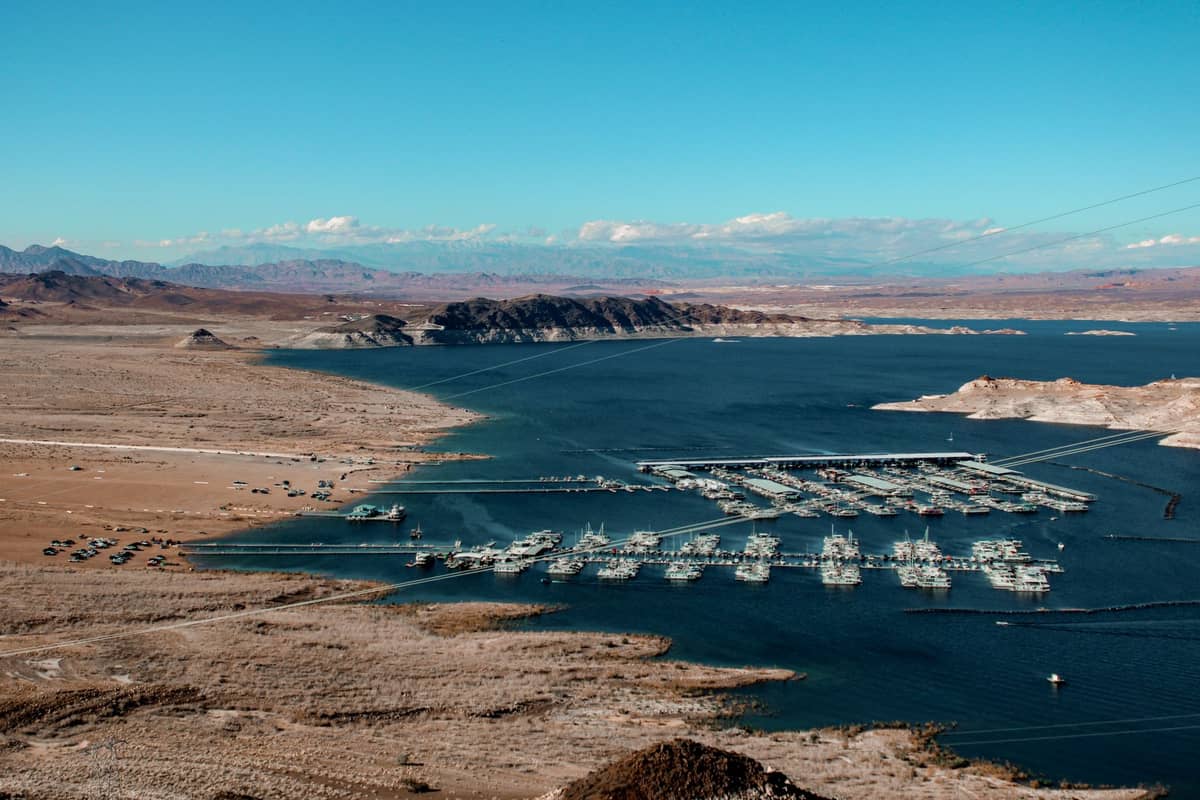
The scale is easy to underestimate from the Las Vegas end. Most visitors drive out expecting a reservoir and find instead something closer to a national park experience: stratified canyon walls in cream, rust, and charcoal; desert bighorn sheep picking across basalt ridges; and water the color of turquoise glass meeting bone-dry mountains. The contrast is the whole point.
It is also worth noting honestly: Lake Mead has faced well-documented water level declines due to prolonged drought and increased regional demand. The famous white 'bathtub ring' of calcium carbonate on the canyon walls marks decades of fluctuating water levels, and at times significant marina infrastructure sits well above the current shoreline. This does not diminish the landscape — in some ways it makes it more dramatic — but it is part of the reality of visiting. For context on the broader environment around Las Vegas, see our guide to hiking near Las Vegas, which covers several areas shaped by the same Mojave Desert forces.
ℹ️ Good to know
The Alan Bible Visitor Center near Boulder Beach is generally open 8:30–16:30 daily, except Thanksgiving, Christmas, and New Year's Day. Stop here first to pick up a park map, check current water levels, and find out which boat launches and beaches are operational — conditions shift seasonally.
How the Park Changes by Time of Day
Early morning, from around 6:00 to 9:00, is when the park works best for almost every activity. The light is low and golden, raking across the canyon walls to produce colors that midday sun washes out entirely. The air is cool enough that hiking feels manageable, and wildlife, particularly birds and the occasional desert bighorn, is active near the water's edge. Parking areas at Boulder Beach and the Lakeshore Road overlooks are nearly empty.
By mid-morning, the desert asserts itself. In summer months, temperatures at lake level can exceed 110°F (43°C) by early afternoon, making prolonged outdoor activity genuinely dangerous without water and shade. The lake surface picks up a strong glare, and the crowds at accessible beaches peak between 10:00 and 14:00 on weekends from Memorial Day through Labor Day. If you are visiting between June and September, plan to be back in your car or on the water (where there is often a breeze) before noon.
Late afternoon brings a second window: from around 16:00 until dusk, the heat eases slightly, the light returns to something warm and directional, and the lake often settles to a near-glassy calm. The Lakeshore Scenic Drive south from the visitor center is worth doing at this hour specifically for the shifting colors on the rock faces above the water.
Tickets & tours
Hand-picked options from our booking partner. Prices are indicative; availability and final rates are confirmed when you complete your booking.
Golden Eagle West Rim helicopter tour with Hoover Dam and Lake Mead
From 401 €Instant confirmationFree cancellationLake Mead Self-Guided Driving Audio Tour
From 13 €Instant confirmationFree cancellationHoover Dam and Lake Mead Self-Guided Driving Audio Tour
From 15 €Instant confirmationFree cancellationValley of Fire and Lake Mead full day sidecar tour from Las Vegas
From 960 €Instant confirmationFree cancellation
Getting to Lake Mead from Las Vegas
A personal vehicle is effectively required. The park has no regular public transit connections from the Las Vegas Strip or downtown, and the distances involved make rideshare impractical for most visitors. From the Strip, the most straightforward route to the central lake area and visitor center runs south on I-515, then east on Lake Mead Parkway (NV-564) through Henderson toward Boulder Beach. The drive takes roughly 35–40 minutes from mid-Strip under normal conditions.
For the northern lake area and Callville Bay Marina, follow Lake Mead Boulevard east from central Las Vegas or North Las Vegas directly to the Northshore Road entrance. This route takes closer to 40 minutes but opens up the quieter, less-visited northeastern shoreline. If you are combining the visit with a stop at Hoover Dam, stay on US-93 south from Henderson: the dam sits at the southeastern edge of Lake Mead and the two sites pair naturally on a single day.
The Hoover Dam is located at the lake's southern end, just outside Boulder City, and most visitors who drive out to Lake Mead pass its access road on the way. Combining both in one trip is efficient and gives you geological and engineering context for what you are looking at on the lake.
⚠️ What to skip
Summer heat at Lake Mead is serious desert heat, not Strip-hotel-pool heat. The National Park Service recommends carrying at least one liter of water per hour of outdoor activity. There is limited shade at most viewpoints and beaches. If you are visiting between June and September, make early morning arrival non-negotiable.
What to Do Here: A Practical Walkthrough
The Lakeshore Scenic Drive is the baseline experience for first-time visitors. Starting near the visitor center and running south along the western shore, it passes several pullouts and overlooks where the full scale of the lake becomes apparent. The road surface is paved and accessible by standard passenger car. Allow 45 minutes to an hour if you stop at three or four viewpoints.
Boulder Beach is the most accessible swimming area, located about a mile from the visitor center. The beach itself is sandy, the water is calm, and there are basic facilities including restrooms. The water temperature peaks in August and remains swimmable through September. No lifeguards are on duty, and the park service advises keeping children within arm's reach near the water at all times.
Hiking options range from short interpretive walks near the visitor center to multi-mile backcountry routes along canyon walls above the lake. The Historic Railroad Trail, which runs from the Alan Bible Visitor Center toward Hoover Dam through a series of tunnels, is particularly well-suited to early morning visits: the tunnels offer shade and the views back across the lake from the ridge are some of the most photogenic in the park.
Boating and kayaking give you access to coves and shoreline that are unreachable by road. Several marinas — including Boulder Boat Harbor near the main visitor area and Callville Bay to the north — offer rentals and launch facilities, though availability and hours shift seasonally. For anyone building a broader outdoor itinerary in the region, the day trips from Las Vegas guide outlines how Lake Mead fits alongside other destinations like Valley of Fire and Red Rock Canyon.
Photography at Lake Mead
The photographic opportunities here are genuinely strong, but they are almost entirely dependent on light timing. The midday sun at this latitude and elevation turns the lake surface into a white glare and flattens the banded canyon walls into a uniform beige. Arrive before 9:00 or return after 16:30 for images with depth and color.
The calcium-white bathtub ring is, paradoxically, one of the most striking compositional elements in the park: it provides a sharp horizontal line against the dark water and the darker canyon walls above, and it tells an environmental story that photographs communicate clearly without a caption. The Lakeshore Road overlooks facing west give you this composition with the sun at your back in the morning.
For a comparison of the region's most dramatic scenic viewpoints, the guide to the best views near Las Vegas is worth reviewing before you plan your route. Lake Mead and the Valley of Fire State Park — about an hour from the lake's northern shore — are frequently paired for a full day of landscape photography.
Who Should Skip This and Who Will Love It
Lake Mead National Recreation Area is not an attraction in the Strip sense of the word. There is no ticketed experience, no air conditioning, no show at a fixed time. Visitors who need their outdoor activities structured and delivered will likely prefer Red Rock Canyon's visitor center and paved scenic loop, which offers a more curated experience on the western edge of Las Vegas.
People who find desaturated, austere landscapes unrewarding should also temper their expectations. In certain lighting conditions and at low water levels, sections of the lake can look stark rather than scenic. If you are expecting a mountain lake with green shoreline and cool air, this is not that place.
On the other hand, if you want to feel genuinely far from the casino floor within 30 minutes of your hotel, Lake Mead delivers that with no exaggeration. The park is also one of the legitimate low-cost escapes from Las Vegas — the $25 vehicle fee covers everyone in the car for a week, making it one of the better-value day trips in the region. Families with older children who can hike or swim independently, outdoor photographers, boaters, birders, and anyone with an interest in Mojave Desert ecology will find it worth the drive.
💡 Local tip
The $25 vehicle pass is valid for 7 consecutive days, so if you plan to visit more than once during your trip — perhaps once for the scenic drive and once for a morning kayak — you only pay once. America the Beautiful annual passes (available for $80 for US residents and valid at most U.S. national parks and federal recreation areas) are accepted and make economic sense if you visit more than three or four federal sites per year.
Insider Tips
- Northshore Road, running along the lake's northeastern shore, sees a fraction of the traffic of Lakeshore Drive on the western side. The red volcanic rock formations along this route, particularly near Redstone Picnic Area, are among the most photographically interesting in the park and are rarely crowded even on summer weekends.
- The Historic Railroad Trail from the visitor center passes through five tunnels originally bored for the construction of Hoover Dam in the 1930s. The tunnels are cool, dark, and genuinely atmospheric — and this is one of the few shaded sections of trail in the main park area, which makes it more bearable on warm mornings.
- Pay your entrance fee online before arrival if possible. The entrance stations can back up on holiday weekends, and having a digital pass reduces your wait at the booth.
- The bathtub ring is most visible and most dramatically lit in the early morning when the sun is low and coming from the east. If you are driving out from Las Vegas for sunrise photography, the Lakeshore Road overlooks face west, so you will have the light behind you and the ring in front of you — a clean, ready-made composition.
- Cell service drops to nothing in many sections of the park once you leave the main visitor area. Download offline maps via Google Maps or Maps.me before you leave Las Vegas, and note which roads require a high-clearance vehicle if you plan to explore beyond the paved routes.
Who Is Lake Mead National Recreation Area For?
- Day-trippers who want genuine desert wilderness within 30 minutes of the Strip
- Boaters and kayakers seeking flat-water access with dramatic canyon scenery
- Landscape photographers working the early morning or late afternoon light windows
- Families with active older children looking for swimming and hiking outside the casino environment
- Visitors combining the lake with a Hoover Dam stop on a single efficient loop
Nearby Attractions
Combine your visit with:
- Antelope Canyon
Antelope Canyon is a series of sculpted slot canyons carved into Navajo Sandstone near Page, Arizona, and one of the most visually striking natural formations in the American Southwest. Accessible only on guided tours led by licensed Navajo guides, it requires advance planning but rewards visitors with an experience unlike anywhere else within day-trip range of Las Vegas.
- Area 51 & Extraterrestrial Highway
Nevada State Route 375, officially designated the Extraterrestrial Highway in 1996, is a 98-mile desert drive skirting the perimeter of the most famous restricted military installation on Earth. It costs nothing to drive, demands serious preparation, and delivers a genuinely remote American landscape that few Strip visitors ever see.
- AREA15 Immersive Entertainment Complex
AREA15 is a 35-acre immersive entertainment and events district just off the Las Vegas Strip, packed with art installations, bizarre interactive experiences, bars, and ticketed attractions like Omega Mart. Daytime entry is free, but the real substance costs extra — and it's worth understanding the pass tiers before you arrive.
- Death Valley National Park
Just two hours from the Las Vegas Strip, Death Valley National Park is the hottest, driest, and lowest national park in the United States. From the salt flats of Badwater Basin to the sculpted dunes of Mesquite Flat, it rewards early risers and well-prepared visitors with landscapes found nowhere else on Earth.