Las Vegas Formula 1 Grand Prix: The Complete Guide to Race Weekend
The Las Vegas Grand Prix is unlike any other race on the F1 calendar: a nighttime street circuit cutting through the neon heart of the Strip. This guide covers tickets, pricing, the circuit layout, what to expect on the ground, and how to plan your visit around one of motorsport's most spectacular events.
Plan and book this trip
Tools from our partner Travelpayouts help you compare flights and hotels. If you book through them, we may earn a commission at no extra cost to you.
Flights
Hotels map
TL;DR
- The Las Vegas Formula 1 Grand Prix runs on a 3.8-mile street circuit along the Strip each November, with the 2026 race scheduled for November 20-22.
- General admission tickets have started at around $50 per day (or $425 for three days), but premium hospitality packages can reach $12,500. Buy early — pre-sales sell out fast.
- The race runs Thursday to Saturday night, not on a traditional Sunday. Plan hotel bookings well in advance — see where to stay in Las Vegas for the best options near the circuit.
- November nights on the Strip get genuinely cold (low 40s°F / around 5°C). Dress in layers — this catches most first-timers off guard. Dress in layers — this catches most first-timers off guard.
- Getting around during race weekend requires planning. Road closures around the circuit are extensive. Factor in significant walking and allow extra time for everything.
What Makes the Las Vegas Grand Prix Different
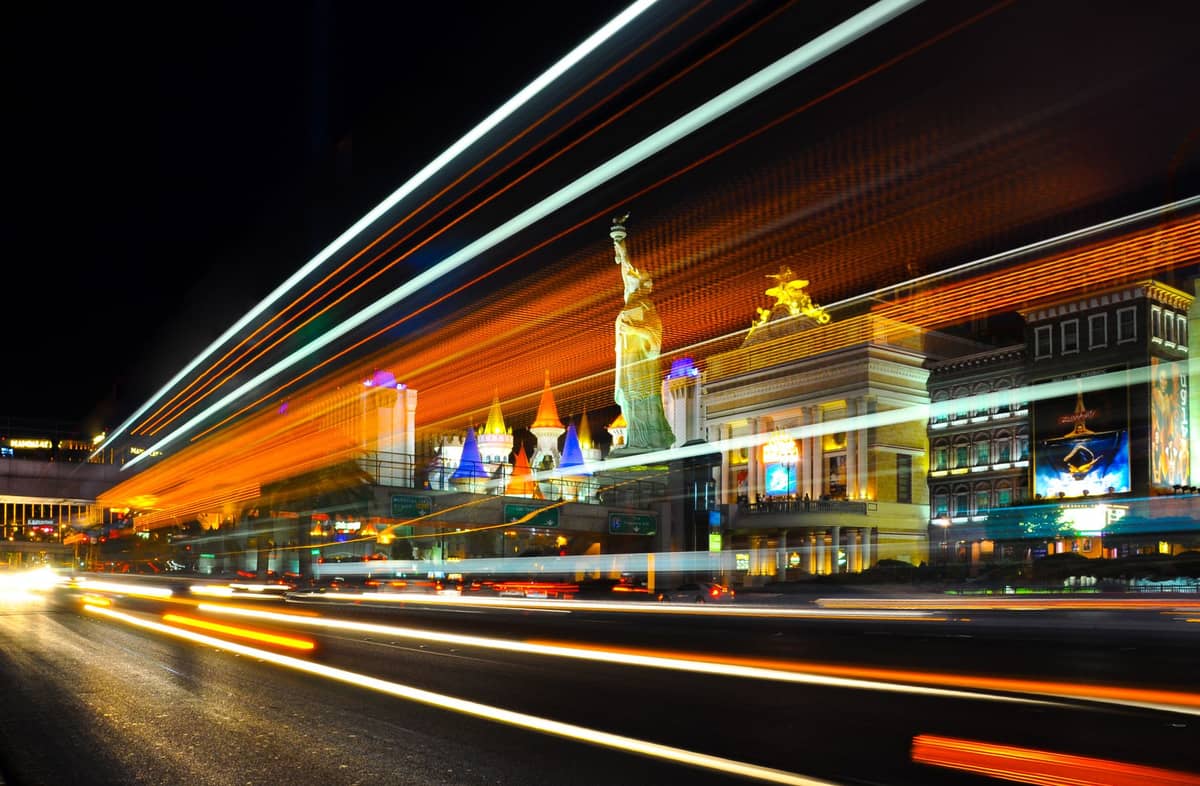
The Las Vegas Grand Prix is one of only a handful of races on the Formula 1 calendar that is genuinely a spectacle beyond the racing itself. Held entirely at night, the circuit uses Las Vegas Boulevard South as its signature stretch. The visual of F1 cars blasting past casinos, hotels, and millions of watts of neon is something that circuit renders in TV coverage cannot fully capture.
This is not a road course thrown together overnight. The Las Vegas Strip Circuit is a purpose-built FIA-approved configuration measuring 3.8 miles (6,201 meters) with 17 turns and two DRS zones. The circuit infrastructure represents a substantial long-term investment, signaling that the Las Vegas Grand Prix is a fixture, not an experiment. For context on how the Strip looks during normal times, the Las Vegas Strip walking guide gives a good orientation to the area the circuit covers.
ℹ️ Good to know
The race follows a Thursday-Saturday format, not the traditional Sunday. Practice sessions fall on Thursday evening (local time), qualifying on Friday night, and the race on Saturday night. If you can only attend one session, qualifying is often the best value — cars are at their absolute limit and the session typically wraps before midnight.
The Circuit: Layout, Key Corners, and What to Watch For
The Las Vegas Strip Circuit The Las Vegas Strip Circuit starts and finishes near Grand Prix Plaza, located between Koval Lane and the Strip. From there, cars run north along Las Vegas Boulevard before cutting west through a series of tight, technical sections and then sweeping back south via Harmon Avenue. The longest straight — the one that produces the eye-catching top-speed runs — runs along the Strip itself. This is where DRS is active and where overtaking is most likely. From there, cars run north along Las Vegas Boulevard before cutting west through a series of tight, technical sections and then sweeping back south via Harmon Avenue. The longest straight — the one that produces the eye-catching top-speed runs — runs along the Strip itself. This is where DRS is active and where overtaking is most likely.
- Main Straight (Las Vegas Blvd) The signature stretch. Cars reach around 210-215 mph. Grandstands here offer the most dramatic speed sensation but can be priciest.
- Turn 1 Braking Zone A hard stop from high speed into the first corner. One of the primary overtaking opportunities on lap one and during the race.
- Technical Middle Sector A sequence of slower, tighter corners tests car setup balance. Less dramatic visually but where tire strategies play out.
- Grand Prix Plaza The purpose-built fan hub at the start/finish area. Contains fan activations, food and beverage, and the best sightlines for pit lane activity.
One thing worth knowing: because the circuit is on public streets, the track surface is smoother than most permanent circuits but different from traditional street circuits like Monaco. Teams in previous years have noted that the asphalt — designed for road traffic — can produce unusual tire behavior, particularly in cool November conditions. The combination of low temperatures and a slick surface makes tire warm-up a significant strategic variable.
Tickets: What They Cost and How to Buy Them
Las Vegas Grand Prix tickets span one of the widest price ranges in all of motorsport. At the accessible end, Las Vegas Grand Prix tickets span one of the widest price ranges in all of motorsport. At the accessible end, single-day general admission tickets have been priced around $50-$150 plus taxes and fees for some entry-level options, rising to $425 for a three-day general admission pass. These include access to fan zones, food and beverage activations, and general viewing areas. They do not include reserved grandstand seats. These include access to fan zones, food and beverage activations, and general viewing areas. They do not include reserved grandstand seats.
Premium and hospitality packages are where pricing becomes serious. Suites, club access, and trackside hospitality have been quoted up to $12,500 per person for the full weekend. These typically include catered food and drinks, premium viewing areas, and paddock or pit lane access at certain tiers. Premium and hospitality packages are where pricing becomes serious. Suites, club access, and trackside hospitality have been quoted up to $12,500 per person for the full weekend. These typically include catered food and drinks, premium viewing areas, and paddock or pit lane access at certain tiers. For most fans, the sweet spot sits somewhere in the $400-$1,200 range for a multi-day reserved grandstand experience with some hospitality included.
⚠️ What to skip
Do not count on buying Las Vegas Grand Prix tickets close to the event at face value. Structured pre-sales absorb significant inventory before general sale. Third-party resale prices typically run 50-150% above face value by race week. Book through the official site at f1lasvegasgp.com as early as possible. Third-party resale prices typically run 50-150% above face value by race week. Book through the official site at f1lasvegasgp.com as early as possible.
- Single-day General Admission: approximately $50-$150 plus fees (limited options at lower end)
- Three-day General Admission: approximately $425, may include food and beverage credits on some packages
- Reserved grandstand (single day): pricing varies significantly by location; Strip-side seats command a premium
- Premium and hospitality packages: $382-$12,500+ per person for full-weekend access
- Watch for American Express and Nevada resident pre-sale windows — these open before general sale
Planning Your Race Weekend: Logistics and Timing
The 2026 Las Vegas Grand Prix is scheduled for November 19-21, with Practice 1 and 2 on Thursday the 19th, Practice 3 and Qualifying on Friday the 20th, and the race on Saturday the 21st. All sessions run in the evening local time (Pacific Standard Time, UTC-8 in November). This schedule is designed for global TV audiences — which means the race itself typically concludes well after midnight Las Vegas time. All sessions run in the evening local time (Pacific Standard Time, UTC-8 in November). This schedule is designed for global TV audiences — which means the race itself typically concludes well after midnight Las Vegas time.
Hotels on and near the Strip raise rates dramatically during race weekend, often 3-5 times normal November prices. Book accommodation as early as possible — ideally when tickets go on sale, or before. Properties directly on the Strip are most convenient but most expensive. For a broader picture of lodging strategy, the Las Vegas hotel guide breaks down the options by location and budget.
Getting around during race weekend is the biggest logistical challenge. The circuit uses large sections of the Strip, which means road closures are extensive and traffic management is aggressive. The track is closed to local traffic for several hours before and after each session. If your hotel is within the circuit footprint or adjacent to it, expect significant detours even for short trips. Plan all restaurant reservations, show tickets, and any activities around session times.
✨ Pro tip
If you are not staying directly on the Strip, rideshare drop-off zones shift during race weekend and change from night to night. Check the official circuit website closer to the event for designated fan arrival routes and rideshare pickup points. Walking is often faster than any vehicle once the crowd peaks.
Flying into Harry Reid International Airport (IATA: LAS), located about 3–5 miles from mid-Strip, is straightforward. Off-peak rideshares typically run $12-25 to Strip hotels; surge pricing during race weekend arrival peaks can push that to $50 or more. For full transport options, the guide to getting around Las Vegas covers buses, rideshare, and monorail in detail.
What to Wear, Eat, and Do Beyond the Race
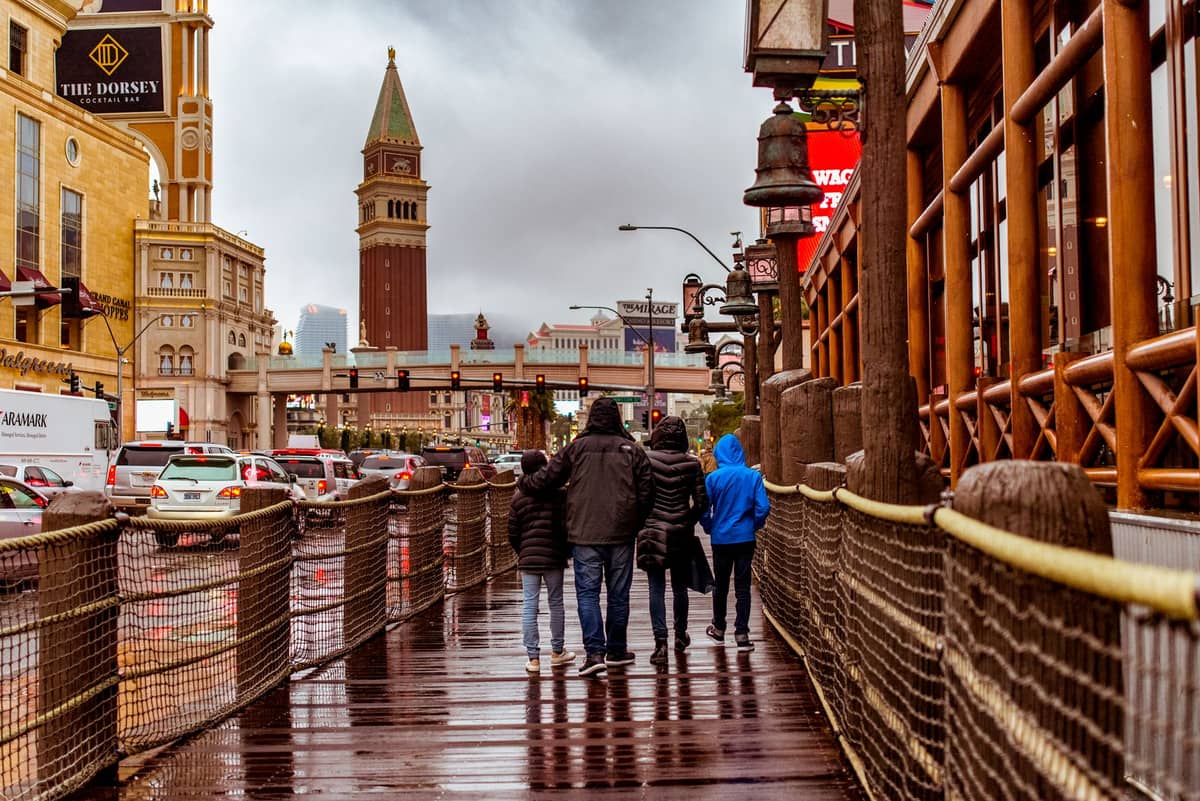
The single biggest comfort mistake first-time Grand Prix attendees make in Las Vegas is underdressing. November nights in the Mojave Desert are genuinely cold. Overnight lows in late November regularly sit around 40-45°F (4-7°C), and when you factor in standing in open grandstands for two-plus hours, wind chill matters. Bring a proper jacket, layer underneath, and consider hand warmers. The race does not pause for crowd comfort. Bring a proper jacket, layer underneath, and consider hand warmers. The race does not pause for crowd comfort.
Beyond the racing, Las Vegas race weekend is also one of the city's biggest event weekends of the year. Concerts, celebrity appearances, and hotel parties fill the calendar around sessions. If you want to eat well without the race-week price surge, Las Vegas celebrity chef restaurants are worth booking weeks in advance. Likewise, shows that are not directly tied to F1 programming often sell out during race week — check Las Vegas shows well ahead of your trip.
Race weekend does not have to be wall-to-wall F1. November is one of the best months to visit Las Vegas climatically during daylight hours — cool enough for outdoor activities, with clear desert skies. Consider a day trip to Red Rock Canyon on a non-session day, or spend a morning at the Neon Museum before the evening session. The circuit itself is not accessible to fans during off hours, but Grand Prix Plaza usually has fan activations throughout the weekend.
Common Misconceptions and Honest Drawbacks
The Las Vegas Grand Prix has attracted some criticism alongside its undeniable spectacle. Some longtime F1 fans find the event too corporate and too expensive relative to the actual racing experience. The circuit, while fast, does not produce an abundance of wheel-to-wheel action in the midfield — top-speed straights favor DRS passes rather than technical overtaking. If pure racing drama is your priority, circuits like Austin or Montreal may deliver more satisfying action. If you want the full Las Vegas experience wrapped around Formula 1, this race is in a category of its own.
A few specific things to be realistic about: general admission zones offer standing-only views, and sightlines are not always clear. The crowd is large, waits for food and drink can be substantial, and cell service in peak crowd moments is often degraded. Bring portable battery packs for your phone. Also worth knowing: the race finishing well after midnight means public transport and rideshare are overwhelmed at the same moment tens of thousands of fans are trying to leave. Factor in at least 60-90 minutes to get back to your hotel after the race ends.
💡 Local tip
Ear protection is worth bringing. F1 cars are significantly louder in person than on television, especially in the grandstand areas close to the main straight. Foam earplugs are fine; purpose-built motorsport ear defenders are more comfortable for a full session and protect your hearing without blocking ambient sound entirely.
FAQ
When is the Las Vegas Grand Prix 2026?
The 2026 Las Vegas Formula 1 Grand Prix is scheduled for November 19-21, 2026. Practice sessions run on Thursday November 19, Practice 3 and Qualifying on Friday November 20, and the race on Saturday November 21. All sessions are held at night, local Pacific Standard Time.
How much do Las Vegas Grand Prix tickets cost?
Pricing ranges widely. Pricing ranges widely. Single-day general admission has started around $50-$150 plus taxes and fees, with three-day general admission around $425. Reserved grandstand and hospitality packages range from several hundred dollars to over $12,500 per person for full-weekend premium experiences. Prices vary by year, so check the official site at f1lasvegasgp.com for current pricing. Reserved grandstand and hospitality packages range from several hundred dollars to over $12,500 per person for full-weekend premium experiences. Prices vary by year, so check the official site at f1lasvegasgp.com for current pricing.
Where is the Las Vegas Grand Prix held?
The race takes place on the Las Vegas Strip Circuit, a 3.8-mile (6,201-meter) FIA-approved street circuit that runs through portions of Las Vegas Boulevard South and surrounding streets. The start/finish area is near Grand Prix Plaza, near the center of the Strip.
How cold does it get at the Las Vegas Grand Prix?
Late November nights in Las Vegas are significantly colder than the city's reputation suggests. Overnight lows typically fall between 40-45°F (4-7°C), and sessions run late into the evening. Layers are essential — a warm jacket, base layers, and optionally hand warmers will make grandstand time much more comfortable.
Can I get Las Vegas Grand Prix tickets last minute?
It is not reliable to count on last-minute face-value tickets. Demand is high, pre-sales absorb substantial inventory, and third-party resale prices tend to be significantly above face value as race week approaches. It is not reliable to count on last-minute face-value tickets. Demand is high, pre-sales absorb substantial inventory, and third-party resale prices tend to be significantly above face value as race week approaches. The safest approach is to buy directly from f1lasvegasgp.com as early as possible.