Where to Stay in Las Vegas: Best Hotels & Areas Guide
Choosing where to stay in Las Vegas is one of the most consequential decisions of your trip. Location dictates what you can walk to, how much you pay in resort fees, and whether you spend half your vacation in a taxi. This guide cuts through the noise with area-by-area breakdowns, real pricing, and the fee math most booking sites hide.
Plan and book this trip
Tools from our partner Travelpayouts help you compare flights and hotels. If you book through them, we may earn a commission at no extra cost to you.
Flights
Hotels map
TL;DR
- Las Vegas hotels on the Strip average around $200/night for the room alone — resort fees of $35–$60 plus tax are added on top, pushing real nightly costs to $260–$290+ at most major properties.
- The Strip (technically in the unincorporated community of Paradise) puts you closest to the big casino resorts, shows, and attractions, but midweek rates can be 30–50% cheaper than weekend prices.
- Downtown Las Vegas (Fremont Street area) runs cheaper on average with lower resort fees ($25–$40), and is a smart base if the Fremont Street Experience is your priority.
- Off-Strip hotels at locals' casinos — Boyd Gaming and Station Casinos properties — often have no resort fees and free parking, making the true nightly cost far lower than it looks.
- Always calculate total cost: base rate + resort fee + parking + tax before comparing hotels. The cheapest headline rate rarely wins on final bill.
Understanding the Las Vegas Hotel Landscape
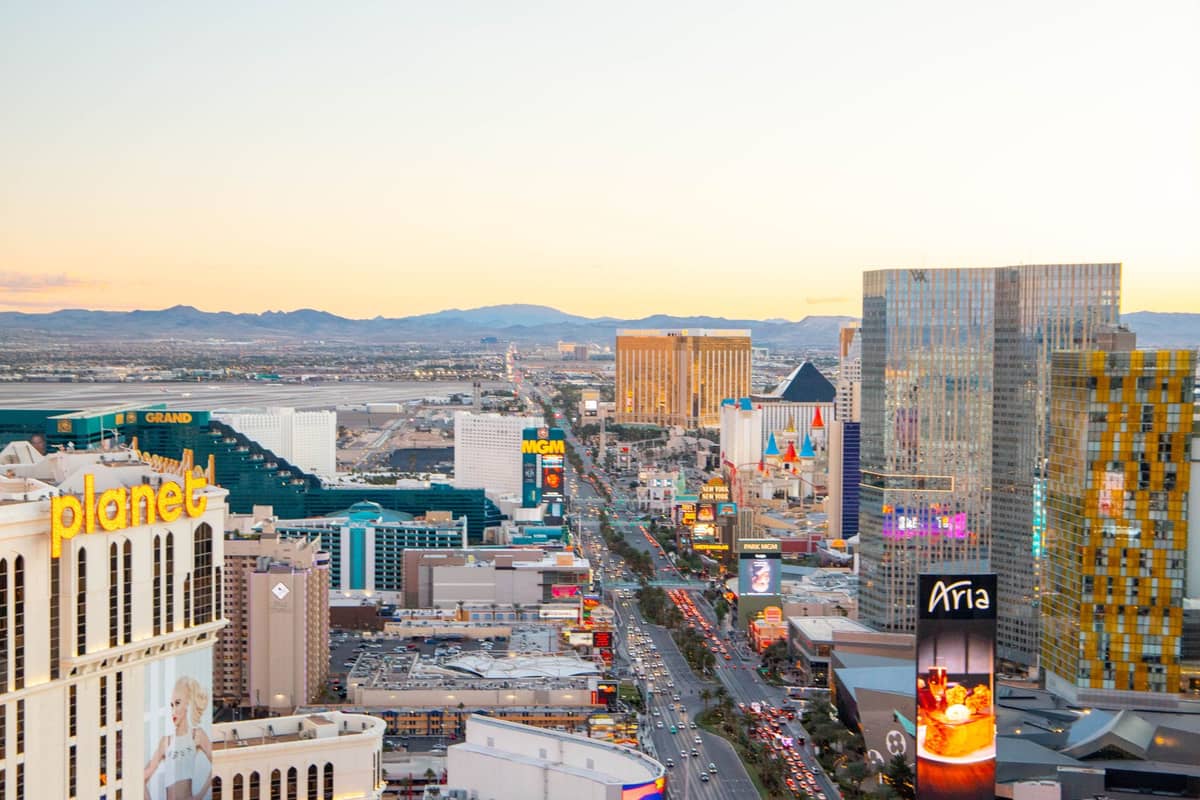
Las Vegas is not a single neighborhood with hotels scattered through it. It is a collection of distinct zones, each with its own pricing logic, atmosphere, and trade-offs. The famous Strip — officially Las Vegas Boulevard South — sits mostly within the unincorporated community of Paradise, not the City of Las Vegas proper. That distinction is mostly trivia, but it helps explain why 'downtown' and 'the Strip' feel like completely different cities, because in a technical sense, they are.
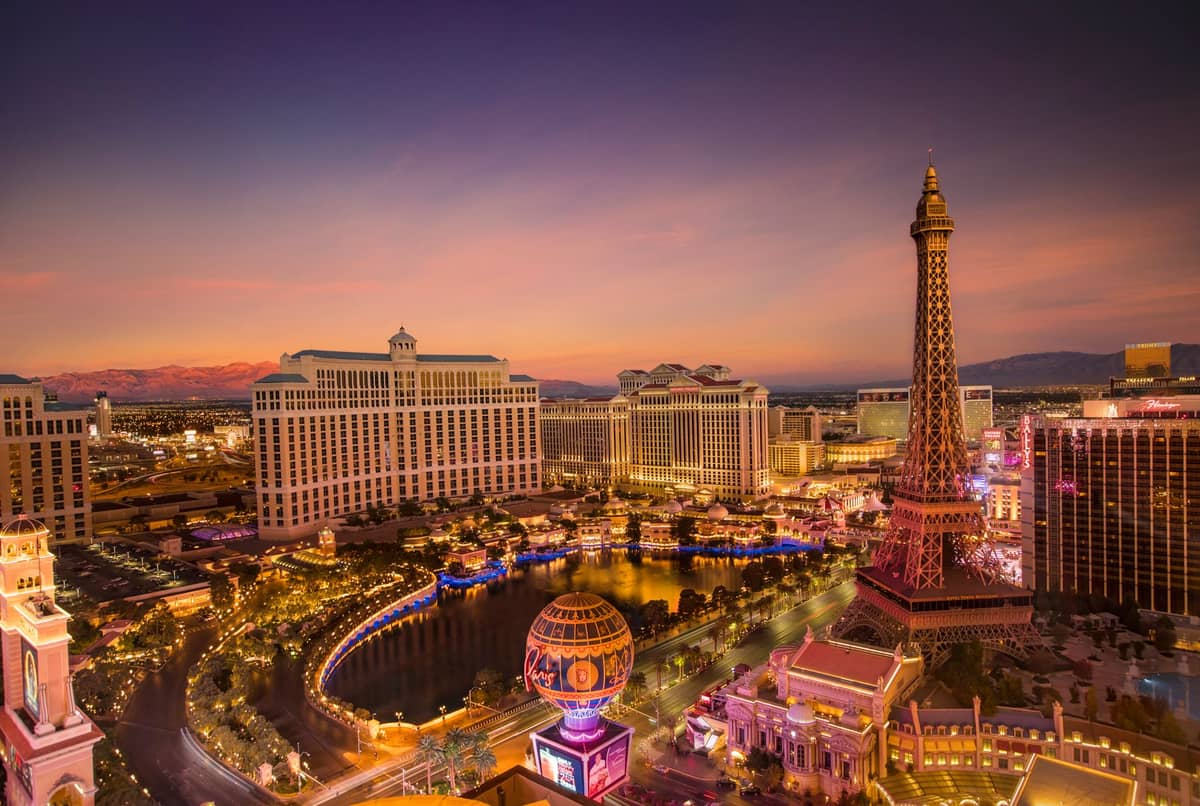
The Strip runs roughly 4.2 miles from the Welcome to Las Vegas sign near Mandalay Bay in the south to the Stratosphere (now The Strat) in the north. Walk the full length and you will cover around 8,500–9,000 steps each way. Most visitors cluster in the central and south Strip around Bellagio, Caesars, and the Venetian. If you are planning to walk the Strip, where you stay within it matters — the north end near The Strat is a longer haul from the action.
⚠️ What to skip
Resort fees are not optional and are rarely included in advertised rates. On the Strip, expect $35–$60 plus tax per night added at checkout. At a $199/night room with a $50 resort fee and 13% hotel tax, your real nightly cost is closer to $282. Always check the total before booking.
The Strip: Highest Energy, Highest Cost
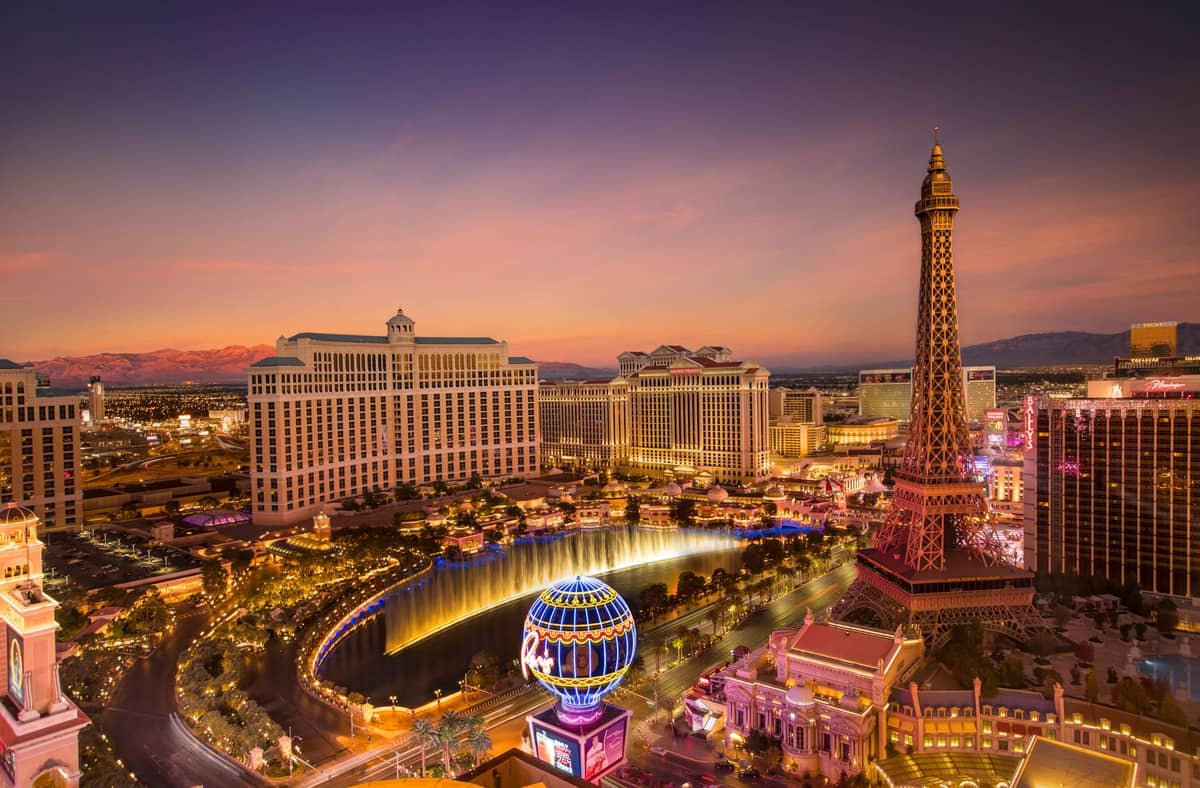
Staying on the Strip makes sense if you want to walk between casinos, attend headline shows, or simply be in the center of the action without organizing transport every night. The average daily rate for Strip hotels in 2025 was roughly $210–$214 for standard rooms — before fees. Major operators including MGM Resorts, Caesars Entertainment, Wynn, and the Venetian/Palazzo charge resort fees in the $45–$55 range before tax, with some luxury-tier properties reaching around $62 after tax.
The Strip is not homogeneous. The south Strip (Mandalay Bay, Luxor, MGM Grand) is calmer and closer to Harry Reid International Airport, about 3–5 miles away with typical rideshare fares of $12–$25 off-peak. The central Strip (Bellagio, Caesars, Flamingo, Paris, Cosmopolitan) is the densest and most walkable section. The north Strip (Encore, Wynn, Resorts World, The Strat) gets quieter quickly past Encore. If nightlife and the Las Vegas club scene are your focus, the central Strip puts you closest to the major venues.
- Budget Strip options ($100–$160/night before fees) Luxor, Excalibur, Circus Circus, and Flamingo tend to price lowest on the Strip. All still charge resort fees ($30–$45 range), and rooms can be basic. These work for visitors who want the Strip address but plan to spend most time elsewhere.
- Mid-range Strip ($160–$260/night before fees) Paris Las Vegas, Harrah's, Bally's (now Horseshoe), LINQ, and MGM Grand occupy this tier. You get solid amenities, central location, and recognizable brands without paying luxury premiums.
- Luxury Strip ($260–$500+/night before fees) Bellagio, Wynn, Encore, The Venetian, Palazzo, Resorts World (top suites), and Aria represent the top tier. Resort fees here run $50–$62 after tax, but rooms, pools, and service quality justify the premium for many travelers.
✨ Pro tip
Midweek stays (Sunday through Thursday) on the Strip typically run 30–50% cheaper than Friday and Saturday nights. If your schedule allows arriving Sunday or Monday, you can often book a $280/night hotel for $160–$190 at the same property. Major conventions, UFC events, and concerts can spike prices on any night of the week, so check the events calendar before setting your dates.
Downtown Las Vegas: Lower Fees, Older Character
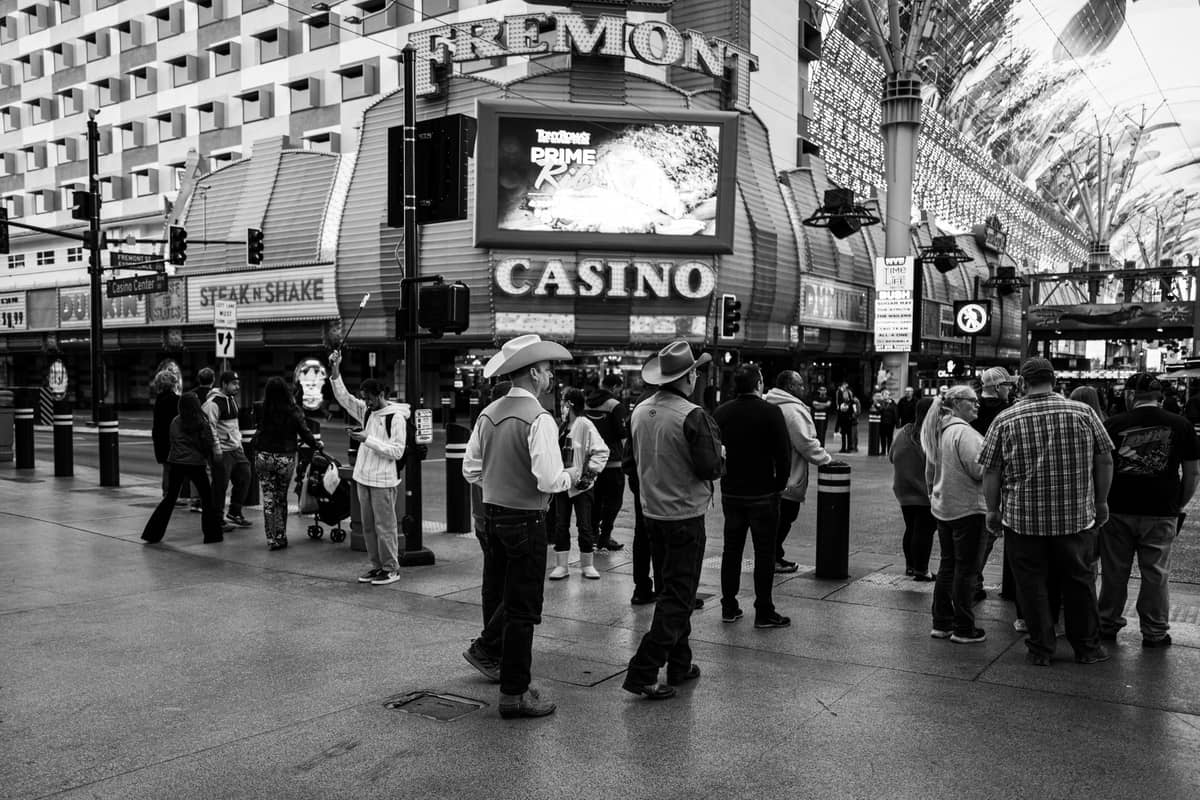
Downtown Las Vegas around Fremont Street is the original gambling district, and it still holds up well for budget-conscious visitors. The Downtown Las Vegas hotel scene centers on properties like the Golden Nugget (the clear quality leader here), Circa Resort and Casino, the D Las Vegas, and Binion's. Resort fees in this area generally run $25–$40, and parking is more likely to be free or validated.
The Golden Nugget is genuinely excellent — a full-service resort with a pool featuring a shark tank slide and competitive room rates compared to Strip equivalents. Circa Resort Casino (adults-only, opened 2020) brought a new standard to downtown with a massive stadium pool and sports betting arena. Both are worth considering if you want quality without Strip pricing.
The honest downside: downtown is about 5–6 miles from the center of the Strip, and while you can take the Deuce bus along Las Vegas Boulevard for around $6–$8, you will feel the distance. If your goal is to spend every evening hopping between Strip casinos, staying downtown creates friction. If you prefer the grittier, more local atmosphere of Fremont Street and plan most activities in that zone, it is the smarter financial choice.
Off-Strip Hotels: The Fee-Free Option Most Visitors Overlook
Off-Strip and locals' casino hotels are the single most underrated category in Las Vegas accommodation. Boyd Gaming properties — Sam's Town, The Orleans, Gold Coast, Suncoast, and Aliante — and Station Casinos locations including Palace Station, Santa Fe Station, and Sunset Station routinely offer free self-parking and either reduced resort fees or lower ones than most Strip properties. A room that looks cheaper at $89/night off-Strip often beats a $149/night Strip room with a $50 resort fee and $20 daily parking charge.
The practical consideration is transport. Without a car, getting from an off-Strip property to the Strip or downtown requires a rideshare ($10–$18 each way) or the RTC bus network. For visitors renting a car, this is almost a non-issue — parking is free, and driving the Strip or heading toward day trips from Las Vegas to Red Rock Canyon or Valley of Fire takes roughly the same time regardless of whether you stay on or off the Strip.
💡 Local tip
If you are renting a car, an off-Strip locals' casino hotel often wins on total cost. Combine free parking, lower (or zero) resort fees, and quieter surroundings, and you can save $80–$120 per night over a comparable Strip stay. Just confirm the fee structure directly with the property before booking — it changes.
Getting to Your Hotel: Airport to Las Vegas

Harry Reid International Airport (IATA: LAS) sits at the south end of the Strip, roughly 3–5 miles from most central Strip hotels. The drive takes 10–20 minutes in normal traffic, though Las Vegas traffic around major events or Friday afternoons can extend that considerably. This is one of the most conveniently located major airports in the United States relative to a city's main tourist district.
- Rideshare (Uber/Lyft) Off-peak: $12–$25 to central Strip. During events or surge pricing: $30–$50+. Pick-up areas are clearly signed at both terminals. Most practical option for solo travelers and small groups.
- Taxi Metered fares typically $15–$35 to the Strip depending on destination and traffic, plus tip. Slightly more predictable than surge-priced rideshare but rarely cheaper.
- RTC Bus (Red Line / Deuce) Around $2–$6 fare. Journey time 30–60 minutes. Fine if you are not in a rush and traveling light. The Deuce runs 24 hours along Las Vegas Boulevard.
- Hotel shuttles Select properties offer complimentary or low-cost ($8–$9) shuttles. Check directly with your hotel before arrival — many Strip properties have discontinued this service.
- Pre-booked sedan / car service Fixed-rate sedans run approximately $35–$55 to the Strip. Black car services can reach $150 all-in. Worth it for groups or when you want a guaranteed price without surge risk.
For more detail on navigating the city once you have checked in, the getting around Las Vegas guide covers the monorail, rideshare strategy, and walking routes in depth.
Choosing by Trip Type: Quick Recommendations
Your reason for visiting should heavily influence where you stay. A bachelor or bachelorette group benefits from being on the central Strip within walking distance of clubs. Couples focused on fine dining and shows do well at Bellagio, Wynn, or the Venetian. Families — Las Vegas is more family-friendly than its reputation suggests — should look at the south Strip where Mandalay Bay's beach and the proximity to the Strip's larger resort pools work in their favor. See the Las Vegas with kids guide for specifics.
Budget travelers doing Las Vegas right should look at downtown or off-Strip locals' casinos, combine that with the Las Vegas on a budget guide, and midweek timing. Luxury travelers wanting spa access, Michelin-level dining, and premium pool experiences will find Wynn/Encore, Bellagio, and the Venetian competitive with any resort in the world at their price point. For a full luxury Las Vegas breakdown, there is a dedicated guide with specific property comparisons.
- First-time visitors wanting the classic experience: central Strip, any mid-range property between Flamingo and Venetian
- Budget-conscious solo or duo: Downtown Golden Nugget or Circa mid-week, or an off-Strip Boyd/Station property with a car
- Nightlife focus: Cosmopolitan, Wynn, or Resorts World for proximity to the best clubs
- Couples and romance: Bellagio or Venetian for ambiance, pool quality, and dining without needing to leave the resort
- Families: Mandalay Bay (beach access), Excalibur (budget-friendly, kids' activities nearby), or MGM Grand
- Sports betting and events: Circa (downtown) has the largest sportsbook in the world; Westgate near the convention center works for trade show visitors
If the Las Vegas Strip is your main draw and you want to plan your time efficiently, the 3 days in Las Vegas itinerary pairs well with a central Strip hotel base and walks you through how to structure your time without doubling back unnecessarily.
FAQ
What are resort fees in Las Vegas and can I avoid them?
Resort fees are mandatory daily charges added by most Las Vegas hotels on top of the room rate. On the Strip, they typically run $40–$55 plus tax per night in 2026. They are not optional at properties that charge them. You can avoid them by staying at select downtown hotels, off-Strip locals' casinos (Boyd Gaming and Station Casinos properties often charge lower or zero resort fees), or a small number of independent hotels. Always check the total price including fees before booking rather than comparing base rates alone.
Is it better to stay on the Strip or downtown in Las Vegas?
It depends on your priorities. The Strip puts you within walking distance of the largest casino resorts, shows, pools, and restaurants but costs more. Downtown (Fremont Street area) is cheaper with lower resort fees and a more local feel, but is 1.5–2 miles from the Strip's main action. If your plan involves splitting time between both zones, a central Strip location is more practical. If you want to save money and the Fremont Street experience interests you, downtown wins on value.
How far is Harry Reid International Airport from the Las Vegas Strip?
Harry Reid International Airport (IATA: LAS) is approximately 3–5 miles from most central Strip hotels. In normal traffic, expect 10–20 minutes by rideshare or taxi. A rideshare off-peak costs $12–$25; taxis typically run $15–$35 plus tip. The RTC bus covers the route for around $2 on residential routes, or $6–$8 for Strip services like the Deuce, but takes 30–60 minutes.
What is the cheapest way to stay in Las Vegas without sacrificing too much?
Book midweek (Sunday to Thursday), target off-Strip locals' casinos like Sam's Town or Palace Station where resort fees are low or absent, and rent a car to make the distance manageable. Alternatively, stay downtown at the D Las Vegas or Fremont Hotel for lower fees than Strip equivalents. Avoid major event weekends — UFC cards, big concerts, and conventions can triple rates at every price tier.
Are there Las Vegas hotels with free parking?
Yes, though they have become rarer on the Strip. Most Strip mega-resorts now charge $15–$30 per day for self-parking. Off-Strip locals' casinos — including multiple Boyd Gaming and Station Casinos properties — typically offer free self-parking. Some downtown hotels also include free parking. If you are driving to Las Vegas, factor parking costs into your total hotel budget when comparing properties.