Westergasfabriek (Westergas): Amsterdam's Best Industrial Cultural Park
Once the beating industrial heart of Amsterdam's gas supply, Westergasfabriek is now a sprawling cultural park where 17 heritage buildings host everything from weekend markets to film nights and club events. Free to enter, genuinely local in character, and far quieter than the city centre.
Quick Facts
- Location
- In Westerpark, Amsterdam-West (west of the Jordaan)
- Getting There
- Tram lines 3 and 5 serve the area; short walk from Haarlemmerplein
- Time Needed
- 1.5 to 3 hours for a relaxed visit; longer on event days
- Cost
- Free to enter the park; event and venue tickets vary by program
- Best for
- Architecture lovers, weekend market visitors, design-conscious travelers
- Official website
- westergas.nl
What Westergasfabriek Actually Is
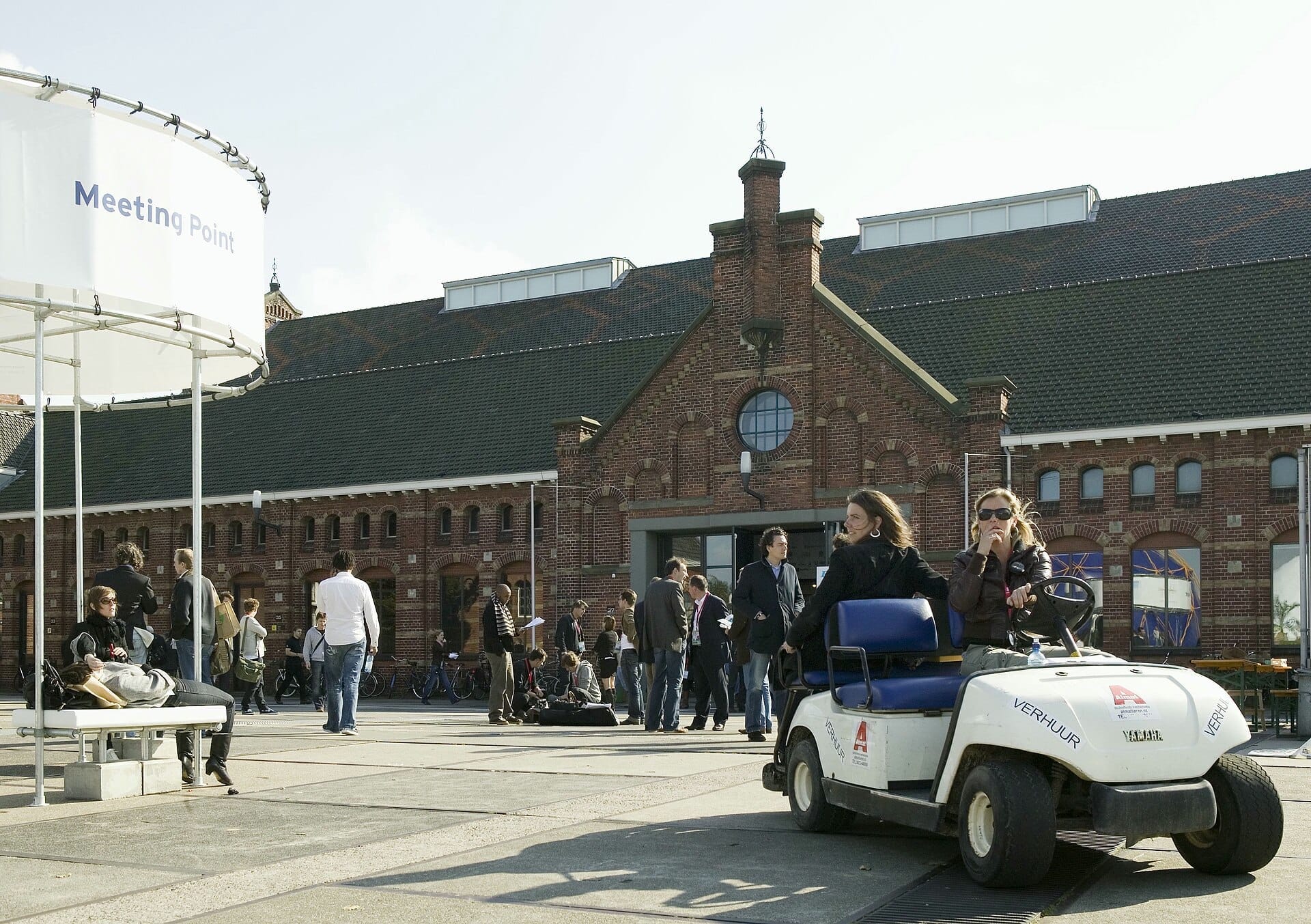
Westergasfabriek is an approximately 11.5-hectare cultural park built within and around a 19th-century gasworks complex on the western edge of central Amsterdam. The site contains 17 monumental industrial buildings, most of them converted into event spaces, creative offices, restaurants, and small venues, all arranged around a large landscaped park that flows into the adjacent Westerpark.
The former gasworks supplied Amsterdam with coal gas for lighting and heating from the 1880s until operations ceased in the 1960s. After decades of industrial decline and a rezoning for recreational use in 1981, the site was reimagined as a cultural destination. It reopened as Culture Park Westergasfabriek in the early 2000s, with the park design completed around 2004. Today it operates under the shorter brand name Westergas.
Unlike a museum or ticketed attraction, Westergasfabriek has no single entrance, no official opening hours for the site as a whole, and no general admission fee. You walk in from multiple points and the experience depends entirely on what is happening when you visit. That flexibility is part of its appeal, but it also means going in with realistic expectations.
ℹ️ Good to know
Westergasfabriek does not charge a general entry fee. The park and grounds are publicly accessible. Individual events, club nights, markets, and venue-based activities each set their own hours and ticket prices. Check westergas.nl before visiting to see what is scheduled.
The Architecture: What the Buildings Tell You
The defining characteristic of a visit here is the industrial architecture. The buildings follow the functional logic of a 19th-century utility complex: thick brick walls, large metal-framed windows, and high-ceilinged spaces originally designed to house gas purifiers, machinery halls, and storage infrastructure. The scale is genuinely impressive. One of the largest structures, the former gasometer building, dominates the central part of the site with its circular form and roofed hall.
Most buildings have been sensitively converted rather than aggressively modernised. Exposed brick, original ironwork, and worn concrete sit alongside design-forward interiors. Walking between the structures, you notice the contrast between the heaviness of the original industrial fabric and the light, airy uses now inside: a terrace restaurant in one building, an event hall in another, a creative co-working space in a third.
For context on how this fits into Amsterdam's broader tradition of adaptive industrial reuse, the Amsterdam architecture guide covers other notable conversions and heritage projects across the city.
Tickets & tours
Live prices and dates from our booking partner. If you book, we may earn a commission at no extra cost to you.
Gray Line Canal Cruise with snackbox & Heineken Experience
From 48 €Instant confirmationFree cancellationAmsterdam evening canal cruise
From 18 €Instant confirmationFree cancellationJewish Museum and Portuguese Synagogue entrance ticket
From 20 €Instant confirmationFree cancellationAdmission ticket for Artis Royal Zoo and Micropia
From 39 €Instant confirmationFree cancellation
How the Experience Changes by Time of Day
Morning visits, roughly before 11am on weekdays, offer the site at its most honest. The park grounds are quiet enough to hear birds over the distant rumble of trams. Dog walkers from the adjacent residential neighbourhoods cut through the paths. The industrial buildings are largely closed or just opening, and the sense of scale comes through clearly without crowds obscuring the sight lines.
Midday and afternoon hours on weekends shift the tone considerably. When a market or food event is running, the central plaza and surrounding grounds fill steadily from noon onwards. The most active hub tends to be around the main terrace cafe and the event halls facing the park. On non-event Saturdays and Sundays, the atmosphere is calmer: locals with children, cyclists stopping for coffee, people using the park as a green corridor between the Jordaan and the western districts.
Evening visits depend entirely on what is programmed. Westergasfabriek has a well-established reputation for large-scale events: club nights, festivals, film screenings, and design fairs. When events are running, the site transforms. Lighting, sound, and crowd density change the entire character of the grounds. If you are not attending a specific event, evening visits during quiet periods offer little beyond the restaurant and bar options.
💡 Local tip
Check the events calendar on westergas.nl before visiting. Some of Amsterdam's better independent markets, including design and vintage fairs, are held here on specific weekends. A visit timed with a market adds significant depth to the experience.
The Park and Green Space
The landscape design around the buildings is deliberate and well-executed. Water features, including a restored canal channel running through the site, break up the hardstanding and give the grounds a sense of flow. Willows overhang sections of the water. Lawns open up between building clusters, providing space for informal gathering without the congestion of the city centre parks.
The park connects directly to Westerpark to the east, which extends the green space considerably. Together they form one of the better urban parks in Amsterdam's western districts. For comparison, Vondelpark is more famous and more intensely used; Westerpark and Westergasfabriek offer something similar in scale but with noticeably less tourist traffic on most days.
In summer, the lawns become genuinely popular from late afternoon, particularly on weekdays when the terrace cafe is open and the light catches the brick facades from the west. In colder months the park is much quieter, but the architecture reads more clearly against a grey sky than it does in high summer when foliage softens the industrial lines.
Eating, Drinking, and What Is Available On-Site
Several food and drink options operate within the complex, though the specific businesses and their hours shift over time as tenants change. The terrace-facing cafe and restaurant spaces have been a consistent draw, particularly for an afternoon coffee or a longer lunch. On event days, additional food stalls and pop-up vendors operate across the grounds.
The surrounding neighbourhood adds context here. The Jordaan's western edge and the streets around Haarlemmerdijk and Haarlemmerstraat, which run roughly parallel to the route toward the site, are lined with independent cafes, specialty food shops, and wine bars. Combining a visit to Westergasfabriek with a walk along this corridor is a reasonable half-day structure. The nearby Noordermarkt operates on Saturday mornings and adds another layer to a western Amsterdam day.
⚠️ What to skip
On days with no programmed events, some of the venue buildings will be closed or operating limited hours. Do not plan a visit around the assumption that all 17 buildings will be open and accessible on any given day.
Practical Information for Getting There
Westergasfabriek sits on the western edge of Amsterdam's inner city, close to the point where the Jordaan neighbourhood gives way to the wider western districts. From many central hotels it can involve roughly a 20 to 30-minute walk, but it is well-connected by tram.
Tram lines 3 and 5 stop near Haarlemmerplein, from where the site is a short walk west along Haarlemmerweg. The approach on foot from this direction passes under the old city gate and along a stretch of road that transitions quickly from central Amsterdam to a quieter residential and commercial pace.
Cycling is the most practical option for most visitors already in Amsterdam. The site has ample bike parking and the cycling infrastructure from the Jordaan and beyond is straightforward. If you are navigating the city by bike for the first time, the cycling in Amsterdam guide covers the key rules and practical notes.
Parking by car is possible in the area but not recommended as the first choice. The site is also within reasonable distance of Amsterdam Centraal by tram, making it accessible for visitors staying in the centre or north of the city.
Who This Suits and Who Should Reconsider
Westergasfabriek works well for travelers who do not need a curated visitor experience. There is no signage telling you what to look at, no guided narrative, and no obvious route through the site. The reward is in wandering, noticing details in the brickwork, understanding the spatial logic of an industrial complex, and spending time in a part of Amsterdam that locals use without much tourist pressure.
If you have limited time in Amsterdam, say two days or fewer, and your priority is the major cultural collections, the canal belt, or specific neighbourhood character, Westergasfabriek is probably not where you should spend your hours. It competes with a lot: the Rijksmuseum, the Anne Frank House, and the entire Jordaan neighbourhood itself are all closer to the city core and offer a denser return per hour of visiting time.
Travelers who specifically enjoy adaptive reuse architecture, independent event culture, or who want to see Amsterdam outside its most-visited circuits will find more here than the site's low profile suggests. It also fits naturally into a broader western Amsterdam walk that might include the Houseboat Museum and the canal streets of the Jordaan.
For weekend visitors attending one of Amsterdam's markets, it is worth checking whether the Amsterdam markets guide lists any scheduled markets at Westergas during your dates, as these substantially improve the visit.
Insider Tips
- The northwest corner of the park, where the water channel widens near the older brick storage buildings, is consistently quieter than the central plaza and offers the clearest unobstructed views of the architecture.
- Westergasfabriek hosts Amsterdam's annual Rollende Keukens (Rolling Kitchens) food truck festival, typically held in late spring. This is one of the better reasons to time a visit here specifically.
- If you are visiting on a non-event Sunday, the tone shifts noticeably by mid-afternoon when brunch crowds thin out. The 2pm to 4pm window gives you good light on the western facades without the morning chill.
- The buildings are most photogenic in low-angle light, either morning or late afternoon, when shadows define the brick texture and the large metal windows catch the sky. Overcast midday light flattens the structure considerably.
- Some of the creative studios and co-working spaces within the complex host occasional open days and pop-up exhibitions. These are not always listed on the main events calendar, so checking social channels or local event listings like Uitkrant can surface programming that the official site does not highlight.
Who Is Westergasfabriek (Westergas) For?
- Architecture and industrial heritage enthusiasts
- Travelers seeking local Amsterdam atmosphere away from tourist circuits
- Weekend visitors combining a market visit with a park afternoon
- Design and creative culture followers interested in adaptive reuse
- Cyclists looking for a destination that rewards an easy ride from the centre
Nearby Attractions
Other things to see while in Jordaan:
- Amsterdam Cheese Museum
Tucked into a building on Prinsengracht, often described as dating from around 1600, the Amsterdam Cheese Museum offers a free, compact introduction to Dutch cheese culture, complete with tastings and exhibits. It sits two minutes from the Anne Frank House, making it a natural addition to a Jordaan afternoon.
- Amsterdam Tulip Museum
Tucked into a canal house on Prinsengracht, directly across from the Anne Frank House, the Amsterdam Tulip Museum traces 400 years of tulip history, from Ottoman origins to the chaos of Tulip Mania and the flower's enduring grip on Dutch identity. Small in scale but precise in focus, it rewards curious visitors who want context beyond the postcard.
- De Negen Straatjes (The Nine Streets)
De Negen Straatjes, or The Nine Streets, is a grid of nine historic cross-streets threading through Amsterdam's Canal Ring between the Singel and Prinsengracht. Free to explore at any hour, the area blends 17th-century canal architecture with independent boutiques, specialist food shops, and unhurried café culture. It rewards slow walkers and curious browsers far more than shoppers with a checklist.
- Het Schip Museum
Museum Het Schip occupies a landmark 1919 public housing complex designed by Michel de Klerk, the defining genius of the Amsterdam School movement. Part architecture museum, part social history, it offers one of Amsterdam's most distinctive and undervisited cultural experiences.
Planning a trip? Discover personalized activities with the Nomado app.