Vasari Corridor: Florence's Secret Medici Passageway Above the Arno
The Vasari Corridor is an approximately 750-metre elevated walkway built in 1565 to allow the Medici rulers to move privately between the seat of government and their private palace. Reopened on 21 December 2024 after years of restoration, it now combines architectural drama, panoramic city views, and a substantial art collection into one of Florence's most distinctive experiences.
Quick Facts
- Location
- Access via the Uffizi Gallery, Piazzale degli Uffizi, 50122 Florence (Centro Storico)
- Getting There
- Short walk from Piazza della Signoria; city buses serve the Lungarni and surrounding streets
- Time Needed
- Allow 2 to 3 hours, including time in the Uffizi before your guided group entry
- Cost
- Uffizi + Vasari Corridor combo ticket €47.00 full price, reservation included (2026 pricing)
- Best for
- History enthusiasts, art lovers, architecture fans, and visitors wanting a rare behind-the-scenes Florence experience
- Official website
- www.uffizi.it/en/corridoio-vasariano
What the Vasari Corridor Actually Is
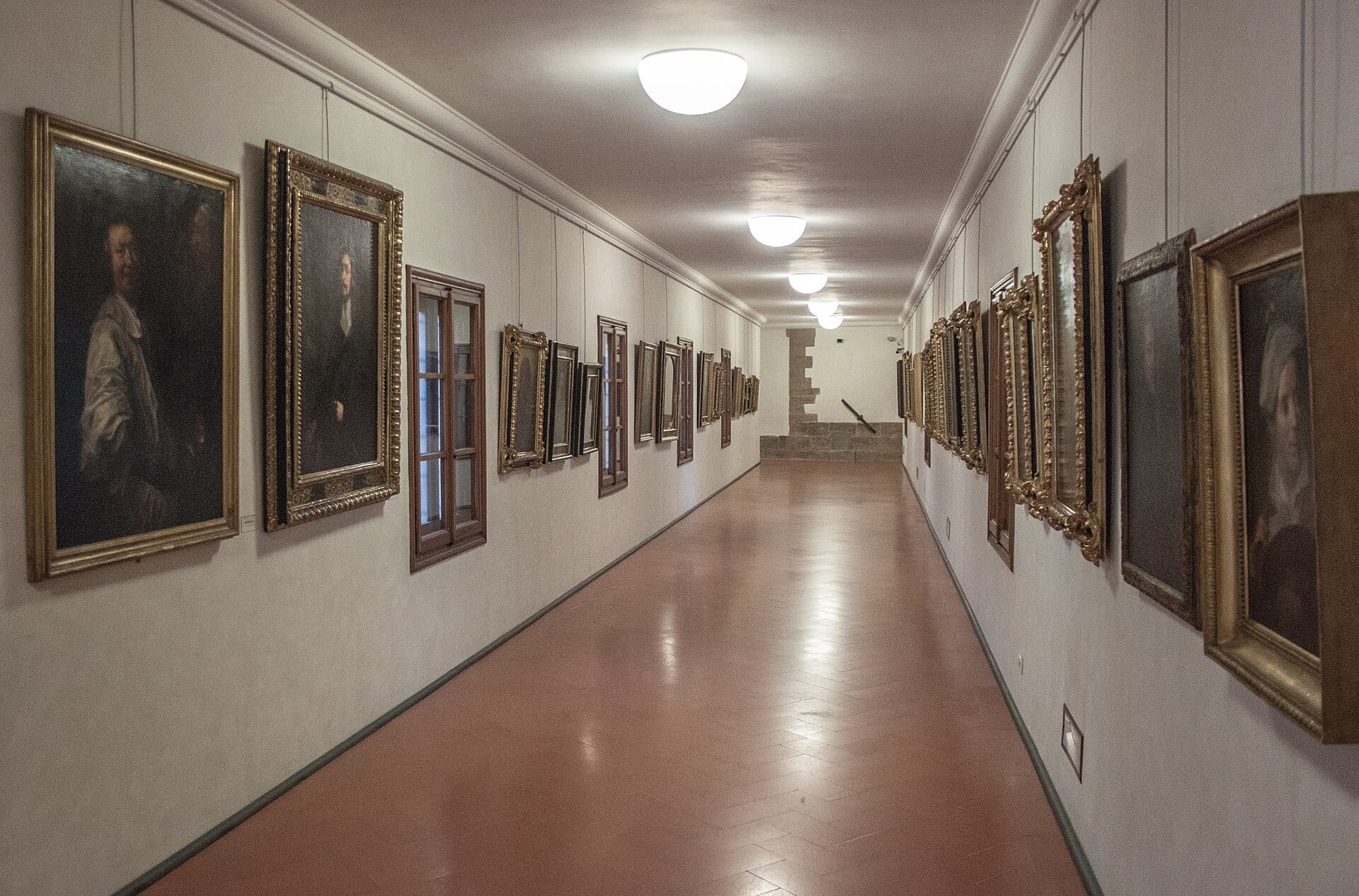
The Corridoio Vasariano is an elevated enclosed passageway stretching approximately 750 metres through the heart of Florence. It runs from the Palazzo Vecchio, through the Uffizi Gallery, across the top of the Ponte Vecchio, and all the way to the Palazzo Pitti on the far side of the Arno. From the outside, it reads as a pale stone gallery perched above the city's rooftops, threading through upper floors and bridging streets where no ordinary pedestrian can go. From the inside, it is something else entirely: a corridor with views through oval windows down onto the Arno, lined with paintings, and filled with the eerie quiet of a space built for power rather than the public.
The corridor was commissioned by Cosimo I de' Medici and designed by the architect, painter, and historian Giorgio Vasari. Construction took approximately five months in 1565, completed just in time for the wedding of Francesco I de' Medici and Joanna of Austria. The speed of construction alone signals how important the project was: the Medici needed a safe, private route between the seat of Florentine government and their family residence at Palazzo Pitti, and they needed it urgently. Walking it today, the political logic is almost palpable.
ℹ️ Good to know
The Vasari Corridor reopened to the public on 21 December 2024 after closing for major safety and accessibility upgrades in 2016. The renovated route now includes ramps, platforms, and lifts, significantly improving accessibility for visitors. Confirm current operating conditions with the Uffizi before booking.
The History Behind the Passageway
To understand the corridor, you need to understand what Florence was in 1565. The Medici had consolidated control over the Republic and were in the process of converting political dominance into dynastic spectacle. Cosimo I was not just a patron of the arts; he was a ruler managing real threats, public perception, and the symbolic language of architecture with deliberate precision. A private elevated walkway that allowed him to move unseen above the city was not a luxury. It was a security and ceremonial tool.
Vasari's engineering solution was to cantilever the corridor's structure over existing buildings, particularly the shops on the Ponte Vecchio. The butchers who had occupied the bridge were famously evicted by Medici decree because their smell was considered inappropriate for the ducal passage above. Goldsmiths and jewellers replaced them, a tradition that continues on the Ponte Vecchio to this day. The corridor above their shops is, in a sense, the reason the bridge looks the way it does.
The corridor was severely damaged during World War II, particularly around the Ponte Vecchio area, when German forces retreated through Florence in 1944 and destroyed most of the city's bridges. The Ponte Vecchio survived, reportedly on direct orders from Hitler, but the corridor suffered significant structural damage. It was restored and reopened to the public in 1973, then closed again in 2016 for a long safety and conservation overhaul before the current reopening on 21 December 2024.
The corridor does not exist in isolation. It connects to the broader story of Medici ambition that runs through Florence's major monuments. For context on that dynasty's physical legacy, theMedici Chapels and Palazzo Medici Riccardiare worth visiting alongside or before your corridor tour.
Tickets & tours
Live prices and dates from our booking partner. If you book, we may earn a commission at no extra cost to you.
Perfume masterclass: a sensory experience in Florence
From 70 €Instant confirmationFree cancellationFlorence cathedral complex and Brunelleschi's dome tickets
From 59 €Instant confirmationMedici series tour in Palazzo Medici Riccardi
From 90 €Instant confirmationFree cancellationPalazzo Vecchio secret passages tour with lunch or gelato tasting
From 47 €Instant confirmationFree cancellation
The Visit: What to Expect Step by Step
Access to the Vasari Corridor is exclusively through the Uffizi Gallery. Your visit begins in Room D19, on the Uffizi's first floor. Visits operate in pre-booked groups of a maximum of 25 visitors plus staff, with the first entry at 10:15 and the last group exiting by 16:35, Tuesday through Sunday.
The guided format is not optional, and this is important to factor into your planning. You will be moving at a group pace, which means the experience lasts considerably longer than walking 750 metres would suggest. Budget two to three hours total, including time spent in the Uffizi before and after the corridor section. The guidance is generally informative, covering both the architectural history and the art collection displayed along the route.
💡 Local tip
Book as far in advance as possible. The group size cap of 25 means slots fill quickly, particularly in spring and summer. The combo ticket (€47 full price, reservation included) is the only way to access the corridor and includes entry to the Uffizi Gallery.
The renovated corridor is fully accessible, with ramps, platforms, and lifts integrated throughout the route. This is a significant change from earlier iterations, when the steep internal staircases made access extremely difficult for visitors with mobility limitations. If accessibility is a concern, contact the Uffizi directly before booking to confirm current provisions.
What You Actually See Along the Route
The oval windows that punctuate the corridor above the Ponte Vecchio are the most celebrated visual feature, and justifiably so. Looking down through them, you see the Arno in both directions, the terracotta rooftops, and the curve of the river in a way that is simply not available from street level. In the morning, when the light is low and golden, the water reflects it directly into the corridor. In the afternoon, the same windows frame a flatter, cooler light that is better for observing detail in the paintings.
The art collection displayed along the corridor walls is substantial. Historically, the corridor housed one of the world's most important collections of artist self-portraits, including works by Raphael, Rembrandt, Velázquez, and many others. The post-renovation hanging arrangement should be confirmed with the Uffizi directly, as curators have used the reopening as an opportunity to reconsider what is displayed and where. Expect paintings densely hung in the older Florentine manner, covering almost every available surface in certain sections.
The architectural transitions are striking. You move from the formal gallery spaces of the Uffizi into a narrower passage with a lower ceiling, then out over the bridge, then through a section that cuts through a church interior (the Corridor passes through the Chiesa di Santa Felicita, where a Medici balcony allowed the family to attend Mass without mingling with worshippers below), and finally toward the Boboli Gardens area leading to the Pitti. Each transition marks a change in atmosphere, temperature, and light.
The corridor's endpoint nearPitti Palace and the adjacent Boboli Gardensmakes it natural to extend your visit into the Oltrarno neighbourhood afterward.
When to Visit and What Affects the Experience
The corridor is an interior space, which means weather matters less here than at most Florence attractions. Rain does not diminish the visit. Extreme summer heat in the Uffizi's public halls, however, can make the time spent waiting before your corridor group entry uncomfortable. Spring visits (April to June) and early autumn visits (September to October) avoid both the worst heat and the most congested queues in the Uffizi itself.
Morning slots starting at 10:15 offer the advantage of entering the Uffizi when it is slightly less crowded. The standard daytime schedule provides a consistent experience; any special evening openings should be checked directly with the Uffizi at the time of booking.
⚠️ What to skip
The Vasari Corridor is closed every Monday. If your Florence visit falls across a Monday, plan accordingly and do not rely on a walk-in option. Advance booking is mandatory regardless of the day.
If you are building a full itinerary around the corridor, consider pairing it with a walk across thePonte Vecchiobefore or after your visit. Seeing the bridge from street level and then looking down on it from the corridor windows above gives you a genuinely unusual double perspective that most visitors miss. For broader planning, thebest museums in Florenceguide can help you sequence the Uffizi and corridor within a longer cultural itinerary.
Photography, Practicalities, and Who Should Skip This
Photography is generally permitted in the Uffizi and along the corridor, but confirm the current policy when you book, as rules around flash, tripods, and specific artworks can change. The oval windows above the Ponte Vecchio are the most photographed spots inside the corridor, and the light through them works best in morning hours. The corridor is narrow, and you will be moving with a group, so a compact camera or smartphone is more practical than a large DSLR with a wide lens.
Wear comfortable shoes. The renovated route incorporates ramps and lifts, but you will still be on your feet for two to three hours across the Uffizi and the corridor combined. The corridor temperature can be cooler than the Uffizi galleries, particularly in winter and in the shadowed sections above the Arno, so a light layer is worth carrying.
Who should consider skipping this: visitors with very limited time in Florence who have not yet seen the Uffizi's main collection will get more value from a standard Uffizi visit at a lower ticket price. The corridor is best appreciated by those with some prior knowledge of Medici history and Renaissance Florence, or a genuine interest in architectural history. Visitors expecting an open-air walk or panoramic terrace will find it unexpectedly enclosed for much of the route. Children may find the guided format and relatively static art-heavy experience difficult to sustain.
Insider Tips
- If special evening openings are introduced, consider booking one for a quieter, more atmospheric experience; check directly with the Uffizi for any updated schedules beyond the standard daytime hours.
- Spend time in the Uffizi's Botticelli rooms before your corridor group assembles. The transition from the painted allegories of Spring and Venus into the physical passageway Medici used gives the entire visit a different emotional register.
- The section of the corridor that passes through the Chiesa di Santa Felicita is one of the most unusual moments: you are briefly inside a functioning church, looking down from a Medici balcony at the nave below. Ask your guide about this specifically if they do not raise it, as it is easy to pass through without fully registering what you are seeing.
- The oval windows above the Ponte Vecchio are on both sides of the corridor. Move to whichever side has better light when your group pauses, rather than defaulting to the nearest window. Upstream views toward the Santa Trinita bridge are often less photographed and equally compelling.
- Confirm the current art-hanging arrangement directly with the Uffizi before your visit. The 2024 reopening gave curators the opportunity to rehang the self-portrait collection and other works, and the layout continues to evolve.
Who Is Vasari Corridor For?
- History enthusiasts who want to understand the Medici's relationship between architecture and political power
- Art lovers already familiar with the Uffizi's main collection and looking for a deeper layer of the museum experience
- Architecture-focused travelers interested in Renaissance engineering and how buildings were adapted to serve dynastic purposes
- Visitors on a second or third trip to Florence who have covered the major sites and want something genuinely different
- Accessibility-conscious travelers, since the renovated corridor now includes ramps, platforms, and lifts to improve access along the route
Nearby Attractions
Other things to see while in Centro Storico (Historic Center):
- Arno River Walk (Lungarni)
The Lungarni are the named embankment streets running along both banks of the Arno River through central Florence. Free to walk at any hour, they offer the city's best unmediated views of the Ponte Vecchio, the surrounding hills, and the slow rhythm of Florentine daily life. No ticket, no queue, no reservation required.
- Brunelleschi's Dome Climb
The climb inside Brunelleschi's Dome is one of the most physically rewarding experiences in Florence. 463 steps through narrow brick passages deliver you to a panoramic terrace above the city's rooftops, with views that no other vantage point in the historic centre can match. Here is everything a traveler needs to plan it well.
- Florence Baptistery
The Florence Baptistery, officially the Battistero di San Giovanni, is one of the oldest and most significant religious buildings in Italy. Standing directly in front of Florence Cathedral, it is famous for Ghiberti's gilded bronze 'Gates of Paradise' and a breathtaking interior ceiling covered in Byzantine mosaics. This guide covers what to expect, when to visit, and how to make the most of your time here.
- Florence Cathedral (Duomo di Firenze)
The Cattedrale Metropolitana di Santa Maria del Fiore is the geographic and spiritual heart of Florence. Free to enter, extraordinary to stand inside, and far more layered than its famous exterior suggests. Here is everything you need to plan a worthwhile visit.
Planning a trip? Discover personalized activities with the Nomado app.