Varso Tower: Warsaw From the Top of the European Union
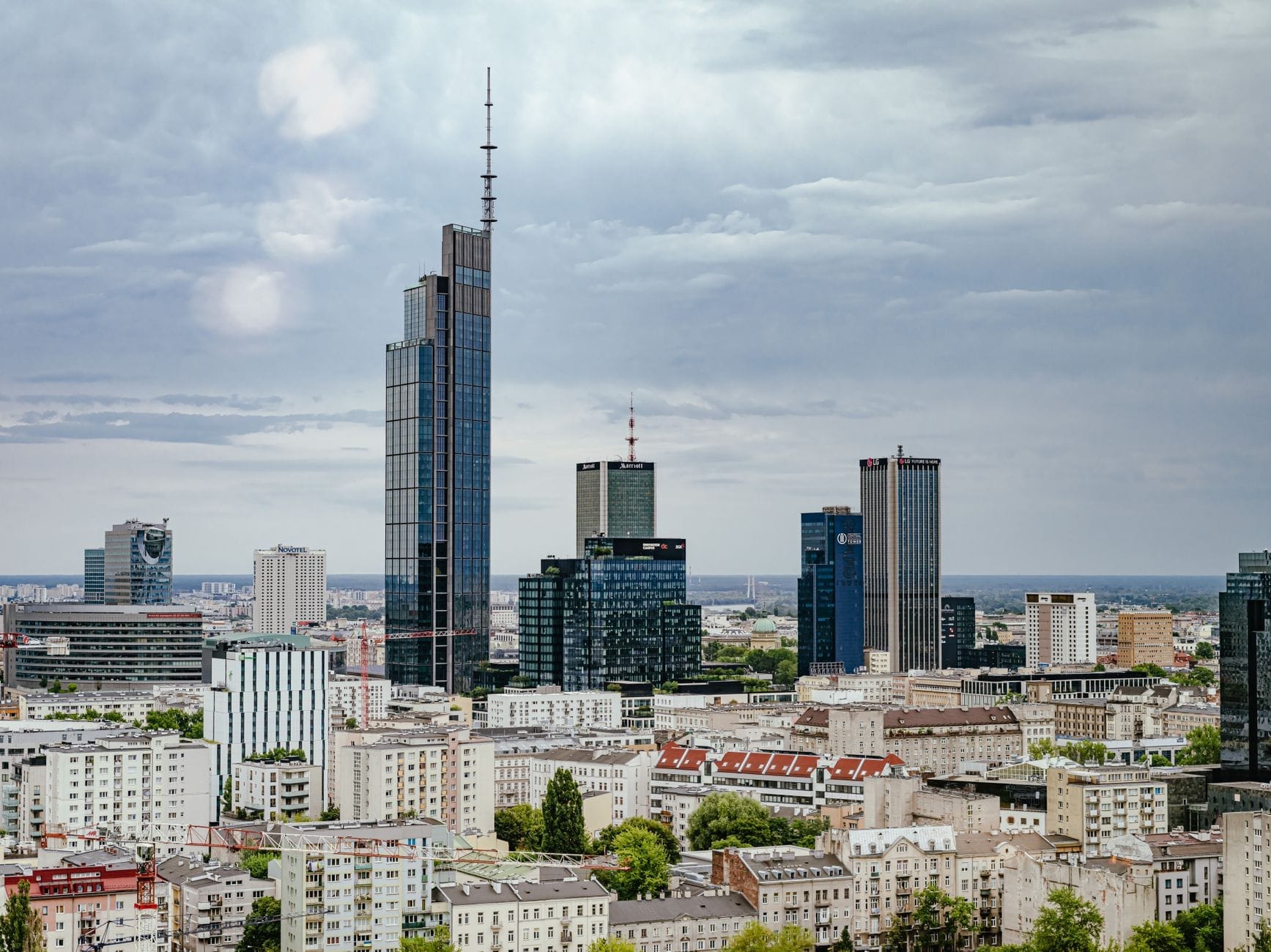
Varso Tower rises 310 metres above Warsaw's city centre, making it the tallest building in the European Union. The Highline Warsaw observation deck on the 53rd floor puts the entire Polish capital at your feet, from the Vistula River to the Palace of Culture and far beyond.
Quick Facts
- Location
- Chmielna 69, 00-801 Warsaw (Varso Place complex, directly beside Warsaw Central Station)
- Getting There
- Warsaw Central Station (direct lobby connection); Metro Centrum (M1) and Rondo ONZ (M2); Trams 10, 17, 33
- Time Needed
- 1 to 2 hours for the observation deck and rooftop lounge
- Cost
- Timed-entry tickets available online; approximately 45 PLN per adult (verify current pricing at highlinewarsaw.com before visiting)
- Best for
- Panoramic city views, architecture enthusiasts, photography, and first-time visitors wanting urban orientation
- Official website
- highlinewarsaw.com/en/varso-tower
What Varso Tower Actually Is
Varso Tower is a 53-storey office skyscraper structurally topped out in 2021, with the overall project completed and opened to visitors in 2025 as the centrepiece of the Varso Place development in central Warsaw. It stands 310 metres tall in total, including an approximately 80-metre architectural spire above a roof height of around 230 metres. That figure makes it the tallest building in the European Union and the tallest structure in Poland. The tower was designed by Foster + Partners and built by HB Reavis, and it forms part of a three-building mixed-use complex sitting directly above Warsaw Central Station.
For visitors, the relevant part of the tower is the Highline Warsaw observation experience on the 53rd floor, which includes both an enclosed deck and an open-air rooftop terrace. This is not a passive elevator ride to a glass box. The deck sits at approximately 230 metres above street level, which is high enough that on a clear day you can see well beyond the city limits into the flat Mazovian countryside. The complex also includes the HighGarden Rooftop Lounge, which often operates late into the evening and allows visitors to combine the panorama with drinks or food.
💡 Local tip
Book timed-entry tickets in advance on the official Highline Warsaw site. Walk-up availability can be limited on weekends and during summer, and online tickets typically cost less than door prices when promotions are active.
The Architecture: Why This Building Looks the Way It Does
Construction on Varso Tower began in 2016 and the tower was structurally topped out in 2021, with overall completion in 2022. Foster + Partners designed the tapering glass facade to respond to the particular urban context of central Warsaw, a district that already contained one dramatic vertical landmark: the Palace of Culture and Science, the Stalinist-era tower that has defined the city's skyline since 1955. Where the Palace is heavy, monumental, and symmetrical, Varso Tower is slim, transparent, and angular. The two buildings now form an inadvertent dialogue across the rooftops of Śródmieście.
The glazed curtain wall cladding the tower was engineered by the Permasteelisa Group and had to meet strict technical requirements for a building at this height. The spire itself is not an antenna or functional structure in the broadcasting sense; it is an architectural element that lifts the total height to 310 metres. From ground level you can see the tapering spire clearly from the Aleje Jerozolimskie corridor below. At street level, the Varso Place complex integrates with Warsaw Central Station through a direct internal connection, meaning the building effectively grows out of the city's main rail hub.
If you want to understand how Varso Tower changed Warsaw's skyline conversation, it helps to visit the Palace of Culture and Science first. Standing on the Palace's own observation terrace, you can look northwest and see Varso Tower exactly as it was intended to be read: a new generation of Warsaw ambition in direct visual conversation with the old.
Tickets & tours
Hand-picked options from our booking partner. Prices are indicative; availability and final rates are confirmed when you complete your booking.
Museum of John Paul II and Primate Wyszyński entrance ticket
From 8 €Instant confirmationPub crawl in Warsaw
From 28 €Instant confirmationFree cancellationWarsaw Museum of Modern Art entrance ticket
From 8 €Instant confirmationSafe and Convenient Luggage Storage in Warsaw Old Town
From 6 €Instant confirmationFree cancellation
The Observation Deck Experience: What to Expect at Different Times
The Highline Warsaw observation deck operates with set daily opening hours that can vary seasonally, and the HighGarden Rooftop Lounge generally stays open later into the evening; check current times before your visit. Morning visits, particularly on weekdays before 11:00, offer the lowest crowd density. The deck is relatively clean and uncluttered at this hour, and the light is soft and directional from the east, catching the Vistula River and the Praga district on the far bank.
Afternoon visits from around 14:00 to 17:00 see the most families and tourist groups. The glass panels are often marked with fingerprints at these hours and the queue for the elevators can grow. If you are visiting for photography, the golden hour window starting roughly 90 minutes before sunset is the most rewarding time to be up here. The low light flattens across the city's roofscape and the Palace of Culture, which is directly to the southeast from this vantage, catches warm tones. At dusk, the city transitions from a grey-and-green horizontal spread to a grid of amber street lamps and the blue-white towers of the financial district.
Evening visits after 20:00 are the quietest of the day. The HighGarden Rooftop Lounge becomes the main draw at this point, with Warsaw's lights laid out below and the air cooling quickly. Bring a layer even in summer; at 230 metres the wind is considerably stronger than at street level and temperatures drop noticeably after sunset.
⚠️ What to skip
Overcast or hazy days significantly reduce visibility. Warsaw's summers can bring afternoon haze that cuts the view to a few kilometres. Check the forecast before booking a specific time slot, and aim for days after rain when the air is clearest.
The View Itself: What You Are Looking At
From 230 metres, Warsaw resolves into distinct layers. Immediately below, the city centre district of Śródmieście shows its mixed character: communist-era concrete blocks alongside glass towers, with the wide avenue of Aleje Jerozolimskie cutting east to west like a navigational baseline. The Vistula River is visible to the east, a wide grey-green band with the low wooded escarpments of the left bank above it. The right bank district of Praga, historically separate in character and architecture from the left-bank city, is laid out clearly from this height.
To the south you can see the green mass of Łazienki Park, Warsaw's largest formal garden, which appears as a dark tree canopy against the urban grid. On clear days the residential towers of Ursynów and even the low horizon of the Mazovian Plain are visible. To the north, the Old Town's compact silhouette is identifiable by its church towers, though from this distance it is easy to underestimate how small the reconstructed historic core actually is relative to the sprawl around it.
The Palace of Culture and Science is the most immediately dramatic element in the view. From Varso Tower you are looking slightly down at the Palace's viewing terrace and across at its upper spire. This reversal of the usual perspective, seeing the Palace from above rather than looking up at it from Plac Defilad, gives a useful sense of just how drastically Warsaw has changed in the seven decades since the Palace was built.
Getting There and Getting In
Varso Tower is among the easiest major attractions in Warsaw to reach by public transport. Varso Place’s lobby connects directly to Warsaw Central Station, meaning you can arrive by intercity train from Kraków, Gdańsk, or Wrocław and walk into the complex without going outdoors. Metro line M1 stops at Centrum station, a short walk along Aleje Jerozolimskie. Metro line M2 stops at Rondo ONZ, a five-minute walk to the northeast. Trams 10, 17, and 33 stop nearby along Aleje Jerozolimskie. Bus lines 117, 127, 175, 504, and 517 also serve the Warsaw Central area.
For visitors staying in the city centre or along Krakowskie Przedmieście, Varso Tower is walkable in under 20 minutes. The tower's address is Chmielna 69, 00-801 Warsaw. Drivers can access underground guarded parking from Chmielna Street, with additional paid surface parking from Aleje Jerozolimskie.
Tickets for Highline Warsaw are timed-entry and purchased online through the official Highline Warsaw site. Pricing is dynamic and varies by date; online adult tickets currently start from around 45 PLN, but you should check current rates before visiting. The ticket includes elevator access to the 53rd-floor deck, HighGarden Rooftop Lounge, and the panoramic terrace; the lounge operates as a hospitality venue and does not require a separate admission fee beyond the deck ticket, though food and drinks are priced accordingly.
ℹ️ Good to know
The elevators from the Varso Tower lobby to the 53rd floor are high-speed and step-free. The observation level is fully accessible by elevator. For specific wheelchair access requirements or assistance services, contact Highline Warsaw directly before your visit.
Photography Tips and Honest Limitations
The glass panels on the observation deck are generally clear enough for photography, but they do introduce some reflection, particularly when shooting toward bright sky. Pressing your lens hood gently against the glass eliminates most of this. Polarising filters are less useful here than at ground level because the angle of polarisation shifts constantly as you move around the circular deck.
The Palace of Culture makes the strongest single subject from this height. A wide-angle lens captures it in context with the financial district behind it; a medium telephoto isolates the upper crown and allows a frame that shows the ornamental Stalinist detailing clearly. For cityscape photography, the north-facing aspect looking toward the Old Town is most rewarding at midday when the sun is roughly above and behind you. The east-facing view toward the Vistula and Praga is best in morning light.
One honest limitation: Varso Tower's observation deck is not the same kind of experience as an open-air roof terrace. The 53rd floor has glass barriers rather than open parapets, and some visitors find this reduces the raw sense of exposure they were hoping for. If you specifically want open-air height, the deck still delivers wind and sound above the enclosures in certain configurations, but set your expectations accordingly.
Who Should Skip This Attraction
Travelers with acrophobia will find little comfort in the enclosed-but-glass experience at this height; the sense of vertical distance is significant even through barriers. Those with only a day in Warsaw and a tight schedule of historic sites may find the time better spent at the Royal Castle or the POLIN Museum, both of which offer deeper engagement with the city's actual history. Visitors who have already experienced similar high-altitude decks in other European capitals may find the experience familiar rather than revelatory, particularly on hazy days when the distant views are obscured.
For repeat visitors to Warsaw who have already covered the main historical and cultural sites, however, Varso Tower offers a genuinely different perspective on a city that is still actively constructing its 21st-century identity. Seeing the Palace of Culture from above, dwarfed by the financial district that has grown around it, tells you something about Warsaw that no ground-level visit can fully convey.
Insider Tips
- Book a late evening slot on a clear weeknight rather than a weekend sunset slot. The crowds are smaller after 20:00, and Warsaw's illuminated skyline holds up well past golden hour, particularly looking toward the Palace of Culture.
- The HighGarden Rooftop Lounge often stays open until late evening. If you are visiting in the evening, arrive at the deck during the last hour of daylight and stay for a drink as the city transitions to night. The ticket cost becomes easier to justify when you factor in an hour at the lounge.
- Warsaw Central Station is directly connected to the Varso Place lobby. If you are arriving in Warsaw by intercity train and heading straight to your hotel, a Varso Tower visit makes a logical first stop: drop your bags at a left-luggage locker in the station and head up before you check in.
- The deck faces all directions but the southeast quadrant facing the Palace of Culture and the Vistula is the most photographically rewarding. Position yourself there first on arrival, before the floor fills with other visitors during peak hours.
- Check air quality and visibility forecasts, not just weather. Warsaw can have clear sunny days where visibility is still limited by particulate haze. Apps that show atmospheric visibility data are more useful than a standard weather forecast for planning your visit.
Who Is Varso Tower For?
- First-time visitors to Warsaw who want spatial and urban orientation before exploring the city on foot
- Architecture and design enthusiasts interested in contemporary European high-rise engineering
- Photographers looking for the city's definitive skyline perspective, especially at golden hour or after dark
- Travelers arriving at Warsaw Central Station who want a meaningful first experience without crossing town
- Visitors who want to understand how Warsaw has rebuilt and reinvented itself from a city almost completely destroyed in World War II to the EU's tallest skyline
Nearby Attractions
Other things to see while in City Centre (Śródmieście):
- Fryderyk Chopin Museum
Housed inside the 17th-century Ostrogski Palace near Warsaw's Royal Route, the Fryderyk Chopin Museum holds one of the world's richest collections of Chopin memorabilia. Closed for full renovation throughout 2026; reopening is planned for 2027 — plan post-renovation visits and confirm dates on the official site.
- Grand Theatre – National Opera
The Grand Theatre – National Opera (Teatr Wielki – Opera Narodowa) is one of the largest opera houses in Europe, anchoring Theatre Square in central Warsaw with a neoclassical facade that survived war and rebuilding. Whether you attend a full opera, a ballet, or simply walk across the square to take in the architecture, this institution rewards both serious culture-seekers and curious first-time visitors.
- Hala Koszyki Food Hall
Built in 1909 and reborn in 2016, Hala Koszyki is a restored Art Nouveau market hall in central Warsaw where locals actually eat, drink, and shop. Free to enter, open daily until 1am, and genuinely good.
- Holy Cross Church (Kościół Świętego Krzyża)
One of Warsaw's most historically charged sites, Holy Cross Church on Krakowskie Przedmieście holds the preserved heart of Frédéric Chopin in a nave pillar. A Minor Basilica with a Baroque facade, 17th-century origins, and free entry, it rewards visitors who take the time to look closely.