Tokyo Metropolitan Teien Art Museum: Art Deco Architecture, Curated Gardens, and Changing Exhibitions in Shirokanedai
The Tokyo Metropolitan Teien Art Museum is one of Tokyo's most architecturally distinctive cultural venues: a meticulously preserved 1933 Art Deco residence once belonging to Prince Asaka, set within a garden estate in Minato. It hosts rotating special exhibitions and offers garden-only admission for those who simply want to walk the grounds.
Quick Facts
- Location
- 5-21-9 Shirokanedai, Minato-ku, Tokyo 108-0071
- Getting There
- Shirokanedai Station (Tokyo Metro Namboku Line / Toei Mita Line) Exit 1, about 6 min walk. Also Meguro Station (JR Yamanote Line / Tokyu Meguro Line), about 7 min walk.
- Time Needed
- 1.5 to 2.5 hours for building and garden; 45 min for garden only
- Cost
- Exhibition tickets vary by show (check official site). Garden only: adults ¥200, university/vocational/technical school students ¥160, junior high/high school students and seniors 65+ ¥100. Free for visitors with disability certificates and one accompanying person. Seniors free on the third Wednesday of each month.
- Best for
- Architecture enthusiasts, design lovers, garden walkers, anyone wanting a quieter museum experience away from major tourist crowds
- Official website
- www.teien-art-museum.ne.jp/en
What the Tokyo Metropolitan Teien Art Museum Actually Is
Most museums in Tokyo are defined by their collections. The Tokyo Metropolitan Teien Art Museum is defined by its building. The Main Building was completed in 1933 as the private residence of Prince Yasuhiko Asaka, an uncle of Emperor Hirohito who had spent several years in Paris during the 1920s. He returned to Japan with a deep appreciation for the Art Deco movement then at its peak in Europe, and commissioned French designer Henri Rapin and glassmaker René Lalique to contribute to the interiors. The result is a building that feels genuinely unusual in the Tokyo context: geometrically patterned plasterwork, frosted glass chandeliers, lacquered panel rooms, and bronze entrance doors etched with figures that would not look out of place in a Parisian hotel de luxe from the same era.
The property was acquired by the Tokyo Metropolitan Government after World War II and converted into a public museum. The Main Building and the adjacent Annex (added in 2014 to expand gallery and amenity space) now host a program of temporary exhibitions, typically running two to four per year. There is no permanent display collection to browse. If you arrive between exhibitions, the building closes entirely for installation, though the garden usually remains open.
⚠️ What to skip
Check the exhibition schedule before you go. The museum closes between shows for installation work, sometimes for several weeks. The garden may stay open independently during these periods, but the building will not. Verify at the official site before your visit.
The Building: What to Look for Inside
The entrance sequence sets the tone. Walking through the main gate, visitors pass along a stone path framed by low hedges before reaching the bronze doors, which are etched with stylized female figures. Step inside and the foyer is immediate and composed: pale plaster walls, a geometric ceiling frieze, and a restrained color palette that keeps the eye moving to ornamental details rather than large surfaces.
The ground-floor reception room is the architectural centerpiece. The ceiling is layered with shallow plaster relief in a pattern that reads almost like a textile, and the built-in lighting fixtures are integrated into the geometry rather than added as afterthoughts. The overall effect is of a space that was conceived holistically, which is rare for any era. The room adjacent to the main hall is a small but remarkable survival: a purpose-built space with mirrored surfaces and custom fittings designed for the Princess to prepare before formal appearances. Details at this level of specificity are what make the building worth touring slowly.
The second floor contains additional former private rooms, accessible by elevator or staircase. Scale is domestic throughout, which means these spaces feel more intimate than grand. That intimacy is part of the point. This was a residence, not a public palace, and the curators have largely kept the architectural fabric visible rather than obscuring it with heavy exhibition installation. The best exhibitions programmed here work with the building's geometry rather than against it.
💡 Local tip
Arrive within the first hour of opening, around 10:00 to 11:00 on a weekday, for the quietest experience inside the building. Weekend midday brings school groups and organized tour parties into the compact interior spaces, which can make slow architectural observation difficult.
Tickets & tours
Hand-picked options from our booking partner. Prices are indicative; availability and final rates are confirmed when you complete your booking.
Tokyo Dining Bar Experience with Darts Throwing Plan
From 8 €Instant confirmationFree cancellationTokyo Dining Darts Bar Experience with Unlimited Darts Plan
From 8 €Instant confirmationFree cancellationManga Art Workshop in a Traditional Tokyo House
From 88 €Instant confirmationFree cancellationTour to Mt. Fuji Area, Oshino Hakkai and Kawaguchi Lake from Tokyo
From 57 €Instant confirmationFree cancellation
The Garden: An Underrated Reason to Visit
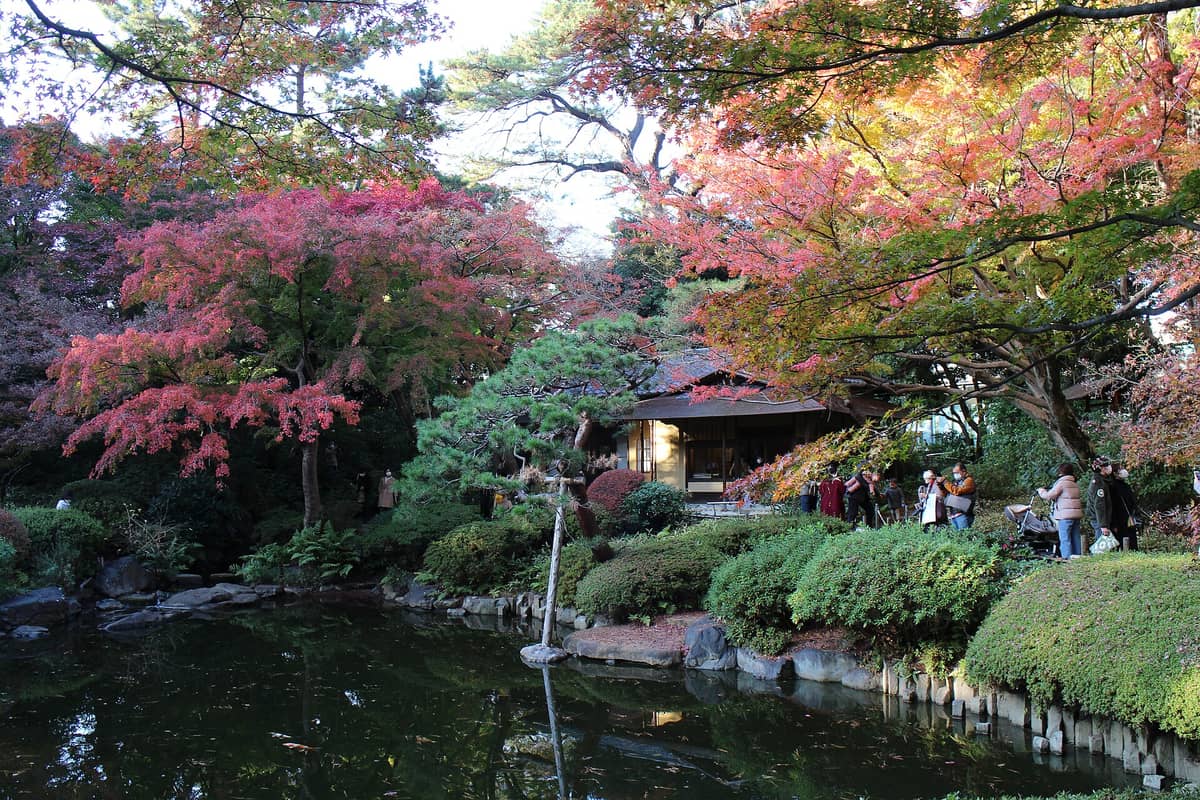
The grounds surrounding the Main Building are divided into distinct sections: a formal French-style garden to the west, a Japanese-style garden to the east, and lawn areas connecting them. The Japanese garden section contains a pond, stone lanterns, and a tea house, and the planting is managed carefully across seasons. In late autumn, the maple and zelkova trees shift into color in a low-key way that rewards visitors who are not chasing the larger spectacles at places like Shinjuku Gyoen or Rikugien.
The garden operates on its own admission fee when exhibitions are not running, making it accessible for a very low cost even when the building is closed. In spring, the combination of blooming trees and the Art Deco facade creates the kind of photograph that takes a few minutes to compose properly. The light in the late afternoon, when the sun drops behind the surrounding trees, is particularly soft. Photographers using longer lenses will find good vantage points along the eastern path looking back toward the Main Building.
The Teien garden is worth comparing to other green spaces in this part of Tokyo. It is smaller and more formal than Shinjuku Gyoen and quieter than Hamarikyu Gardens, but it carries a distinct character: the geometry of the French section mirrors the architectural logic of the building, and in good weather the lawn areas fill softly with afternoon light.
How the Experience Changes by Time of Day and Season
Morning visits, particularly on weekdays, offer the clearest conditions inside the building. Natural light enters the main reception rooms through east-facing windows and the frosted glass fixtures glow differently from the flat artificial light of midday. The staff open the building at 10:00 and early arrivals often have the ground floor largely to themselves for the first thirty minutes.
By midday on weekends the interior becomes more crowded, and the building's compact scale means that queues can form at bottlenecks on the staircase and in smaller gallery rooms. If you are visiting a popular exhibition, expect to wait briefly in these areas. The garden, by contrast, stays spacious even when the building is full: there is enough physical separation between the formal and Japanese sections that it never feels overwhelmed.
Seasonally, the museum's programming often aligns with the garden calendar. Exhibitions with garden-relevant themes tend to coincide with spring planting and autumn foliage windows. The building itself is climate-controlled, so the interior experience is comfortable year-round, but the external approach along the stone path is particularly pleasant in cool weather. In summer, the tree canopy on the eastern garden path provides shade, though the late afternoon heat in August can make outdoor lingering uncomfortable.
Getting There and Practical Details
The museum sits in the Shirokanedai district of Minato Ward, a quiet residential area between Meguro and Azabu-Juban. The walk from Shirokanedai Station takes about six minutes from Exit 1 along a gentle residential street. From Meguro Station the walk is slightly longer at around seven minutes from the official exits, passing through a stretch of low-rise shops and restaurants. Neither approach involves hills steep enough to concern most visitors, though the street surfaces are standard Tokyo pavement: smooth but uneven in places.
The Namboku Line connects Shirokanedai to major hubs across the city, and Meguro Station gives access to the JR Yamanote Line as well as the Tokyu Meguro Line heading toward Yokohama. For broader orientation on moving around Tokyo by rail, the Tokyo transit guide covers IC card setup and line transfers in detail.
The museum is open Tuesday through Sunday, 10:00 to 18:00, with last admission at 17:30. It closes on Mondays, unless Monday falls on a national holiday, in which case the museum opens and closes the following weekday instead. The year-end and New Year period also brings closures, and additional closure windows occur between exhibitions for installation. Some exhibitions include evening opening extensions until 20:00 on select dates; check the official schedule.
Exhibition ticket prices are set individually per show and go on sale approximately one month before each exhibition opens. The garden-only admission (¥200 for adults as of the latest verified pricing) is a separate ticket available at the gate. Visitors with disability certificates receive free admission, including up to one accompanying person. Seniors aged 65 and over receive free admission on the third Wednesday of each month, referred to as Silver Day.
ℹ️ Good to know
Accessibility: the Main Building has wheelchair-accessible elevators to the second floor. Accessible restrooms with ostomate facilities and baby-changing tables are available in the Main Building (1F), Annex (1F), European Garden, and the restaurant. Wheelchairs are available to borrow at no charge. The garden paths are mostly flat but have some gravel sections.
The Exhibition Program: What to Expect
The Teien Art Museum programs temporary exhibitions that typically connect to decorative arts, design, craft, photography, and applied art. The thematic focus shifts between shows, but the programming consistently reflects an interest in the relationship between objects and the spaces that contain them. This makes curatorial sense given the building: a former private residence with strong design integrity is a better setting for furniture and craft than for large-scale contemporary painting.
The exhibitions here are less internationally marketed than those at larger institutions like the Tokyo National Museum or the National Art Center Tokyo, which means they attract a more local, design-literate audience. For visitors with a specific interest in Japanese applied arts, architecture, or mid-century design, checking what is showing during your travel window is worth the ten seconds it takes.
Photography policies vary by exhibition, so check at the entrance. In the building itself, some rooms permit photography without flash while others restrict it entirely. The garden is generally open to photography throughout.
Who Should Think Twice Before Visiting
The Teien Art Museum will disappoint visitors who expect a large permanent collection with multiple hours of material to browse. There is no permanent display. If the current exhibition does not interest you, the primary draw is the building and garden, which together take a relatively short visit. Travelers on short Tokyo itineraries prioritizing volume of content might allocate that time elsewhere.
It is also not the right choice for families with young children looking for interactive experiences. For that kind of visit, Miraikan or the National Museum of Nature and Science offer considerably more engagement. The Teien rewards slow attention, which is a different mode of museum-going.
Insider Tips
- If you are visiting primarily for the architecture and garden, a weekday morning arrival at 10:00 is the single best strategy. The building is quiet, the light is good, and staff are attentive rather than managing crowds.
- The third Wednesday of each month is Silver Day, when seniors over 65 enter free. If you are not a senior, be aware this day brings a larger older local crowd, which can slow movement through the building's narrow hallways.
- The restaurant on site, set within the garden, is a reasonable option for a light meal or coffee after your visit. It is not remarkable as a dining destination, but the setting more than compensates on a good weather day.
- Between exhibitions, admission to the garden alone for ¥200 is one of the quietest and best-value green spaces in Minato Ward. The French formal garden section is especially well maintained and receives far fewer visitors than the park grounds around Meguro River or Hamarikyu.
- If photography is your main goal, the ideal light on the building's exterior falls in the late afternoon during spring and autumn, when the sun is low enough to illuminate the facade without harsh overhead contrast. The bronze entrance doors photograph particularly well in this light.
Who Is Tokyo Metropolitan Teien Art Museum For?
- Architecture and design enthusiasts who want to examine a rare surviving example of 1930s Japanese Art Deco in situ
- Visitors with a specific interest in decorative arts, craft, or applied design exhibitions
- Travelers who want a garden walk in a formal, maintained setting away from Tokyo's busier parks
- Photographers looking for a combination of historic architecture and seasonal garden subjects
- Anyone seeking a calm, unhurried museum experience with a distinctly local, non-tourist-heavy audience
Nearby Attractions
Combine your visit with:
- Akasaka Palace (State Guest House)
The State Guest House, Akasaka Palace is Japan's principal diplomatic residence and one of the few Western-style palaces in Asia open to the public. Built in neo-baroque style for the Crown Prince in the early 20th century, it now receives heads of state and, on select days, ordinary visitors. The combination of ornate gilded interiors, formal French gardens, and a Japanese-style annex makes it one of the most architecturally unusual stops in Tokyo.
- Edo-Tokyo Open Air Architectural Museum
Spread across the grounds of Koganei Park, the Edo-Tokyo Open-Air Architectural Museum rescues and reassembles more than 30 historic structures spanning the Edo period through the early 20th century. From a dismantled farmhouse to a reconstruction of a Showa-era Tokyo streetscape, it is one of the most thoughtful and undervisited cultural sites in the metropolitan area.
- Enoshima
A small island off the Shonan coast of Kanagawa Prefecture, Enoshima packs a surprising amount into a short walk: a three-part Shinto shrine, ancient sea caves, a hilltop botanical garden, a lighthouse observation tower, and seafood stalls lining a stone-paved shopping street. It works as a half-day excursion or a full day if you combine it with nearby Kamakura.
- Gotokuji Temple
Gotokuji Temple in Setagaya is a working Soto Zen Buddhist temple that happens to be one of the claimed birthplaces of the maneki-neko, Japan's iconic beckoning cat. Hundreds of white ceramic cats line the shelves of a dedicated shrine, creating one of Tokyo's most quietly striking visual spectacles. Entry is free, crowds are manageable, and the surrounding grounds offer genuine calm.