Tokyo National Museum: Six Buildings, 150 Years of History, and Japan's Greatest Collection
The Tokyo National Museum is Japan's oldest national museum and its most comprehensive, housing over 120,000 objects spanning ancient ceramics and armor to Buddhist sculpture and ukiyo-e prints. Spread across six distinct buildings inside Ueno Park, it rewards both the casual visitor and the serious art enthusiast.
Quick Facts
- Location
- 13-9 Ueno Park, Taito-ku, Tokyo 110-8712, Japan
- Getting There
- JR Ueno Station (Park Exit) – 10 min walk; Tokyo Metro Ueno Station (Ginza/Hibiya Lines) – 15 min walk; Nezu Station (Chiyoda Line) – 15 min walk
- Time Needed
- 2–4 hours for a focused visit; a full day if covering all six buildings
- Cost
- Adults ¥1,000 / University students ¥500 / Under 18 and over 70 free (for regular collection exhibitions)
- Best for
- History enthusiasts, art lovers, Japan first-timers, rainy-day culture seekers
- Official website
- www.tnm.jp/?lang=en
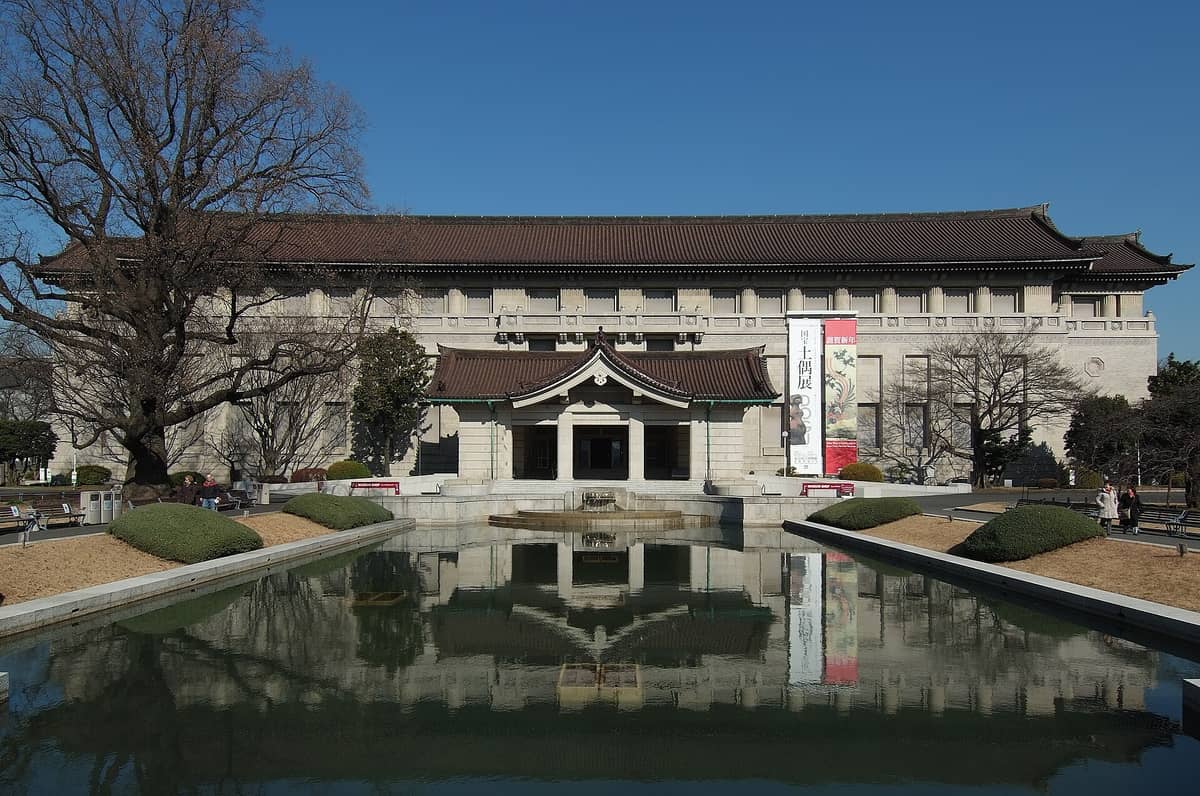
What the Tokyo National Museum Actually Is
The Tokyo National Museum, known in Japanese as 東京国立博物館 (Tōkyō Kokuritsu Hakubutsukan), is the oldest national museum in Japan and holds the country's largest museum collection. Its origins trace back to 1872, when a national exposition in Ueno laid the groundwork for what would become a permanent institution of cultural preservation. Today the museum's collection numbers over 120,000 objects, with several thousand on display at any given time.
The grounds feel less like a single building and more like a compact cultural campus. Six main structures are spread across the grounds inside Ueno Park, each focused on a different region or discipline: the Honkan (Japanese Gallery) as the centrepiece, the Toyokan for Asian art, the Heiseikan for archaeology, the Hyokeikan for special occasions and overflow, the Kuroda Memorial Hall for Western-style Japanese painting, and the Gallery of Horyuji Treasures housing extraordinary Buddhist objects from Nara. Planning which buildings to prioritize before you arrive will save significant time.
💡 Local tip
Check the museum's official website before visiting. Special exhibitions run several times per year and carry separate admission fees on top of the regular collection ticket. Some blockbuster shows may also use timed-entry slots or other crowd-control measures.
The Honkan: Where Most Visitors Should Start
The Honkan, or Japanese Gallery, is the architectural and intellectual heart of the museum. The current building dates from 1938, designed in what is sometimes called the Imperial Crown style, blending a Western structural frame with a sweeping Japanese roof. Its wide stone staircase and symmetrical facade give it a formal, almost governmental weight that sets the tone before you step inside.
Inside, 24 rooms on two floors trace Japanese art history from prehistoric Jomon pottery through the Meiji era. The layout moves from ancient clay figurines and haniwa sculptures to samurai armor, lacquerware, netsuke, textiles, and later paintings and screens. The armor collection alone justifies the visit for many, with full suits displayed under focused lighting that reveals the meticulous lacquer and silk cord construction. The armor collection alone justifies the visit for many, with full suits displayed under focused lighting that reveals the meticulous lacquer and silk cord construction.
Room lighting throughout the Honkan is generally subdued and warm, designed to protect fragile textiles and paper while creating an atmosphere that encourages close looking. Bring reading glasses if you use them. Labels are available in Japanese and English in many areas, with enough context to follow the collection without a guide, though the museum does offer audio guides for an additional fee.
Tickets & tours
Hand-picked options from our booking partner. Prices are indicative; availability and final rates are confirmed when you complete your booking.
Tour to Mt. Fuji Area, Oshino Hakkai and Kawaguchi Lake from Tokyo
From 57 €Instant confirmationFree cancellationNikko UNESCO Shrine and Nature View 1-Day Tour from Tokyo
From 78 €Instant confirmationFree cancellationYanaka: historical walking tour in Tokyo's old town
From 40 €Instant confirmationFree cancellationMeiji Shrine, Imperial Palace, Asakusa and Tokyo Skytree Entry
From 34 €Instant confirmationFree cancellation
The Gallery of Horyuji Treasures: The Most Undervisited Building
For visitors with a specific interest in Buddhist art, the Gallery of Horyuji Treasures is unmissable and consistently less crowded than the Honkan. The building itself, designed by Yoshio Taniguchi and opened in 1999, is an exercise in restrained modernism: a rectangular glass and steel pavilion set above a shallow reflecting pool. On clear mornings, the reflection creates a striking stillness before the tourist rush arrives.
Inside, approximately 300 objects from Horyuji Temple in Nara are displayed: gilt bronze Buddhist figures, ornate coronets, lacquered wooden masks from the Gigaku performance tradition, and embroidered silk banners. These objects were donated to the Imperial Household in 1878 and are now held at the museum in climate-controlled cases. The condition and rarity of many pieces is exceptional. The gallery is quiet by design, with a cool, library-like atmosphere that rewards slow, attentive looking.
Best Times to Visit and How the Experience Changes
Weekday mornings, particularly Tuesday through Thursday, offer the most comfortable experience. The museum opens at 09:30 and the first hour tends to be noticeably quieter than late morning and afternoon. Tour groups and school parties typically arrive mid-morning and peak around 11:00. If you arrive at opening, you can cover the upper floor of the Honkan before the first group rush.
Friday and Saturday evenings are worth knowing about. The museum extends its hours to 20:00 on these days (last admission 19:30), which creates a genuinely different atmosphere. Afternoon crowds thin out by 17:00, and the final two hours tend to be quieter and more contemplative. The museum's garden, visible from several interior windows, takes on a different quality in fading light. Evening visits are particularly practical for travelers with full daytime schedules.
Spring cherry blossom season (typically late March to early April) brings heavy foot traffic to Ueno Park as a whole, which spills into the museum grounds. The garden behind the Honkan opens to the public during this period and is worth a short detour, but expect the museum itself to be busier than usual. Autumn foliage season sees similar patterns. If visiting during either peak season, arriving right at 09:30 is strongly advisable.
⚠️ What to skip
The museum is closed on Mondays. If Monday falls on a public holiday, it opens on Monday and closes the following Tuesday instead. Always check the official calendar before planning your visit around the museum.
Getting There and Practical Logistics
The museum sits at the northern end of Ueno Park, a 10-minute walk from JR Ueno Station via the Park Exit. The route is straightforward: follow the main park path north past the pond and through the cluster of other cultural institutions. The walk passes the Ueno Park main pond and several other museums, so allow extra time if you are tempted to explore along the way. From Tokyo Metro's Ueno Station (Ginza and Hibiya Lines), or Nezu Station on the Chiyoda Line, the walk extends to around 15 minutes.
Coin lockers are available inside the main gate area, which is useful if you are carrying a day bag or luggage. The museum prohibits large bags inside the galleries, and bag checks are available at no extra charge near the entrance. Photography is permitted in most permanent collection galleries without flash, but some rooms and all special exhibitions restrict photography entirely. Look for posted signs at each room entrance.
Accessibility is generally good across the main buildings. The Honkan, Toyokan, Heiseikan, and Gallery of Horyuji Treasures all have elevators and ramps. The historic Hyokeikan is the exception and has limited barrier-free access. Wheelchairs and walking sticks are available to borrow from museum staff. Visitors with a disability certificate and one accompanying person enter free for regular collection exhibitions.
What to Eat, Skip, and Do Nearby
The museum has a cafe and restaurant inside the grounds, open during museum hours. Quality is adequate but unremarkable. A better option for lunch is to exit back into Ueno Park and head south toward Ueno's surrounding streets, where ramen shops, soba restaurants, and the sprawling Ameyoko market are all within walking distance. The Ameyoko market street runs along the JR Yamanote Line tracks and offers a very different kind of cultural experience as a counterpoint to the museum's formality.
Visitors with more time in the neighborhood should also consider the National Museum of Western Art, which sits just inside the Ueno Park entrance, a short walk from the Tokyo National Museum. Its permanent collection includes European paintings and sculptures from the medieval period through the early twentieth century, and the building itself, designed by Le Corbusier, is a UNESCO World Heritage Site. Combining both museums in a single day is feasible with an early start.
The broader Ueno-Akihabara area rewards extended exploration. If Japanese cultural history is your focus, the National Museum of Nature and Science is also in the park and provides strong context for Japan's natural and scientific heritage. For a more detailed overview of how this neighborhood fits into a Tokyo itinerary, the guide to the best museums in Tokyo covers the full range of options across the city.
An Honest Assessment: Who This Is For and Who Might Find It Slow
The Tokyo National Museum is exceptional at what it does, but it is not a place that manufactures excitement. It is a traditional encyclopedic museum with deep, scholarly collections presented in a measured, formal register. If you are accustomed to interactive or immersive museum formats, the experience here will feel deliberately old-fashioned. Object labels are informative but rarely transformative, and some rooms can feel repetitive if you do not have a specific area of interest to anchor your attention.
Visitors traveling with young children should plan carefully. The galleries are quiet, the objects are often fragile, and the experience of spending two or more hours with ancient ceramics is genuinely not suited to most children under 10. The Heiseikan's archaeology section, with its clay figurines and reconstructed environments, tends to engage younger visitors better than the fine arts galleries.
For anyone with a sincere interest in Japanese art, history, craft, or material culture, this museum is among the strongest experiences Tokyo offers. The depth and quality of the collection is difficult to overstate, and the admission price for what is on display represents remarkable value. A return visit to focus on a single building or collection type is often more satisfying than trying to cover everything in one pass.
Insider Tips
- The museum's permanent collection includes objects that are changed periodically throughout the year to protect fragile items. Textiles and scrolls you see in one visit may not be on display on a return trip, which makes each visit genuinely distinct.
- Friday and Saturday evening visits (until 20:00) offer noticeably thinner crowds from around 17:30 onward. This is the quietest time to spend extended time with the major galleries in the Honkan.
- The garden behind the Honkan is open to the public during spring cherry blossom season and during special events. It is one of the more serene outdoor spaces in the Ueno area.
- University students can enter for ¥500 but must bring their student ID.
- If you have limited time, focus exclusively on the Honkan upper floor and the Gallery of Horyuji Treasures. These two areas represent the museum's greatest strengths and can be covered meaningfully in around two hours.
Who Is Tokyo National Museum For?
- First-time visitors to Japan who want a comprehensive grounding in Japanese art and cultural history
- Art and design enthusiasts with specific interests in Buddhist sculpture, samurai armor, lacquerware, or ukiyo-e
- Rainy-day visitors looking for a full-day indoor cultural program in central Tokyo
- Travelers combining a museum visit with a broader Ueno Park afternoon
- Budget-conscious visitors: the regular collection offers exceptional depth at ¥1,000 for adults
Nearby Attractions
Other things to see while in Ueno & Akihabara:
- Akihabara Electric Town
Akihabara Electric Town (秋葉原電気街) is the beating heart of Tokyo's electronics and otaku culture. Stretching from Akihabara Station along Chuo-dori and its surrounding alleys, the district packs multi-story electronics megastores, retro game shops, anime merchandise outlets, and maid cafés into a few dense city blocks. Entry is free. The real cost is time and willpower.
- Ameyoko Market
Ameyoko Market (Ameya-Yokocho) stretches between Ueno and Okachimachi stations in central Tokyo, packing fresh seafood, discount clothing, snacks, and cosmetics into roughly 500 meters of covered and open-air stalls. Entry is free, the energy is genuine, and the history runs deep.
- Kanda Myojin Shrine
Kanda Myojin Shrine has stood as Edo's spiritual guardian for nearly 1,300 years, yet sits a seven-minute walk from one of Tokyo's most modern districts. The shrine grounds are free to enter and effectively accessible at all hours, making it an accessible counterpoint to the neon intensity of nearby Akihabara.
- Kyu-Iwasaki-tei Garden
Kyu-Iwasaki-tei Garden preserves the former Tokyo residence of the Iwasaki family, founders of Mitsubishi, in the Ikenohata area of Taito Ward near Ueno. The estate combines a Victorian-style wooden mansion, a connected billiard hall, and a traditional Japanese garden — all for one of the lowest admission prices of any historic site in the city.