Akihabara Electric Town: Inside Tokyo's Most Electrifying District
Akihabara Electric Town (秋葉原電気街) is the beating heart of Tokyo's electronics and otaku culture. Stretching from Akihabara Station along Chuo-dori and its surrounding alleys, the district packs multi-story electronics megastores, retro game shops, anime merchandise outlets, and maid cafés into a few dense city blocks. Entry is free. The real cost is time and willpower.
Quick Facts
- Location
- Sotokanda, Chiyoda-ku, Tokyo 101-0021 (centered on Akihabara Station)
- Getting There
- JR Akihabara Station (Electric Town Exit) — JR Yamanote, JR Keihin-Tōhoku, JR Chūō-Sōbu lines; Tokyo Metro Hibiya Line; Tsukuba Express
- Time Needed
- 2–4 hours for a focused visit; a full day if you're serious about shopping
- Cost
- Free to walk and browse; arcades and maid cafés charge separately (maid cafés typically several hundred yen entry plus food/drinks)
- Best for
- Electronics bargain hunters, anime and manga fans, gaming collectors, and anyone curious about Japan's pop culture scene
- Official website
- akiba.or.jp/english/index.html
What Akihabara Electric Town Actually Is
Akihabara Electric Town is not a single building or theme park. It is an entire urban district in Chiyoda ward, roughly bounded by Akihabara Station and spreading along the broad avenue of Chuo-dori and the narrower side streets branching off it. The official Japanese name, 秋葉原電気街 (Akihabara Denkigai), translates directly as "Electric Town," a nickname that dates back to the district’s post-World War II origins as a market for radio parts and home appliances. As Japan's consumer electronics industry grew through the 1960s and 70s, Akihabara grew with it, becoming the country's dominant retail hub for televisions, refrigerators, audio equipment, and eventually computers.
The transformation into an otaku culture district happened organically through the 1980s and 1990s. As personal computing took hold, shops selling components attracted a technically minded crowd who also consumed anime, manga, and video games. Retailers followed demand. By the early 2000s, Akihabara had become internationally recognized as a center for anime merchandise, figurines, doujinshi (self-published comics), retro games, and cosplay goods. Today those two identities, cutting-edge electronics and otaku pop culture, coexist on the same block, sometimes in the same building.
ℹ️ Good to know
The streets around Akihabara Station are publicly accessible around the clock, but most shops open around 10:00 and close by 20:00 or later in the evening. Restaurants and maid cafés often stay open later into the evening. Plan your electronics shopping for afternoon on weekdays to avoid the heaviest weekend crowds.
Arriving and First Impressions
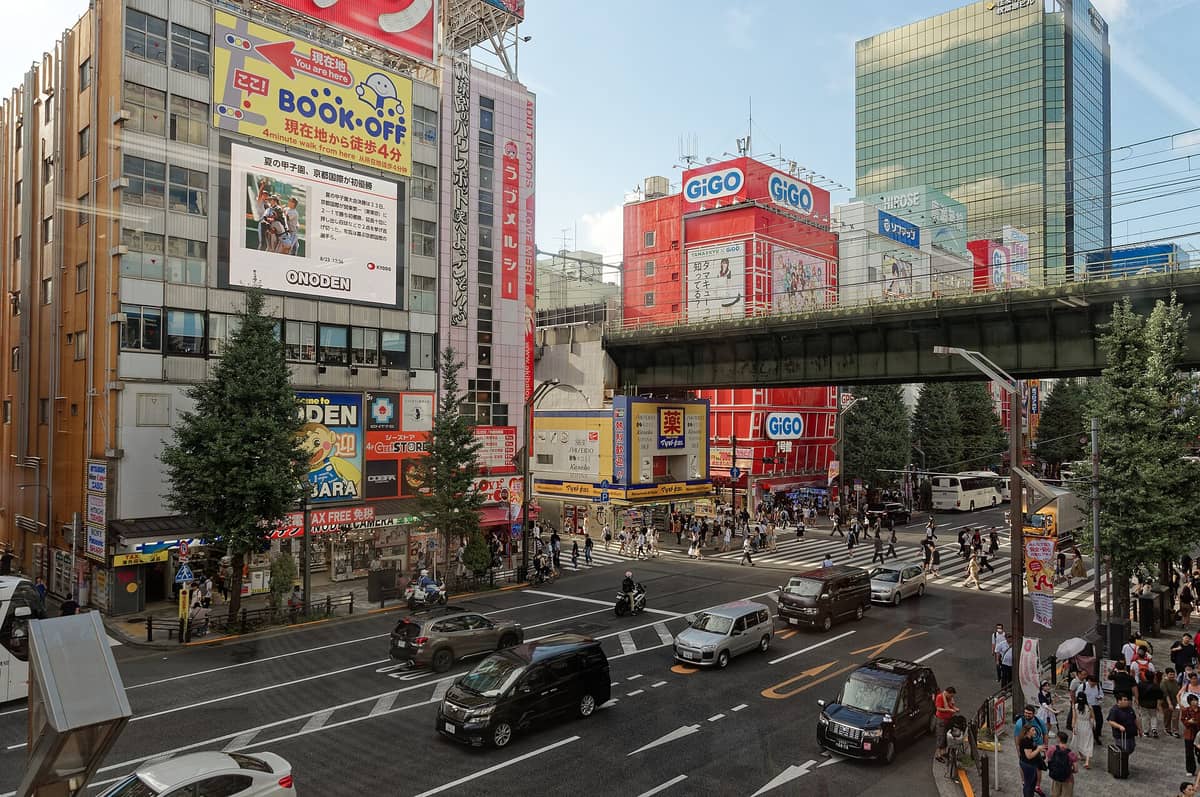
Step out of the JR Akihabara Station through the Electric Town Exit (電気街口) and the district introduces itself immediately. The exit deposits you directly at the foot of Chuo-dori, where the visual density is immediate: multi-story buildings wrapped in LED signage, shop fronts stacked with boxed figures and component panels, and the faint tinny audio of game music drifting from arcade floors above. On weekday mornings around 10:00, the street is calm enough to actually read the shop signs. On weekend afternoons, the main avenue from the station to UDX plaza becomes shoulder-to-shoulder with visitors from across Japan and internationally.
A practical note on orientation: Chuo-dori is the spine, but the most interesting finds are often one street over. The alleys east and west of the main road hold smaller specialist shops, including vendors of vintage audio equipment, rare arcade boards, and secondhand anime goods priced below what you will find in the flagship stores. These alleys smell faintly of heated electronics and old paper, a combination entirely unique to Akihabara.
Akihabara sits within the broader Ueno-Akihabara area, placing it within easy walking distance of Ueno's parks and museums. If you are building a full-day itinerary across the neighborhood, the contrast between the two zones is one of Tokyo's more interesting character shifts.
Tickets & tours
Hand-picked options from our booking partner. Prices are indicative; availability and final rates are confirmed when you complete your booking.
Drawing Omelette Rice Experience at Akihabara Maid Cafe
From 34 €Instant confirmationFree cancellationAkihabara Electric Town Adventure with an Expert Guide
From 130 €Instant confirmationFree cancellationAkihabara anime and gaming adventure tour
From 51 €Instant confirmationFree cancellationProfessional Make-Up and Photography Experience in Akihabara
From 1.271 €Instant confirmationFree cancellation
Electronics: What's Still Worth Shopping Here
The honest picture is that Akihabara is no longer the undisputed cheapest place in Tokyo for mainstream electronics. Online retail and large suburban chains have closed much of the price gap. What the district still offers is depth of selection, particularly for components, hobbyist electronics, audiophile equipment, and specialist items that online retail does not display well. Yodobashi Camera Multimedia Akiba, the enormous store immediately north of the station, stocks an almost absurd breadth of consumer electronics across multiple floors, with English-speaking staff available and tax-free shopping for international visitors.
For component buyers and repair hobbyists, the small shops along Kanda Kawaramachi-dori and the indoor arcades around the station's western side offer resistors, soldering kits, retro PC hardware, and surplus electronics in a way that no online store replicates. Bring cash: many of these smaller vendors operate cash-only, and the prices are often written in Japanese on paper tags. The tactile pleasure of sifting through bins of old IC chips while a shop owner watches a baseball game on a small TV is a sensory experience no photograph conveys.
💡 Local tip
Tax-free shopping (10% consumption tax refund) is available at most larger stores for non-resident foreign visitors spending over ¥5,000 at a single store in one day. Carry your passport. The refund process is handled at a dedicated counter and takes about 10 minutes.
Anime, Manga, and Gaming: The Otaku Ecosystem
The anime and manga retail ecosystem in Akihabara operates across every price tier simultaneously. Mandarake, spread across multiple locations in the district, is one of the most respected names for secondhand anime goods, rare figures, and vintage manga volumes. Animate and Kotobukiya carry new merchandise and model kits. In between, dozens of smaller operators fill their windows with sealed figurines, posters, and character goods from whatever series is currently popular.
Retro gaming deserves particular attention. Several shops in Akihabara specialize in physical game media from the Famicom era through to more recent console generations. Prices for genuinely rare cartridges can be high, but the breadth of inventory is extraordinary. Even visitors with no intention of buying will find themselves lingering over glass cases of hardware they had forgotten existed. Super Potato, one of the district's most recognized retro game shops, occupies multiple floors and has been a fixture here long enough to feel like a small museum.
If anime and manga culture is a central reason for your visit, it is worth reading a broader guide to Tokyo's anime and manga scene before you arrive. Akihabara is the most concentrated single area, but not the only one.
Maid Cafés and the Soft Entertainment Layer
Maid cafés are a format that originated in Akihabara in the early 2000s and remain a genuine cultural fixture rather than a tourist novelty invented for export. Staff dressed in maid costumes serve food and drinks while performing table-side games or songs with guests. The experience is deliberately theatrical and, by most Western social norms, distinctly unusual. It is also entirely good-natured and far less strange in context than it sounds in description.
Most maid cafés charge a table fee of a few hundred yen per person on top of food and drink orders, though exact pricing varies significantly by venue. Some popular spots require reservations on weekends. @home café, Maidreamin, and a handful of others maintain English menus and are accustomed to international visitors. If you go in treating it as what it is, a performance genre with its own rules, rather than as an ironic spectacle to photograph, the experience is genuinely entertaining.
⚠️ What to skip
Photography inside maid cafés is usually restricted to specific moments at the staff's direction, and filming is typically prohibited. Follow the rules posted at the entrance. Some cafés also add service charges or minimum order requirements that are not always obvious from outside signage — confirm the pricing structure before sitting down.
How the District Changes Through the Day
Weekday mornings, roughly 10:00 to noon, are the calmest window. The main boulevard is navigable, the electronics floors of large stores are quiet enough to browse without pressure, and the smaller alley shops are fully stocked before the day's selling begins. The light at this hour is good for photography: the neon and LED signage contrasts interestingly with the plain concrete of the older buildings.
By mid-afternoon on Sundays and some holidays, Chuo-dori fills to the point where it is closed to traffic between around 13:00 and 18:00 from April to September and until around 17:00 from October to March, becoming a pedestrian street. This is the most photogenic version of Akihabara, but also the most congested. The noise level rises considerably. The smell of yakitori and sweet fried food from street vendors mixes with the cooled air pushing out from shop doors. If your goal is focused shopping or photography of the architecture, weekday mornings are more productive. If your goal is absorbing the atmosphere at full saturation, come on a Sunday afternoon.
After dark, roughly after 20:00, most electronics and merchandise shops close. The district shifts to restaurants, arcades, and maid cafés. The lighting becomes entirely artificial and the crowd skews younger. It is a quieter, stranger version of the same neighborhood, and worth seeing briefly even if you do not plan to stay late.
Akihabara's pedestrian weekend hours are just one example of the kind of detail covered in a broader Tokyo shopping guide — useful context if you are planning multiple shopping districts in a single trip.
Practical Details for Visitors
Getting there is straightforward from almost anywhere in central Tokyo. The JR Yamanote Line stops at Akihabara Station and, together with the JR Keihin-Tōhoku and JR Chūō-Sōbu Local lines, connects the district to Shinjuku, Shibuya, Ueno, and Tokyo Station. The Tokyo Metro Hibiya Line provides a direct link from Ginza and Roppongi. From Akihabara Station, use the Electric Town Exit (電気街口) to emerge at the center of the action on the western side of the tracks. The station also has a central exit that connects to the Akihabara UDX office complex and is less useful for visitors focused on the shopping district.
The streets themselves are flat and easy to navigate on foot. The main accessibility limitation is inside individual buildings: many older electronics and secondhand shops occupy narrow staircase buildings with no elevator access. Yodobashi Akiba, BIC Camera, and the larger modern complexes are fully step-free. If mobility is a concern, the main avenue is entirely accessible but the side-alley shops may not be.
Weather matters here more than you might expect. Rain drives everyone off the street and into the multi-story stores, making the floors uncomfortably crowded. In summer (July and August), the outdoor portions of a visit become genuinely uncomfortable by early afternoon due to heat and humidity. Bring a bottle of water, and note that convenience stores (7-Eleven, Lawson, FamilyMart) are plentiful in the district if you need to restock. December and January offer the most comfortable outdoor browsing conditions, though evenings get cold quickly.
For general climate guidance on timing a Tokyo trip, see the overview of the best time to visit Tokyo — spring and autumn consistently offer the most comfortable conditions for any extended walking in the city.
Insider Tips
- The weekday lunch window (11:30–13:30) empties out the electronics floors of large stores as local workers leave and tourists haven't yet arrived in full force. It is the best window for unhurried browsing at Yodobashi Akiba or the specialist component shops.
- Chuo-dori’s pedestrian closure on Sundays runs roughly 13:00–18:00 from April to September and 13:00–17:00 from October to March. If you want to photograph the street without cars and without extreme crowds, arrive at 13:00 on the dot before foot traffic peaks.
- The indoor electrical component arcades (covered passages lined with tiny stalls) on the western side of the station are the most 'old Akihabara' experience remaining. They are easy to miss because they do not announce themselves loudly, but they reward curiosity with an almost unchanged atmosphere from the district's 1970s electronics-market era.
- For secondhand anime goods, Mandarake's Akihabara branch is the local benchmark. Prices are marked, staff are knowledgeable, and the inventory is rotated frequently. Go early in the day for the freshest stock.
- Many shops in Akihabara accept IC transit cards (Suica, Pasmo) as payment alongside cash and credit cards, which is useful if you are already carrying transit credit. Check at the register before assuming — smaller shops are more likely to be cash-only.
Who Is Akihabara Electric Town For?
- Anime, manga, and gaming fans who want the deepest physical retail selection in Japan
- Electronics and component hobbyists looking for specialist parts or audiophile gear
- First-time visitors to Japan curious about otaku culture at its geographic source
- Retro game collectors seeking Famicom-era cartridges and hardware in original condition
- Photographers interested in Tokyo's most visually layered streetscape, particularly at dusk or during weekend pedestrian hours
Nearby Attractions
Other things to see while in Ueno & Akihabara:
- Ameyoko Market
Ameyoko Market (Ameya-Yokocho) stretches between Ueno and Okachimachi stations in central Tokyo, packing fresh seafood, discount clothing, snacks, and cosmetics into roughly 500 meters of covered and open-air stalls. Entry is free, the energy is genuine, and the history runs deep.
- Kanda Myojin Shrine
Kanda Myojin Shrine has stood as Edo's spiritual guardian for nearly 1,300 years, yet sits a seven-minute walk from one of Tokyo's most modern districts. The shrine grounds are free to enter and effectively accessible at all hours, making it an accessible counterpoint to the neon intensity of nearby Akihabara.
- Kyu-Iwasaki-tei Garden
Kyu-Iwasaki-tei Garden preserves the former Tokyo residence of the Iwasaki family, founders of Mitsubishi, in the Ikenohata area of Taito Ward near Ueno. The estate combines a Victorian-style wooden mansion, a connected billiard hall, and a traditional Japanese garden — all for one of the lowest admission prices of any historic site in the city.
- National Museum of Nature and Science
The National Museum of Nature and Science (国立科学博物館) is Japan's leading institution for natural history and the history of science and technology. Spread across two pavilions in Ueno Park, it covers everything from dinosaur fossils to the development of Japanese industry — and admission for high school students and under is free.