Ameyoko Market: Ueno's Open-Air Street Market Worth Your Time
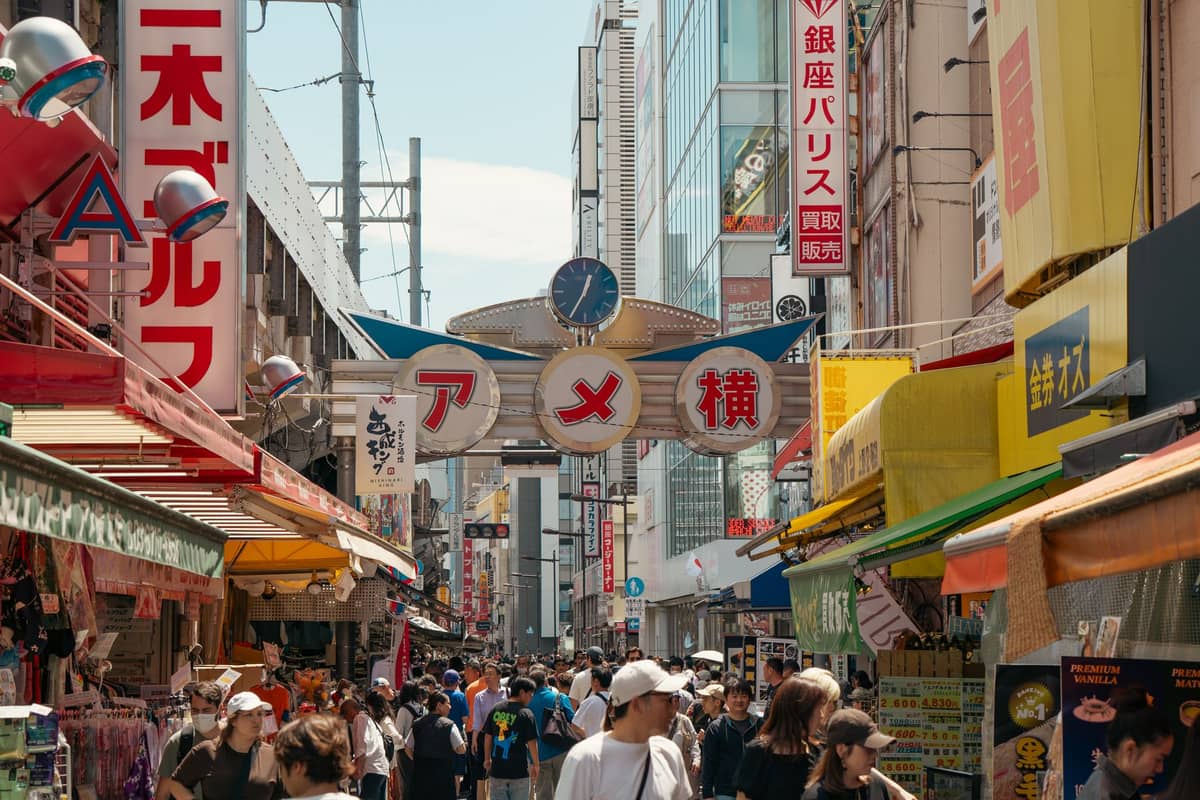
Ameyoko Market (Ameya-Yokocho) stretches between Ueno and Okachimachi stations in central Tokyo, packing fresh seafood, discount clothing, snacks, and cosmetics into roughly 500 meters of covered and open-air stalls. Entry is free, the energy is genuine, and the history runs deep.
Quick Facts
- Location
- 6-10-7 Ueno, Taito City, Tokyo — between JR Ueno and JR Okachimachi stations
- Getting There
- JR Ueno Station (Central Gate, 3-5 min walk); Tokyo Metro Hibiya/Ginza Line at Ueno Station; JR Okachimachi Station
- Time Needed
- 45 minutes to 2 hours depending on shopping intent
- Cost
- Free entry; goods priced in JPY, vary by stall
- Best for
- Street food, discount shopping, authentic local atmosphere, food photography
- Official website
- www.ameyoko.net
What Ameyoko Market Actually Is
Ameyoko Market, formally Ameya-Yokocho (アメヤ横丁), is a dense, roughly 500-meter strip of market stalls and shops that runs below the elevated JR tracks connecting Ueno and Okachimachi stations. It is one of the few places in Tokyo where merchants still call out to customers, prices are sometimes negotiable, and the street itself doubles as a communal dining space. Around 400–500 shops operate along the street and in the narrow alleys branching off it, selling everything from raw seafood piled high on crushed ice to imported cosmetics, dried goods, running shoes, and army-surplus clothing.
Entry is free and the market is open daily, with most shops running from around 10:00 to 19:00 or 20:00 depending on the establishment. Some stalls close on selected Wednesdays, but the overall market rarely feels empty on any day of the week. There is no ticket booth, no turnstile, and no clear boundary where the market begins — you'll know you've arrived when the overhead railroad tracks narrow the sky and the smell of grilled skewers hits you at street level.
ℹ️ Good to know
No entrance fee. Most shops open around 10:00 and close between 19:00–20:00, though hours vary by shop. Many close on some Wednesdays. Year-end (late December) is the busiest and most atmospheric time to visit, but also the most crowded.
The History Behind the Stalls
The name Ameya-Yokocho is commonly translated as “Candy Store Alley,” a reference to the post-World War II black market that sprang up here after 1945. With formal supply chains destroyed, vendors sold whatever they could source — including American-surplus goods, sweets made from potato starch, and basic provisions. The area became essential for survival shopping at a time when much of Tokyo had been reduced to rubble.
Over the following decades the black market evolved into a legitimate commercial street, but the competitive, high-turnover character it developed during that period never entirely disappeared. The discounting culture, the vendors who shout prices into the crowd, the sense that a good deal is always nearby — these are direct inheritances from those postwar years. Taito Ward, where the market sits, has historically been one of Tokyo's more working-class districts, and Ameyoko retained that character even as surrounding Ueno was upgraded with world-class museums and Shinkansen connections.
Today the market is closely associated with the broader Ueno and Akihabara area, though it feels tonally distinct from the polished museum precinct of Ueno Park a few minutes away. The contrast is part of what makes it interesting.
Tickets & tours
Hand-picked options from our booking partner. Prices are indicative; availability and final rates are confirmed when you complete your booking.
Tsukiji Fish Market Walking Food Tour
From 40 €Instant confirmationFree cancellationMt.Fuji,Owakudani, Hakone Cruise & Ropeway, Oshino Hakkai 1-Day Trip
From 54 €Instant confirmationFree cancellationTour to Mt. Fuji Area, Oshino Hakkai and Kawaguchi Lake from Tokyo
From 57 €Instant confirmationFree cancellationNikko UNESCO Shrine and Nature View 1-Day Tour from Tokyo
From 78 €Instant confirmationFree cancellation
Walking the Market: What You'll Find Where
The main artery runs north-south along the base of the elevated rail embankment. Heading south from Ueno Station's Central Gate, the first section is dominated by fresh food stalls: trays of tuna cuts at prices lower than supermarkets, king crab legs splayed over ice, oysters shucked to order, and tanks of live seafood. The vendors here are aggressive in a good-natured way, handing out samples and calling out discounts, especially in the late afternoon as they prepare to close.
Further south, the product mix shifts. Dried goods, nuts, seaweed, and spices appear alongside imported chocolates and snacks sold loose by the 100-gram scoop. Cosmetics stalls carrying Korean and Japanese brand surplus stock are common in the covered arcade sections. Clothing increases in density toward the Okachimachi end, with military-surplus outerwear, sportswear, and cheap basics stacked in open bins. The underside of the rail bridge shelters narrow alley bars — yakitori places barely wide enough for a counter and five stools — that fill with office workers from early evening.
💡 Local tip
If fresh seafood is your goal, aim for the northern section near Ueno Station. If you're browsing clothing or cosmetics, work from the Okachimachi end northward. Going against the usual foot-traffic direction gives you more space to stop and look.
How the Market Changes Through the Day
Arriving before noon on a weekday is the calmest experience. The stalls are set up and restocked, the seafood displays are at their most orderly, and you can stop and look without being pressed by the crowd. Vendors are often more willing to engage slowly and explain their products. The market at this hour smells mainly of brine and fresh fish, with occasional gusts of coffee from the few cafes tucked into the side lanes.
By mid-afternoon on weekends the lane becomes genuinely crowded. Tourists mix with local shoppers, the calling and discounting intensifies, and the food stall operators start reducing prices to move perishable stock before close. This is the most photogenic window if you want the market at full pitch — faces lit by the filtered light under the rail bridge, vendors in happi coats gesturing at trays of scallops, the contrast of century-old market culture under an active train line. The noise level rises significantly: train rumbles every few minutes overhead, vendor calls overlap, and the narrow passage amplifies everything.
After 18:00, the street transitions. Most food stalls begin closing out their fresh stock, but the small standing bars and izakayas under the tracks come alive. The crowd gets younger, the smell shifts from seafood to charcoal smoke and beer, and the atmosphere becomes more bar-street than market. For visitors primarily interested in fresh produce, this window is too late. For those who want to experience the evening drinking culture built into the market's bones, it is the most interesting hour.
Practical Guide: Getting There and Getting Around
The most convenient approach is via JR Ueno Station’s Central Gate, which deposits you directly onto the market’s northern end within about a 3–5 minute walk. The Tokyo Metro Hibiya and Ginza Lines also stop at Ueno Station and connect to nearby exits. From Okachimachi Station, one stop south on the JR Yamanote Line, you reach the market’s southern end. Both approaches work; which you choose depends on where you’re coming from.
Ameyoko pairs naturally with Ueno Park and the cluster of museums nearby, including the Tokyo National Museum. A half-day that combines the park and museum complex with an afternoon walk through the market is one of the more satisfying itineraries in this part of the city.
For wheelchair users and those with limited mobility, the nearby train stations are accessible with elevators and barrier-free routes. The market itself is less accommodating: the lanes are narrow, goods frequently spill onto the pavement, and crowds at busy times make maneuvering a mobility device difficult. Tactile paving is generally not present along the market lanes. Public toilets are available at both train stations, and dedicated public facilities within the market area are limited.
⚠️ What to skip
There are no widely accessible public toilets signed inside the market itself. Use facilities at Ueno Station or Okachimachi Station before entering, especially if visiting with children.
Food Worth Stopping For
Eating at Ameyoko is less formal than anywhere else in central Tokyo. Many visitors grab food from counters and eat standing on the pavement. The most characteristic items include karaage (fried chicken) sold by weight from open fryers, skewered meats grilled over charcoal, fresh oysters eaten with a splash of ponzu, and thick slices of tuna belly that the vendors will explain in competitive detail. Thai and Korean food stalls have become increasingly common in the lower sections, reflecting the international character the market has developed over the past two decades.
For context on Tokyo's wider street food scene, the Tokyo street food guide covers markets, stalls, and neighborhoods across the city, including how Ameyoko compares to other food-market options.
Cash remains more common than cards in many of the smaller stalls, though this is slowly changing. Bring yen if you want to buy fresh food from the market vendors.
Photography and What to Expect Visually
The compressed space under the JR tracks creates specific lighting conditions that are difficult to replicate elsewhere in Tokyo. In daylight, bright overcast conditions work best because direct sunlight creates harsh shadows from the overhead structure. Late afternoon produces warm sidelight that catches the metallic surfaces of seafood displays well. The visual density is high: signs layered over signs, products stacked in organized disorder, vendors in uniform aprons against backgrounds of packed merchandise.
Be aware that many stall owners do not want cameras pointed directly at their goods without engagement or purchase. Photographing the general scene, the street level, and the train tracks is uncontroversial. Pointing a long lens at a specific vendor's face or produce display from a distance is less welcome. The usual rule applies: buy something first, then ask.
Who Will Enjoy This and Who Might Not
Ameyoko works well for travelers who enjoy unscripted urban experiences, who like food shopping as an activity in itself, or who want to see a side of Tokyo that predates the polished retail experience of Ginza or Omotesando. It is also genuinely useful for self-catering: the seafood and dried goods are good quality at fair prices, and the market is an efficient place to stock up.
Those seeking pristine, curated retail should head to Ginza instead. Visitors who find crowds and noise draining will struggle here on weekend afternoons. The market is not particularly well-suited to travelers with sensory sensitivities or those using wheelchairs during peak hours, due to the physical constraints of the lanes.
It is also worth being honest about expectations: Ameyoko is not exotic or undiscovered. Tourist presence is constant and some stalls have leaned into that, offering products aimed more at sightseers than residents. The food stalls and the vendors at the seafood end remain genuinely local in character, but selective browsing is required.
Insider Tips
- Visit on a weekday morning for the calmest experience and best seafood selection. The freshest stock arrives early and the lanes are navigable before lunchtime crowds build.
- Late December, particularly the 28th through 31st, sees vendors dramatically cutting prices on perishables for the New Year. The market at this time is packed and the energy is extraordinary — locals stock up for osechi (New Year’s food) and vendors auction off remaining stock at steep discounts.
- The small covered alleys running perpendicular to the main lane, especially on the west side near the railway embankment, contain some of the oldest standing bars in the market. These are not tourist bars. They open early evening and fill quickly with regulars.
- Prices at the fresh food stalls are sometimes listed in ways that assume you'll buy in quantity. If you ask to buy a smaller amount than displayed, many vendors will agree, especially later in the afternoon when moving stock matters more than price per unit.
- The market runs south to Okachimachi, but most visitors turn back at the midpoint. The southern section has noticeably fewer tourists and a more workaday character, with better prices on practical goods like kitchenware and basics.
Who Is Ameyoko Market For?
- Food lovers interested in fresh seafood and Japanese street snacks at street-market prices
- Photographers looking for dense urban texture, market culture, and candid scenes
- Travelers combining a half-day in Ueno Park and museums with an afternoon street-market walk
- Budget shoppers hunting discounted clothing, cosmetics, and imported goods
- Anyone wanting a tangible connection to Tokyo's postwar commercial history
Nearby Attractions
Other things to see while in Ueno & Akihabara:
- Akihabara Electric Town
Akihabara Electric Town (秋葉原電気街) is the beating heart of Tokyo's electronics and otaku culture. Stretching from Akihabara Station along Chuo-dori and its surrounding alleys, the district packs multi-story electronics megastores, retro game shops, anime merchandise outlets, and maid cafés into a few dense city blocks. Entry is free. The real cost is time and willpower.
- Kanda Myojin Shrine
Kanda Myojin Shrine has stood as Edo's spiritual guardian for nearly 1,300 years, yet sits a seven-minute walk from one of Tokyo's most modern districts. The shrine grounds are free to enter and effectively accessible at all hours, making it an accessible counterpoint to the neon intensity of nearby Akihabara.
- Kyu-Iwasaki-tei Garden
Kyu-Iwasaki-tei Garden preserves the former Tokyo residence of the Iwasaki family, founders of Mitsubishi, in the Ikenohata area of Taito Ward near Ueno. The estate combines a Victorian-style wooden mansion, a connected billiard hall, and a traditional Japanese garden — all for one of the lowest admission prices of any historic site in the city.
- National Museum of Nature and Science
The National Museum of Nature and Science (国立科学博物館) is Japan's leading institution for natural history and the history of science and technology. Spread across two pavilions in Ueno Park, it covers everything from dinosaur fossils to the development of Japanese industry — and admission for high school students and under is free.