TD Garden: Boston's Premier Sports and Concert Arena
TD Garden sits directly above North Station in downtown Boston, serving as the home arena for the Boston Celtics and Boston Bruins. Whether you're attending an NBA playoff game, an NHL matchup, or a major concert, this guide covers everything you need to know before you go.
Quick Facts
- Location
- 100 Legends Way, Boston, MA 02114 (Downtown Boston, above North Station)
- Getting There
- North Station (MBTA Green & Orange Lines, plus Commuter Rail)
- Time Needed
- 3–4 hours for most events; doors open approximately 1–1.5 hours before start time
- Cost
- Ticketed events only; prices vary by event and seat location (USD). No general admission.
- Best for
- Sports fans, concert-goers, families, first-time Boston visitors
- Official website
- www.tdgarden.com
What Is TD Garden?
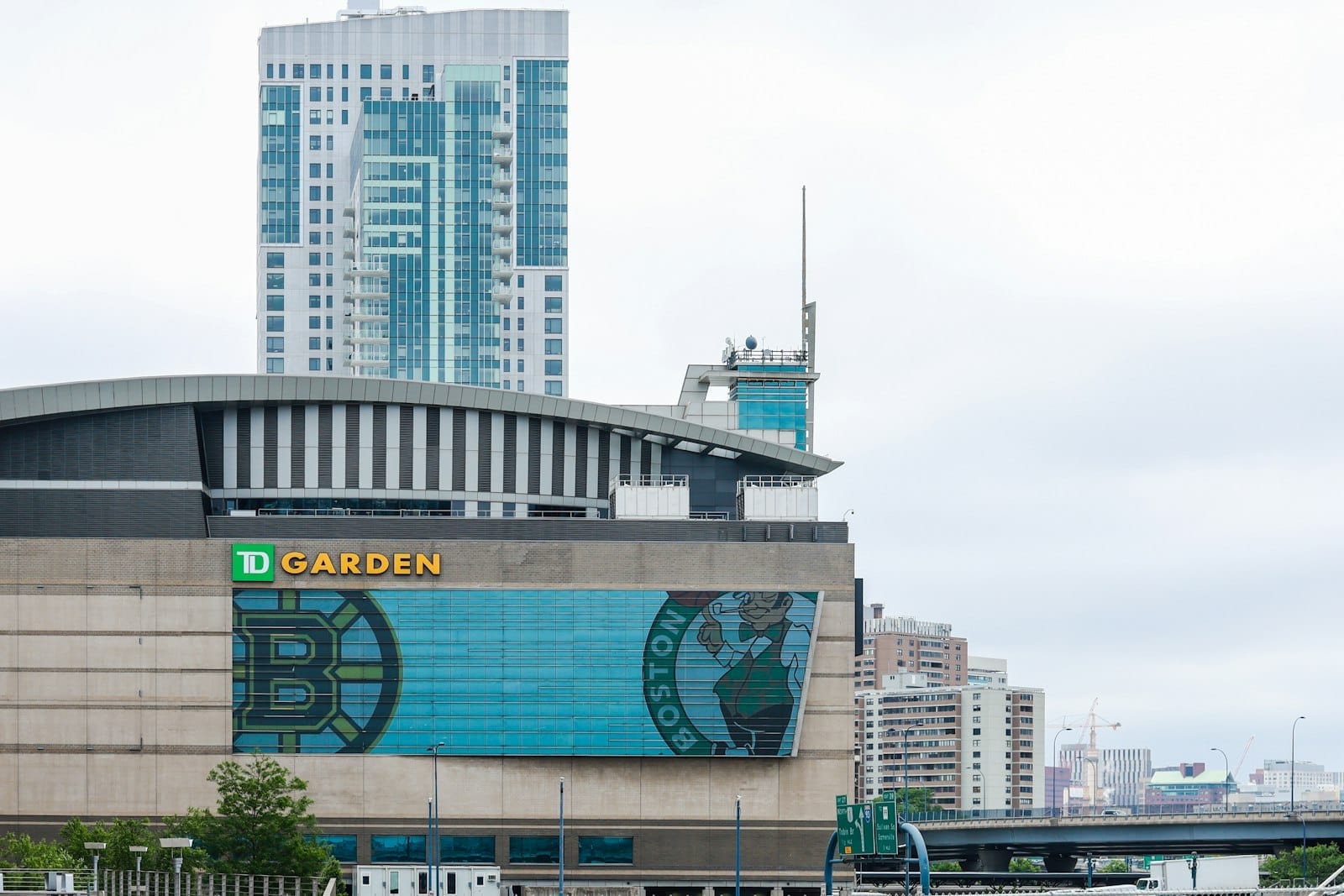
TD Garden is Boston's largest indoor arena, a 19,000-plus seat venue (19,156 for basketball and 17,850 for hockey) that has anchored the northern edge of downtown Boston since it opened in 1995. It replaced the original Boston Garden, a legendary but aging facility that once hosted Celtics championships and Bruins dynasties, and it has inherited much of that competitive legacy while operating at a modern scale.
The arena opened under the name FleetCenter, was renamed TD Banknorth Garden in 2005, and became simply TD Garden in July 2009. A naming-rights agreement with TD Bank runs through June 2045, so the name is settled for the foreseeable future. The venue is owned and operated by Delaware North, a hospitality and entertainment company, and it sits directly above MBTA North Station, one of the most heavily used transit hubs in New England.
For visitors exploring downtown Boston, TD Garden is hard to miss. The building rises at the intersection of Causeway Street and Legends Way, its exterior walkways and LED signage visible from the Rose Kennedy Greenway and the North End waterfront.
The Teams: Celtics and Bruins
TD Garden is the permanent home of two of Boston's most storied franchises. The Boston Celtics (NBA) play their home games here from October through April, with the playoffs extending into June. The Boston Bruins (NHL) skate at TD Garden from October through April as well, with their postseason running into June in strong years. On paper, that means roughly 70 to 80 professional regular-season home games per season between the two teams, making the arena one of the most consistently active in North America.
Celtics games draw a crowd that treats basketball as a civic event. The arena reaches capacity for most matchups, particularly against rival teams like the Miami Heat, Milwaukee Bucks, or New York Knicks. Noise levels in the upper deck during a fourth-quarter run can be startling if you've never experienced NBA playoff basketball in a sold-out building. Bruins crowds trend slightly different: louder during physical plays, attentive to line changes in a way that signals real hockey knowledge, and quick to fill the concourses with the smell of beer and arena pretzels the moment the horn sounds.
💡 Local tip
For first-timers: Bruins and Celtics tickets sell at very different price points depending on the opponent. A mid-season weeknight game against a lower-ranked team can be significantly more affordable than a weekend matchup against a rival. Check the official team websites and the TD Garden box office for current listings before going to secondary markets.
Tickets & tours
Hand-picked options from our booking partner. Prices are indicative; availability and final rates are confirmed when you complete your booking.
Boston Celtics Basketball Game at TD Garden
From 95 €Instant confirmationBoston Bruins ice hockey game ticket at TD Garden
From 52 €Instant confirmationBoston Summer Night Trolley Tour and River Cruise
From 27 €Instant confirmationFree cancellationLEGOLAND Discovery Center Boston tickets
From 26 €Instant confirmationFree cancellation
Concerts and Other Events
Beyond sports, TD Garden hosts a full calendar of concerts, family shows, and special events throughout the year. In concert configuration, the arena holds up to approximately 19,500 people, making it one of the largest indoor concert venues in New England. Major touring artists across genres have played here, and the floor is often converted to general admission standing for larger rock and pop productions.
Sightlines from the lower bowl are strong for most concert configurations. Upper-level seats for concerts can feel distant depending on stage positioning, so it is worth checking the specific seating map for each event before purchasing. The acoustics vary noticeably between productions: heavily amplified rock shows can feel overwhelming in some upper sections, while arena-pop productions with more production polish tend to manage sound better across the bowl.
Getting There: The Transit Advantage
TD Garden's single biggest practical advantage for visitors is its location directly above North Station. The MBTA Green Line (all branches) and Orange Line both stop here, and the North Station Commuter Rail serves suburbs across eastern Massachusetts, southern New Hampshire, and southern Maine via the Amtrak Downeaster connection. On event nights, the platform is coordinated to handle post-game crowds, though expect queues of 15 to 30 minutes after a major sellout event.
If you're coming from other parts of the city, the Orange Line from Back Bay or Downtown Crossing puts you at the door in under 10 minutes. From Cambridge, the Green Line connects through Government Center. The arena is also walkable in about 10 to 15 minutes from Faneuil Hall or the North End. For a full overview of getting around the city, see the guide to getting around Boston.
⚠️ What to skip
Driving and parking near TD Garden on event nights is expensive and slow. Multiple garages operate nearby, but all charge event-rate premiums, and Causeway Street becomes a bottleneck for 30 to 45 minutes after events end. Transit is the strongly preferred option for most visitors.
What to Expect on Event Day
Doors and Arrival
Doors typically open 60 to 90 minutes before the listed start time, though this varies by event type. For sports games, arriving 45 to 60 minutes early gives you time to find your seats, grab food, and absorb warmups without the full crowd pressure. For concerts, especially general admission floor events, early arrival matters significantly more if you want a good standing position.
The main entry points are on Causeway Street and Legends Way. Bag policies are enforced and have tightened in recent years across most major arenas. Check the TD Garden website before your event for current clear-bag requirements, which are now standard for many sports events.
Inside the Venue
The concourse layout is relatively straightforward for a venue of this size. Food and beverage options ring each level, with the usual arena offerings alongside a few Boston-specific food concepts. The lower bowl has noticeably better amenities and sight lines, but upper-deck seats for Celtics or Bruins games are still energetic and part of the atmosphere, particularly when the building is full.
The ice surface for Bruins games is converted to hardwood for Celtics games, a logistical operation that takes place between back-to-back events. If you're attending a game, the court or ice itself is visible from almost every seat in the building, a genuine advantage over older arena designs where structural pillars created obstructed views. Seating capacity is 19,156 for basketball and 17,850 for hockey as of the most recent arena configuration.
ℹ️ Good to know
Accessibility: TD Garden states a commitment to accessible accommodations across the venue, including seating options, entrances, and guest services. Contact the venue directly or review the Guest Services section of the TD Garden website before your visit to confirm specific accessibility needs.
The Neighborhood Before and After
The blocks around TD Garden have changed considerably since the arena opened in 1995. The area along Causeway Street has filled in with bars and restaurants that cater heavily to the pre- and post-game crowd, making it easy to extend an evening around the event. The Faneuil Hall Marketplace is a short walk to the southeast, and the North End's restaurant district begins just across the highway overpass, offering a far more interesting post-game dinner than anything inside the arena.
For visitors curious about the historical context of the neighborhood, the nearby Freedom Trail passes through this part of downtown, and the Old North Church in the North End is a short walk away. The contrast between a packed Celtics game and a quiet morning walk along the Freedom Trail is a reasonable summary of what downtown Boston offers within a small radius.
Photography and Practical Notes
Standard smartphone cameras are permitted for personal use at most events, but professional cameras with detachable lenses are typically prohibited without media credentials. Flash photography is discouraged during live performances. The best vantage points for interior shots depend heavily on your seat location; the lower bowl's angles on the court or ice are impressive, while the upper deck gives a wider compositional view of the full arena in event mode.
If you're building a broader Boston itinerary around a game night, consider pairing TD Garden with a daytime visit to nearby attractions. The Boston Public Market is close by for a pre-event meal with local vendors, and the Rose Kennedy Greenway is a pleasant walk between sessions. For planning a full trip around a Celtics or Bruins game, the 3 days in Boston itinerary offers a useful framework.
Who Should Reconsider
TD Garden is not a tourist attraction in the conventional sense. There is no public tour program, no exhibit space to visit on a casual afternoon, and nothing to see or do at the venue outside of ticketed events. If you're not attending a game or a concert, there is no reason to go. Travelers who expect a sports museum experience or a behind-the-scenes tour will be disappointed; this is purely an operational event venue.
Those sensitive to crowd density should note that the post-event North Station platform can feel overwhelming after a playoff game or a major concert. If claustrophobia or crowd anxiety is a concern, waiting 20 to 30 minutes after the event ends before heading to the platform reduces the crush considerably.
Insider Tips
- The MBTA runs additional Green and Orange Line service on major event nights, but trains still fill quickly. If you're traveling with a group, stagger your departure slightly after the event ends, or walk toward Government Center station to board before the main wave of departing fans reaches the platform.
- Tickets sold through unofficial third-party resellers are sometimes invalid at the gate. TD Garden recommends purchasing through official channels linked directly from the arena or team websites. If you do use a secondary market, verify the ticket type: mobile-only tickets transferred through unofficial apps have caused entry problems.
- The Club Level seating offers notably better food and beverage options and a quieter environment for watching the game, which makes it worthwhile for families or anyone less interested in the full crowd atmosphere of the lower bowl.
- For Bruins games, the action near the boards is faster and more physical than it appears on television. Lower-level seats close to the ice, even at the ends, provide a dramatically different experience from watching at home and are often underrated relative to their price.
- If you're attending a concert, check whether the floor is general admission or reserved. General admission floor tickets require earlier arrival and more physical stamina, while reserved lower-bowl seats offer a better seated experience for the same or a lower price in many cases.
Who Is TD Garden For?
- NBA and NHL sports fans who want to see the Celtics or Bruins on their home court or ice
- Concert-goers attending major touring artists or large-scale productions
- Families with older children or teenagers attending a first professional sports game
- Visitors building an evening itinerary around downtown Boston's dining and nightlife
- Sports travelers making Boston a destination specifically around a playoff event
Nearby Attractions
Other things to see while in Downtown & Financial District:
- Boston Common
Founded in 1634, Boston Common is the oldest public park in the United States and the civic anchor of downtown Boston. Free to enter and open year-round, it serves as a gathering place for locals, a landmark on the Freedom Trail, and the starting point for exploring everything the city has to offer.
- Boston Harbor Whale Watching
The New England Aquarium Whale Watch presented by Boston Harbor City Cruises sends a high-speed catamaran from Long Wharf out to Stellwagen Bank National Marine Sanctuary, one of the most productive whale feeding grounds on the East Coast. With onboard aquarium naturalists and a whale-sighting guarantee, it is one of the few Boston experiences that delivers on its premise.
- Boston Public Market
Open daily from 8:00 AM to 8:00 PM and free to enter, Boston Public Market brings together more than 30 New England farmers, fishers, and food artisans in a year-round indoor market above Haymarket Station. It is the first public market in the United States to require that everything sold is produced in or originates from New England.
- Custom House Tower
Standing 496 feet above McKinley Square, the Custom House Tower was Boston's tallest building for about half a century until 1964. Today it operates as a Marriott Vacation Club property, and its free public observation deck tours remain a lesser-known opportunity for a panoramic view of the harbor and skyline.