St Nicholas of Myra: Brighton's Ancient Mother Church
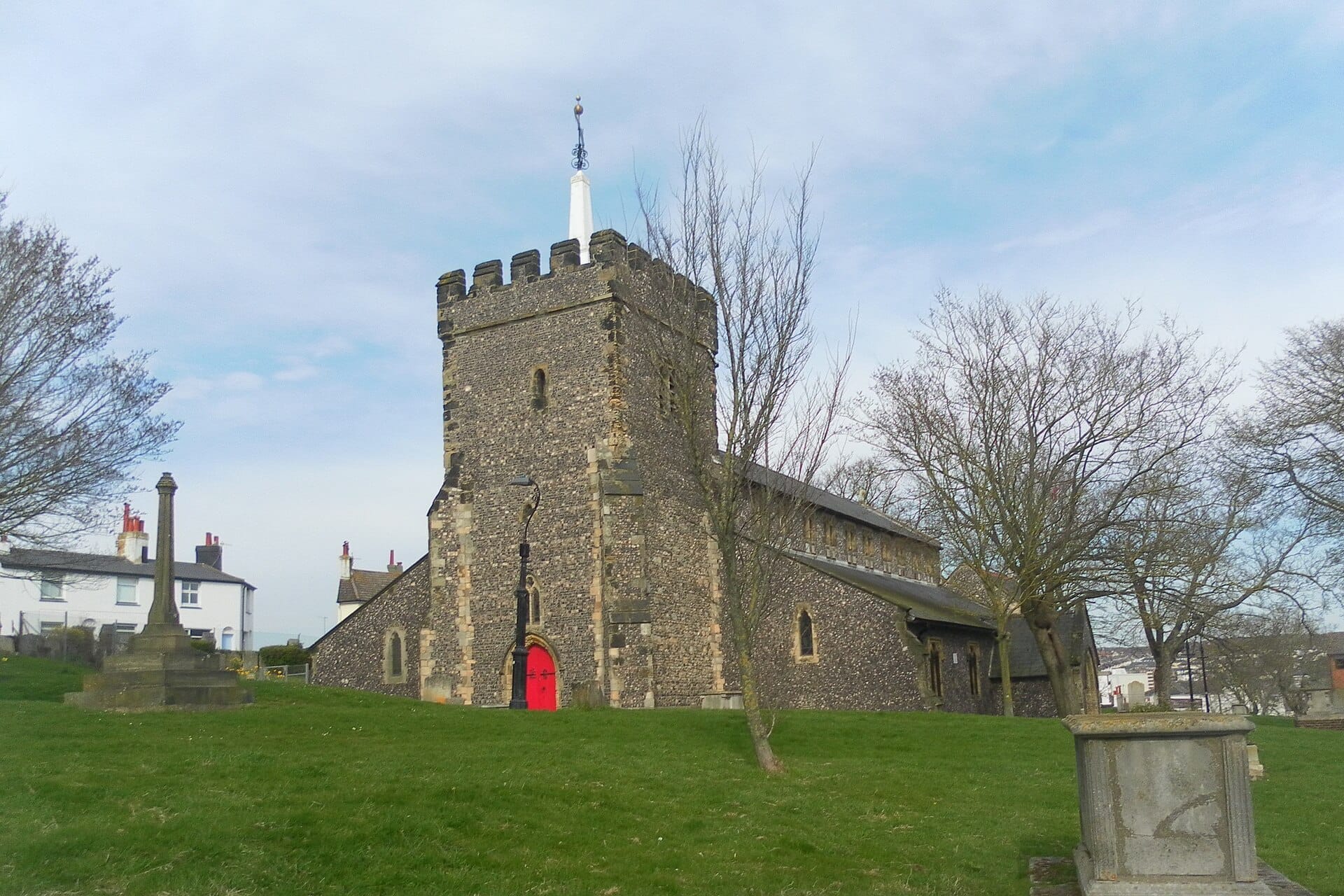
Standing on a hill above Brighton's shopping streets, St Nicholas of Myra is the ancient parish church and one of the oldest surviving buildings in the city. With medieval stonework dating to around 1380, a Norman font carved in 1170, and a churchyard that predates the resort by centuries, it offers a rare moment of historical depth in a city better known for its seafront spectacle.
Quick Facts
- Location
- Church Street & Dyke Road, Brighton, BN1 3LJ
- Getting There
- 10-minute walk from Brighton railway station; buses to Churchill Square or Western Road, then uphill on Church Street
- Time Needed
- 30 to 60 minutes
- Cost
- Free entry (donations welcomed)
- Best for
- History, architecture, quiet reflection, heritage photography
- Official website
- www.stnicholasbrighton.org.uk
What St Nicholas Church Actually Is
St Nicholas of Myra, Brighton is the ancient Mother Church of the town, and one of the oldest surviving structures in what is now a city of nearly 280,000 people. Before Brighton was a fashionable resort, before the Royal Pavilion was built, before the Victorian pier extended into the sea, this flint-and-stone church sat on its hill above a fishing village. A church on this site is referenced in the Domesday Book of 1086, and the current medieval fabric, the nave columns and arches, the chancel, and the square tower, dates to approximately 1380. That makes the building older than the printing press in England.
It is a Grade II* listed building, a designation that places it in the top few percent of England's protected historic structures. The listing reflects both its architectural integrity and its significance as a continuously used parish church for many centuries.
ℹ️ Good to know
The church is a working parish, not a dedicated tourist attraction. There is no formal visitor admission schedule. Plan around service times (Sunday Eucharists at 8:00 on the first and third Sundays of the month and 10:30; Wednesday Mass at 15:00; Thursday Mass at 17:30) or contact the parish office, open Tuesdays and Thursdays 10:00 to 13:00, to confirm access. Always check the official website before visiting.
The Architecture: Flint, Caen Stone, and 650 Years of Survival
The exterior is built in the Sussex vernacular style: rough knapped flint, which gives the walls a dark, almost mineral texture that catches the light differently at each hour of the day. The square tower is the dominant feature from the street, visible above the rooftops of the surrounding Victorian terraces. Up close, the walls have the uneven, hand-set quality of genuinely old construction, nothing like the smooth ashlar of Georgian or Victorian ecclesiastical architecture elsewhere in Brighton.
Inside, the eye goes immediately to the Norman font. Carved from Caen stone, imported from Normandy, around 1170, it predates the current building by over two centuries. The carved scenes on the font bowl depict the Last Supper and the Baptism of Christ. The stone has the slightly worn, tactile quality that only comes from genuine age, not restoration work. A rood screen, dating from around 1480 and restored in 1887, separates nave from chancel and provides an unusual structural feature for a Church of England parish church, where most screens were removed after the Reformation.
The nave columns and pointed arches are straightforward English Gothic work of the late 14th century, without ornamental excess. This is not a cathedral trying to impress; it is a working parish church designed to be solid and functional. That restraint is part of what makes it architecturally legible, even for visitors with no particular background in ecclesiastical architecture.
For those already interested in Brighton's architectural heritage, the church sits within a broader landscape of historic structures worth exploring. The Royal Pavilion is less than a ten-minute walk downhill, and the contrast between George IV's Indo-Gothic confection and this spare medieval flint church could not be more instructive about the different layers of Brighton's history.
Tickets & tours
Live prices and dates from our booking partner. If you book, we may earn a commission at no extra cost to you.
Brighton city lights flight with welcome drink
From 21 €Instant confirmationCycle along the beachfront with Brighton Beach Bikes hire
From 7 €Instant confirmationFree cancellationTour Brighton's highlights with an exploration game mobile app
From 10 €Instant confirmationFree cancellationExplore Brighton self-guided walking tour using an app
From 11 €Instant confirmation
The Churchyard: History at Eye Level
The churchyard surrounding St Nicholas is worth as much time as the interior. Many of the graves date to the 17th and 18th centuries, and the inscriptions, where still legible, document the occupations and family structures of pre-resort Brighton. The churchyard is one of the very few places in the city centre where you can stand on ground that has not been developed or substantially altered since medieval times.
On weekday mornings, the churchyard is often nearly empty, and the combination of sea light filtered through the trees and the relative quiet, given that you are standing a few hundred metres from the noise of the shopping centre, is genuinely striking. On weekends, particularly in summer, small groups pass through, but this is not a place that draws crowds. The gravel paths are uneven in places and the terrain is sloped, so flat footwear is useful.
💡 Local tip
Morning visits, particularly on weekdays between roughly 9:00 and 11:00, offer the best combination of good light on the exterior flintwork and minimal foot traffic. The south-facing aspect of the churchyard means the stones are well-lit for photography throughout the morning.
Getting There and Practical Notes
St Nicholas is about a ten-minute walk from Brighton railway station. From the station, head south down Queen's Road toward the Clock Tower, then turn right along Western Road and continue uphill on Church Street. The church sits at the junction of Church Street and Dyke Road on elevated ground, and the tower becomes visible before you reach the gate. If arriving by bus, Churchill Square is the closest major stop; from there it is a short walk uphill.
There is no dedicated parking adjacent to the church. Street parking in this part of central Brighton is subject to zone controls and limited availability. Public transport or walking from the station is the practical approach for most visitors.
Accessibility information, specifically step-free access, hearing loops, and toilet facilities, is not detailed on the parish website. Visitors with specific access requirements should contact the parish office directly before visiting, ideally during the Tuesday or Thursday opening hours.
If you are planning a broader day in Brighton and want to understand the city's historic core, the Brighton Regency architecture guide provides useful context for situating St Nicholas within the city's longer architectural timeline.
How the Experience Changes Through the Day and Year
The quality of light inside the church shifts considerably through the day. Morning light enters from the east through clear and stained glass, giving the interior a cooler, more austere quality that suits the plainness of the Gothic stonework. By early afternoon, the nave is warmer and brighter. On overcast days, which are common in Brighton from October through January, the interior takes on a muted grey tone that is actually appropriate to the age and character of the building.
Winter visits are quiet to the point of solitude on weekdays. The churchyard in particular, stripped of leafy cover, exposes the full silhouette of the flint tower against the sky. Summer brings more foot traffic and brighter conditions for exterior photography, but also the occasional school group and tourist cluster around the churchyard. Neither season makes the church inaccessible; this is simply not a place that ever feels overwhelmed by visitors.
Midweek, the Wednesday 14:00 organ recital offers an unusual opportunity: a free musical event in a medieval church, with an optional small donation at the door. The acoustics in a building of this scale and construction are inherently different from a concert hall, and the recital provides an experience of the space that a purely visual visit does not replicate.
For those combining a visit with time at the seafront, the Brighton beach and the broader Lanes district are both within a fifteen-minute walk downhill, making a half-day itinerary straightforward.
Who Will Get the Most From This Visit and Who Might Not
St Nicholas rewards visitors who are genuinely interested in English medieval architecture, Norman ecclesiastical art, or local history. The Norman font alone, one of the oldest and most complete examples of Romanesque stone carving in Sussex, justifies a stop for anyone with that kind of interest. Genealogists researching Brighton families will find the churchyard and parish records of particular relevance.
It is less likely to hold the attention of visitors primarily interested in Brighton's contemporary identity as a seaside and nightlife destination. The church is not interactive, not theatrical, and not visually spectacular in the way that the Royal Pavilion or the Palace Pier are. There are no cafes, shops, or audio-guide facilities. The building asks for quiet attention rather than providing entertainment, and that is entirely consistent with what it is.
Families with young children may find the Brighton Palace Pier or Sea Life Brighton better suited to shorter attention spans, though the churchyard does offer open space for a brief pause on a warmer day.
Insider Tips
- The Wednesday 14:00 recital is free to attend (with an optional small donation) and provides a rare chance to hear live music in a medieval interior. It is rarely mentioned in general Brighton listings and draws a small, quiet audience.
- The Norman font is on the left as you enter the nave. Position yourself close and look at the carved relief panels rather than photographing from a distance; the detail in the stone repays close attention.
- The churchyard has a slightly elevated terrace on the western side that provides an unobstructed view across the rooftops toward the sea on clear days, a genuinely good vantage point that most visitors walk past.
- If you are visiting in poor weather, the interior is reliably dry and calm. The building makes a logical stop on a wet afternoon when much of Brighton's outdoor appeal is reduced.
- The parish office is open only on Tuesdays and Thursdays from 10:00 to 13:00. If you have specific research questions about the church's history or want to arrange a more structured visit, contact in advance rather than showing up unannounced.
Who Is St Nicholas Church For?
- Architecture and heritage travellers interested in medieval English church design
- Visitors wanting contrast with Brighton's famous Regency and Victorian landmarks
- Genealogists researching Sussex family history through parish records and churchyard inscriptions
- Travellers looking for a quiet, no-cost stop during a central Brighton day
- Photography enthusiasts interested in flint architecture and historic burial grounds
Nearby Attractions
Combine your visit with:
- Booth Museum of Natural History
Founded in 1874 by naturalist Edward Thomas Booth, the Booth Museum of Natural History is Brighton's free natural history collection housed in a Grade II listed Victorian building on Dyke Road. With over 525,000 specimens, from British birds to butterfly drawers and dinosaur bones, it is one of the most significant natural history collections in southern England. Note: closed to the public since 20 April 2025 for essential works; special event days only, with reopening targeted for later 2026 or early 2027.
- Brighton Racecourse
Perched on Whitehawk Hill roughly a mile from the coast, Brighton Racecourse is one of England's most unusual flat racing venues. The horseshoe-shaped track, open from April to October, offers panoramic views across the city and out to the English Channel, alongside a race day atmosphere that ranges from relaxed midweek afternoons to packed summer festivals.
- Devil's Dyke
Perched around 215 metres above sea level on the South Downs, Devil's Dyke is a National Trust countryside site just north of Brighton. Claimed to be the longest, deepest and widest dry valley in Britain, it offers panoramic views stretching from the English Channel to the Surrey Hills, free access year-round, and walking routes ranging from a gentle ridge stroll to a steep valley descent.
- Preston Manor
Preston Manor is a Grade II* listed historic country house museum in Brighton, open seasonally beside Preston Park. With rooms preserved as they were in 1905 and a history recorded in the Domesday Book, it offers a rare glimpse into upper-middle-class Edwardian life — a world away from the seafront crowds.
Planning a trip? Discover personalized activities with the Nomado app.