St Mary's Collegiate Church: Kotor's Quiet Romanesque Survivor
Standing within the medieval walls of Kotor Old Town, St Mary's Collegiate Church is one of the city's oldest surviving sacred buildings. Smaller and less visited than the Cathedral of St Trypho, it offers a more intimate encounter with Kotor's Romanesque architecture and layered ecclesiastical history.
Quick Facts
- Location
- Kotor Old Town, Montenegro
- Getting There
- Enter via the Sea Gate; the church is a short walk into the old town
- Time Needed
- 20–40 minutes
- Cost
- Free or nominal entry; verify locally
- Best for
- Architecture lovers, history seekers, and anyone who wants to step away from the main crowds
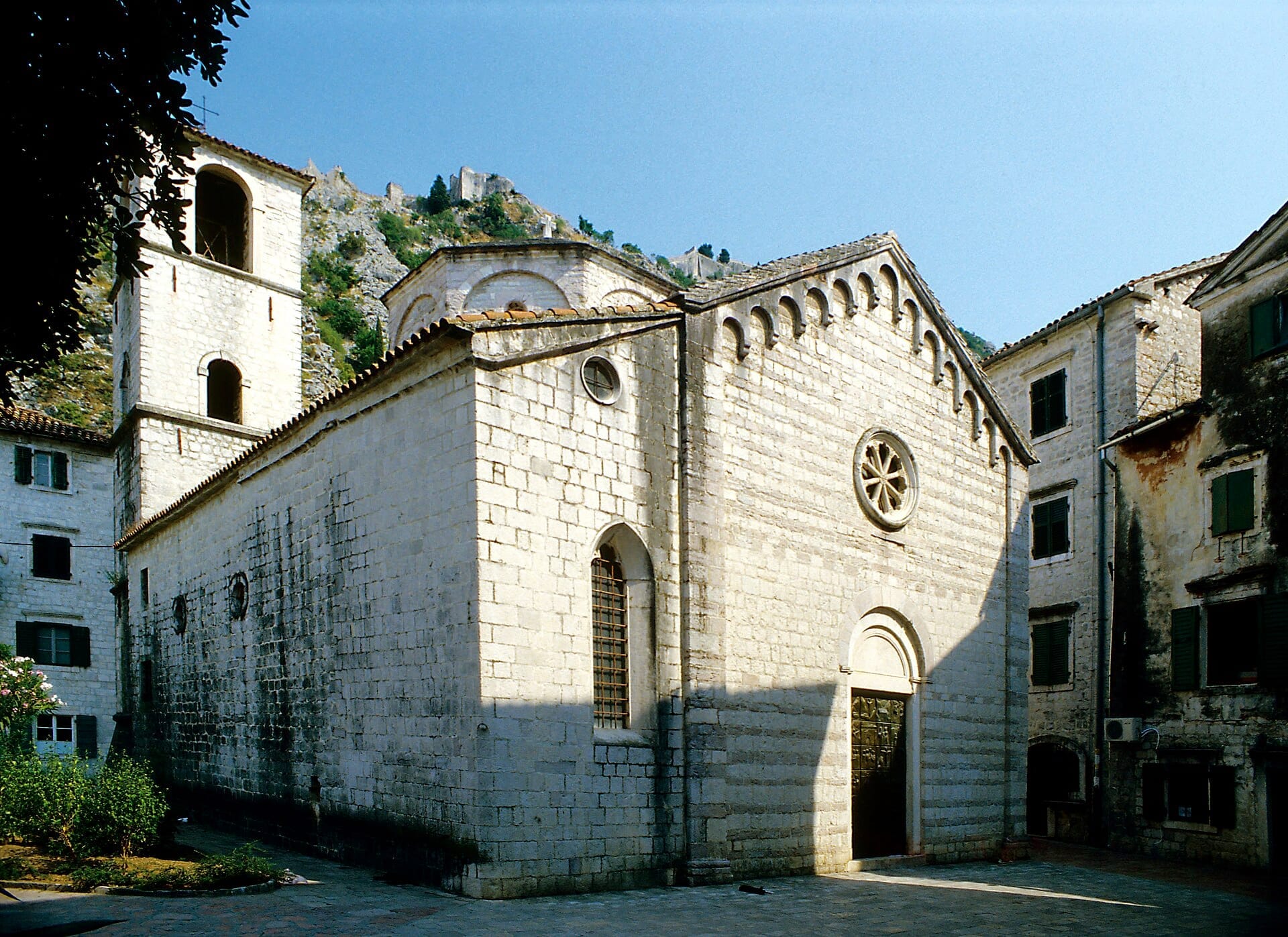
What St Mary's Collegiate Church Actually Is
St Mary's Collegiate Church is one of Kotor's oldest sacred buildings, rooted in the Romanesque tradition that characterizes much of the old town's ecclesiastical architecture. The term 'collegiate' signals its historical status: a church served by a chapter of canons rather than a single parish priest, which gave it an elevated ecclesiastical rank during the medieval period. That distinction shaped both its architecture and its place in the city's religious life for centuries.
The church sits within the compact grid of Kotor Old Town, where centuries of Venetian, Byzantine, and Romanesque influences overlap in the stonework of every alley. Compared to the grander Cathedral of St Trypho just nearby, St Mary's is smaller and receives far fewer visitors on any given day, which is precisely what makes it worth seeking out.
💡 Local tip
Arrive in the morning when the light falls across the stone facade from the east. The texture of the Romanesque stonework is most readable before midday shadows deepen.
The Architecture: Reading the Stone
The church's exterior reflects the sober Romanesque sensibility common to Adriatic coastal towns from the 11th through 13th centuries: thick walls, restrained ornamentation, and a measured use of locally quarried limestone. This is not the decorative Gothic exuberance you find further north in Dalmatia, nor is it Byzantine in its spatial logic. It is functional, durable, and quietly beautiful in the way that only aged stone in good Mediterranean light can be.
Look closely at the proportions of the doorway and any surviving carved details around the entrance. In Romanesque ecclesiastical architecture of this region, these elements were not purely decorative: they communicated theological meaning and social order to a largely illiterate congregation. Even where restorations have occurred over the centuries, the structural bones of the building carry the logic of its original medieval design.
Kotor's old town sits in a seismically active zone and has suffered major earthquakes, most devastatingly in 1667 and again in 1979. Each event left marks on the built fabric of the city, and St Mary's, like most of Kotor's historic buildings, carries visible evidence of repair, reconstruction, and adaptation across its walls. This layering is not a flaw; it is a record of survival.
Tickets & tours
Hand-picked options from our booking partner. Prices are indicative; availability and final rates are confirmed when you complete your booking.
Half-day Blue Cave adventure
From 45 €Instant confirmationFree cancellationMontenegro Canyons private tour from Kotor
From 68 €Instant confirmationFree cancellationLovćen national park and Budva city full-day private tour
From 150 €Instant confirmationFree cancellationDubrovnik walking tour from Kotor
From 59 €Instant confirmationFree cancellation
Inside the Church: Scale and Atmosphere
The interior is modest in scale, which is part of its appeal. Where larger churches can feel performative, St Mary's has the quality of a genuinely devotional space: low ceilings, cool stone, and the particular silence that comes from thick walls and small windows. If candles are lit, the effect is immediate and atmospheric without being theatrical.
The furnishings and any surviving artworks inside should be examined at close range. Medieval and early Renaissance sacred art in this region often incorporates both Western Catholic iconographic traditions and traces of Eastern Orthodox influence, reflecting Kotor's position as a trading and cultural crossroads on the eastern Adriatic. Even small devotional paintings or carved altar elements can carry significant art-historical interest if you take the time to look.
ℹ️ Good to know
Dress modestly before entering, as St Mary's is an active place of worship. Shoulders and knees should be covered. This applies regardless of the season or temperature outside.
How the Experience Changes by Time of Day
Early morning, before the cruise ship passengers filter through the Sea Gate and into the old town's main squares, the streets around St Mary's are occupied mainly by locals: shopkeepers arranging displays, residents crossing the square on their way elsewhere, cats stationed in patches of early sun. This is the hour when Kotor's old town feels like a real town rather than a stage set, and it is the best time to visit any of the smaller churches.
By mid-morning on busy days, especially in summer, the Square of Arms and the lanes leading to the Cathedral fill with tour groups. St Mary's, set slightly off the main pedestrian flow, tends to remain calmer. If you are visiting Kotor during peak season, see the guide on visiting Kotor in summer for timing strategies that apply across the old town's churches and squares.
Late afternoon brings a softer, warmer light into the old town's narrower streets, and the temperature drops slightly as the sun descends behind the Lovcen massif. This is a pleasant time for a slower circuit of the lesser-visited churches, ending with a walk along the waterfront as the evening begins.
Context: Kotor's Ecclesiastical Landscape
Kotor's old town contains an unusually dense concentration of medieval churches for a settlement of its size, a reflection of the city's historical wealth and its status as an important port on the Adriatic trade routes. St Mary's Collegiate Church is one piece of this larger picture. To understand it properly, it helps to walk the full circuit of the old town, comparing the scale, style, and condition of each sacred building. The Kotor Old Town walking tour provides a structured route that places St Mary's in relation to the other major churches and squares.
For those with a particular interest in sacred architecture, the nearby Church of St. Luke is equally rewarding and also tends to attract fewer visitors than the main cathedral. Comparing the two buildings side by side gives a clear sense of how different architectural traditions coexisted in a medieval Adriatic port.
Kotor's ecclesiastical heritage survived as intact as it did partly because the city remained under Venetian protection for nearly four centuries, from 1420 to 1797. Venice had strong incentives to preserve Kotor's existing institutions and buildings, which helped shield the old town from the kind of wholesale demolition and rebuilding that reshaped other Adriatic cities. St Mary's collegiate status during that period likely added to its institutional resilience.
Practical Notes for Visitors
St Mary's Collegiate Church is located inside the walls of Kotor Old Town, which is entered most directly through the Sea Gate on the western waterfront side. From the gate, the church is reachable on foot within a few minutes, though the exact walking time depends on which alley you take through the old town's dense medieval grid. No vehicles are permitted inside the walls, and the old town is entirely pedestrian.
There is no significant public transit stop immediately at the church; visitors arrive on foot from the old town entrance. If you are arriving in Kotor by sea or from the cruise terminal, the Kotor cruise port guide covers the walking route from the port into the old town in detail.
Opening hours for smaller churches in Kotor's old town can vary seasonally and may be subject to change for religious observances or restoration work. Verify current hours locally or at the tourist information office near the Sea Gate before planning a visit around a specific time. Entry fees, where charged, are generally nominal.
⚠️ What to skip
Like many of Kotor's smaller churches, St Mary's may be closed during midday hours or outside the main tourist season. If the door is locked on your first attempt, try again in the late morning or early afternoon.
Insider Tips
- Cross-reference St Mary's with St Luke's Church on the same visit. The two churches sit close to each other and represent distinct architectural moments in the old town's history. Seeing them back-to-back takes less than an hour and sharpens your reading of both.
- Bring a small flashlight or use your phone torch if you want to examine carved details in darker interior corners. The windows are small and the interior light is uneven, especially on overcast days.
- The surrounding streets are worth exploring slowly. The blocks immediately around the church contain some of the old town's quieter residential architecture, away from the souvenir shops concentrated near the main squares.
- Photography of the exterior is best before 10am or after 4pm, when the sun angle picks up the relief texture of the Romanesque stonework without washing it out in flat midday light.
- If you are combining this visit with a walk up to the fortress walls, plan St Mary's as your first stop while energy is high. The fortress hike is steep and the churches feel more absorbing before physical fatigue sets in.
Who Is St Mary's Collegiate Church For?
- Architecture and art history enthusiasts who want to compare Kotor's medieval sacred buildings beyond the headline cathedral
- Travelers who prefer quieter, less crowded sites and are willing to do a little navigating through the old town grid
- Visitors on a longer stay in Kotor who have already covered the main attractions and want to go deeper
- Photographers looking for Romanesque stonework in good natural light away from tour-group crowds
- Anyone following a structured old-town walking itinerary who wants to understand the full ecclesiastical landscape of medieval Kotor
Nearby Attractions
Other things to see while in Kotor Old Town (Stari Grad):
- Cats Museum Kotor
Tucked inside Kotor's medieval Old Town, the Cat Museum is a compact, quirky gallery dedicated to the city's beloved cats. It's part souvenir shop, part folk art collection, and wholly representative of why Kotor and cats have become inseparable in the popular imagination.
- Fortress of San Giovanni (Castle of San Giovanni)
Perched 260 metres above sea level on a steep limestone ridge, the Fortress of San Giovanni is Kotor's defining landmark. The climb is demanding, the views are extraordinary, and the medieval fortifications reveal centuries of Venetian, Byzantine, and Ottoman history layered into a single hillside.
- Kotor City Walls
The Kotor City Walls stretch approximately 4.5 kilometers across the steep slopes of Mount St. John, enclosing the UNESCO-listed old town and climbing to the Fortress of San Giovanni above. This is one of the most physically rewarding urban walks in the entire Mediterranean region, combining medieval architecture, sweeping bay views, and a genuine sense of altitude.
- Kotor Clock Tower
Rising above the Square of Arms at the entrance to Kotor's Old Town, the Clock Tower is one of the most photographed landmarks in Montenegro. Small in scale but central to the character of the square, it has marked time here for centuries and remains an essential orientation point for anyone exploring the old town.