St James' Church (Sint-Jacobskerk): Flemish Masters in a Living Medieval Church
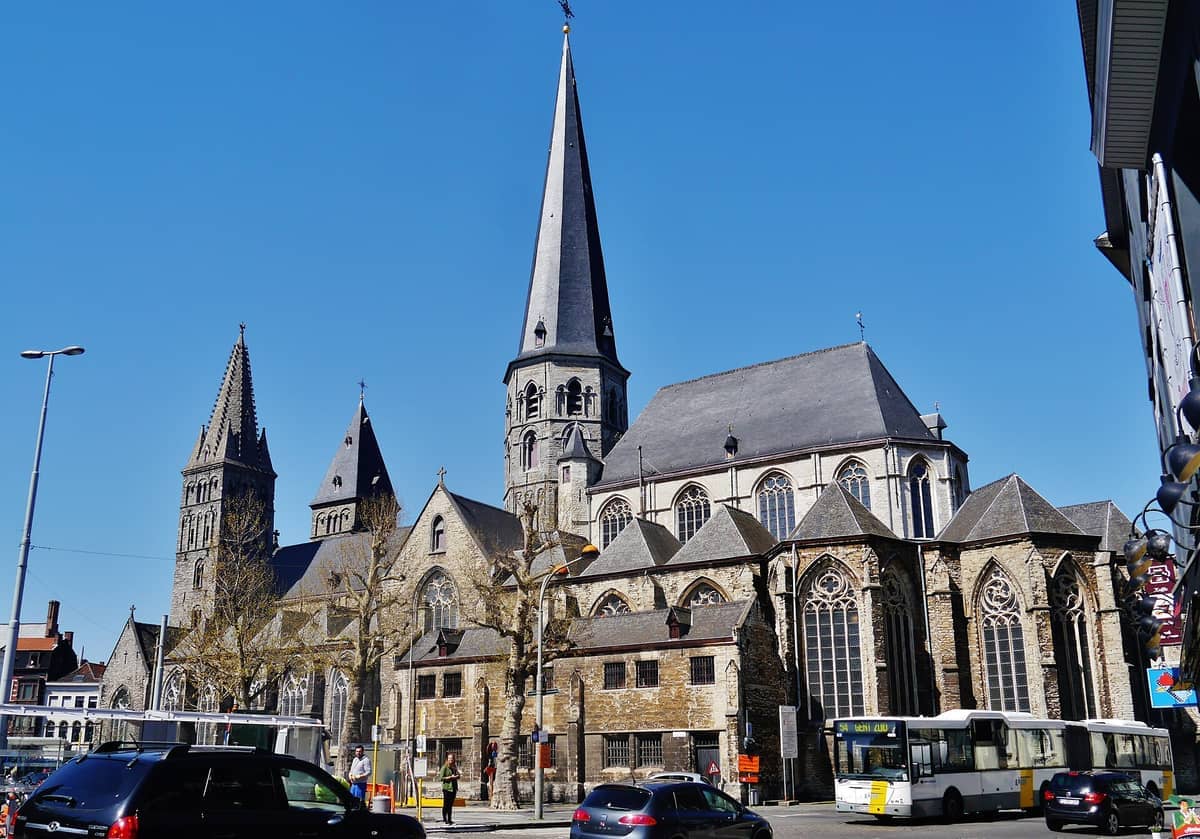
Sint-Jacobskerk stands in the heart of Ghent's historic centre as one of the city's oldest parish churches, home to significant Flemish Masters artworks and a striking Romanesque-Gothic facade. Admission is free, and the church remains an active place of worship rather than a converted museum — which makes visiting it feel genuinely different from the more crowded cathedral experiences nearby.
Quick Facts
- Location
- Bij Sint-Jacobs, 9000 Gent
- Getting There
- Walking distance from Korenmarkt and Gravensteen; De Lijn trams serve the city centre (Korenmarkt stop)
- Time Needed
- 45–75 minutes for a thorough visit
- Cost
- Free admission (paid guided tours or special events may vary)
- Best for
- Art history enthusiasts, architecture lovers, visitors seeking a quieter church experience
- Official website
- visit.gent.be/en/see-do/st-james-church
What Is St James' Church, and Why Does It Matter?
St James' Church, known locally as Sint-Jacobskerk, is one of Ghent's four great medieval parish churches and sits in the historic centre just a short walk from the Gravensteen castle and the Vrijdagmarkt. Unlike St Bavo's Cathedral, which draws enormous crowds almost entirely for the Ghent Altarpiece, Sint-Jacobskerk receives fewer visitors and rewards those who seek it out with a more contemplative, unhurried experience.
The church is part of the Flemish Masters in Situ programme, a heritage initiative that preserves important artworks from the Flemish masters tradition in the original sacred settings for which they were painted or commissioned. This means the paintings and sculptures here are not relocated to a climate-controlled gallery — they remain where they were always intended to be seen, surrounded by stone, candlelight, and centuries of accumulated devotion.
The building itself reflects the architectural ambitions of a prosperous medieval city. Its Romanesque base — visible in the rounded arches and the solidity of the nave walls — gives way to Gothic refinements added over subsequent centuries. Standing at the exterior, the layering of different building campaigns is readable in the stonework if you look carefully: heavier, older masonry at the base, with lighter Gothic tracery rising above.
💡 Local tip
Friday is the best day to visit: the church opens from 10:00 on Fridays (April–September), giving you the morning entirely to yourself before other sightseers arrive. On other open days, doors open at 14:00.
The Artworks Inside: Flemish Masters in Context
The interior of Sint-Jacobskerk is cool and dim, even on bright summer afternoons, and your eyes need a few moments to adjust before the scale of what surrounds you becomes apparent. The nave is lined with side chapels, each containing altarpieces or carved stone memorials that span several centuries of Ghent's artistic and religious history. The stone floors are worn smooth in the centre of the aisles — a physical record of centuries of daily footfall.
The church's association with the Flemish Masters in Situ programme places it alongside some of the most significant surviving examples of Flemish religious painting in their original ecclesiastical context. The artworks here were made for spaces exactly like this: tall, north-lit interiors where the quality of light shifts constantly and where the relationship between painting, architecture, and liturgy was carefully considered by the artists. Seeing them in a gallery would be a different, lesser experience.
If you want to understand the broader tradition these works belong to, the Flemish Masters in Ghent guide provides essential context on the key artists, periods, and sites across the city.
Tickets & tours
Hand-picked options from our booking partner. Prices are indicative; availability and final rates are confirmed when you complete your booking.
Historic Ghent city exploration game
From 10 €Instant confirmationFree cancellationSelf guided tour with interactive city game of Ghent
From 29 €Instant confirmationFree cancellationBelgian waffle making workshop and beer tasting in Ghent
From 45 €Instant confirmationFree cancellationTaste of Ghent private chocolate walking tour
From 256 €Instant confirmationFree cancellation
Opening Hours and Seasonal Variations
Sint-Jacobskerk keeps seasonal hours that visitors frequently misread, so it is worth committing these to memory before you set out.
Summer Hours (1 April – 30 September)
- Tuesday, Wednesday, Saturday: 14:00–18:00
- Friday: 10:00–18:00
- Closed: 3rd Saturday of every month
Winter Hours (1 October – 31 March)
- Tuesday–Saturday: 13:30–17:30
- Closed: 3rd Saturday of every month
⚠️ What to skip
The church closes on the 3rd Saturday of every month. If your visit to Ghent falls on that Saturday, plan around it. Some parish events or private ceremonies also result in unannounced closures — if in doubt, check locally or contact the Visit Gent tourist office.
Parish activities occasionally extend opening on specific weekday or Saturday mornings, but the regular visitor schedule includes 10:00–13:00 on Fridays and Saturdays. Standard admission is free throughout the year.
The Space at Different Times of Day
Morning visits on Fridays (April through September) offer the most undisturbed experience. By 10:00 the church is typically quiet: the smell of old stone and faint incense lingers, the light from the high windows is sharp and directional, and the only sound is the distant murmur of the city filtered through thick medieval walls. This is when the paintings in the side chapels are easiest to examine without other visitors obscuring your view or moving through the space.
Afternoon visits, when the doors open at 14:00 on most days, coincide with the main tourist surge through Ghent's centre. The church remains relatively calm compared to St Bavo's or the Belfry, but you will share the space with other visitors. The light quality in the afternoon shifts as the sun moves west, creating stronger contrast in the nave and softening the tones in the side chapels. Bring a small torch if you want to examine painted details in darker corners — overhead lighting in historic churches like this is never adequate for close inspection.
Late afternoon, in the final hour before closing, the church empties noticeably. The slanted light of late day catches the texture of carved stonework differently than midday illumination, and the quietness returns. This is a good time for photography, though flash is typically discouraged in active churches.
Getting There and the Surrounding Area
Sint-Jacobskerk is located in Ghent's historic centre at Bij Sint-Jacobs, a short street that feeds into the web of medieval lanes around the Patershol neighbourhood. If you are walking from Gravensteen castle, allow about five minutes on foot heading southeast. From the Korenmarkt tram stop — served by multiple De Lijn tram lines — the walk takes roughly ten minutes through the historic centre.
The area around the church is one of the quieter pockets of the historic centre. Bij Sint-Jacobs hosts a weekly antique and flea market on Friday, Saturday, and Sunday mornings, meaning the square outside can be crowded with market stalls and browsers on those days — which adds atmosphere but complicates navigation. On other days, the square is relatively peaceful, with a few café terraces and a residential character that distinguishes it from the more tourist-heavy waterfront areas.
From Gent-Sint-Pieters, the main train station, take a De Lijn tram toward Korenmarkt and walk into the historic centre from there. The getting around Ghent guide covers all tram and bus options in detail, including current fare information from De Lijn.
ℹ️ Good to know
Visitors with specific mobility requirements should verify accessibility conditions directly with the church or the Visit Gent tourist information office before travelling, as detailed step-free or adapted facilities information is not currently published for this site.
Photography and Practical Notes
The exterior of Sint-Jacobskerk is one of the less-photographed medieval facades in Ghent — partly because the surrounding streets are narrow and it is difficult to get far enough back for a full-front composition. The best exterior angles come from the Bij Sint-Jacobs square itself, particularly the northeast corner, or from the small streets running along the south flank of the building. Early morning light (before the market crowds arrive on Fridays) gives clean, soft illumination on the stone.
For interior photography, the challenge is low light and the need to respect the space as an active church. A wide-aperture lens and a steady hand are more useful than flash or a tripod, which may not be permitted. The Ghent photography guide covers church interiors and lighting conditions across the city's historic buildings.
Honest Assessment: Who Will Love This, and Who Might Not
Sint-Jacobskerk is not the most spectacular single building in Ghent. The Belfry, the cathedral, and Gravensteen are all more immediately dramatic. What this church offers is depth rather than spectacle: the accumulation of centuries in stone, paint, and carved wood, experienced in a space that has not been converted into a museum or tourist facility. It remains a parish church, used by the local community, and that ordinariness is part of what makes it feel real.
Visitors who approach church architecture and religious art primarily as boxes to tick on a highlights tour may find the modest scale underwhelming. If your visit to Ghent is a single day and you are prioritising the most famous sights, Sint-Jacobskerk would probably yield to St Bavo's, the Belfry, and the Graslei. But if you have a second day, or if you are already in the Patershol area, the church rewards a careful hour in a way that the busier attractions sometimes cannot.
Insider Tips
- Visit on a Friday morning between April and September: it is the only day the church opens at 10:00, giving you an almost private experience before the midday visitor flow begins.
- The Bij Sint-Jacobs flea market runs on Friday, Saturday, and Sunday mornings in the square outside the church. Arriving before 10:30 means you can browse the market stalls after your visit, catching both experiences in a single morning.
- Bring a small pocket torch or use your phone's torch function for close inspection of altarpiece details and carved stonework in the darker side chapels — the overhead lighting is atmospheric but not adequate for detail work.
- Always check the monthly closure: the 3rd Saturday of every month is a guaranteed closure day regardless of season. This catches many visitors by surprise, especially those combining the church with weekend plans.
- The Patershol neighbourhood, one of Ghent's most characterful medieval residential quarters, begins immediately behind the church. After your visit, walk north into Patershol's narrow cobbled lanes for some of the best restaurant choices in the city centre.
Who Is St James' Church (Sint-Jacobskerk) For?
- Art history enthusiasts interested in Flemish Masters paintings in their original ecclesiastical settings
- Architecture lovers who want to read the layers of Romanesque and Gothic construction in a single building
- Travellers on a second day in Ghent who have already covered the headline attractions and want something quieter
- Photographers looking for medieval church interiors and exteriors with fewer crowds than St Bavo's
- Visitors combining the church with the Bij Sint-Jacobs flea market and the Patershol neighbourhood
Nearby Attractions
Other things to see while in Ghent Historic Centre:
- City Pavilion (Stadshal)
Completed in 2012 by Ghent architects Robbrecht & Daem and Marie-José Van Hee, the Stadshal is a free, open public structure spanning roughly 40 metres at Emile Braunplein, surrounded by the Belfry, Town Hall, and St Nicholas' Church. Whether you pass through at noon or after dark, this latticed wooden canopy changes character with the light and the crowd beneath it.
- Design Museum Gent
Design Museum Gent, founded in 1903 and located in Ghent's historic centre, holds a collection of approximately 22,500 objects tracing applied arts and design from the 18th century to the present day. The museum is currently closed for a major expansion and renovation, but its permanent collection and architectural setting make it one of Ghent's most distinctive cultural institutions., holds a collection of approximately 22,500 objects tracing applied arts and design from the 18th century to the present day. The museum is currently closed for a major expansion and renovation, but its permanent collection and architectural setting make it one of Ghent's most distinctive cultural institutions.
- Castle of Gerald the Devil (Geeraard de Duivelsteen)
Built in the 13th century in Scheldt Gothic style, Geeraard de Duivelsteen is one of the most architecturally striking medieval structures in Ghent. From knight's residence to madhouse to event venue, its layered history is as dramatic as its stone facade. The building is not open for regular walk-in visits, but its exterior and occasional scheduled openings make it essential context for understanding Ghent's medieval character.
- Ghent Altarpiece (Adoration of the Mystic Lamb)
Completed in 1432 by Hubert and Jan van Eyck, the Ghent Altarpiece is a 12-panel polyptych (with paintings on both sides of most wings) housed in St Bavo's Cathedral in Ghent's historic centre. It is one of the most technically advanced and historically significant paintings ever made, and seeing it in person requires a ticket, a timed slot, and some preparation.