SoHo Shopping District: New York's Most Architecturally Striking Place to Shop
SoHo is Lower Manhattan's grid of 19th-century cast-iron loft buildings, now home to flagship retail, independent boutiques, and art galleries spread across roughly 26 blocks. Free to enter and walkable in an afternoon, it rewards visitors who come curious about both shopping and architectural history.
Quick Facts
- Location
- South of Houston Street, Lower Manhattan (ZIP 10012 / 10013). Bounded by Houston St (north), Canal St (south), Lafayette St (east), and West Broadway / Sixth Ave (Avenue of the Americas) (west).
- Getting There
- Spring St (6 train) on Lafayette St, about 3 min walk; Prince St (R/W trains) on Broadway, about 5 min walk.
- Time Needed
- 2–4 hours for a focused walk; a full afternoon if you plan to browse seriously or stop for a meal.
- Cost
- Free to enter and walk. Individual store prices range from accessible (independent boutiques) to very high-end (luxury flagships).
- Best for
- Architecture lovers, serious shoppers, design-minded travelers, and anyone who wants a street-level read on New York's aesthetic.
- Official website
- www.nyctourism.com/new-york/manhattan/soho
What SoHo Actually Is
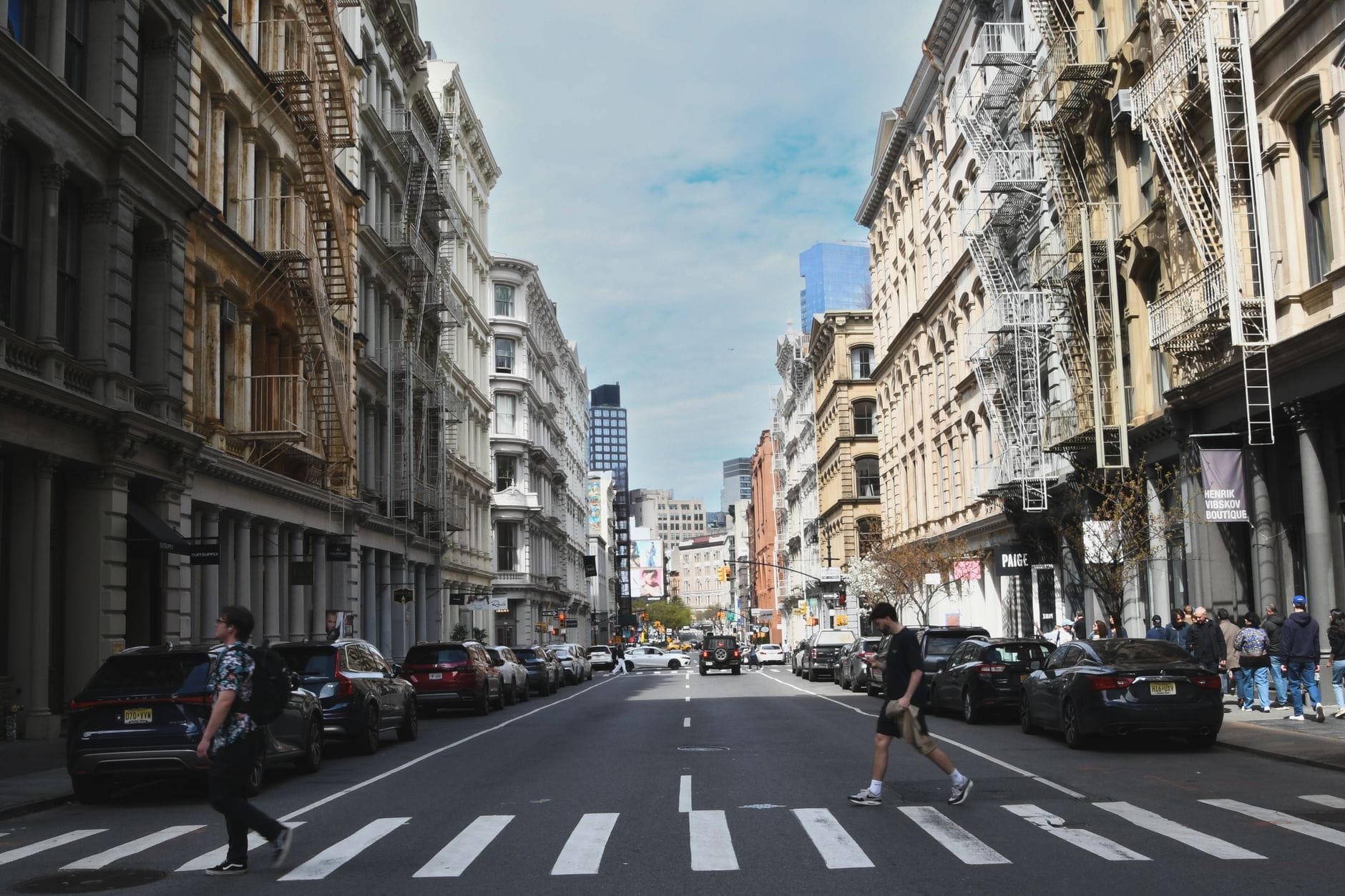
The SoHo Shopping District occupies roughly 26 blocks of Lower Manhattan between Houston Street to the north and Canal Street to the south. The acronym stands for 'South of Houston Street,' a name coined in 1962 by urban planner Chester Rapkin. What distinguishes the neighborhood from every other shopping corridor in New York is the architecture surrounding you while you browse: SoHo contains the world's largest concentration of cast-iron buildings, most of them built in the late 19th century as commercial lofts for light manufacturing and dry-goods warehouses.
Those buildings were designated the SoHo–Cast Iron Historic District by New York City in 1973, and listed on the National Register of Historic Places in 1978. The facades facing Broadway and Prince Street are genuinely worth slowing down for: elaborate cornices, arched windows framed in painted iron, and ground-floor columns that have been supporting retail tenants for over a century. The shopping here is not incidental to the architecture. It grew out of it.
ℹ️ Good to know
SoHo is a public neighborhood with no entry fee or ticketing. Streets are accessible around the clock. Individual stores set their own hours, typically opening late morning and closing in the early evening, but hours vary and are worth checking before you go.
How the Neighborhood Changed Over Time
By the mid-20th century, SoHo's loft buildings had largely been abandoned by manufacturing tenants. Artists moved in through the 1960s and 1970s, drawn by cheap rents and large, light-filled spaces. The neighborhood became one of the most important gallery districts in the world during the 1970s and 1980s, when names like Leo Castelli and Paula Cooper operated here. Gentrification followed quickly. By the 1990s, retail had replaced most of the galleries, and by the 2000s, luxury flagships had replaced many of the independent boutiques.
That history is still readable in the streetscape. A handful of galleries remain, particularly along West Broadway and on side streets. The loft-living culture that defined the neighborhood in the 1970s left behind ceiling heights and floor plans that today's flagship stores use for dramatic effect. If you want more context on how neighborhoods like this fit into the broader shape of Manhattan, the NYC neighborhoods guide covers the borough-wide picture.
Tickets & tours
Hand-picked options from our booking partner. Prices are indicative; availability and final rates are confirmed when you complete your booking.
Soho, Chinatown and Little Italy audio-guide walking tour app
From 10 €Instant confirmationNew York SoHo District tour with a city exploration game
From 8 €Instant confirmationFree cancellationGuided walking tour through Chinatown, Little Italy and SoHo
From 31 €Instant confirmationFree cancellationSoHo, Little Italy & Chinatown guided walking tour
From 33 €Instant confirmationFree cancellation
What to Expect on the Streets
Broadway is SoHo's commercial spine, running north-south through the center of the district. It carries the highest concentration of large-format retail: global fast-fashion chains, sportswear flagships, and beauty retailers occupy ground floors of cast-iron buildings on both sides. Prince Street and Spring Street run east-west and offer a slightly calmer mix of international luxury brands and mid-range labels. Greene Street and Mercer Street, both one-way and partially cobblestoned, tend toward higher-end boutiques and homeware stores.
The cobblestones are worth flagging honestly. Several of SoHo's side streets are still paved with 19th-century Belgian blocks, which look handsome in photographs and are genuinely uncomfortable underfoot after an hour. Flat, rubber-soled shoes are a practical choice. The same cobblestones, combined with steps at many building entrances, make wheelchair and stroller navigation difficult on certain blocks. Accessibility varies building by building, and several nearby subway stations including Spring St and parts of Canal St are not fully ADA-accessible. Check the MTA's accessibility tool before planning your route.
💡 Local tip
Wear comfortable, flat shoes. The cast-iron buildings are beautiful, but SoHo's cobblestoned side streets are harder on your feet than they look.
How SoHo Changes Through the Day
Early morning, before 10am, is the closest SoHo gets to quiet. The delivery trucks have usually cleared out, the cobblestones are still damp from overnight cleaning, and you can actually look up at the cast-iron facades without competing with foot traffic. This is the best time for photography: even light, no crowd blur, and the ironwork details on buildings like the Haughwout Building at Broadway and Broome Street are genuinely striking without a scrum of pedestrians in frame.
By late morning, the retail traffic begins in earnest. Weekend afternoons between roughly noon and 4pm are the most crowded period, particularly on the Broadway corridor between Houston and Prince. The sidewalks narrow around the most popular storefronts, and the streets can feel more like a pedestrian bottleneck than a neighborhood. If you have the flexibility, a weekday visit between Tuesday and Thursday will give you meaningfully more space to move.
Late afternoon on weekdays, after 4pm, brings a different crowd: locals running errands, office workers cutting through on the way to the subway, and a noticeable drop in tourist density on the side streets. The light at this hour hits the upper floors of the loft buildings at a low angle, and the iron facades take on a warm grey-gold color that is genuinely worth pausing for.
What to Shop For and Where to Focus
SoHo's retail mix is wide but skewed toward fashion, beauty, homeware, and design objects. The Broadway strip covers the accessible end of the price range, with large multi-floor stores carrying global brands. The side streets, particularly Greene, Mercer, and Wooster, tend toward independent boutiques, international labels with smaller footprints, and design-forward homeware shops. If you are specifically interested in vintage or secondhand goods, SoHo itself is not the strongest destination for that category, though the surrounding neighborhoods carry more options.
For travelers whose priority is browsing rather than buying, the ground-floor windows along Broadway between Prince and Spring offer a useful survey of what is current in New York retail. SoHo also functions well as a starting point for a longer day: Chelsea Market is accessible to the north by subway or a long walk, and the High Line connects Chelsea's retail and food culture to a very different architectural experience.
If shopping is the main point of your New York trip rather than just part of it, the NYC shopping guide maps the differences between SoHo, Fifth Avenue, and the outer borough markets in useful detail.
Eating and Pausing in SoHo
SoHo has a strong restaurant and café culture, concentrated particularly on Spring Street and around the Prince Street and Broome Street intersections. You will find Italian restaurants that have been operating for decades alongside newer all-day cafés. Prices are generally on the higher end for Manhattan, reflecting the real estate costs of the neighborhood. Standing tables and counter seating are easier to find on short notice than full sit-down restaurants at peak weekend hours.
The food options in SoHo work well as a midpoint break in a longer day that might include Washington Square Park to the north in Greenwich Village, or a walk south toward the New Museum on the Bowery, which sits just east of the SoHo boundary and represents the contemporary art side of the neighborhood's older gallery history.
Honest Assessment: Is It Worth Your Time?
SoHo is occasionally described as having lost its edge, and that is not entirely unfair. Many of the independent boutiques and galleries that defined it in the 1990s have been replaced by flagships that exist in every major city worldwide. If your only goal is finding clothes or goods from international brands, you can do that closer to your hotel without the cobblestone walk.
What SoHo offers that is genuinely harder to replicate elsewhere is the combination of serious architectural quality and functional retail at street level. Walking the full length of Greene Street from Canal to Houston, where the buildings date to between 1869 and 1895, is an experience in 19th-century commercial urbanism that does not require entering a single shop. The cast-iron facades are the actual attraction. The retail is the reason the facades are maintained.
⚠️ What to skip
SoHo on weekend afternoons can feel overcrowded, particularly on Broadway between Houston and Spring. Visitors who find dense retail crowds uncomfortable, or who are looking for quiet or authentic New York neighborhood character, may find the experience frustrating. A weekday morning visit changes the experience significantly.
Insider Tips
- The Haughwout Building at the corner of Broadway and Broome Street (488 Broadway) is one of the oldest and most intact cast-iron structures in the district, built in 1857. Look at the ground-floor colonnade and the window arches before you go inside: it is one of the few buildings where the ironwork still reads clearly as architectural invention rather than just ornamentation.
- Greene Street between Canal and Grand is sometimes called the 'King of Greene Street' block for its dense run of elaborate 19th-century cast-iron facades. Most visitors walk Broadway and miss this street entirely. It takes about ten minutes to walk and is significantly less crowded.
- If you want a coffee before the main retail crowd arrives, the blocks around Spring Street and Sullivan Street have a few cafés that open early and fill up later than the Broadway-facing spots.
- SoHo's side streets occasionally feature pop-up installations, gallery openings, and temporary art interventions, particularly in the ground-floor windows of buildings between Wooster and West Broadway. These are unscheduled and easy to miss, but worth a look if you are on foot.
- The R and W trains at Prince Street drop you almost exactly in the center of the retail core. The 6 train at Spring Street is a slightly longer walk but puts you closer to the southern end of the district, which is less crowded and has a higher proportion of independent shops.
Who Is SoHo Shopping District For?
- Architecture enthusiasts who want to see cast-iron commercial buildings in their original urban context
- Design-oriented shoppers looking for a broad survey of international retail in one walkable area
- First-time New York visitors who want a ground-level feel for Lower Manhattan's street grid
- Photographers interested in 19th-century facades, street light, and texture
- Travelers combining retail with gallery visits, particularly those interested in contemporary art and design
Nearby Attractions
Combine your visit with:
- Brooklyn Navy Yard
A roughly 225-acre former U.S. Navy shipyard turned urban manufacturing campus, the Brooklyn Navy Yard blends two centuries of American industrial history with a living community of makers, artists, and innovators. Access is controlled, but for curious visitors willing to plan ahead, it offers one of the most distinctive experiences in New York City.
- Jamaica Bay Wildlife Refuge
Tucked into the southern edge of Queens, Jamaica Bay Wildlife Refuge is the only wildlife refuge in the National Park System managed by the National Park Service. Free to enter and open year-round, it offers salt marshes, brackish ponds, and migratory bird sightings just a subway ride from Midtown Manhattan.