Sekumpul Waterfall: Bali's Most Breathtaking Cascade
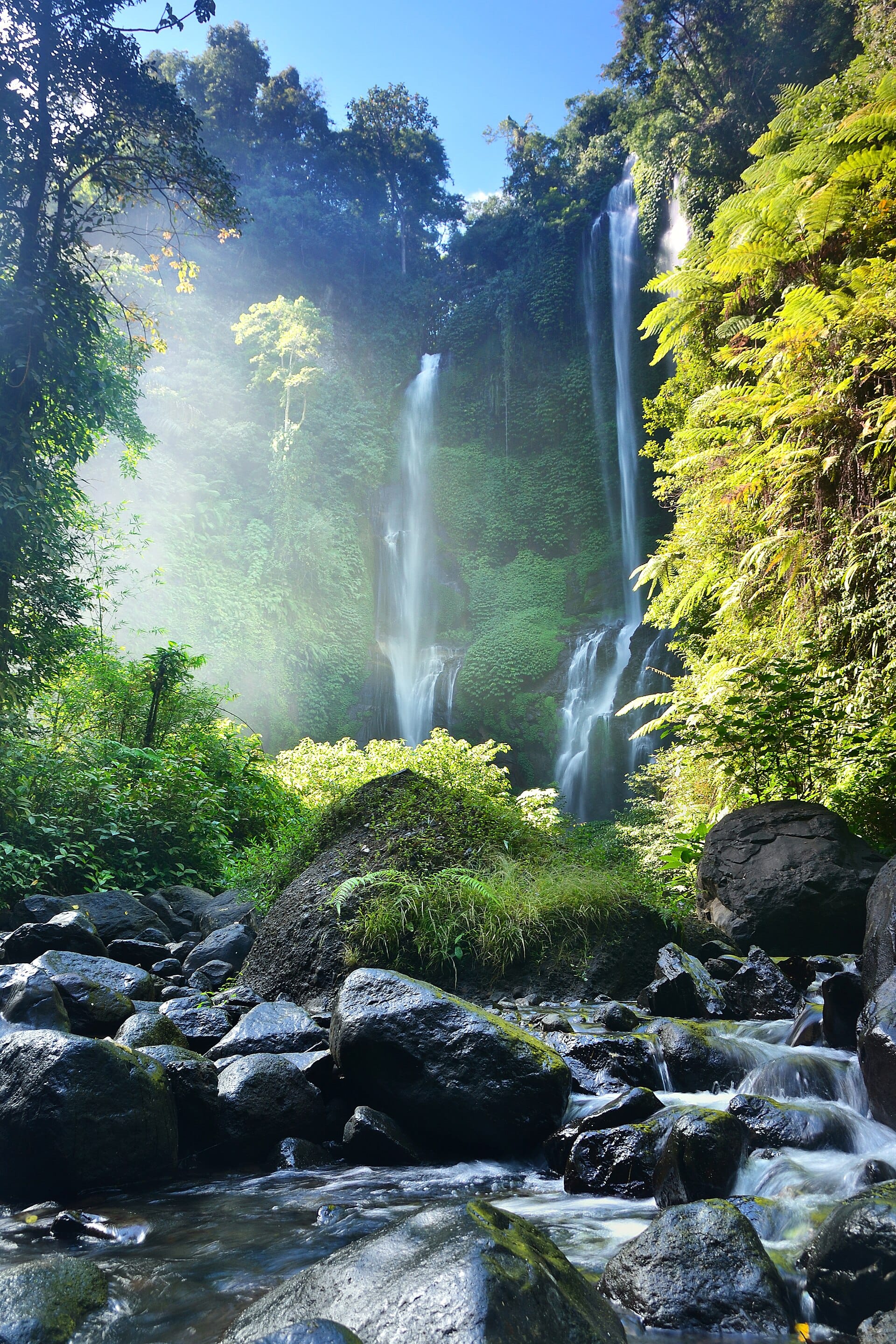
Sekumpul Waterfall, located in Bali's northern highlands near Singaraja, is widely considered the island's most impressive waterfall system. A steep jungle trek leads to a cluster of seven cascades plunging up to 80 meters into a mist-filled gorge, surrounded by dense tropical forest and the sound of rushing water that you can hear long before you see it.
Quick Facts
- Location
- Sekumpul Village, Sawan District, Buleleng Regency, North Bali (approx. 2.5 hours from Ubud)
- Getting There
- Private car or scooter rental required; no public transit serves the trailhead. Most visitors arrange a driver from Ubud or Singaraja.
- Time Needed
- 3 to 5 hours including the trek, time at the falls, and the return climb
- Cost
- Entry fee applies at the village; a local guide is mandatory and fees are paid on-site. Confirm current rates on arrival as prices are set by the village cooperative.
- Best for
- Nature lovers, photographers, hikers willing to earn a serious reward
What Sekumpul Actually Is
Sekumpul Waterfall is not a single waterfall. It is a cluster of seven individual cascades that spill from the edge of a forested plateau into a narrow river gorge in North Bali's Buleleng Regency. The tallest drop reaches roughly 80 meters. Several falls run parallel, close enough that their mist merges into a continuous cool haze that drifts across the canyon floor. The name Sekumpul translates loosely from Balinese as 'collection' or 'gathering,' which describes the scene accurately.
This is not a roadside attraction you can view from a car park. Reaching the base requires a real descent through working farmland, bamboo forest, and slippery stone steps that have been cut into the hillside. The effort involved filters out casual visitors, which means the pool at the base tends to feel far less crowded than Bali's better-known falls.
ℹ️ Good to know
Sekumpul sits in North Bali, not within Ubud's immediate surroundings. From central Ubud, expect a drive of roughly 2 to 2.5 hours each way via the mountain road through Kintamani. Plan for a full day and leave early.
The Trek Down: What the Descent Is Really Like
The trail begins at a small parking area in Sekumpul Village, where guides wait to escort groups. The path immediately enters a working clove and coffee plantation, and on dry mornings the air carries a faint spice scent from the drying cloves laid out on roadside tarps. Within five minutes the vegetation closes in, and the sound of rushing water begins to build.
The descent involves around 350 to 400 stone steps, some reinforced with concrete, others worn smooth by rain and foot traffic. Sections pass beneath bamboo so dense that sunlight filters through as scattered shafts rather than direct light. The path also crosses a shallow river on stepping stones, and depending on recent rainfall, this crossing can range from an easy hop to a knee-deep wade. Expect your footwear to get wet.
The total one-way walk takes approximately 30 to 45 minutes at a moderate pace. The return journey is the harder half. Coming back up those same steps in tropical humidity, after spending time in the cool mist at the base, is genuinely taxing. Visitors who underestimate the climb back are the ones who turn up at their cars looking hollowed out.
💡 Local tip
Wear proper grip footwear, not sandals or flip-flops. The steps get mossy and wet regardless of weather. A change of socks and a dry shirt left in the car will feel like a gift to your future self.
Tickets & tours
Live prices and dates from our booking partner. If you book, we may earn a commission at no extra cost to you.
At the Base: The Waterfall Experience
The moment the main cascade comes into full view is one of the more genuinely impressive sights in Bali. The water drops in wide sheets rather than a single narrow thread, and the spray radius is substantial. Standing within 20 meters of the main falls means getting steadily wet even without entering the pool. The noise is significant: a low, constant roar that makes conversation difficult without raising your voice.
The pool at the base is swimmable, though the current near the falls is strong and the water is cold by Bali standards. Most visitors wade in at the shallower edges rather than swimming across. A second set of falls sits a short walk along the gorge floor, slightly smaller but often less photographed, which means you can frequently have a clear sightline without other visitors in frame.
Morning light reaches the gorge floor between approximately 9am and 11am, angling in from the east. This window produces the best photography conditions, with the mist catching the light and the green of the surrounding vegetation fully saturated. By midday the gorge sits in shadow and the mood becomes darker, cooler, and more atmospheric in a different way.
When to Visit and How Rainfall Changes Everything
Sekumpul performs differently across seasons. During Bali's wet season, roughly November through March, the falls run at full power: wide, white, and deafening. The path also becomes considerably more treacherous, with mud replacing dry earth and certain river crossings becoming genuinely risky. Some visitors find the raw volume of water during this period worth the added difficulty. Others find it dangerous.
The dry season, April through October, produces calmer conditions for the trek and still-impressive falls, though the flow is visibly reduced compared to peak wet season volume. The path is safer, the river crossing is manageable, and the mist at the base is still present. For most visitors, the dry season offers the better balance of safety and reward.
For broader context on how Bali's seasons affect outdoor excursions across the island, see the best months to visit Bali guide before finalizing your itinerary.
⚠️ What to skip
After heavy overnight rain, the river crossing on the trail can become unsafe. Check conditions with your guide or guesthouse before setting out. Guides at the trailhead will typically advise honestly if the path is not suitable that day.
Guides, Fees, and the Village Cooperative
A local guide is now required to enter the trail. This is not a formality: the path forks in several places and the guide also assists visitors on the more technical sections of the descent. Guides are organized through the village cooperative at the trailhead, and fees are standardized by the group. The system keeps money within the local community and the trails reasonably well maintained.
Entry fees and guide costs are collected separately at the trailhead. Bring sufficient cash in small denominations, as there are no card payment facilities at the site. Prices have increased in recent years as Sekumpul's reputation has grown, so check current rates with your accommodation or driver the morning of your visit to avoid overpaying and scammers rather than relying on figures from older blog posts.
Tipping your guide at the end of the trek is customary and appreciated, particularly if they offered steady hands on difficult sections or carried bags.
Combining Sekumpul with a North Bali Day Trip
Because the drive from Ubud or southern Bali is substantial, most visitors build a full northern loop rather than making Sekumpul the only stop. The route from Ubud via Kintamani passes the crater lake of Batur, offering a natural stop on the way out or back.
If you are using Ubud as your base, the Ubud area has enough close-range attractions to fill a separate day entirely, leaving the Sekumpul excursion as a dedicated long day.
Travelers interested in combining volcano trekking with their northern Bali visit should look at the Mount Batur trek, which can sometimes be paired with an afternoon visit to Sekumpul on the same day, though this makes for a very long and physically demanding outing.
For a gentler Ubud-based nature experience that does not require a long drive, the Campuhan Ridge Walk offers accessible jungle scenery with minimal effort and no guide fees.
Who Should Skip Sekumpul
Sekumpul is not for every traveler and there is no shame in acknowledging that. The trek involves a substantial stair descent and an equally demanding return climb in heat and humidity. Visitors with knee problems, heart conditions, or limited mobility will find the physical demands prohibitive. There is no alternative route and no motorized access to the base.
Travelers on a tight half-day schedule should also reconsider. Factoring in the drive from Ubud, the trek down, time at the falls, the climb back, and the return drive, five hours is a realistic minimum. Rushing the experience to catch a sunset in Seminyak is a common mistake that leaves visitors feeling short-changed at both ends.
Young children can make the descent with careful adult supervision, but the river crossing and wet steps require close attention. Toddlers or infants in carriers should not attempt the route.
Insider Tips
- Leave Ubud by 7am. You want to be on the trail by 9am to catch the morning light in the gorge and beat the groups that arrive mid-morning. The falls at 9:30am with low crowds and good light are a significantly different experience from the falls at 11:30am with three tour groups.
- There are two separate viewpoints and two separate trail entry points to Sekumpul's cluster of falls. Ask your guide to show you both the main falls and the second set further along the gorge floor. Many visitors only see the primary cascade and miss the quieter falls entirely.
- Pack a dry bag or waterproof phone case. The mist at the base reaches surprisingly far, and phone screens accumulate enough water to affect touch sensitivity within minutes of standing near the main cascade.
- The stone steps on the return climb have narrow risers in sections. Take them slowly and use the rope handrails where provided. Most trip incidents happen on the ascent when tired legs rush the last section.
- If you arrange a private driver for the day, negotiate the full itinerary and waiting time explicitly in advance. Some drivers charge extra for waits beyond two hours, which is easy to exceed when accounting for the full trek.
Who Is Sekumpul Waterfall For?
- Dedicated nature travelers who want Bali's most powerful waterfall experience and are prepared for the physical commitment
- Photographers seeking dramatic light, mist, and jungle-framed cascades in morning shooting conditions
- Hikers and active travelers who want something more strenuous than the typical Bali temple circuit
- Couples looking for a shared physical challenge with a genuinely rewarding payoff at the end
- Visitors staying in Ubud or the highlands who want to extend their time in Bali's interior rather than returning to the southern beach areas
Nearby Attractions
Other things to see while in Ubud:
- Tegallalang Rice Terraces
Tegallalang Rice Terraces is one of Bali's most photographed landscapes, a sweeping cascade of hand-carved paddies north of Ubud shaped by the ancient subak irrigation system. This guide covers what the terraces actually look like up close, when to visit, what it costs, and whether it lives up to its reputation.
- Campuhan Ridge Walk
The Campuhan Ridge Walk is a 2-kilometre paved and dirt path tracing a narrow spine above two river valleys, cutting through open grasslands and jungle canopy on the edge of Ubud. It is the closest thing the town has to a proper escape from its own popularity, and it costs nothing to walk.
- Tirta Empul Temple
Tirta Empul Temple in Tampaksiring is where Balinese Hindus have bathed in holy spring water for over a thousand years. The ritual bathing pools, ancient shrines, and mountain air make this one of the most spiritually charged sites on the island. Here is what visiting actually looks like.
- Goa Gajah Elephant Cave
Carved into a hillside near Ubud around the 11th century, Goa Gajah is one of Bali's most significant Hindu archaeological sites. The cave entrance — a gaping stone mouth surrounded by carved demons and foliage — is instantly recognizable, but the full site extends into terraced gardens, bathing fountains, and jungle ravines that most visitors never reach.
- Mount Batur
Mount Batur is an active 1,717-metre volcano in Bali's highland interior, drawing thousands of hikers each year for its pre-dawn ascent and extraordinary crater-rim sunrise. The two-hour climb rewards visitors with sweeping views over Lake Batur, Mount Agung, and, on clear mornings, the distant silhouette of Mount Rinjani on Lombok.
- Amed
Amed is a string of fishing villages along Bali's remote northeast coast, known for dramatic black-sand beaches, world-class diving on coral reefs and a WWII Japanese shipwreck, and an unhurried atmosphere that feels like a different island entirely. It rewards travelers willing to make the drive.
- Ayung River
The Ayung River is Bali's longest river, carving a deep green gorge through the rainforest just west of Ubud. It draws visitors for white-water rafting, riverside resort walks, and some of the most dramatic jungle scenery on the island.
- Sacred Monkey Forest Sanctuary
Home to over 1,200 long-tailed macaques and three Hindu temples dating back centuries, the Sacred Monkey Forest Sanctuary is one of Ubud's most photographed and genuinely surprising attractions. It rewards visitors who respect its rules and punishes those who don't.
- Usat Liberty Wreck
The USAT Liberty is a World War II cargo ship resting just off the black-sand shore of Tulamben, on Bali's northeast coast. Lying at depths between 5 and 29 metres, it is one of Southeast Asia's most accessible and rewarding wreck dives, equally suited to beginners snorkelling the shallow superstructure and experienced divers exploring the deep stern.
Planning a trip? Discover personalized activities with the Nomado app.