Tegallalang Rice Terraces: The Complete Visitor Guide
Tegallalang Rice Terraces is one of Bali's most photographed landscapes, a sweeping cascade of hand-carved paddies north of Ubud shaped by the ancient subak irrigation system. This guide covers what the terraces actually look like up close, when to visit, what it costs, and whether it lives up to its reputation.
Quick Facts
- Location
- Tegallalang Village, Gianyar Regency, ~10 km north of Ubud
- Getting There
- No public transit; take a taxi, ride-hail (Gojek/Grab), or rent a scooter from Ubud
- Time Needed
- 1.5 to 2.5 hours for a thorough walk with stops
- Cost
- Entry donations requested at multiple points (IDR 10K–20K / checkpoint); activities like swings or photo props charged separately
- Best for
- Landscape photography, cultural context, a scenic morning walk
What Are the Tegallalang Rice Terraces?
The Tegallalang Rice Terraces are a series of dramatic, stepped paddies carved into the hillsides along the Pakerisan River valley, approximately 10 to 20 kilometres north of Ubud. They are among the most visually striking agricultural landscapes in Southeast Asia, shaped not by modern engineering but by the subak system, a centuries-old Balinese cooperative water management tradition that UNESCO recognised as part of a World Heritage cultural landscape in 2012.
The terraces are genuinely working farmland. Depending on the season and the crop cycle, you may find the paddies flooded and mirror-flat, thick with bright green shoots, or stripped back to golden stubble after harvest. Each stage looks completely different, which is worth knowing before you book. Many visitors who arrive expecting lush green carpets find dry brown fields instead and leave disappointed. Checking recent photos before you go takes 60 seconds and saves that frustration.
ℹ️ Good to know
Bali rice farmers typically plant two to three crops per year on a staggered schedule, so different sections of Tegallalang can look entirely different from one another on the same day. Verdant green conditions are most likely during the rainy season from November through March, but even during dry months you will usually find at least some sections in active growth.
The Experience: Walking the Terraces
Most visitors arrive at the upper road, where a row of cafes and souvenir shops lines the ridge. The view from here is the classic postcard shot: tier after tier of paddies dropping into a valley floor, palm trees punctuating the ridgelines, and a narrow river threading below. It is undeniably impressive in the right light, particularly in the early morning when low-angle sun catches the water in flooded fields and turns them into scattered mirrors.
From the ridge you can descend into the terraces on narrow footpaths. The paths are uneven, occasionally slippery, and require some agility to navigate comfortably. Wear closed shoes with grip rather than sandals. Once you are down among the paddies, the experience shifts noticeably. The sounds from the road fade. You hear running water through narrow irrigation channels, the occasional creak of a bamboo scarecrow spinning in the wind, and, in the early morning, roosters and frogs. The smell is of wet earth and cut grass. It is a sensory experience that the view from above does not prepare you for.
The path eventually loops back up to the road or connects to the valley floor, where small warungs sell cold drinks and simple food. The full walk from rim to valley and back takes about 45 minutes at a relaxed pace, though many visitors spend longer at key viewpoints or rest stops along the way.
⚠️ What to skip
Multiple donation checkpoints operate along the main path. These are informal rather than official ticketed entry points, but refusing tends to create awkward pressure. Budget IDR 10,000 to 20,000 per checkpoint and treat it as part of the cost of the visit. Keep small notes handy so you are not fumbling with large bills.
Tickets & tours
Live prices and dates from our booking partner. If you book, we may earn a commission at no extra cost to you.
Guided tour of Bali highlights with Tegallalang Rice Terraces
From 73 €Instant confirmationFree cancellationUbud highlights full-day tour with monkey forest and rice terraces
From 73 €Instant confirmationFree cancellationBest Ubud tour with Tirta Empul, Batuan Temple, Ubud Market, Rice Terrace
From 64 €Instant confirmationFree cancellationTetebatu Rice Terrace and Benang Stokel Waterfall Guided Tour
From 107 €Instant confirmationFree cancellation
Best Time to Visit: Hours, Light, and Crowds
The terraces are accessible from early morning until early evening, with no hard closing time enforced on the main footpaths. Arriving between 7am and 9am is the single most effective decision you can make here. Crowds at that hour are a fraction of what they become by mid-morning, the light is warm and directional, and the cafes along the ridge are quiet enough to sit at without waiting. By 10am, the main viewpoints are thick with tour groups and the ridge road fills with parked vehicles.
Midday between 11am and 2pm is the least rewarding time to visit. Overhead light is harsh and flattening, temperatures in the valley can climb to around 28 degrees Celsius or higher with little shade on the lower paths, and the ridge is at peak congestion. If you are visiting in the afternoon, aim for 3pm onwards when tour coaches have largely departed and the light softens again before dusk.
Weekends bring larger domestic tourist crowds from Denpasar and other Balinese cities, which compounds the international visitor flow. If your schedule allows, a Tuesday or Wednesday morning will be noticeably calmer than a Sunday.
Cultural and Historical Context
The subak system that created and maintains Tegallalang is not simply an irrigation method. It is a social institution rooted in Balinese Hindu philosophy. Local water temples coordinate planting schedules across dozens of farming families, balancing the spiritual calendar with practical needs like pest management and water distribution. The system has been in continuous operation for over a thousand years and remains active today.
UNESCO's 2012 inscription of the subak landscape covered five sites across Bali, recognising the integration of spiritual belief, agricultural practice, and community governance as an outstanding cultural achievement. Tegallalang sits within the broader Ubud area, which is the cultural heartland of Bali. If you want to understand more about this context before or after your visit, exploring Ubud itself gives considerable depth: its museums, temples, and traditional villages all connect to the same philosophical framework that shaped the rice terraces.
The Swing Industry and Commercial Add-Ons: An Honest Assessment
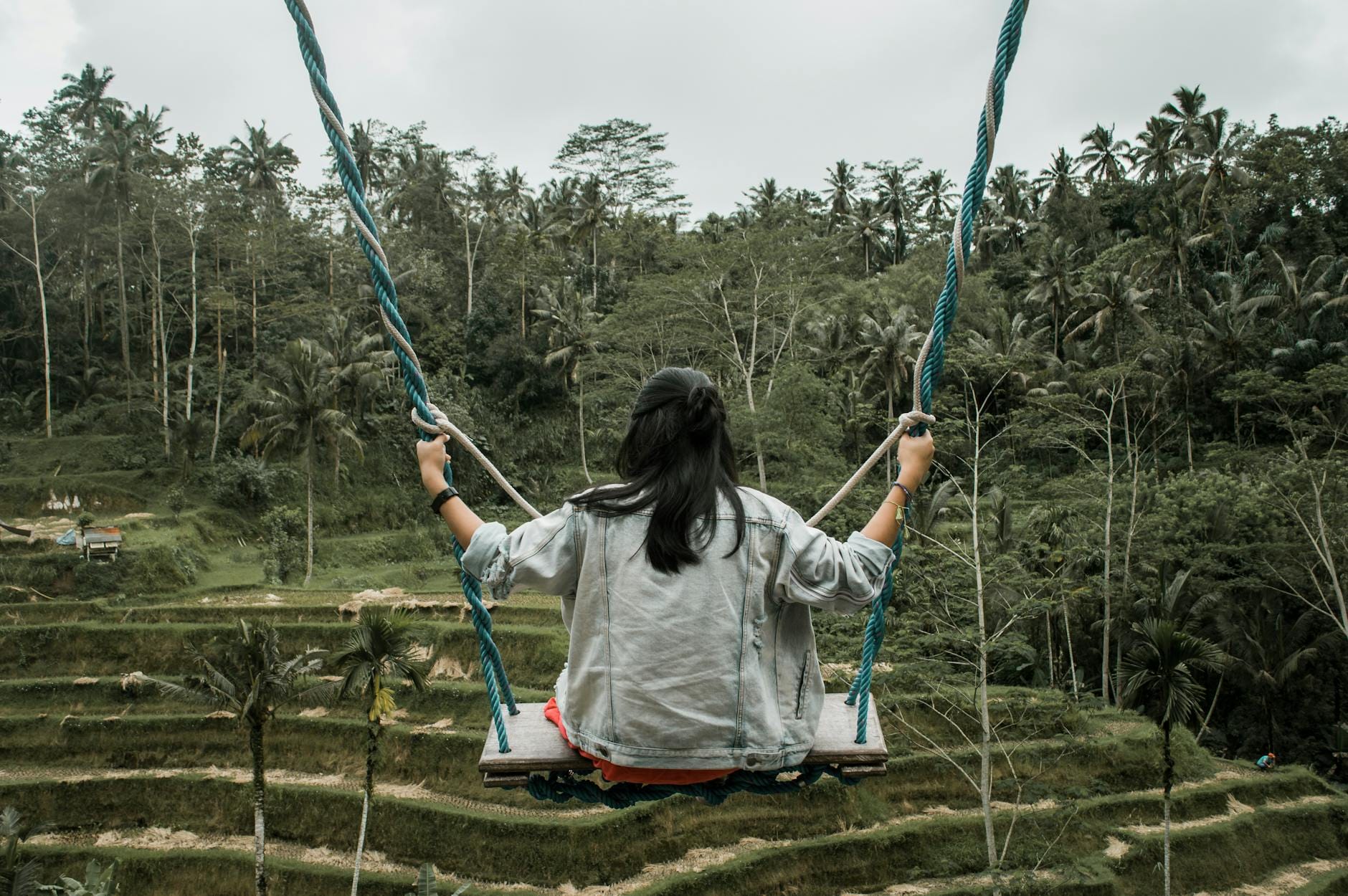
Over the past decade, Tegallalang has developed a substantial commercial layer on top of the agricultural landscape. Bali swings, suspended over the terrace edges and offering dramatic aerial photo opportunities, were pioneered near here and have multiplied across the ridge. Prices for a swing session are charged per person and vary by operator, typically ranging from IDR 100,000 to IDR 300,000 depending on the setup and any photo packages included.
Whether this is worth your time is genuinely subjective. The photos are striking and the experience is popular for good reason. However, the swings have also contributed to a shift in how many visitors engage with the terraces: queueing for an Instagram prop rather than walking the paddies themselves. If your interest is in the agricultural landscape and its cultural significance, the walk through the lower terraces is more rewarding than the ridge-level swing experience. Both can coexist in a single visit if you allocate enough time.
Similarly, the cafe and restaurant strips along the top road have expanded considerably. Some offer genuinely good food with spectacular views. Others serve average food at inflated prices, banking on the location. Reading recent reviews before choosing where to sit will help you find the former.
💡 Local tip
If you want a terrace view with breakfast and no sales pressure, arrive before 8am and choose a cafe that is clearly set up for seating rather than primarily selling souvenirs. The quieter cafes toward the northern end of the ridge tend to have better food and less aggressive upselling.
Getting There and Practical Information
There is no public bus or shuttle that serves Tegallalang directly. From central Ubud, the drive takes roughly 20 to 30 minutes depending on traffic. Ride-hail apps Gojek and Grab both operate in the area and are generally the most straightforward option for solo travellers or couples. A rented scooter from Ubud is cost-effective and gives you flexibility to stop at other points along the road, which passes through several other villages and smaller terrace viewpoints worth a pause.
Many visitors combine Tegallalang with a broader Ubud day circuit that might include the Sacred Monkey Forest Sanctuary to the south or temple stops along the way. Asking your driver to include a few viewpoint stops on the route north is standard practice and rarely costs extra if you are hiring for a half-day.
Accessibility at the terraces is limited. The ridge-level viewpoints are reachable by most visitors, including those with limited mobility. The descending footpaths into the lower terraces involve irregular steps, steep inclines, and uneven ground that is not suitable for wheelchairs or pushchairs, and is challenging for anyone with significant mobility restrictions.
Photography Tips
The most photographed angle is from the northern end of the ridge road, looking south-west across the full sweep of the terraces. This perspective works best in the hour after sunrise when the light comes from a low eastern angle and any standing water in the paddies picks up the sky. A polarising filter, if you shoot with interchangeable lens cameras, noticeably reduces glare and deepens the green of active crops.
For something less standard, descend into the terraces and shoot upward from the valley floor, framing the tiers against a blue sky with palm fronds in the foreground. This angle appears far less frequently online and captures the sense of scale that the ridge-level shots cannot. A wide-angle lens or the wide mode on a smartphone works well here. Early morning mist in the valley, most common from October through January, adds atmospheric depth to these shots.
Who Should Skip Tegallalang
Tegallalang is not for everyone. If you have already spent time at Jatiluwih Rice Terraces, the larger and arguably more authentic UNESCO-listed subak landscape in west Bali, Tegallalang may feel comparatively crowded and commercial. Visitors specifically seeking a quiet, rural agricultural experience without tourist infrastructure will likely find the trade-off disappointing during peak hours.
Those with limited mobility who cannot descend the terraces will also get a much reduced experience, since the ridge-level view, while scenic, represents only a fraction of what the place offers. And travellers who are particularly sensitive to sales pressure should be prepared: vendors, checkpoint collectors, and swing operators are persistent, though not aggressive.
Insider Tips
- Walk north along the ridge road past the main cluster of cafes to find quieter viewpoints with fewer selfie sticks and more breathing room. The crowds thin noticeably within 200 metres of the main stopping area.
- If you visit during or just after rain, the lower paths become slick clay. Bring a small microfibre towel and old footwear you do not mind getting muddy. The terrace smell after rain, wet soil and fresh greenery, is one of the best versions of the place.
- Ask your driver or a local warung about the current crop stage before arriving. They almost always know whether the paddies are flooded, green, or between cycles, and can save you a wasted trip if the conditions are not what you are hoping for.
- The cafes on the ridge with the best unobstructed views often require a minimum spend rather than a direct admission fee. A coffee and a snack typically meets the threshold and secures you a table for as long as you want.
- Combine the visit with a stop at one of the silver or wood-carving workshops on the road between Ubud and Tegallalang. The craftsmanship is genuine, prices are negotiable, and the villages along this stretch are an underappreciated part of the journey.
Who Is Tegallalang Rice Terraces For?
- Photographers who can arrive at dawn and want genuine landscape shots with minimal crowds
- Travellers with an interest in Balinese culture and the UNESCO subak heritage system
- First-time Bali visitors building a classic Ubud day itinerary
- Couples looking for a scenic half-morning walk with a relaxed cafe breakfast to follow
- Anyone curious to see how traditional cooperative farming actually operates at scale
Nearby Attractions
Other things to see while in Ubud:
- Sacred Monkey Forest Sanctuary
Home to over 1,200 long-tailed macaques and three Hindu temples dating back centuries, the Sacred Monkey Forest Sanctuary is one of Ubud's most photographed and genuinely surprising attractions. It rewards visitors who respect its rules and punishes those who don't.
- Amed
Amed is a string of fishing villages along Bali's remote northeast coast, known for dramatic black-sand beaches, world-class diving on coral reefs and a WWII Japanese shipwreck, and an unhurried atmosphere that feels like a different island entirely. It rewards travelers willing to make the drive.
- Ayung River
The Ayung River is Bali's longest river, carving a deep green gorge through the rainforest just west of Ubud. It draws visitors for white-water rafting, riverside resort walks, and some of the most dramatic jungle scenery on the island.
- Campuhan Ridge Walk
The Campuhan Ridge Walk is a 2-kilometre paved and dirt path tracing a narrow spine above two river valleys, cutting through open grasslands and jungle canopy on the edge of Ubud. It is the closest thing the town has to a proper escape from its own popularity, and it costs nothing to walk.
- Goa Gajah (Elephant Cave)
Carved into a hillside near Ubud around the 11th century, Goa Gajah is one of Bali's most significant Hindu archaeological sites. The cave entrance — a gaping stone mouth surrounded by carved demons and foliage — is instantly recognizable, but the full site extends into terraced gardens, bathing fountains, and jungle ravines that most visitors never reach.
Planning a trip? Discover personalized activities with the Nomado app.