Saxon Garden (Ogród Saski): Warsaw's Oldest Public Park
Opened to the public in 1727, the Saxon Garden is one of the oldest public parks in the world and a quiet green anchor in the heart of Warsaw. Free to enter, open around the clock, and carrying deep historical weight, it rewards visitors who slow down long enough to notice what's here.
Quick Facts
- Location
- Between Marszałkowska Street and Piłsudski Square, City Centre, Warsaw
- Getting There
- Świętokrzyska metro station (~7 min walk); Ratusz Arsenał (~9 min walk)
- Time Needed
- 45 minutes to 1.5 hours
- Cost
- Free, open 24 hours daily
- Best for
- History lovers, morning walkers, families, photography
What the Saxon Garden Actually Is
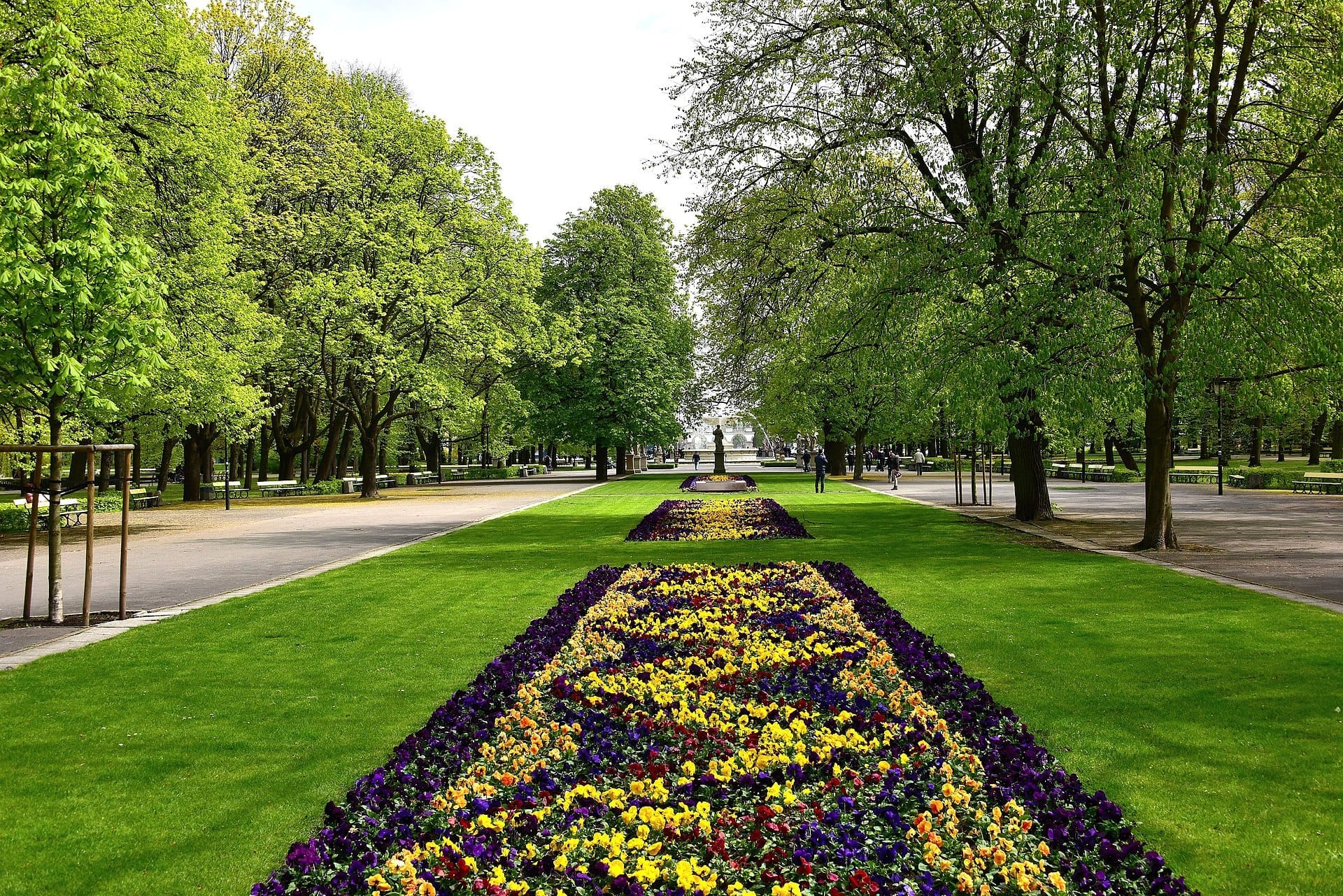
The Saxon Garden, known in Polish as Ogród Saski, opened its gates to the public on 27 May 1727, making it one of the earliest parks in the world to offer free public access at a time when green spaces were exclusively aristocratic privileges. That fact alone gives it a quiet significance that most visitors miss while walking through. Covering approximately 15.5 hectares in the geographic centre of Warsaw, it sits between Marszałkowska Street to the east and Piłsudski Square to the west, close enough to the city's main arteries that you can hear tram bells from certain corners, but insulated enough to feel genuinely separate from the urban pace.
The garden was originally laid out in the French formal style under the Saxon kings who gave it its name, then redesigned in the English landscape style in the 19th century. Today it carries both influences: straight allée paths lined with old linden trees alternate with more naturalistic clearings and a large ornamental pond at its centre. The park survived considerable destruction during World War II, and its post-war restoration is a quiet chapter in the broader story of Warsaw's reconstruction.
ℹ️ Good to know
The Saxon Garden is open 24 hours a day, every day, with free admission. No tickets, no timed entry, no reservation needed.
The Tomb of the Unknown Soldier: The Reason Many Come
At the western edge of the garden, facing Piłsudski Square, stand three surviving arcade arches of the Saxon Palace, demolished by the Germans in 1944. Beneath these arches lies the Tomb of the Unknown Soldier, one of Poland's most significant national monuments. An eternal flame burns here continuously, and an honor guard stands watch in rotating shifts. The changing of the guard takes place every hour on the hour, and on Sundays at noon the ceremony is expanded and accompanied by military music.
If you are visiting Warsaw with any interest in its wartime history, this corner of the Saxon Garden is not optional. The ruined arcade is all that physically remains of an enormous palace complex that once dominated this part of the city. For deeper context on what this area meant before and during the war, the Warsaw Uprising Museum provides essential background that transforms a walk through this square from sightseeing into something more grounded.
💡 Local tip
The full changing of the guard ceremony at the Tomb of the Unknown Soldier takes place every Sunday at noon and draws a respectful crowd. Arrive 10 minutes early to get a clear sightline.
Tickets & tours
Hand-picked options from our booking partner. Prices are indicative; availability and final rates are confirmed when you complete your booking.
Beauty and the Beast Garden of Lights exhibition in Warsaw
From 9 €Instant confirmationMuseum of John Paul II and Primate Wyszyński entrance ticket
From 8 €Instant confirmationPub crawl in Warsaw
From 28 €Instant confirmationFree cancellationWarsaw Museum of Modern Art entrance ticket
From 8 €Instant confirmation
What It Feels Like at Different Times of Day
Early mornings between 7 and 9 AM are the most peaceful window. Office workers cut through on their way to work but do not linger. Retirees walk the central allée with deliberate regularity. The linden trees, which line much of the interior, release a faint sweetness in late spring and early summer that you notice most when the air is still and cool. The ornamental pond reflects the surrounding foliage and the occasional fountain spray, and ducks move through it with complete indifference to onlookers.
Midday on weekdays brings office lunch crowds, particularly near the benches around the pond and the fountain terrace. It becomes social and lively, but not overcrowded in the way that major tourist attractions are. Weekends shift the demographic toward families with children and couples. The garden absorbs visitors naturally because of its size and its multiple internal paths, so it rarely feels congested even when busy.
In winter, the garden takes on a different character entirely. Snow on the formal paths and bare linden branches create a spare, slightly melancholy atmosphere that suits Warsaw's colder months. The Tomb of the Unknown Soldier is particularly striking in low winter light. This is not a park that closes itself off in cold weather; the paths are maintained, and Warsaw residents use it year-round.
Historical and Architectural Context
The garden's origins trace to the early 18th century, when it was part of the private grounds of the Saxon Palace, built for the Polish-Saxon king Augustus II. Opening it to the public in 1727 was a progressive act for its era. The original French-style geometry was softened in the 1800s into a more naturalistic English landscape park, which is the form it roughly holds today. A series of allegorical sculptures along the main allée date from the 18th century and represent abstract virtues and sciences; they are easy to miss if you are walking quickly, but worth pausing at.
The park sits in the broader context of Warsaw's central axis, which stretches from the Royal Castle through the Old Town and down toward Piłsudski Square. Walking from the Saxon Garden south along Marszałkowska or east toward Nowy Świat gives a clear sense of how this park functions as a breathing space within a dense urban grid built around it.
The park's bandstand, fountain, and sundial are small landmarks within the grounds that orient a walk without requiring a map. The 16 sculptures along the main allée are reproductions; the originals were damaged or destroyed during the war, which is itself a historically relevant detail. Restoration and reconstruction are recurring themes throughout central Warsaw, and the Saxon Garden is no exception.
Practical Walkthrough: Getting There and Getting Around
The most convenient metro stop is Świętokrzyska, served by both Metro Line 1 and Metro Line 2, making it easily reachable from most parts of the city. From the station it is roughly a 7-minute walk west to the garden's eastern entrance. Ratusz Arsenał on Metro Line 1 is an alternative at about 9 minutes' walk. Multiple tram and bus routes run along Marszałkowska Street directly adjacent to the garden.
If you are building a half-day walk through central Warsaw, the Saxon Garden connects logically with Piłsudski Square and the Tomb of the Unknown Soldier immediately to the west, and the Royal Route attractions to the east. A route that begins at the garden, crosses toward Nowy Świat Street, and continues to the Old Town makes for a coherent half-day without backtracking.
The paths inside are mostly paved with compact gravel or stone, suitable for most footwear. Flat terrain throughout makes it accessible for strollers and wheelchairs on the main allées, though some narrower paths have uneven surfaces. There are benches throughout, several cafés and kiosks near the main entrance on Marszałkowska, and public toilets within the park grounds.
⚠️ What to skip
There is no dedicated cycling path through the garden's interior. Cyclists are expected to walk their bikes inside the park, though enforcement is inconsistent.
Photography Tips and What to Photograph
The central fountain and pond area photograph well in the hour after sunrise when the light is soft and low, and the crowds are thin. The main allée of linden trees creates a strong natural tunnel composition, especially in early autumn when the leaves begin to turn. For the Tomb of the Unknown Soldier, a slightly elevated angle from across Piłsudski Square captures the ruined arcade with the eternal flame visible beneath; get low and close during the guard change to show the ceremony in human scale.
In spring the flowerbeds near the main entrance and the bandstand area offer dense color that contrasts well with the formal stonework. The allegorical sculptures along the central path are best photographed in overcast light, which eliminates the harsh shadows that flatten their detail under direct sun.
Is It Worth Your Time? An Honest Assessment
The Saxon Garden is not a destination in the way that a museum or palace is. It will not occupy three hours of your itinerary or teach you something structured. What it offers is different: a genuinely pleasant, historically layered public space that reflects the everyday life of Warsaw better than most attractions do. The Tomb of the Unknown Soldier raises the stakes considerably; if you arrive without knowing about it, the eternal flame and the guard may catch you off guard in the best way.
If you are visiting Warsaw for a short stay and choosing between this and a major museum, prioritize the museum. But if you are in the city for two days or more, the Saxon Garden earns its place as a connecting piece between other sites on the central axis. It pairs particularly well with a walk along Krakowskie Przedmieście, Warsaw's grandest boulevard, which runs parallel a few blocks east.
Visitors who expect manicured grandeur on the scale of Versailles will find it understated. Visitors who want to sit somewhere genuinely old, free, and unhurried in the middle of a capital city will find it exactly right.
Insider Tips
- The Sunday noon guard change at the Tomb of the Unknown Soldier includes full military ceremony with music. It draws respectful local crowds and is notably different from the quieter hourly changes on weekdays.
- The 18th-century allegorical sculptures along the main allée are easy to overlook. There are 16 in total; they represent virtues, sciences, and the elements, and some carry legible Latin inscriptions worth deciphering.
- If you enter from the Marszałkowska side in the morning, walk toward the pond first before heading west to the arcade arches. This routes you through the most picturesque part of the park before it fills with lunchtime visitors.
- The benches directly around the central fountain are almost always occupied on warm afternoons. The benches in the eastern section near the garden's side entrances are consistently quieter.
- In late spring, usually May to early June, the linden trees along the central allée bloom and release a noticeable fragrance. This is one of the more sensory experiences the park offers, and it lasts only a few weeks.
Who Is Saxon Garden (Ogród Saski) For?
- History and memory travelers who want to see the Tomb of the Unknown Soldier in proper context
- Morning walkers and runners looking for a calm green space in the city centre
- Families with young children who need open space without an entrance fee
- Photographers looking for architectural-meets-natural compositions in central Warsaw
- Visitors building a walking route through the central axis of the city
Nearby Attractions
Other things to see while in City Centre (Śródmieście):
- Fryderyk Chopin Museum
Housed inside the 17th-century Ostrogski Palace near Warsaw's Royal Route, the Fryderyk Chopin Museum holds one of the world's richest collections of Chopin memorabilia. Closed for full renovation throughout 2026; reopening is planned for 2027 — plan post-renovation visits and confirm dates on the official site.
- Grand Theatre – National Opera
The Grand Theatre – National Opera (Teatr Wielki – Opera Narodowa) is one of the largest opera houses in Europe, anchoring Theatre Square in central Warsaw with a neoclassical facade that survived war and rebuilding. Whether you attend a full opera, a ballet, or simply walk across the square to take in the architecture, this institution rewards both serious culture-seekers and curious first-time visitors.
- Hala Koszyki Food Hall
Built in 1909 and reborn in 2016, Hala Koszyki is a restored Art Nouveau market hall in central Warsaw where locals actually eat, drink, and shop. Free to enter, open daily until 1am, and genuinely good.
- Holy Cross Church (Kościół Świętego Krzyża)
One of Warsaw's most historically charged sites, Holy Cross Church on Krakowskie Przedmieście holds the preserved heart of Frédéric Chopin in a nave pillar. A Minor Basilica with a Baroque facade, 17th-century origins, and free entry, it rewards visitors who take the time to look closely.