Wat Ram Poeng Meditation Centre: Chiang Mai's Serious Retreat Space
Wat Ram Poeng, formally known as Tapotaram Temple, is one of northern Thailand's most established centres for vipassana meditation. Both short-stay visitors and those committing to multi-week residential courses come here for structured practice in a calm, forested monastic setting on the southern edge of Chiang Mai's Old City area.
Quick Facts
- Location
- Suthep Road, southwest of the Old City moat, Chiang Mai
- Getting There
- Songthaew (red truck taxi) from Tha Phae Gate or Nimman Road; approximately 20-30 minutes
- Time Needed
- Half day for a visit; 10 or 26 days for a residential course
- Cost
- Donation-based for visitors; residential courses request donations with an additional one-time 500 THB fee for linens and ceremonial items
- Best for
- Serious meditation practitioners, retreat seekers, travellers wanting genuine monastic experience
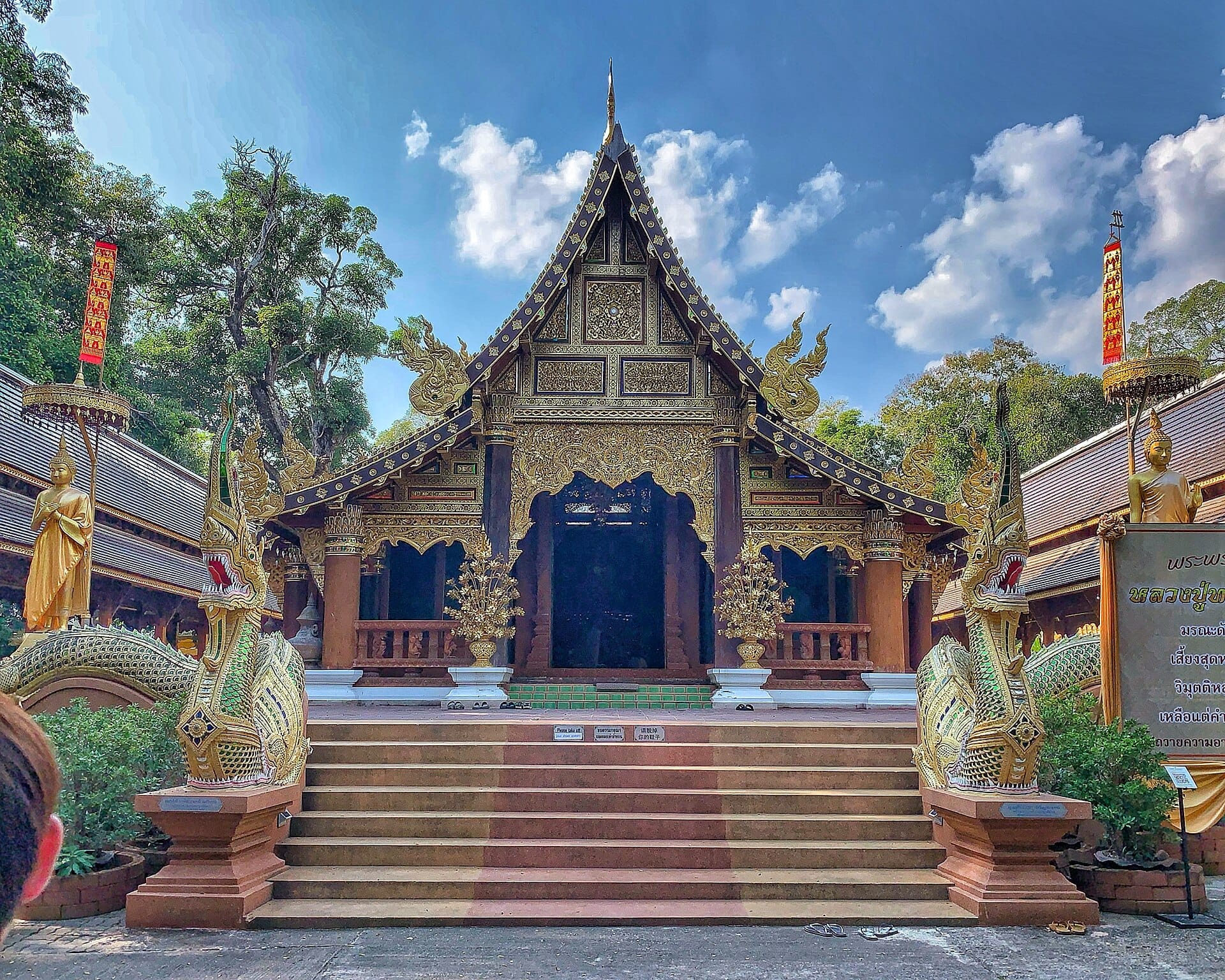
What Wat Ram Poeng Actually Is
Wat Ram Poeng, whose official name is Tapotaram Temple, is not a temple you pass through on the way to somewhere else. It is a functioning vipassana meditation centre with a decades-long reputation as one of the most rigorous and respected practice sites in northern Thailand. The centre operates under the Mahasi tradition of insight meditation, offering structured courses based on the Four Foundations of Mindfulness (Satipatthana), a core framework in Theravada Buddhist mindfulness practice.
The grounds have a quiet, unhurried quality that separates them from the more tourist-facing temples of the Old City. There is no golden chedi competing for attention, no tuk-tuk dropping groups at the gate. Instead, you find shaded walking paths, a meditation hall, simple kuti (residential huts) for students, and monks and practitioners moving at the pace of deliberate attention.
ℹ️ Good to know
Wat Ram Poeng is a working retreat centre, not a drop-in attraction. Visitors who wish to observe or explore should do so with appropriate silence and dress. Shorts and sleeveless tops are not acceptable anywhere on the grounds.
The Grounds: What You Will See
The centre sits on a sizeable plot bordered by mature trees, which create a genuine sense of enclosure from the surrounding Chiang Mai streets. In the early morning, around 6 to 7am, the air carries a faint smell of incense from the main ordination hall, and the only sounds are birdsong, the distant hum of a motorbike on Suthep Road, and the soft footsteps of meditators doing walking meditation on the designated paths.
The architecture is typical Lanna Buddhist style with tiered rooflines and carved wooden details, though the buildings are functional rather than ornate. The primary draw is not visual spectacle but spatial calm. The grounds have a noticeably different atmospheric pressure to the city outside. Even short-term visitors who simply walk the perimeter or sit on a bench near the sala often remark on the shift in pace they feel within a few minutes.
Residential students occupy their own section of the compound and maintain noble silence, so visitors should not approach or engage meditators they encounter on the walking paths. This is one of the key practical rules of the site and worth understanding before you arrive.
Tickets & tours
Live prices and dates from our booking partner. If you book, we may earn a commission at no extra cost to you.
Doi Inthanon National Park small group guided tour
From 34 €Instant confirmationFree cancellationHalf-day tour to admire elephants and enjoy Thai nature
From 48 €Instant confirmationFree cancellationChiang Mai - Chiang Dao Cave and 5 Hill Tribe villages
From 42 €Instant confirmationFree cancellationArt in Paradise Chiang Mai 3D Art Museum entrance tickets
From 8 €Instant confirmationFree cancellation
The Meditation Courses: How They Work
The centre offers structured vipassana courses, with a 26‑day basic course and a 10‑day follow‑up course for those who have completed the basic retreat, conducted in English and Thai. The 26‑day course provides the full basic Mahasi‑style curriculum developed in Burma and adapted at Wat Ram Poeng. Students are expected to maintain silence throughout, follow a daily schedule beginning before dawn, and practice both sitting and walking meditation for the majority of each waking hour.
Advance registration is required and courses fill well in advance, particularly during Chiang Mai's cooler months from November through February. The centre accommodates both laypeople and ordained practitioners. Foreign students are assigned an English-speaking teacher or receive instruction through a translator. The accommodation is basic but adequate: simple private rooms or kuti, two daily alms-style meals before noon, and access to the walking meditation paths.
💡 Local tip
If you want to join a course, contact Wat Ram Poeng directly several months ahead of your intended arrival. Walk-in enrolment is rarely possible, and the administration office operates on limited hours.
For travellers who cannot commit to a full residential course, there is the option of practising during the day under supervision, though this arrangement should be confirmed with the centre beforehand. Casual visits are permitted on the grounds, but the meditation instruction itself is reserved for enrolled students.
Time of Day and Atmosphere
The most worthwhile time to visit is early morning, between 6am and 9am. The light is soft, the temperature is cool by Chiang Mai standards, and the grounds have their fullest sense of quiet purpose. You may see monks collecting alms or walking in slow, measured steps between the hall and their quarters. The contrast with the city outside is most apparent at this hour.
Midday visits are less atmospheric. The heat is significant from March through May, and the grounds lose some of their early morning quality. If you are visiting purely to see the space rather than practise, a morning visit of 30 to 45 minutes is sufficient to understand what the centre offers.
Evening, particularly around dusk, brings its own stillness, with the last light filtering through the tree canopy and the faint sound of chanting from the direction of the main hall. This is a rewarding time to sit quietly near the grounds if you have the patience for it.
Getting Here and Practical Logistics
Wat Ram Poeng is located on Suthep Road, about 4 km southwest of the Old City moat at the foot of Doi Suthep. The most straightforward way to reach it from central Chiang Mai is by songthaew, the red shared pickup trucks that serve as the city's informal transit network. Flag one down near Tha Phae Gate or from Nimman Road and specify your destination. The journey takes roughly 20 to 30 minutes depending on traffic.
You can also hire a tuk-tuk for a direct and slightly faster trip, which is practical if you are carrying luggage for a residential stay. If you are staying near the Nimman area, the ride is shorter still, as the centre sits in the same general southern corridor of the city.
Parking is available for those arriving by private vehicle or motorbike. There is no formal visitor centre or information desk at the gate, so first-time visitors should be prepared to navigate the grounds independently or seek a monk or lay volunteer near the administration building.
⚠️ What to skip
Dress strictly: cover shoulders and knees at minimum. Shoes should be removed before entering any building. Photography inside the meditation halls is not appropriate and should be avoided entirely.
Who This Attraction Is Not For
Wat Ram Poeng is not a social outing. Visitors expecting incense markets, Instagram-friendly architecture, or a brief cultural photo stop will find the experience underwhelming. The centre does not cater to sightseers in the way that Chiang Mai's more prominent temples do. There is nothing to buy, no guided tour, and no performance of ritual for an audience.
Travellers who want a broader sense of Chiang Mai's temple culture without committing to a practice visit would be better served by Wat Phra Singh or Wat Chedi Luang, both of which welcome casual visitors and offer more visual and historical depth for a short stop.
Children will find very little to engage with here, and the silence expected of visitors makes this unsuitable for families with young children. Those coming solely out of curiosity about Thai Buddhism but with no interest in meditation practice may also find the experience hollow without preparation.
Fitting Wat Ram Poeng Into Your Chiang Mai Visit
For travellers serious about meditation, Wat Ram Poeng can become the entire reason for a Chiang Mai trip. A 10-day or 26-day course effectively replaces sightseeing with practice. If you are building a broader itinerary around the city, the 3-day Chiang Mai itinerary can help you balance temple visits with this kind of deeper stop.
Wat Ram Poeng is also a good complement to a visit to Wat Umong, the forest tunnel temple further up Suthep Road, which also emphasises meditation practice and has a similarly contemplative atmosphere. The two can be combined in a half-day focused on the quieter, more practice-oriented side of Chiang Mai's Buddhist landscape.
For those interested in understanding the wider context of Lanna Buddhism before visiting, the Lanna Folklife Museum near the Old City provides useful background on the region's religious and cultural traditions.
Insider Tips
- Register for a course directly with the centre, not through third-party booking platforms. The administration team communicates by email and telephone, and direct contact ensures your registration is confirmed properly.
- Bring light, loose clothing in muted colours if you plan to practise. White or beige is traditional for lay meditators in the Mahasi tradition. Bright patterns are acceptable for casual visits but feel out of place in the atmosphere.
- The walking meditation paths alongside the buildings are available to visitors and are a good way to experience the grounds meaningfully rather than just passing through. Walk slowly, as meditating students use these same paths.
- Early November to mid-February is the best window for a residential course: temperatures are manageable, the city is at its most pleasant, and the atmosphere on the grounds is at its calmest.
- If you are in Chiang Mai during burning season, roughly February through April, the air quality can be poor enough to affect long sitting sessions in outdoor or semi-open spaces. Factor this in if you are choosing dates for a retreat.
Who Is Wat Ram Poeng Meditation Centre For?
- Travellers seeking structured vipassana meditation instruction in the Mahasi tradition
- Those wanting genuine monastic atmosphere rather than a curated tourist temple
- Experienced meditators looking to deepen practice on an extended retreat
- Visitors interested in the practical rather than ornamental side of Theravada Buddhism
- Slow travellers willing to spend days or weeks in one place rather than moving constantly
Nearby Attractions
Other things to see while in Old City (Chiang Mai Old Town):
- Chang Phuak Night Market (North Gate Food Market)
Chang Phuak Night Market, known to locals as the North Gate Food Market, is a compact open-air street food gathering outside Chiang Mai's ancient city walls. Night after night, it draws a faithful crowd of students, office workers, and savvy travelers in search of authentic northern Thai cooking at prices that haven't caught up with the tourist economy.
- Chiang Mai City Arts and Cultural Centre
Housed in a beautifully restored colonial-era building on the edge of the Old City's Three Kings Monument plaza, the Chiang Mai City Arts and Cultural Centre offers one of the most accessible and well-curated introductions to Lanna history and northern Thai culture. It rewards both first-time visitors and those who want genuine context before exploring the city's temples and neighborhoods.
- Chiang Mai City Walls and Moat
The rectangular moat and surviving brick walls of Chiang Mai's Old City are the physical outline of a 700-year-old Lanna capital. Free to explore at any hour, they offer one of the most atmospheric walks in northern Thailand, framing temples, corner bastions, and four ceremonial gates.
- Chiang Mai National Museum
The Chiang Mai National Museum offers one of the clearest introductions to northern Thailand's Lanna Kingdom, covering 700 years of history through royal artifacts, Buddhist sculpture, ceramics, and ethnographic collections. It's calm, well-organized, and genuinely undervisited compared to the temples nearby.
Planning a trip? Discover personalized activities with the Nomado app.