Plaza Garibaldi: The Soul of Mariachi in Mexico City
Plaza Garibaldi is Mexico City's most famous mariachi gathering point, a free public square in Centro Histórico where trumpet fanfares and guitarrón bass lines fill the air every evening. Part cultural institution, part open-air spectacle, it rewards visitors who arrive after sunset with an experience unlike anything else in the capital.
Quick Facts
- Location
- Eje Central Lázaro Cárdenas 43, Centro, Cuauhtémoc, CDMX
- Getting There
- Garibaldi/Lagunilla (Lines 8 & B) — approx. 4-min walk
- Time Needed
- 1–2 hours (longer if you stay for drinks and music)
- Cost
- Free to enter the plaza; individual song performances cost extra (negotiate fee with musicians)
- Best for
- Mariachi music, late-night atmosphere, Mexican cultural history
What Is Plaza Garibaldi?
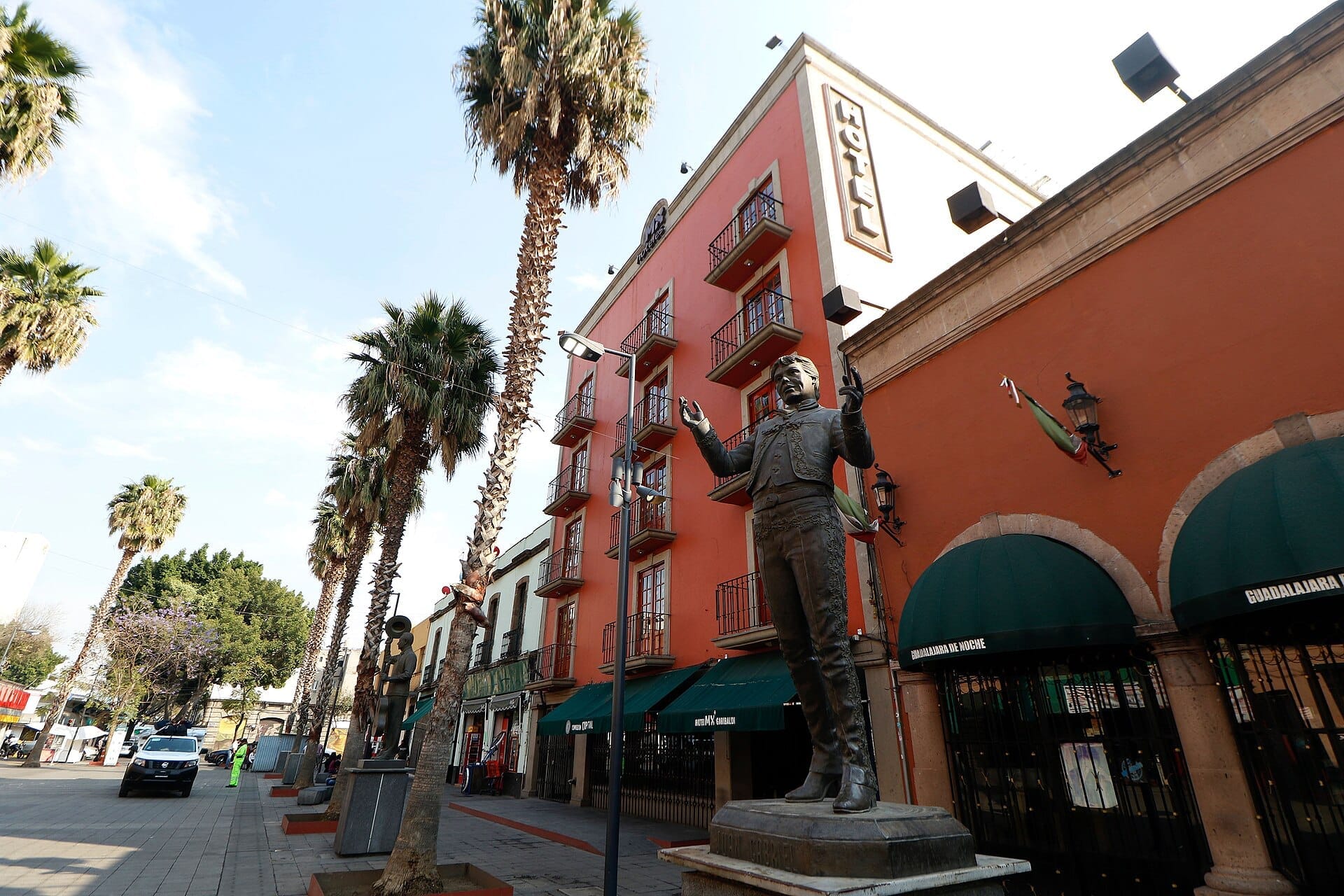
Plaza Garibaldi is Mexico City's undisputed center of mariachi culture, a flat, open paved square in the northern edge of Centro Histórico where dozens of mariachi groups congregate every evening, competing for your attention in a riot of brass, violin, and voice. There is no ticket booth, no turnstile, no curated experience. You walk in, the music hits you immediately, and the scene does the rest.
The plaza sits at the intersection of Eje Central Lázaro Cárdenas and several smaller streets near Colonia Guerrero, a short walk north of the historic core and its major monuments. It is not a polished tourist attraction in the conventional sense. The cobblestones are worn smooth, the surrounding bars have seen better decades, and the whole operation runs on spontaneity. That roughness is precisely the point.
💡 Local tip
The plaza is technically open 24 hours, but the real action begins around 9 PM and peaks between 10 PM and midnight. Arriving before 8 PM on a weekday will feel underwhelming — a fraction of the musicians are present and the atmosphere is flat.
A Brief History: From Street Market to Mariachi Stage
The square has gone through several identities. Its earlier names included Plazuela del Jardín and Plaza del Baratillo in reference to a large street market that occupied the area. In 1910, the city officially renamed it Plaza Garibaldi in honor of Giuseppe Garibaldi, the Italian revolutionary whose name was adopted for the square, while his grandson Giuseppe (José) Garibaldi did fight alongside Francisco Madero's forces during the Mexican Revolution.
The mariachi tradition at the square solidified in the early 1920s, when the Salón Tenampa cantina opened on the plaza's edge. Tenampa became a gathering point for musicians arriving from Jalisco and Nayarit who needed a place to wait for work — they would play inside and outside, and clients would pay for private serenatas. That informal labor exchange evolved into the organized spectacle that fills the plaza today, where entire bands in charro suits stand ready to perform on request.
Mariachi itself was designated part of UNESCO's Representative List of the Intangible Cultural Heritage of Humanity in 2011, and Plaza Garibaldi is the genre's most recognized urban stage. For fuller context on the city's layers of music, food, and street life, the complete guide to things to do in Mexico City covers the wider picture.
Tickets & tours
Live prices and dates from our booking partner. If you book, we may earn a commission at no extra cost to you.
A mariachi night in Plaza Garibaldi and dinner at Bellini restaurant
From 143 €Instant confirmationFree cancellationPrivate Mariachi night in Plaza Garibaldi and dinner at Bellini
From 207 €Instant confirmationFree cancellationPuebla and Cholula guided tour from Mexico City with optional lunch
From 43 €Instant confirmationFree cancellationXochimilco, Coyoacan and Frida Kahlo Museum with skip-the-line tickets
From 63 €Instant confirmationFree cancellation
What the Experience Actually Feels Like
Step onto the plaza after 9 PM on a Friday or Saturday and the sensory overload is immediate. Three or four groups may be playing simultaneously within earshot, their sets overlapping in a wall of competing trumpets. The smell of tequila and mezcal drifts from open bar doors. Vendors push through the crowd with trays of snacks. Couples celebrate birthdays and anniversaries by commissioning a full group to serenade them on the spot — you will see teary expressions and raised glasses within minutes of arriving.
The musicians themselves are the visual center of the plaza. Traditional charro suits — black or silver with elaborate embroidery, tight-fitting pants with metal buttons running down the seam, wide-brimmed sombreros — make each group instantly identifiable. The standard ensemble includes violins, trumpets, a vihuela (small high-pitched guitar), a guitarrón (large bass guitar), and a guitarra de golpe. When a full group launches into a classic like Cielito Lindo or La Negra, the sound is dense and physical, not background music.
If you want a private performance, approach a group, name the song, and negotiate the price before they begin. Rates are not fixed but expect to pay per song. Groups will also accept restaurant-style serenata bookings for birthdays or special occasions. Watching the negotiation process itself is entertaining — musicians are experienced salespeople and the banter is good-natured.
Daytime vs. Evening: Two Very Different Plazas
During the day, Plaza Garibaldi is largely unremarkable. A handful of musicians in civilian clothes may be present, but the energy is absent. Street vendors and pedestrian traffic move through without pausing. The plaza's architectural features — the paved central area, the surrounding colonial-era buildings, the Museo del Tequila y el Mezcal (and the Mercado San Camilito) on the north side — are visible but not compelling on their own.
After dark, the same space transforms. The lighting shifts the mood significantly: the plaza uses warm artificial light that catches the metalwork on the musicians' suits and creates a theatrical quality. By 10 PM on weekends, groups of 30 to 50 people form semicircles around individual bands, smartphone screens glowing as everyone records. The perimeter bars open their doors fully and the music from inside competes with the music outside.
ℹ️ Good to know
Thursday evenings tend to be quieter than Friday and Saturday but still atmospheric — and you will have more space to move around and interact with musicians without a large crowd pressing in.
The Museo del Tequila y el Mezcal
On the north side of the plaza, the Museo del Tequila y el Mezcal (MUTEM) offers a compact but worthwhile complement to the outdoor experience. The museum traces the history and production of both spirits, with exhibits covering agave varieties, distillation methods, and the cultural role of each drink. Admission may include a small tasting, though the drink voucher and pricing should be confirmed directly with the museum before visiting as these details change.
The rooftop terrace at MUTEM is one of the better-kept practical secrets here: it gives an elevated view of the plaza below, and the bar serves both tequila and mezcal with the music rising from the square beneath you. If you want to understand the difference between agave spirits before ordering at the bar, the Mexico City mezcal guide goes into useful depth.
Getting There and Practical Logistics
The easiest approach by public transit is the Metro. The Garibaldi/Lagunilla station serves both Line 8 (yellow) and Line B (grey), and the plaza is approximately a 4-minute walk from the exit. The Bellas Artes station (Lines 2 and 8) is about 8 minutes on foot if you are coming from the historic core near the cathedral or Alameda Central.
Ride-hailing apps including Uber, DiDi, and Cabify all service the area and are the most practical option late at night, both for arrival and departure. The streets immediately around the plaza can be congested on weekend evenings, so your driver may drop you a block away. The guide to getting around Mexico City covers transit options in detail for all neighborhoods.
The plaza itself is flat and paved, making it physically accessible for most mobility levels. The surface is worn but even across most of the central area. Specific accessibility facilities such as adapted restrooms are not documented in available sources — visitors with specific requirements should contact nearby venues in advance.
⚠️ What to skip
The streets immediately north and east of Plaza Garibaldi border Tepito, one of Mexico City's more challenging neighborhoods. Stay oriented, travel in a group after midnight, and use a ride-hailing app rather than walking to a main avenue when leaving late. The plaza itself is well-lit and publicly active, but the surrounding blocks require the same street awareness you would apply in any dense urban environment.
Who Should Skip This — and Who Will Love It
If you are looking for a quiet, curated cultural experience, Plaza Garibaldi will frustrate you. There is nothing subtle about it. The volume is high, the salesmanship is constant, and the surrounding area is gritty. Travelers who want polished comfort or who are particularly sensitive to crowd pressure should consider experiencing mariachi in a more controlled setting, such as a formal dinner show.
For everyone else, especially those interested in Mexican popular music traditions, late-night urban energy, or simply something unlike any other city square in the world, the plaza delivers. It pairs naturally with an evening that starts near the Palacio de Bellas Artes and the Alameda Central before heading north to Garibaldi for the late-night finale.
Insider Tips
- Ask for the song El Son de la Negra if you want to hear what a full mariachi group sounds like at full intensity — it is considered an unofficial anthem and most groups play it with particular energy.
- The Salón Tenampa on the plaza's edge has been operating since around 1923 and is worth a drink purely for its walls: portraits of famous Mexican entertainers cover nearly every surface, and the staff are accustomed to tourists.
- Bring a mix of cash in smaller denominations. Musicians prefer cash for individual song payments, and tipping in coins will draw polite but firm disappointment.
- If you visit on a weeknight (Sunday through Wednesday), you will find smaller crowds and musicians who are more willing to chat between sets — a better opportunity to actually talk about the music.
- The MUTEM rooftop bar has seating with a direct sightline to the plaza below. Arrive by 9 PM to secure a spot before the crowd builds, then watch the plaza fill up beneath you over the following hour.
Who Is Plaza Garibaldi For?
- Music enthusiasts interested in mariachi as a living cultural tradition rather than a staged performance
- Night owls and late-evening travelers who want genuine local atmosphere after most tourist sites close
- Couples celebrating a special occasion — a commissioned serenade on the plaza is memorable
- Travelers combining a Centro Histórico evening walk with a finale experience
- Food and drink explorers curious about the overlap between mezcal culture and Mexican popular music
Nearby Attractions
Other things to see while in Centro Histórico:
- Alameda Central
Founded in 1592, Alameda Central is the oldest public park in the Americas and the green centerpiece of Mexico City's historic center. Flanked by the Palacio de Bellas Artes and a ring of colonial-era institutions, it offers free entry, shaded walkways, and a front-row seat to everyday city life.
- Calle Madero
Avenida Francisco I. Madero connects the Zócalo to the Torre Latinoamericana along one of the oldest streets in the Americas. Free to walk at any hour, it layers colonial architecture, street performance, and everyday city life into a single corridor that doubles as an open-air history lesson.
- Casa de los Azulejos
Casa de los Azulejos is one of the most photographed facades in Mexico City, its exterior wrapped in blue-and-white Talavera tiles from Puebla. With documented origins in the 16th century and operating as a Sanborns restaurant since 1919, it offers free entry and a rare chance to step inside a baroque palace that has survived centuries of history.
- La Ciudadela Artisan Market
The Mercado de Artesanías de La Ciudadela is one of Mexico City's largest and best-known handicraft markets, with more than 350 vendors selling handmade goods from across 22 states. Entry is free, quality ranges from tourist trinkets to serious collector pieces, and knowing how to navigate the stalls makes all the difference.
Planning a trip? Discover personalized activities with the Nomado app.