Platea Madrid: Inside the Gourmet Food Hall Built in a Former Cinema
Platea Madrid occupies the shell of the old Carlos III cinema on Calle de Goya, turning more than 6,000 square metres of tiered seating and theatrical architecture into one of Europe's largest gastronomic leisure spaces. It is part food market, part restaurant floor, part late-night social venue, and entirely a product of Salamanca's appetite for doing things at a certain scale.
Quick Facts
- Location
- Calle de Goya 5–7, 28001 Madrid (Barrio de Salamanca)
- Getting There
- Metro Line 4 – Serrano or Velázquez stations, both a short walk away
- Time Needed
- 1.5–3 hours, depending on how many stalls you explore
- Cost
- Free entry; food and drink prices reflect the Salamanca setting (mid to high range)
- Best for
- Serious food lovers, curious architecture fans, groups with mixed tastes, and anyone wanting a long late lunch or early dinner
- Official website
- www.plateamadrid.com
What Platea Madrid Actually Is
Platea Madrid is a gourmet food hall housed inside the repurposed Carlos III cinema on Calle de Goya, in the heart of Madrid's upscale Salamanca district. The venue spans more than 6,000 square metres across two main floors and three internal galleries, making it one of the largest dedicated gastronomic spaces in Europe. It is not a traditional market where you buy ingredients to take home; it is a destination for eating and drinking, with a line-up of stalls, bars, and restaurant counters run by some of the city's more recognised culinary names.
The format is somewhere between a food court and a proper restaurant experience. You can graze across multiple vendors in a single visit, eating jamón and oysters at one counter before moving to a Peruvian ceviche bar or a stall specialising in grilled Galician beef. The theatrical interior means the whole thing feels deliberately performative, which suits Salamanca's self-aware character perfectly.
ℹ️ Good to know
Platea does not charge general admission. You walk in, explore, and pay only for what you eat and drink. Opening hours are typically from noon to around 2:00 am depending on the day and season, but verify current times on the official site before visiting, as they can shift.
The Architecture: A Cinema Transformed
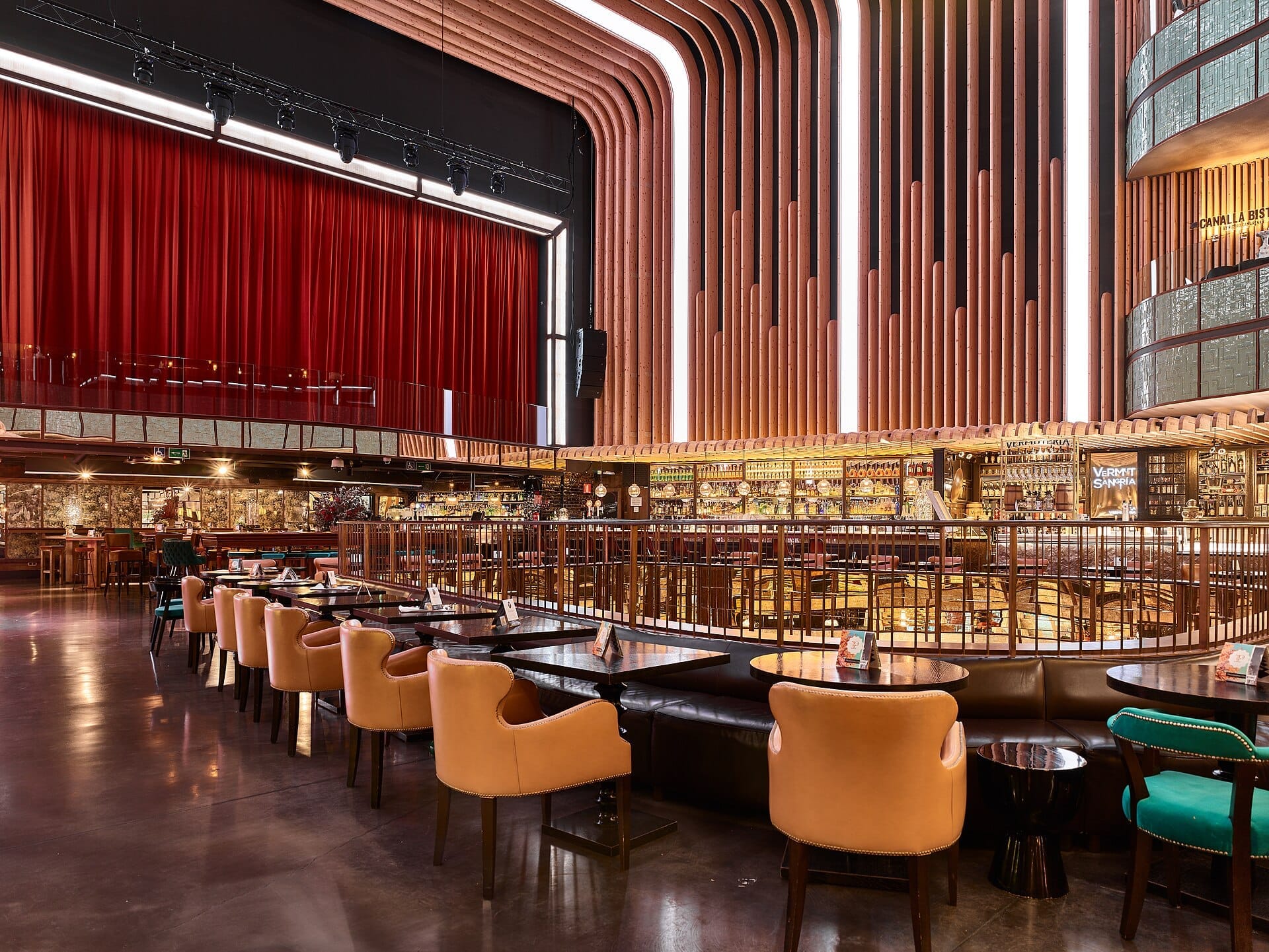
The Carlos III was a cinema that sat on this corner of Calle de Goya for decades before closing. When Platea opened, the conversion retained and deliberately showcased the bones of the original theatre: the raked seating tiers, the curved balconies, the deep stage area, and the dramatic vertical height of the auditorium. Walking in for the first time, the scale is genuinely surprising. The ceiling soars above you, and the layers of activity on different levels give the space an almost operatic quality.
The central stage area is sometimes used for live performances, cooking demonstrations, and events, reinforcing the theatrical analogy. The two upper gallery levels wrap around the main floor, offering slightly different atmospheres: the ground level is louder and more social, while the upper floors can feel a fraction calmer, particularly during the earlier afternoon hours.
If you are interested in how Madrid repurposes its older buildings for contemporary use, Platea sits within a broader pattern worth exploring. The Madrid architecture guide covers the city's relationship with adaptive reuse across different eras and districts.
Tickets & tours
Hand-picked options from our booking partner. Prices are indicative; availability and final rates are confirmed when you complete your booking.
Royal Monastery of El Escorial and the Valley of the Fallen trip from Madrid
From 64 €Instant confirmationFree cancellationFlexible time Real Madrid: Bernabeu Stadium & Museum Entry
From 42 €Instant confirmationMuseum of Senses Madrid entrance ticket
From 19 €Instant confirmationAvila and Segovia full-day tour from Madrid
From 50 €Instant confirmationFree cancellation
How the Experience Changes by Time of Day
Arriving at noon or shortly after, you will find Platea calm enough to navigate without pressure. The vendors are setting up fully, the light inside is soft and the space feels surprisingly large. This is the best window for people who want to browse methodically, read menus at each counter, and make considered choices without competition for seats.
By 2:00 pm, the lunch crowd fills in quickly. This is when Madrileños from the surrounding offices and apartment blocks arrive, and the noise level rises considerably. Conversations overlap across the tiers, the smell of grilled seafood and freshly poured vermouth drifts through the central atrium, and the atmosphere becomes warmly social rather than just functional. This midday period is probably the most representative visit, showing the place as it is intended to operate.
From around 9:00 pm onward, the character shifts again. The dining crowd transitions into a later, more drawn-out evening, with groups settling in for wine rather than quick lunches. The stage area may have something happening, and the upper bars see more sustained activity. Late on a Friday or Saturday, Platea runs well past midnight in full evening mode, functioning as much as a social venue as a food destination.
💡 Local tip
If you want to visit multiple stalls without hunting for a table, arrive between noon and 1:00 pm on a weekday. Weekend lunches after 2:00 pm can get crowded enough that finding an open seat at a preferred counter requires patience.
What to Eat and How to Navigate the Stalls
The food offer inside Platea is weighted toward premium Spanish products with some international formats alongside. Jamón ibérico counters, fresh oyster bars, ceviche stations, specialist cheese stalls, and grilled meat counters sit within a short walk of each other. The quality across the board skews higher than a typical food hall, reflecting both the Salamanca location and the venue's positioning.
Prices are not low. A plate of jamón, a glass of Albariño, and a small dessert can add up quickly if you are grazing freely. Budget accordingly, and treat it as a restaurant meal spread across different counters rather than expecting street food economics. That said, the portions at individual counters tend to be sized for sharing, which makes group visits more practical.
Platea sits at the more indulgent end of the Madrid food scene. For a wider view of the city's eating options across different price points, the Madrid food guide provides useful context, and the Madrid tapas guide covers the more casual side of the same neighbourhood.
Vegetarian and fish-forward options are well represented, but if someone in your group eats no seafood and no meat, their choices will be noticeably narrower than in a mixed-cuisine market. This is worth factoring in before choosing Platea as the group meal solution.
Getting There and Getting Around Salamanca
Platea's address at Calle de Goya 5–7 puts it near Plaza de Colón, close to its intersection with Calle de Serrano. The nearest Metro stations are Serrano and Velázquez on Line 4, both within a comfortable walk. The surrounding streets are some of the most walkable in Madrid, lined with recognisable retail and restaurant names.
The Salamanca district is worth treating as a broader afternoon or evening destination rather than just a detour for Platea. Barrio de Salamanca has a density of shops, bars, and restaurants that makes it easy to build a several-hour visit around. Calle de Serrano is the main shopping artery nearby, and the area's residential blocks give it a more local texture than purely tourist zones.
💡 Local tip
Entrances exist on Calle Goya, Calle Hermosilla, and Calle Marqués de Zurgena. The Calle Goya entrance is the most straightforward for first-time visitors arriving from the Metro.
Who This Works for and Who Should Look Elsewhere
Platea rewards visitors who enjoy the ritual of choosing between many good options without committing to a single restaurant. It suits couples wanting a long, exploratory meal; small groups with different tastes; and solo travellers comfortable eating at counters. The theatrical interior is a genuine attraction in itself, making the visit feel more considered than a standard food court stop.
It is less suited to travellers on a tight budget who want to eat well in Madrid at lower cost: there are far more economical ways to eat quality food in the city. Families with young children will find the evening atmosphere, noise levels, and counter-service format somewhat awkward, particularly at peak hours. If you are looking for a quick lunch between museum visits, the pace and pricing structure of Platea probably work against you.
For visitors focused on free or low-cost experiences in Madrid, the free things to do in Madrid guide covers a very different range of the city's options. For those with the flexibility and budget to lean into Salamanca's character fully, the luxury Madrid guide covers the district in more depth.
Photography and Practical Notes
The interior of Platea is visually rich by any standard. The sweep of the old cinema tiers, the warm lighting over the counters, and the vertical drama of the atrium give photographers a lot to work with. Wide-angle shots from the upper gallery looking down toward the stage capture the full architectural scale. Counter-level detail shots work well at mid-morning when the vendors are laid out but not yet obscured by crowds.
Flash photography in a working food service environment tends to be unwelcome, and the ambient lighting is warm enough that a camera capable of reasonable high-ISO performance will produce better results anyway. Smartphone cameras handle the space well in most conditions.
⚠️ What to skip
Platea's opening hours appear differently across various listing sites, with times ranging from midnight to 2:00 am closing. Always check the official plateamadrid.com website before visiting, especially on Sundays or public holidays when hours may differ from the standard week.
Insider Tips
- The upper gallery bars are slightly less crowded than the ground floor even at peak times. If you want a seat with a view of the full auditorium, head up before you order rather than trying to carry food from the ground floor later.
- Weekday lunches between noon and 1:30 pm are the calmest visiting window. The quality of service and the ease of navigating between counters is noticeably better than on Saturday afternoons.
- Some of the individual restaurant counters inside Platea can be reserved in advance. If you have a specific vendor in mind, check their own booking options rather than just walking in on the day, particularly for weekend evenings.
- The stage area at the centre of the old auditorium occasionally hosts live events, cooking demos, or seasonal programming. The official site usually lists upcoming events if you want to time a visit around something specific.
- If you are combining Platea with a broader afternoon in Salamanca, visit the food hall first while your appetite is fresh, then use the surrounding streets for walking. The stretch of Calle Goya toward Velázquez is worth exploring on foot after eating.
Who Is Platea Madrid For?
- Food-focused travellers who want to sample several high-quality Spanish products in a single setting
- Groups with varied tastes who cannot agree on a single restaurant cuisine
- Architecture and design enthusiasts interested in adaptive reuse of mid-20th-century cinemas
- Couples looking for a long, relaxed lunch or early dinner with a theatrical backdrop
- Visitors to Salamanca who want to anchor a longer afternoon or evening around a central destination
Nearby Attractions
Other things to see while in Barrio de Salamanca:
- Calle de Serrano
Calle de Serrano is Madrid's most prestigious shopping corridor, stretching roughly 4 kilometers through the elegant Barrio de Salamanca and into Chamartín. From international luxury flagship stores near Puerta de Alcalá to local Spanish designers and fine food markets further north, the street offers a complete portrait of how Madrid's wealthiest neighborhood shops, eats, and moves.
- Fundación Mapfre – Sala Recoletos
Tucked into a beautifully restored 1880s building on one of Madrid's most elegant boulevards, Fundación MAPFRE Sala Recoletos is a compact, carefully programmed gallery that consistently delivers exhibitions rivalling much larger institutions. With roughly 1,000 square metres across three rooms, it focuses on photography, modern art, and overlooked masters — and it is free every non-holiday Monday afternoon.
- Plaza de Toros de Las Ventas
Plaza de Toros de Las Ventas is one of Europe's most architecturally striking arenas, a Neo-Mudéjar landmark with a capacity of 23,798 seats and a history stretching back to 1931. Whether you attend a corrida or simply take the guided tour, the scale and detail of this place are genuinely arresting.
- Mercado de La Paz
Opened in 1882 and still going strong, Mercado de La Paz is the working neighborhood market at the heart of Madrid's upscale Salamanca district. With around 35 stalls selling everything from Iberian ham to fresh fish, it offers a grounded, local counterpoint to the area's designer boutiques — and it costs nothing to walk in.