Parque Morelos: Guadalajara's Downtown Green Escape
Parque Morelos is a free public park in the heart of Guadalajara's historic center, shaped by architect Rafael Urzúa in the mid-1960s as a calm retreat along the busy Calzada Independencia. It anchors a stretch of the centro with shaded paths, a striking equestrian statue, and the quiet rhythm of everyday tapatío life.
Quick Facts
- Location
- Calzada Independencia Norte s/n, Colonia Centro, Guadalajara, Jalisco
- Getting There
- Mi Macro Calzada BRT along Calzada Independencia; several city bus routes stop nearby
- Time Needed
- 30–60 minutes
- Cost
- Free entry
- Best for
- Walkers, families, history buffs, and anyone needing a break from the centro's stone plazas
- Official website
- bosquesurbanos.mx/bosques/parque-morelos
What Is Parque Morelos?
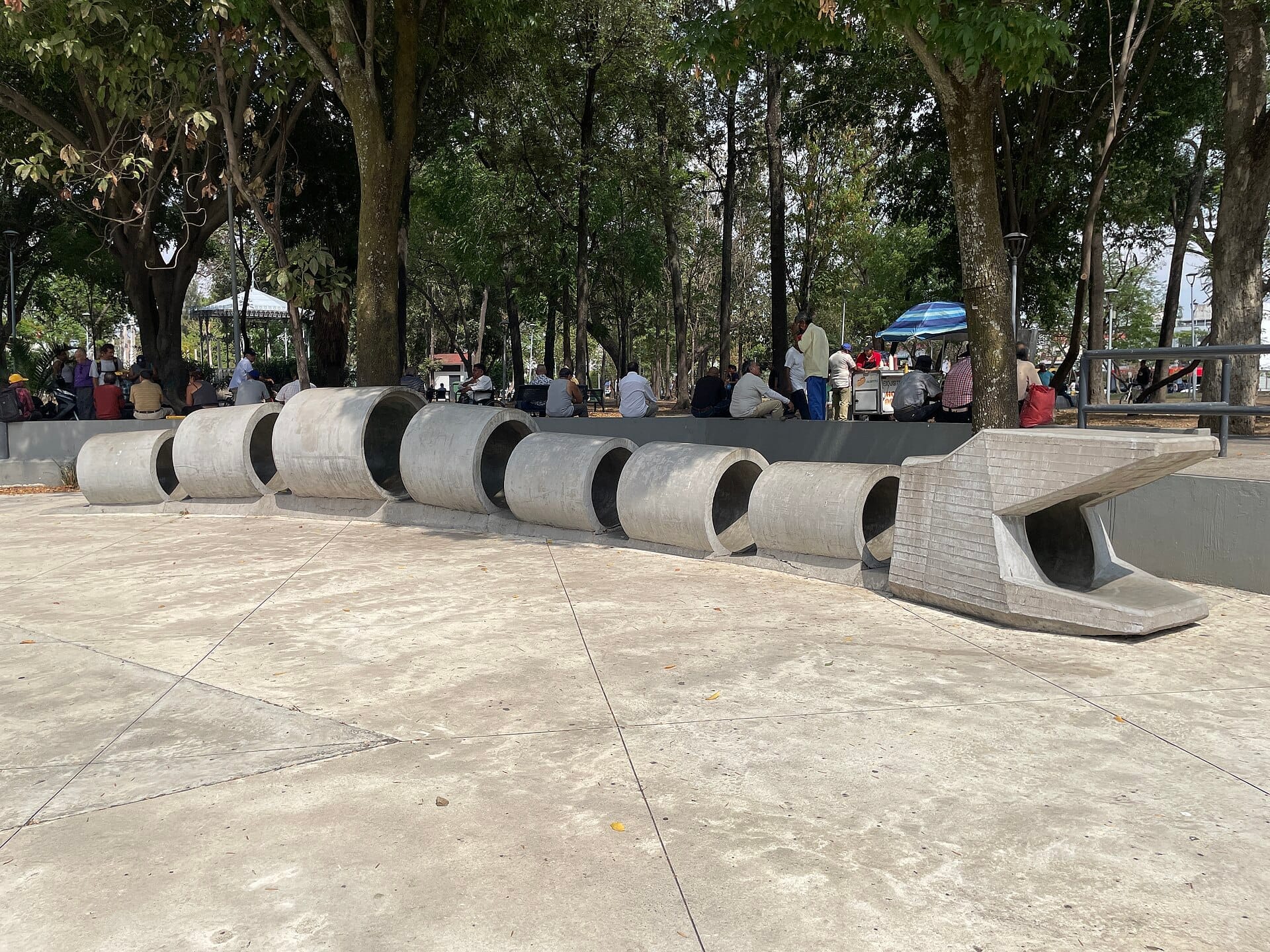
Parque Morelos is a municipal green space on Calzada Independencia Norte, sitting inside Guadalajara's historic center. It is not a sprawling botanical garden or a theme park. It is something more modest and arguably more useful: a well-shaded urban park where the noise of one of the city's major arteries softens behind rows of trees, and where locals come to sit, walk, and exist without any particular agenda.
The park occupies ground with real historical weight. The site once formed part of the old Alameda tapatía, a tree-covered island beside the San Juan de Dios River. When Calzada Independencia was built over the river bed in the twentieth century, the natural watercourse disappeared beneath concrete, and the leafy corridor it had supported was gradually absorbed into the surrounding urban fabric. The current park layout was designed by architect Rafael Urzúa in the mid-1960s, conceived as a green oasis to survive the pressures of a growing city. For context on how this area relates to the broader historic core, see our guide to the Centro Histórico de Guadalajara.
ℹ️ Good to know
Official hours are daily 07:00–18:30 according to the Agencia Metropolitana de Bosques Urbanos. Some mapping apps list it as open 24 hours, which conflicts with the official schedule. Plan to visit during daylight.
The Centerpiece: Morelos on Horseback
The park's most striking fixed element is the equestrian statue of José María Morelos, the insurgent priest and military leader who became one of the key figures in Mexico's independence movement. The bronze sculpture was created by Miguel Miramontes and completed in 1967. It sits on a pedestal of marble and cantera stone near the Calzada Independencia edge of the park, positioned so that it reads clearly from the street.
Morelos is depicted in military posture, commanding and upright. The quality of the casting and the considered stone base give the monument a solemnity that distinguishes it from more generic civic sculpture. Early morning light, before the city fully wakes up, hits the bronze at a low angle and produces long shadows across the pedestal that make for clean photographs without crowds or harsh midday glare.
If you are working through a broader tour of the historic center and want to understand the political and cultural symbolism embedded in Guadalajara's public spaces, the statue at Parque Morelos connects naturally to the larger ensemble of monuments along the Rotonda de los Jaliscienses Ilustres, just a short walk away.
Tickets & tours
Hand-picked options from our booking partner. Prices are indicative; availability and final rates are confirmed when you complete your booking.
Lake Chapala and Ajijic guided tour from Guadalajara
From 68 €Instant confirmationFree cancellationGuadalajara and Tlaquepaque guided tour
From 73 €Instant confirmationFree cancellation
What the Park Feels Like at Different Hours
Arriving at Parque Morelos around 7:30 in the morning means sharing it with joggers, older residents doing slow laps on the interior paths, and a few people simply sitting on benches with coffee bought from the street stalls just outside the entrance. The air carries the smell of damp soil and cut grass from overnight watering, and the tree canopy muffles the early traffic on Calzada Independencia enough that the park genuinely feels removed from the street.
By mid-morning, families with young children appear. The paths are wide enough for strollers and the flat terrain presents no real obstacles for small children running ahead of their parents. Street vendors begin to set up along the park's perimeter, selling snacks, fruit cups, and agua fresca, which are useful if you are doing a longer walk through the centro.
Midday in summer, roughly June through September, brings real heat. Guadalajara sits at around 1,550 meters above sea level, which moderates temperatures compared to coastal Mexico, but afternoon sun in July and August can still push highs above 30°C. The park's tree coverage offers genuine shade, which makes it a reasonable stop during the hottest part of the day, but the humidity of the rainy season means it rarely feels cool. The dry season months of November through March are noticeably more comfortable for a mid-afternoon visit.
Late afternoon, roughly from 16:00 onward, is the park's most active period. School-aged children arrive, vendors are in full operation, and the benches fill with people watching the activity. The sound level rises: there are ball games, conversations, and music occasionally drifting from the street. This is when the park most resembles the social gathering point it has always functioned as, rather than just a green corridor.
💡 Local tip
The best window for unhurried exploration is 07:00–09:00. The light is good, the crowds are minimal, and the surrounding streets are quiet enough that the walk from the nearest BRT stop along Calzada Independencia is genuinely pleasant.
Getting There and Getting Around
The park sits directly on Calzada Independencia Norte, which is served by the Mi Macro Calzada BRT line, a bus rapid transit corridor that runs along this major north-south avenue. It is one of the more straightforward transit routes in the city. Several standard city bus lines from the Mi Transporte network also pass along Calzada Independencia and the surrounding streets. For a broader overview of navigating the city without a car, the guide to getting around Guadalajara covers metro, BRT, and bus options in detail.
Ride-hailing apps including Uber and DiDi operate throughout Guadalajara and reach the centro easily. If you are arriving from a hotel in Colonia Americana or near Glorieta Minerva, a ride to the park typically takes 10–15 minutes in normal traffic, though rush hours on Calzada Independencia can extend that considerably.
The park is also walkable from the main cathedral complex and Plaza de la Liberación in under 15 minutes, depending on your starting point within the centro. Wear comfortable shoes since the surrounding streets mix cobblestone with uneven concrete paving typical of the historic district.
Practical Details and What to Bring
Entry is free with no gates, turnstiles, or ticketing of any kind. The park is managed as part of Guadalajara's metropolitan urban forest system under the Agencia Metropolitana de Bosques Urbanos, which maintains an official profile for the park. Bring your own water, particularly in warmer months; while vendors operate outside the park, there are no guaranteed water fountains or refreshment facilities inside the grounds.
Tap water in Guadalajara is generally not recommended for drinking without filtration, so carrying a sealed bottle from your accommodation is straightforward practice. Sun protection matters even in the dry season given the altitude and latitude of the city.
Accessibility-specific information is not published officially by the park or its managing agency. The interior paths appear generally level based on city descriptions emphasizing strolling and family use, but there is no confirmed official data on step-free entrances, tactile paving, or accessible restroom facilities. Visitors with specific accessibility requirements should contact the Municipio de Guadalajara or the Agencia Metropolitana de Bosques Urbanos directly before visiting.
⚠️ What to skip
Avoid leaving valuables visible on park benches. Like any busy public space in a major Mexican city, standard urban common sense applies: keep bags in front of you and phones off in crowded moments.
Honest Assessment: Who This Park Is For
Parque Morelos is not a destination in itself for most international visitors. It is a pleasant and historically grounded urban park that earns its place in a walking itinerary through the centro rather than as a standalone objective. Travelers who appreciate the texture of everyday city life, who want to understand how Guadalajara functions beyond its cathedral plazas and museum galleries, will find something genuine here. It pairs naturally with a stop at Mercado San Juan de Dios, which is nearby, or with a broader walk along Calzada Independencia toward the Parque Agua Azul to the south.
Visitors spending only one or two days in Guadalajara and prioritizing the city's major cultural sites should treat Parque Morelos as a bonus stop rather than a priority. For those with a full day or more in the centro, it fits neatly into a centro walking itinerary without requiring any detour.
People who find urban parks dull in general will not discover anything here to change that view. The park's appeal is quiet and cumulative, the way good urban green space tends to work, rather than dramatic.
Insider Tips
- The equestrian statue of Morelos faces toward Calzada Independencia, which means the best portrait angle for photography places you with your back to the street. Go before 09:00 on a weekday for an unobstructed shot with soft morning light.
- The BRT Mi Macro Calzada stop closest to the park drops you within a short walk north along the avenue. From that stop you can also connect efficiently toward the historic center's main plazas without needing a separate transit transfer.
- Street food vendors clustered at the park's perimeter in the late afternoon typically offer fresh fruit with chile and lime, a quick and inexpensive energy boost mid-walk. Prices are in Mexican pesos and cash is standard; do not expect card readers at these stalls.
- The park is noticeably quieter on weekday mornings than weekend afternoons. If you want the calm version, Tuesday through Thursday before 10:00 is consistently the least crowded window.
- November through February brings the dry season, when skies are clear and afternoon temperatures are moderate. This is the window when a slow circuit of the park followed by a walk south along Calzada Independencia to Parque Agua Azul is most comfortable.
Who Is Parque Morelos For?
- Travelers on foot exploring the full centro histórico over a half-day or full day
- Families with young children looking for a flat, shaded pause between cultural sites
- History-minded visitors interested in Mexico's independence-era figures and public commemoration
- Photographers seeking honest, crowd-free urban scenes in early morning hours
- Budget travelers wanting a free, comfortable rest point in the heart of the city
Nearby Attractions
Other things to see while in Centro Histórico:
- Calandrias (Horse-Drawn Carriage Rides)
Calandrias are Guadalajara's traditional horse-drawn carriages, operating through the colonial streets of the Centro Histórico since the early 20th century. A slow, unhurried circuit past cathedral facades, plazas, and pedestrian corridors, they offer a different pace from the city's foot traffic. This guide covers what to expect, when to go, and whether it's worth your time.
- Guadalajara Cathedral (Catedral de Guadalajara)
The Catedral Basílica de la Asunción de María Santísima anchors Guadalajara's historic center, surrounded by four plazas and centuries of layered history. Its twin neo-Gothic spires are the city's most recognized silhouette, and entry is free. Here is everything you need to know before you go.
- Instituto Cultural Cabañas (Hospicio Cabañas)
A UNESCO World Heritage Site at the heart of Guadalajara's Centro Histórico, Hospicio Cabañas houses José Clemente Orozco's most celebrated murals inside a neoclassical complex of staggering scale. This is the single most significant cultural site in western Mexico, and one of the most important in all of Latin America.
- Lienzo Charro de Jalisco
The Lienzo Charro Charros de Jalisco, on Av. R. Michel near Parque Agua Azul, is one of Mexico's most storied charro arenas. Home to one of Mexico's oldest charro associations, this is where Jalisco's equestrian traditions are kept alive through competitive charreadas, pageantry, and music.