MOTAT – Museum of Transport and Technology: Auckland's Living Machine
Spread across 40 acres in Western Springs, MOTAT brings together historic aircraft, heritage trams, steam engines, and interactive science exhibits under one roof — or rather, across two connected sites. It is one of the largest transport and technology collections in the Southern Hemisphere, and far more immersive than a typical museum.
Quick Facts
- Location
- 805 Great North Road & 98 Motions Road, Western Springs, Auckland 1022
- Getting There
- Drive: Exit 6 (St Lukes Rd) off North Western Motorway. Also accessible by bus, train, or bike. Check Auckland Transport journey planner.
- Time Needed
- 3–5 hours for a thorough visit; allow a full day with kids
- Cost
- Adults NZD $19 | Children (5–15) $10 | Under 5 free | Family pass $45 | Students/Overseas seniors $10
- Best for
- Families, history enthusiasts, aviation fans, school-age children, curious adults
- Official website
- www.motat.nz
What MOTAT Actually Is
The Museum of Transport and Technology, known universally as MOTAT, opened in 1964 and has grown into a 40-acre precinct in Western Springs on Auckland's western fringe. Unlike a gallery where objects sit behind glass, MOTAT is structured around full-scale machines you can walk beside, climb into, and in some cases operate. The collection spans horse-drawn vehicles, trams, military aircraft, fire engines, printing presses, early computers, and interactive science demonstrations — essentially the entire mechanical history of New Zealand's industrial and transport development, compressed into two linked sites.
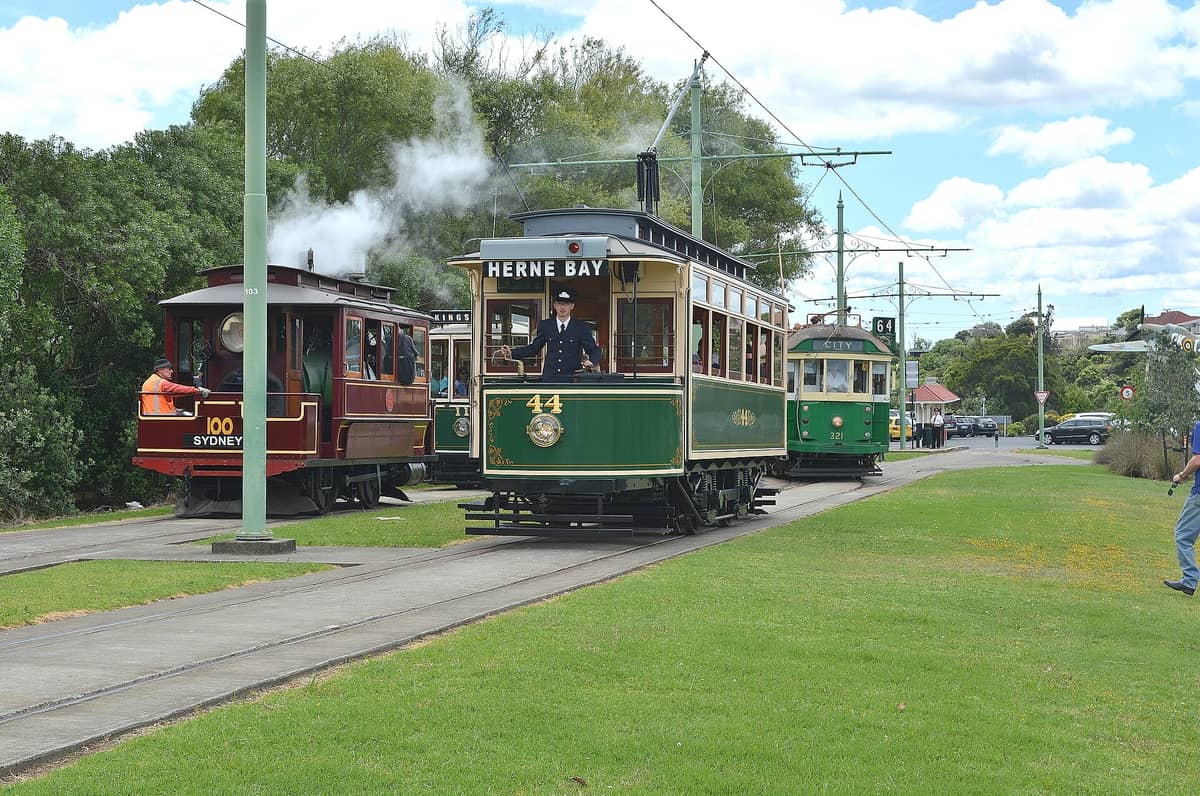
The two sites are connected by a free heritage tram service, which is itself part of the exhibit. Riding it between the Great North Road entrance and the Aviation Hall on Motions Road is not just a convenience; it is one of the more charming journeys you will find in Auckland. The tram clacks along a dedicated track through the Western Springs precinct, and the experience feels genuinely different from anything else in the city.
ℹ️ Good to know
MOTAT is open daily 10:00 am–4:00 pm (last entry 3:30 pm), including most public holidays. It is closed on Christmas Day. Arrive by 11:00 am if you want to cover both sites comfortably before closing.
The Two Sites: What You Will Find at Each
Great North Road – The Main Entrance
This is where most visitors begin. The Great North Road site houses the bulk of MOTAT's social history and science collections: a recreated Victorian village streetscape with period buildings, fire engines, trams in the tram barn, and a hands-on science and technology centre that works well for school-age children. The Aviation Hall is at the Motions Road site — it contains historic New Zealand aircraft in a hangar-style space where the scale of the machines is immediately apparent, including early biplanes and propeller-driven aircraft that trace the development of flight in the region.
The recreated village is worth a slower walk. Buildings were relocated from around Auckland and assembled into a coherent streetscape, giving you a pharmacy, a printing room, and a schoolhouse among others. It is not a theme park recreation but a genuine collection of heritage structures. Weekend living history demonstrations occasionally animate these spaces — check the MOTAT website for scheduled events before you visit.
Motions Road – Heavy Transport and Industry
The second site, reached via the heritage tram, leans toward heavy industry and road transport: traction engines, steam rollers, early motor vehicles, and large-format machinery. It tends to be quieter than the main site and suits visitors who want to spend time with the mechanical details rather than move quickly between exhibits. The sense of scale here is different from the aviation hall — the machines are lower, denser, and you are often standing close enough to smell the grease and metal.
Tickets & tours
Live prices and dates from our booking partner. If you book, we may earn a commission at no extra cost to you.
Luggage Storage in Auckland
From 5 €Instant confirmationFree cancellationNew Zealand West Coast discovery tour
From 100 €Instant confirmationFree cancellation13,000ft skydiving experience in Auckland
From 195 €Instant confirmationFree cancellationDiscover Auckland City Tour
From 88 €Instant confirmationFree cancellation
How the Experience Changes Through the Day
Mornings are the best time to arrive. Between 10:00 and 11:30 am the crowds are thinnest, the light in the aviation hall is good for photography, and the school groups that tend to fill the science centre later in the day have not yet arrived in force. Weekday mornings are especially calm outside of school holiday periods.
By midday the science and technology area becomes noticeably louder, particularly during Auckland school holidays and weekends. If you have children, this does not matter much — the noise is part of the energy. If you are a solo visitor or couple focused on the historical collections, front-loading your visit with the Great North Road site and riding the tram to Motions Road by midday gives you the quieter experience in the afternoon, when family visitors begin leaving.
Overcast days are fine here; MOTAT is largely indoor or undercover, and the covered tram barn and aviation hall are unaffected by rain. A wet Auckland day is actually a reasonable occasion to visit, as you get the full experience without the outdoor friction.
💡 Local tip
School holiday periods (particularly the summer break, late December through late January) bring high family attendance. Arrive at opening time or visit on a weekday morning for a calmer experience.
Historical and Cultural Context
MOTAT's founding in 1964 came at a moment when New Zealand was beginning to seriously consider preserving its industrial and transport heritage. Many of the vehicles in the collection would otherwise have been scrapped during the rapid motorisation of the 1950s and 60s. The museum was built by volunteers and enthusiasts before government or civic heritage funding was a standard resource, and that grassroots character still informs how the collection feels — less curated than a national institution, more encyclopedic, the result of people rescuing things they cared about.
The precinct is identified on the MOTAT website as Te Wai Ōrea, and the site's position adjacent to Western Springs — a significant freshwater reserve and ecological corridor — gives it a geographic context that matters to the wider Auckland landscape. The Auckland Zoo is immediately next door, which makes the area a natural hub for a full-day family outing on the western fringe of the city.
For visitors interested in Auckland's broader heritage landscape, MOTAT sits within a wider network of sites. The Auckland War Memorial Museum and the New Zealand Maritime Museum approach different aspects of the same national story — military and naval history respectively — but MOTAT is the only institution in Auckland dedicated to the mechanics of everyday life and industry.
Practical Walkthrough: Getting There and Around
By car, the most direct route from central Auckland is via the North Western Motorway, taking Exit 6 (St Lukes Road) and following Great North Road west. MOTAT has on-site parking, with fees applying. The museum also advises access by bus, train, and bike, so checking the Auckland Transport journey planner before your visit is worthwhile if you are arriving without a car.
Once inside, the free heritage tram connects the two sites. Note that the trams are not wheelchair accessible. Many public areas across the precinct are accessible, but some areas involve stairs, confined spaces, or uneven terrain. If accessibility is a particular concern, contacting MOTAT directly before your visit will give you the most accurate picture of which exhibits you can navigate comfortably.
If you are combining MOTAT with other western Auckland interests, the Waitakere Ranges Regional Park is a short drive further west, and the beaches of Piha and Karekare are accessible from the same general direction. A MOTAT morning followed by an afternoon at Piha Beach is a practical and geographically logical combination.
⚠️ What to skip
Last entry is 3:30 pm, and the museum closes at 4:00 pm. The two sites take more time than most visitors expect. If you arrive after 2:00 pm, you will not have time to cover both sites meaningfully.
Photography and Practical Notes
The aviation hall offers the best photography opportunities: high ceilings, large subjects, and enough ambient light on clear days that you rarely need flash. A wide-angle lens or a phone with a wide mode handles the scale of aircraft better than standard focal lengths. The tram barn, with its row of historic trams, photographs best in the first hour after opening when the doors are often open and natural light fills the space.
Wear comfortable shoes. The two sites combined cover a substantial amount of ground, much of it on concrete or uneven heritage surfaces. If you are visiting with young children, a stroller is practical on most of the main pathways, but plan to fold it for certain indoor spaces and note the tram accessibility limitation.
There is a café on site. For a wider range of food options before or after your visit, Ponsonby Road is a short drive east and offers considerably more choice.
Is MOTAT Worth It? An Honest Assessment
For families with children aged roughly 5 to 14, MOTAT is one of the stronger value propositions in Auckland. The combination of hands-on exhibits, large machines, the tram ride, and the sheer variety of things to look at keeps children engaged for a full half-day or longer. The family pass at NZD $45 for two adults and up to four children is competitive against most Auckland attractions.
For adults visiting without children, the value depends on your interest level in transport and industrial history. If that is your subject, MOTAT is genuinely rewarding: the collection is serious, the scale is impressive, and the volunteer culture that built it is still evident in the level of care given to individual exhibits. If you are a general tourist with limited time in Auckland, the museum requires a meaningful time commitment and a specific interest in machinery to justify itself against competing options closer to the city centre.
Visitors on a tight schedule might prefer the Auckland Art Gallery or Kelly Tarlton's Sea Life Aquarium as more centrally located alternatives. MOTAT rewards visitors who come with time and curiosity rather than those ticking boxes on a compressed itinerary.
For context on how MOTAT fits into a broader Auckland visit, the 3-day Auckland itinerary and the guide to Auckland's best museums both offer useful frameworks for prioritising your time.
Insider Tips
- The heritage tram is free to ride between sites; timetable information can vary, so ask at the ticket counter when you arrive to plan your visit.
- Weekend living history demonstrations animate the Victorian village buildings — the MOTAT events calendar is worth checking before your visit so you can time your walk through the streetscape when interpreters are present.
- The Auckland Zoo shares the same Western Springs precinct. Combining both attractions in a single day is logistically easy and keeps travel overhead low, particularly for families driving from the central city.
- Children under 5 enter free, which makes MOTAT one of the more affordable options in Auckland for families with very young children who are still drawn to large colourful machines.
- If photography is your priority, visit on a weekday morning in summer when the aviation hall gets the best ambient light. Weekend afternoons bring more visitors and more visual clutter in wide shots.
Who Is MOTAT – Museum of Transport and Technology For?
- Families with school-age children looking for a hands-on half-day or full-day activity
- Aviation and transport history enthusiasts who want serious depth rather than superficial displays
- Visitors combining MOTAT with the adjacent Auckland Zoo for a full western Auckland day
- Travellers on a rainy day seeking a largely indoor attraction with substantial content
- Students and educators: the science and technology centre aligns with curriculum themes and works well for organised groups
Nearby Attractions
Combine your visit with:
- Auckland Botanic Gardens
Spread across 64 hectares in Manurewa, the Auckland Botanic Gardens offer free entry every day of the year, with themed garden collections, 10 hectares of native forest, and a visitor centre on site. It sits south of the city centre and rewards a longer visit than most people initially plan for.
- Auckland Zoo
Auckland Zoo has been part of the city's fabric since 1922, sitting in the Western Springs precinct with a collection that spans native New Zealand wildlife and international species. This guide covers everything from ticket prices and transit options to the best time of day to arrive and which exhibits deliver the most.
- Bastion Point (Takaparawhau)
Takaparawhau, known widely as Bastion Point, is a grassy headland in Ōrākei where Māori history, colonial conflict, and sweeping Waitematā Harbour views converge. It costs nothing to visit, carries centuries of significance, and rewards visitors who take time to understand what they are standing on.
- Bethells Beach (Te Henga)
Bethells Beach, officially Te Henga (Bethells Beach), is a raw, dramatic stretch of black-sand coastline about 45 minutes west of central Auckland. With rolling dunes, a freshwater lagoon, strong surf, and zero phone coverage, it delivers a genuine wilderness experience rare for a city of 1.6 million people.
Planning a trip? Discover personalized activities with the Nomado app.