New Zealand Maritime Museum: Auckland's Story Told Through the Sea
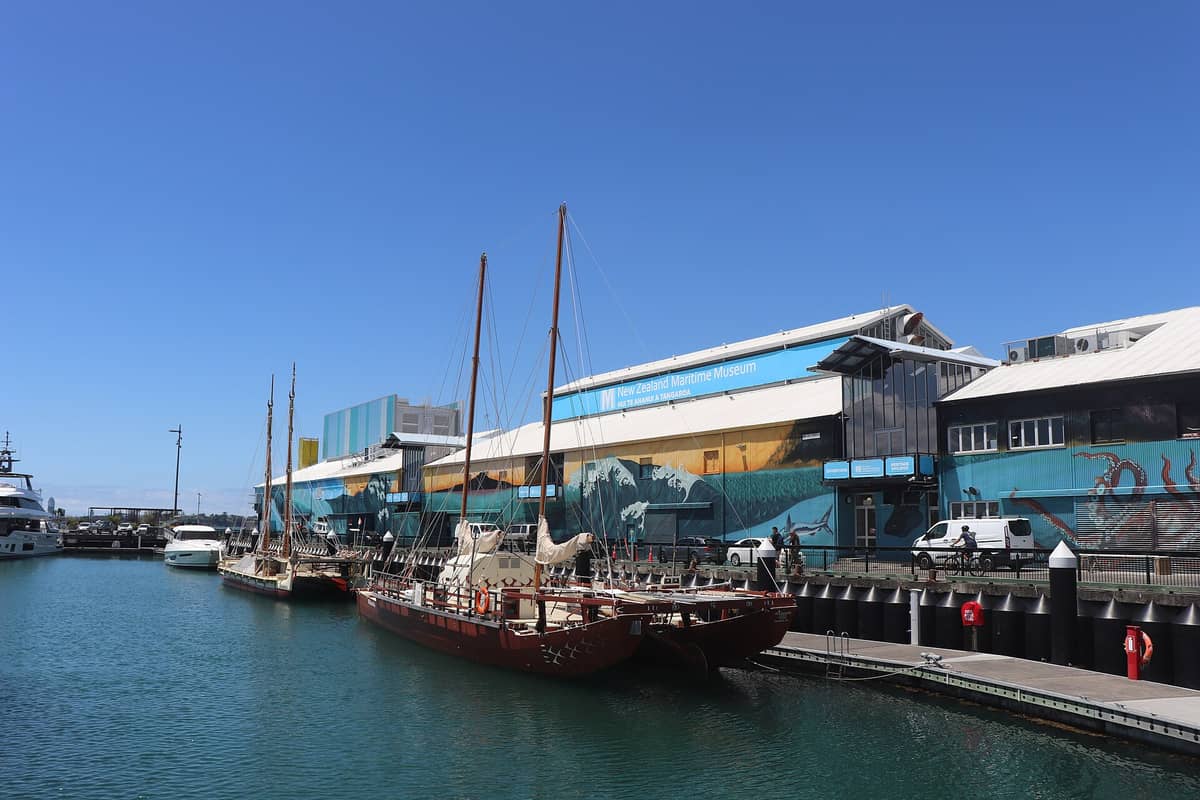
The New Zealand Maritime Museum, officially known as Hui Te Ananui A Tangaroa, sits at the edge of Viaduct Basin and traces the country's deep relationship with the ocean. From Māori voyaging waka to the America's Cup era, this is one of Auckland's most substantive indoor attractions. Auckland residents enter free; visitors pay standard admission.
Quick Facts
- Location
- Corner of Quay and Hobson Streets, Viaduct Harbour, Auckland
- Getting There
- Walkable from Britomart; accessible by bus, train, or ferry to the downtown waterfront
- Time Needed
- 1.5 to 3 hours for the museum; longer if you join a harbour sailing trip
- Cost
- Adults NZ$24 | Seniors/Students NZ$19 | Children (5–14) NZ$12 | Family NZ$58 | Under 5s free | Auckland residents free with proof of address
- Best for
- History lovers, families with older children, sailors, anyone curious about New Zealand's Pacific identity
- Official website
- www.maritimemuseum.co.nz
What the New Zealand Maritime Museum Actually Is
The New Zealand Maritime Museum Hui Te Ananui A Tangaroa opened in August 1993 as the Auckland Maritime Museum Hobson Wharf. The Māori subtitle translates loosely to 'gathering place of the great ocean of Tangaroa', which gives you a sense of the museum's ambitions. This is not a cabinet of ship models and dusty compasses. It's a serious attempt to explain how the sea shaped New Zealand: who arrived, how they navigated, what they built, and what they lost.
The building sits right at the water's edge in Viaduct Basin, which is itself a working marina. Through the museum's upper windows you can watch superyachts and fishing vessels moving in and out while reading about the vessels that came before them. That physical relationship between the exhibits and the living harbour is one of the more effective things about the place.
ℹ️ Good to know
Auckland residents enter free with proof of address. If you live in the region and haven't visited, this is one of the easier decisions on a rainy afternoon. Visitors from outside Auckland pay standard admission; last entry is 4:00 pm and the museum closes at 5:00 pm daily except Christmas Day.
The Exhibits: What You'll Actually See
The ground floor is where the largest physical objects live. Heritage vessels are moored directly alongside the museum, and the interior galleries occupy a multi-level warehouse-style space. The smell shifts as you move through it: there's a faint salt-and-rope quality near the wharf-facing sections, and the older timberwork in some displays adds something almost resinous.
The Māori and Pacific voyaging content is genuinely strong. The museum covers the navigation techniques used by Polynesian voyagers to cross the Pacific, including wayfinding by stars, currents, and bird behaviour. There's a full-sized waka hourua (double-hulled sailing canoe) that anchors the gallery physically and conceptually. This is the foundation of the whole narrative: New Zealand was reached by sea, by people who understood the ocean with extraordinary precision, long before European ships arrived.
Further in, the colonial maritime story unfolds through immigration vessels, trade ships, and port infrastructure. This section can feel denser and more text-heavy than the Pacific galleries. Give it time; some of the personal stories collected from immigrant voyages are unexpectedly affecting. The transition from sail to steam is well handled, and the model ships displayed here reward close inspection.
The America's Cup galleries cover Auckland's role as a yachting city, particularly following the 1995 and 2000 victories. If you're visiting Wynyard Quarter during an America's Cup cycle or a major sailing event, this section carries extra weight as the surrounding precinct transforms into an international racing base. Outside those periods, it works well as a record of how the city briefly became the world's yachting capital.
Tickets & tours
Live prices and dates from our booking partner. If you book, we may earn a commission at no extra cost to you.
New Zealand West Coast discovery tour
From 100 €Instant confirmationFree cancellationLuggage Storage in Auckland
From 5 €Instant confirmationFree cancellation13,000ft skydiving experience in Auckland
From 195 €Instant confirmationFree cancellationDiscover Auckland City Tour
From 88 €Instant confirmationFree cancellation
Heritage Vessels and Harbour Sailing
The museum operates heritage vessels that visitors can board and, on scheduled trips, sail aboard. The Ted Ashby is a twin-masted scow, a flat-bottomed cargo vessel type once common in New Zealand coastal trade. It's moored at the wharf and forms part of the visit even when not sailing. Access aboard Ted Ashby is possible for most visitors; wheelchair access is subject to conditions, so check with staff on the day.
Harbour sailing trips run on a schedule that varies and should be verified directly with the museum before your visit. These trips offer a different kind of engagement with the harbour than standing on shore, and they're worth booking in advance if that experience interests you. The cost is separate from standard admission.
💡 Local tip
If a harbour sailing trip is the main draw for your visit, confirm the schedule by checking the museum website or calling ahead. Trip availability can depend on weather, vessel condition, and crew availability. Don't assume it runs daily.
When to Visit and How the Experience Changes
Mornings, particularly on weekdays, are the quietest period. School groups arrive in force from mid-morning on weekdays during term time, which changes the atmosphere noticeably: the main galleries get louder and certain interactive sections become harder to use without waiting. If you're an adult visitor without children, arriving before 10:30 am or after 2:00 pm on weekdays gives you substantially more room to absorb the content at your own pace.
Weekend afternoons can also be busy, particularly during school holidays. The museum is a reliable rainy-day destination for Auckland families, which means wet weekends fill it up. That's not a reason to avoid it; just factor in more time and lower expectations for quiet contemplation of the Pacific navigation gallery.
The exterior wharf and the upper-floor views toward Viaduct Harbour are best in morning light. The low angle of the sun across the water in winter mornings can make the harbour scene look remarkable from the upper windows. In summer, late-afternoon light comes through more directly, and the outdoor areas around the museum attract more foot traffic as people move between the waterfront restaurants.
Getting There and Getting Around
The museum is at the corner of Quay and Hobson Streets in Viaduct Harbour, within walking distance of Britomart transport centre. Britomart is the hub for trains and many bus routes, making the museum straightforward to reach without a car. The waterfront walk from Britomart along Quay Street is flat and clearly signed.
From further afield, the ferry terminal at downtown Auckland is also within walking distance. If you're combining a visit to the museum with a day on the water, the ferry connections to Devonport or Waiheke Island depart nearby and make for a logical pairing. Auckland Transport accepts contactless debit and credit cards on buses, trains, and most ferries, so an AT HOP card is useful but not essential.
Parking in Viaduct Harbour is available but limited and paid. The area is designed to be pedestrian-friendly, and driving here during busy periods adds unnecessary complication. Public transport or walking from the CBD is the more straightforward option.
Accessibility, Practicalities, and What to Bring
The museum has ramp access at most entry points and an elevator connecting the ground and first floors. Two visitor wheelchairs are available to borrow. Accessible toilets are on the lower level. The main indoor galleries are navigable for wheelchair users; vessel access is more variable, and it's worth asking staff about current conditions when you arrive.
There's no strict dress code, but the wharf area can be breezy even in summer. If you plan to board a vessel or spend time on the outdoor decks, a light layer is useful. Photography is welcome throughout the indoor galleries. The lighting in some of the older exhibit sections is deliberately low to protect materials, so phone cameras may struggle; the Pacific navigation gallery, by contrast, is open and well-lit.
There is a café on site for refreshments. The surrounding Wynyard Quarter has a substantial number of dining options within a short walk, ranging from casual fish and chips at the waterfront to sit-down restaurants. Viaduct Harbour immediately adjacent has further options, and the whole precinct is suited to extending the visit into lunch or dinner.
Honest Assessment: Who This Works For
The New Zealand Maritime Museum works best for people who bring some curiosity about history, Pacific culture, or sailing. It's not a passive, visually spectacular experience: you need to read, engage, and slow down. Visitors looking for a quick walk-through with dramatic set pieces will find it more rewarding than expected in the Pacific voyaging section and possibly slower-going in the colonial trade galleries.
Families with children under about seven may find the content skews older. There are interactive elements, but the museum's strength is its narrative depth, not sensory stimulation. Families with children in the eight-to-fourteen range tend to get more from it, especially if the children have any interest in boats, the ocean, or New Zealand history.
For travellers trying to understand New Zealand's Māori and Pacific heritage more broadly, this pairs well with the Auckland War Memorial Museum, which covers te ao Māori (the Māori world) in considerable depth across its own galleries. The two museums complement each other more than they overlap. See the Auckland Māori culture guide for context on where the Maritime Museum fits within a broader cultural itinerary.
Visitors who are primarily interested in modern Auckland's relationship with the harbour — the cafés, the racing yachts, the waterfront promenade — may find the museum less essential. It's an indoor, museum-paced experience. The harbour itself is the draw for many people, and the museum is for those who want to understand why it matters.
Insider Tips
- The Auckland resident free entry policy is real and worth using. Bring any official mail or ID showing an Auckland region address and admission is waived entirely. This applies to all residents, not just those with Auckland Council cards.
- The upper floor of the museum offers some of the better views over Viaduct Harbour available from an indoor public space in the area. Take a moment by the windows before descending to the wharf level.
- If you want to see the Ted Ashby under sail rather than just moored, check the harbour trip schedule well before your visit and book ahead. Walk-up availability on popular days is not guaranteed.
- The Pacific navigation gallery is the strongest section of the museum for most visitors. If your time is limited, prioritise this area rather than trying to move through every gallery at equal speed.
- Last admission is at 4:00 pm. The museum closes at 5:00 pm. Arriving at 3:30 pm is technically possible but leaves little room, especially if you stop to read exhibits in any depth. Plan for at least 90 minutes.
Who Is New Zealand Maritime Museum For?
- History and culture travellers who want context on New Zealand's Pacific identity beyond scenery
- Families with school-age children (8 and up) interested in boats, navigation, or New Zealand history
- Sailing and yachting enthusiasts, particularly those following the America's Cup
- Rainy-day visitors looking for a substantive indoor experience close to the CBD
- Auckland residents who qualify for free entry and have not yet visited
Nearby Attractions
Other things to see while in Wynyard Quarter:
- Auckland Fish Market
Auckland Fish Market on Jellicoe Street is the city's best place to buy and eat fresh local seafood, set against the working waterfront of Wynyard Quarter. With roots going back to 1904, it balances genuine fishing-industry heritage with a relaxed, open-air market atmosphere that works equally well for an early breakfast or a long lunch.
- Silo Park
Silo Park sits at the western edge of Wynyard Quarter, where six clustered cement silos and the 35-metre-tall Silo 7 anchor a free public waterfront space open around the clock. It draws locals for lunchtime walks and families for summer cinema nights, and it earns its place as one of Auckland's most thoughtfully designed public spaces.
- Viaduct Harbour
Viaduct Harbour sits on Auckland's downtown waterfront, where a working marina meets a lively strip of restaurants, bars, and public space. Originally redeveloped for the 2000 America's Cup, it remains one of the city's most accessible and photogenic outdoor areas. Entry is free, and it works equally well as a morning coffee stop or an evening destination.
Planning a trip? Discover personalized activities with the Nomado app.