Silo Park: Auckland's Industrial Waterfront Reimagined
Silo Park sits at the western edge of Wynyard Quarter, where six clustered cement silos and the 35-metre-tall Silo 7 anchor a free public waterfront space open around the clock. It draws locals for lunchtime walks and families for summer cinema nights, and it earns its place as one of Auckland's most thoughtfully designed public spaces.
Quick Facts
- Location
- Corner of Jellicoe and Beaumont Streets, Wynyard Quarter, Auckland 1010
- Getting There
- City Link bus to Wynyard Quarter, then a short walk; or a 10-minute walk from Britomart via Wynyard Crossing; or a 10-minute walk from Britomart via Wynyard Crossing
- Time Needed
- 30 minutes to browse; 2+ hours for a cinema night or event
- Cost
- Free to enter; events and Silo Cinema screenings may have separate charges
- Best for
- Waterfront walks, industrial architecture, summer evening events, families, photographers
- Official website
- www.silopark.co.nz
What Silo Park Actually Is
Silo Park is a free public park on the waterfront edge of Wynyard Quarter, built around a cluster of six cement storage silos known as Silo 6 and the standalone 35-metre Silo 7 north of the tracks. The silos are not ruins or decoration: they are the original industrial infrastructure that once received bulk cement shipped into Auckland's working port. When the first stage of the park opened in 2011 as part of the broader Wynyard Quarter regeneration, the decision was made to keep the silos in place rather than demolish them, giving the park a scale and visual identity that most waterfront green spaces simply don't have.
The result is unusual. You have a park where the dominant architectural elements are enormous grey cylinders of poured concrete, and yet the space feels lively rather than austere. Grass terraces and gravel paths fill the spaces between and around the silos. The harbour is visible from much of the park, and the salt-and-seaweed smell of the Waitemata drifts in whenever the wind comes from the north. The harbour is visible from most of the park, and the salt-and-seaweed smell of the Waitemata drifts in whenever the wind comes from the north.
💡 Local tip
The park is open 24 hours daily and entry is free. If you're visiting for the Silo Cinema or a specific event, check the silopark.co.nz website for the seasonal schedule and ticketing details before you go, as these operate independently from the park itself.
The Industrial History Behind the Silos
Wynyard Quarter was, for much of the 20th century, a working industrial and fishing precinct separated from the rest of central Auckland by its function rather than geography. The silos stored cement for distribution across the region: not glamorous, not heritage in the conventional sense, but entirely central to how Auckland was built. When the precinct was earmarked for redevelopment ahead of the 2011 Rugby World Cup, urban planners faced the question of what to do with infrastructure that was too large to ignore and too expensive to demolish easily.
Keeping the silos was, in retrospect, the right call. They give Wynyard Quarter a visual anchor that newer mixed-use precincts often lack, and they prevent the area from reading as a generic waterfront development. Silo 7 in particular is used for Silo Park’s outdoor cinema, with films projected onto its walls.
For a deeper look at how industrial land has been transformed across Auckland's waterfront, the New Zealand Maritime Museum is a short walk east along Jellicoe Street and covers the working history of Auckland's port and harbour in detail.
Tickets & tours
Live prices and dates from our booking partner. If you book, we may earn a commission at no extra cost to you.
Luggage Storage in Auckland
From 5 €Instant confirmationFree cancellationNew Zealand West Coast discovery tour
From 100 €Instant confirmationFree cancellation13,000ft skydiving experience in Auckland
From 195 €Instant confirmationFree cancellationDiscover Auckland City Tour
From 88 €Instant confirmationFree cancellation
How the Park Changes Through the Day
Morning at Silo Park is quiet in a way that feels deliberate. Joggers loop around the harbour edge path, and the low angled light catches the concrete surfaces of the silos in ways that make them look almost warm. The grass terraces are often wet with dew, and the sound of rigging tapping against masts from the nearby marina carries across the park. If you want photographs of the silos without crowds or harsh shadows, early morning is the window.
By midday on weekdays, the park fills with office workers from the surrounding Wynyard Quarter precinct eating lunch on the grass or at the picnic tables near the water's edge. On weekends the dynamic shifts: families arrive to enjoy the open space, and the cafe and food trucks that operate near the park pick up steady trade. The pace is relaxed rather than frenetic, and the park's layout, with its multiple levels and the silos providing natural shade breaks, means it absorbs people without feeling crowded.
Evenings, particularly in summer (December through February), are when Silo Park draws its largest audiences. The Silo Cinema sets up an outdoor screen against the base of the silos, and people arrive early with blankets and food to claim good spots on the grass. There's a particular atmosphere at these screenings that's hard to manufacture: the sky behind the silos goes through a slow progression from blue to orange to deep purple as the film starts, the harbour is audible in the background, and the scale of the silos looming above the crowd makes the whole thing feel genuinely cinematic.
Silo 7: The Cultural Venue Inside the Park
Silo 7 deserves separate mention because its role as the outdoor cinema screen is easy to miss during the day. The tall silo stands apart from the six-silo Silo 6 cluster, and its walls become the surface for film projections during Silo Park’s cinema events.
Check what's on inside Silo 7 before your visit. The event programme varies and can include markets, exhibitions, and community events that don't appear in mainstream tourist listings. On a rainy day, it also provides genuine indoor shelter, which matters in Auckland's changeable weather.
ℹ️ Good to know
Auckland's weather can turn quickly regardless of season. The park is entirely exposed to harbour winds, and an overcast morning can become a wet afternoon with little warning. If you're planning a longer visit or a picnic, check the forecast and bring a layer.
Getting There and Moving Around the Area
The most straightforward public transport option is to take a bus to Wynyard Quarter and walk to the park entrance. If you're already in the CBD or near the waterfront, walking is probably easier: the route from Britomart takes roughly 10 minutes via Quay Street, across Te Wero Island on the Wynyard Crossing bridge, and into Jellicoe Street. The Wynyard Crossing is itself a bascule bridge that opens periodically to let taller vessels through, so if you arrive at a crossing wait, it's only a few minutes. If you're already in the CBD or near the waterfront, walking is probably easier: the route from Britomart takes roughly 10 minutes via Quay Street, across Te Wero Island on the Wynyard Crossing bridge, and into Jellicoe Street. The Wynyard Crossing is itself a bascule bridge that opens periodically to let taller vessels through, so if you arrive at a crossing wait, it's only a few minutes.
Cyclists have direct access via the waterfront cycleway, and the broader Wynyard Quarter precinct is flat and walkable. If you're combining Silo Park with a longer waterfront route, the Viaduct Harbour is directly to the east, and the Auckland Fish Market is a few minutes' walk to the west, making this stretch of waterfront a practical half-day loop.
There is no parking directly at the park; the nearest options are in the commercial car parks within Wynyard Quarter. If you're driving, factor in that this is a central waterfront area where parking can be slow and paid. The AT HOP card or a contactless bank card works on the bus, making public transport the lower-friction choice.
Photography, Accessibility, and Practical Notes
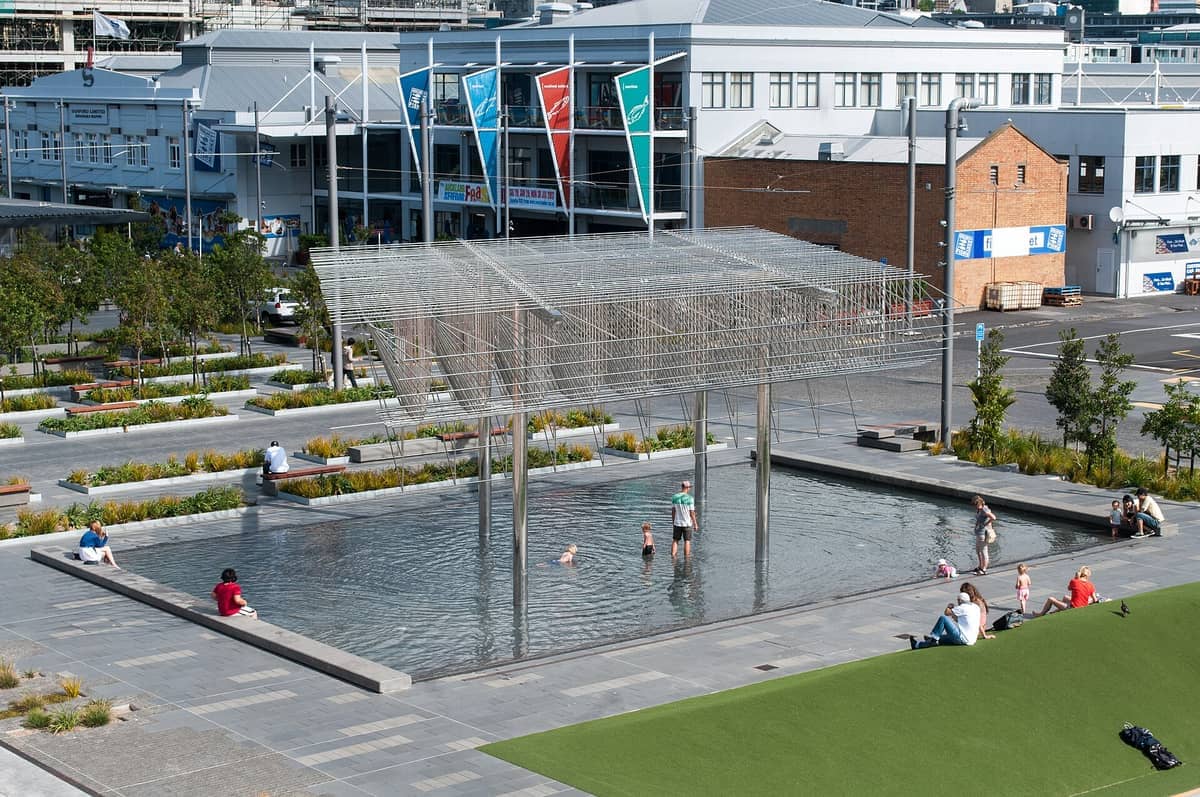
Silo Park photographs well at almost any time of day, but the flat midday light tends to flatten the texture of the concrete and make the silos look less striking than they are. Late afternoon brings raking light that emphasises the surface of the cylinders, and blue-hour shots with the lights of the park and the Waitemata behind the silos can be excellent. The water play area is popular with families and makes for candid, lively photography of children, though be mindful of photographing others without permission.
In terms of mobility, the park's main paths and grass terraces are generally accessible, as the site is flat and on reclaimed waterfront land. However, the official park information does not specify detailed step-free routes or accessible facility locations, so visitors with specific accessibility requirements should contact Auckland Council or Wynyard Quarter management directly before visiting.
Silo Park sits within the broader Wynyard Quarter precinct, which is worth exploring as its own half-day destination. See the full Wynyard Quarter neighbourhood guide for a complete picture of what's in the area, including dining, the harbourside walk, and the nearby market.
Honest Assessment: Who Gets the Most From Silo Park
Silo Park works best as part of a waterfront walk or as a destination for a specific event rather than as a standalone attraction requiring significant travel time. For travellers with only a day or two in Auckland, it may not rank as a priority over sites with more concentrated content. But for those who enjoy thoughtful urban design, industrial heritage repurposed well, and the particular pleasure of a waterfront park that actually belongs to its neighbourhood rather than looking designed for tourists, it's genuinely satisfying.
Visitors expecting a polished theme-park experience or a packed programme of daily activities will likely find the park underwhelming outside of event periods. It is, at its core, a public park: well-designed, free, and genuinely used by Aucklanders. That's its strength, not a limitation.
If you're building a broader Auckland itinerary, the Auckland 3-day itinerary guide shows how to fit Silo Park and Wynyard Quarter into a logical route alongside other central Auckland highlights.
Insider Tips
- The Silo Cinema runs seasonally, usually during summer and sometimes into autumn. Programme details and ticketing are announced for each season; check the official Silo Park website before you go.
- The grassy terraces at the base of the silos fill up fast on warm Friday evenings when locals treat the park as an outdoor after-work spot. If you want a quieter experience of the space, weekday mornings between 7am and 9am are when the park is at its most peaceful.
- Silo 6 is used as an art and exhibition space, and Silo 7 is used for outdoor cinema screenings. Check the official programme for current events and access details.
- The Wynyard Crossing bridge opens for marine traffic at scheduled intervals. If you're timing a walk from the CBD, check the opening schedule if you're on a tight schedule, as each opening means a short wait for pedestrians.
- Food trucks and outdoor dining near the park change regularly. Don't plan around a specific vendor without checking; the area's food offer is best treated as a pleasant surprise rather than a guaranteed itinerary item.
Who Is Silo Park For?
- Waterfront walkers combining Silo Park with the wider Wynyard Quarter and Viaduct Harbour loop
- Families with young children, thanks to the open layout and seasonal events
- Architecture and urban design enthusiasts interested in adaptive reuse of industrial infrastructure
- Summer visitors who can time their trip to coincide with a Silo Cinema screening
- Photographers looking for industrial-scale subjects against a harbour backdrop
Nearby Attractions
Other things to see while in Wynyard Quarter:
- Auckland Fish Market
Auckland Fish Market on Jellicoe Street is the city's best place to buy and eat fresh local seafood, set against the working waterfront of Wynyard Quarter. With roots going back to 1904, it balances genuine fishing-industry heritage with a relaxed, open-air market atmosphere that works equally well for an early breakfast or a long lunch.
- New Zealand Maritime Museum
The New Zealand Maritime Museum, officially known as Hui Te Ananui A Tangaroa, sits at the edge of Viaduct Basin and traces the country's deep relationship with the ocean. From Māori voyaging waka to the America's Cup era, this is one of Auckland's most substantive indoor attractions. Auckland residents enter free; visitors pay standard admission.
- Viaduct Harbour
Viaduct Harbour sits on Auckland's downtown waterfront, where a working marina meets a lively strip of restaurants, bars, and public space. Originally redeveloped for the 2000 America's Cup, it remains one of the city's most accessible and photogenic outdoor areas. Entry is free, and it works equally well as a morning coffee stop or an evening destination.
Planning a trip? Discover personalized activities with the Nomado app.