Auckland Fish Market: Seafood, History, and Harbour Air in Wynyard Quarter
Auckland Fish Market on Jellicoe Street is the city's best place to buy and eat fresh local seafood, set against the working waterfront of Wynyard Quarter. With roots going back to 1904, it balances genuine fishing-industry heritage with a relaxed, open-air market atmosphere that works equally well for an early breakfast or a long lunch.
Quick Facts
- Location
- 22–32 Jellicoe Street, Wynyard Quarter, Auckland 1010
- Getting There
- 15-min walk from Britomart; buses 20 and 75 stop nearby; CityLink connects the CBD to Wynyard Quarter
- Time Needed
- 1–2 hours for browsing and eating; longer if you linger over a meal
- Cost
- Free to enter; pay per purchase at vendors
- Best for
- Seafood lovers, early risers, families, food-focused travellers
- Official website
- www.sanford.co.nz/afm
What Is Auckland Fish Market?
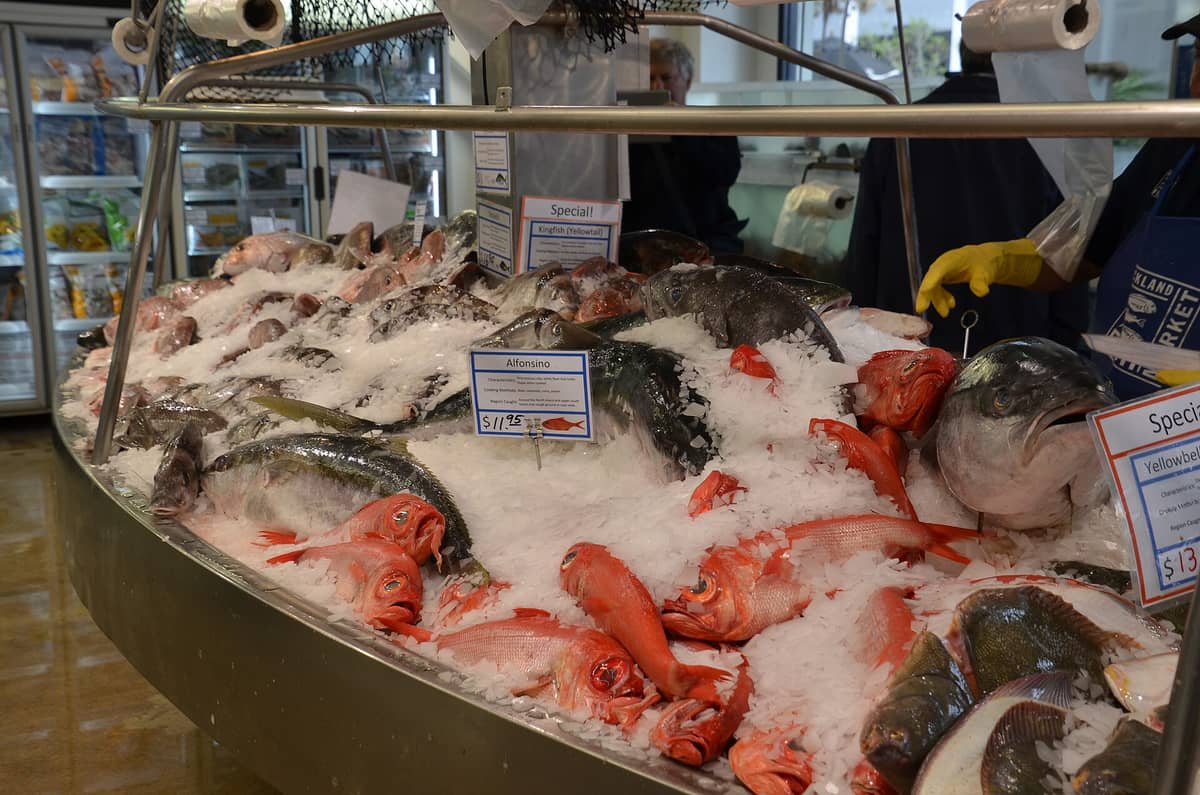
Auckland Fish Market is a working seafood market and dining precinct at 22 Jellicoe Street, on the western edge of Wynyard Quarter., on the western edge of Wynyard Quarter. It is not a tourist simulation of a fish market. Fishing vessels still unload catches into the broader Wynyard waterfront precinct, and the smell of brine and fresh catch in the early morning is genuine. Inside, vendors sell whole fish, fillets, live shellfish, smoked fish, and cooked seafood meals side by side. The scale is manageable rather than overwhelming, which makes it easy to move between stalls, compare what is fresh that day, and settle in to eat without feeling rushed.
The market traces its origins to 1904, when Albert Sanford established it in this same corner of the Auckland waterfront. Sanford Limited, now one of New Zealand's largest seafood companies, still has a direct connection to the site. That unbroken thread of fishing commerce over more than a century gives the place a depth that newer waterfront food precincts can't replicate. For context on how Wynyard Quarter has been reimagined around its industrial and maritime past, the Wynyard Quarter neighbourhood guide covers the broader precinct in detail.
ℹ️ Good to know
Market hours vary by vendor. Sanford and Sons Fishmonger is open Monday–Thursday, 8 am–5 pm, and Friday–Sunday, 8 am–6 pm; several eateries open at 11 am. Closed Christmas Day. Check individual vendor hours before visiting.
The Early Morning Experience: When the Market Is at Its Best
Arrive between 8 and 9 am and the market operates at a different register from the lunch crowd. The light over the Waitematā Harbour is clear and low, and the fishmonger is open. This is an early opportunity to browse the seafood selection, which includes local and imported lines depending on the day.
At this hour, the crowd skews toward locals running a practical errand: home cooks, restaurant buyers, and people who know exactly what they want. Conversations between regulars and stallholders are direct and informative. If you listen, you'll pick up more useful information about what is worth buying that day than you'd find on any sign. The morning is also the best time to buy whole fish to take back to a self-catering apartment, as the selection has not yet been picked through.
💡 Local tip
If you want to eat on-site in the morning, look for stalls offering chowder, fish burgers, or fresh oysters from opening. A bowl of chowder on the waterfront terrace before the city fully wakes up is one of Auckland's quieter pleasures.
Tickets & tours
Live prices and dates from our booking partner. If you book, we may earn a commission at no extra cost to you.
Luggage Storage in Auckland
From 5 €Instant confirmationFree cancellation13,000ft skydiving experience in Auckland
From 195 €Instant confirmationFree cancellationDiscover Auckland City Tour
From 88 €Instant confirmationFree cancellationAuckland to Rotorua via Hobbiton movie set tour
From 205 €Instant confirmationFree cancellation
Lunchtime and the Afternoon Crowd
By midday on weekdays, and from mid-morning on weekends, the market shifts into a busier, more social gear. Office workers from the nearby commercial buildings in Wynyard Quarter and the CBD arrive in groups. The outdoor courtyard seating fills up, and the queue at the cooked-seafood counters gets real. Vendor hours vary, so check the specific eatery before planning a late meal.
The afternoon is still enjoyable but less peaceful. If you are visiting specifically to buy fresh seafood to cook rather than to eat on-site, note that selection narrows as the day goes on. What is left by 3 pm tends to be the slower-moving lines rather than the premium daily catch. Families with children tend to arrive in the late morning, which works well: the space is open enough that movement is easy, the food options are immediate, and the harbour views hold attention without needing a screen.
Photography is straightforward here. The market's open layout and good natural light make wide shots of the stalls clean and clear. The most interesting frames tend to be close-up details: ice-covered fish arranged by colour, the texture of freshly shucked oysters, or the steam rising from a chowder cup on a cool morning. Avoid weekday midday if you want people-free shots of the stalls themselves.
What to Buy and Where to Eat
The market operates as a collection of independent vendors rather than a single shop, so prices, quality, and what's available differ between stalls. New Zealand snapper (tāmure) is the flagship species at most stalls: firm white flesh, mild flavour, and well-suited to local preparation styles. Green-lipped mussels from the Marlborough Sounds are consistently available and good value. Crayfish (kōura) availability and pricing are seasonal and can be high; treat them as an occasional indulgence rather than a market staple.
For eating on-site, the cooked options include fish and chips made with the day's catch, prawn dishes, chowder, sushi-style preparations, and occasionally specials that reflect what has come in fresh. The quality gap between the best and worst vendors is noticeable. Walk the full length of the stalls before committing rather than buying at the first counter you reach.
If you plan to eat seafood elsewhere in Auckland after visiting the market, the Auckland food guide covers the city's broader dining landscape, including waterfront options.
Getting There and Getting Around
The market is a 15-minute walk from Britomart along the waterfront, following Quay Street and then turning into the Wynyard Quarter at the Viaduct Harbour end. The route is flat, clearly signposted, and pleasant in good weather. In rain, it is exposed, so bring a layer or jacket regardless of season. Auckland's maritime climate means a clear morning can shift by midday, and the waterfront catches any wind off the harbour.
Buses 20 and 75 stop close to the market. The CityLink bus connects the CBD to Waitematā Station, from where it is a short walk. Accessible parking is available near the courtyard entrance, and accessible bathrooms are located in both the courtyard and the Jellicoe Street foyer. If you are combining the market with a broader waterfront loop, the Viaduct Harbour is a five-minute walk east along Jellicoe Street.
⚠️ What to skip
Street parking in Wynyard Quarter is limited and enforced strictly. If you are driving, use one of the paid parking buildings in the precinct rather than searching for street parks.
Honest Assessment: Who Will Enjoy This, and Who Might Not
Auckland Fish Market is genuinely useful and enjoyable if you care about food, seafood specifically, or the working heritage of a port city. It is not a spectacle. There are no cooking demonstrations timed for tourist groups, no theatrical fishmongers performing for cameras. The appeal is the real thing: fresh product, honest pricing relative to the quality, and a sense that the people running the stalls know exactly what they are selling and where it came from.
Travellers who will find it underwhelming: those expecting a large-scale covered market with dozens of stalls and entertainment, people who do not eat seafood or have strong aversions to fish smells, or anyone hoping for a purely scenic waterfront stop without a commercial core. The market is not large, and it does not pretend to be. If your Auckland time is short and seafood is not a priority, the adjacent Wynyard Quarter has enough other points of interest that you may naturally pass through without needing to treat the market as a dedicated destination.
For a full waterfront morning, consider walking the Coast to Coast Walkway or exploring Commercial Bay nearby to build out the visit.
Practical Notes on Timing and Seasons
Auckland's temperate maritime climate means the market is accessible year-round, but the experience changes by season. Summer (December through February) brings the most predictable weather for outdoor seating, but also the largest tourist crowds on weekends. The extended evening hours on Thursday through Saturday are at their best in summer, when warm air and long daylight make outdoor eating genuinely comfortable.
Winter visits (June through August) are quieter, and the morning market atmosphere is particularly good on a cold, clear day when the harbour reflects flat grey light. Bring an extra layer; the courtyard seating is exposed. For broader seasonal planning, the best time to visit Auckland guide breaks down conditions by month.
Insider Tips
- Ask vendors directly what came in fresh that morning rather than assuming all displayed fish is today's catch. Most vendors will tell you without being asked twice, and the answer shapes what is worth buying.
- Some vendors stay open later on Thursday through Saturday; check individual hours if you are planning dinner.
- Green-lipped mussels bought live at the market are significantly cheaper than the same product in any nearby restaurant. If you have access to a kitchen, they are excellent value and require minimal preparation.
- The accessible entrance near the courtyard is also the most pleasant entrance for everyone: it opens directly onto the outdoor seating area with harbour views, rather than into the middle of the indoor stall layout.
- On quiet Tuesday and Wednesday mornings, some vendors offer minor discounts on bulk purchases, particularly on whole fish. This is not advertised; it comes from asking directly when you are buying more than a single portion.
Who Is Auckland Fish Market For?
- Seafood enthusiasts wanting fresh, locally sourced New Zealand fish and shellfish at market prices
- Early risers looking for a genuine working-waterfront breakfast before the city crowds arrive
- Self-catering travellers staying in apartments who want to cook their own fresh catch
- Families with young children who want an open, casual outdoor eating environment with immediate food options
- Food-focused travellers building a broader understanding of New Zealand's fishing and maritime culture
Nearby Attractions
Other things to see while in Wynyard Quarter:
- New Zealand Maritime Museum
The New Zealand Maritime Museum, officially known as Hui Te Ananui A Tangaroa, sits at the edge of Viaduct Basin and traces the country's deep relationship with the ocean. From Māori voyaging waka to the America's Cup era, this is one of Auckland's most substantive indoor attractions. Auckland residents enter free; visitors pay standard admission.
- Silo Park
Silo Park sits at the western edge of Wynyard Quarter, where six clustered cement silos and the 35-metre-tall Silo 7 anchor a free public waterfront space open around the clock. It draws locals for lunchtime walks and families for summer cinema nights, and it earns its place as one of Auckland's most thoughtfully designed public spaces.
- Viaduct Harbour
Viaduct Harbour sits on Auckland's downtown waterfront, where a working marina meets a lively strip of restaurants, bars, and public space. Originally redeveloped for the 2000 America's Cup, it remains one of the city's most accessible and photogenic outdoor areas. Entry is free, and it works equally well as a morning coffee stop or an evening destination.
Planning a trip? Discover personalized activities with the Nomado app.