Kyoto City KYOCERA Museum of Art: Art, Architecture, and Ninety Years of History
Originally opened in 1933, the Kyoto City KYOCERA Museum of Art is one of Japan's oldest public art museums. Renovated and reopened in 2020, it now combines a landmark Imperial-era building with contemporary gallery spaces, making it one of the most architecturally interesting cultural venues in the city.
Quick Facts
- Location
- 124 Okazaki Enshoji-cho, Sakyo-ku, Kyoto (Okazaki Park area)
- Getting There
- Higashiyama Station (Tōzai Subway Line), 8–10 min walk; or City Bus 5/86 to Okazaki Koen/Bijutsukan Heian Jingu-mae
- Time Needed
- 1.5–3 hours (longer if a major special exhibition is running)
- Cost
- Permanent collection: ¥730 adults (non-residents), ¥520 Kyoto residents; special exhibitions priced separately. Elementary, junior high, and high school students who are not Kyoto residents: ¥300; children under elementary school age free.
- Best for
- Art lovers, architecture enthusiasts, rainy-day culture seekers, visitors combining a Heian Shrine walk with a museum stop
- Official website
- kyotocity-kyocera.museum/en
What the Kyoto City KYOCERA Museum of Art Actually Is
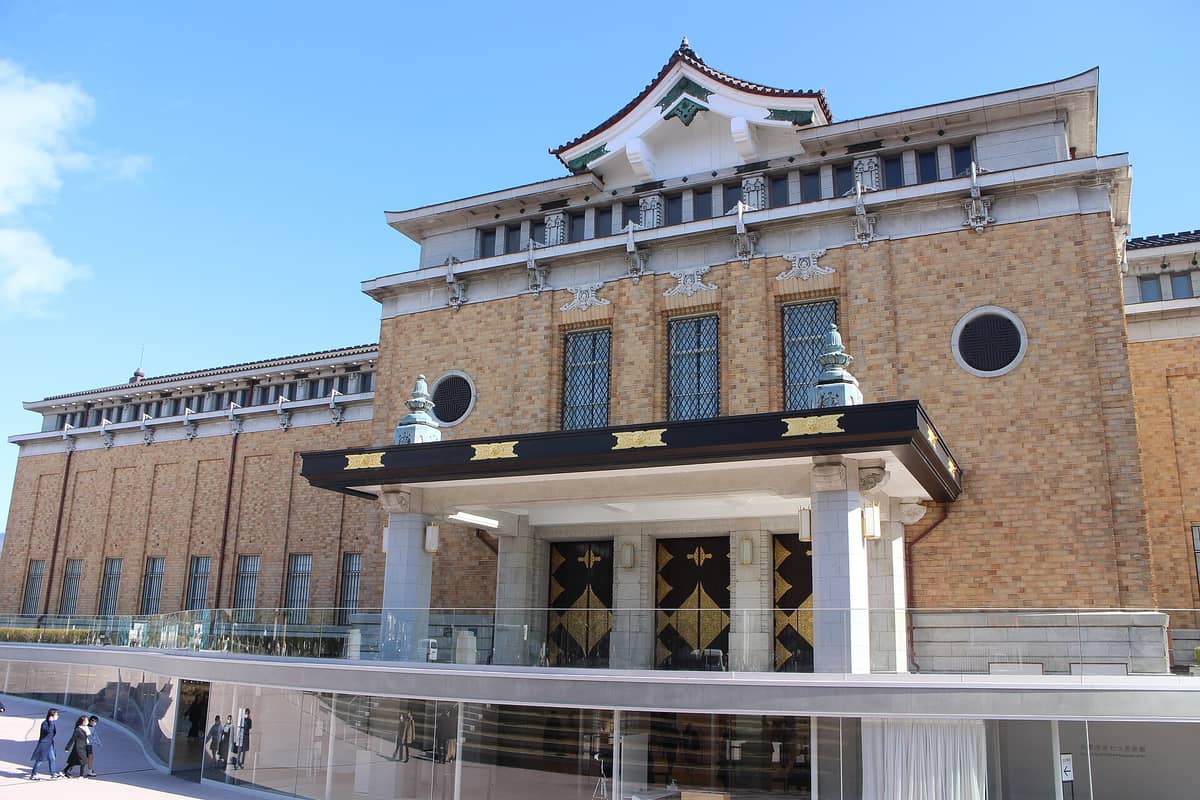
The Kyoto City KYOCERA Museum of Art sits in the Okazaki district on the eastern edge of central Kyoto, flanked by the grounds of Heian Shrine and a string of smaller institutions that make this area the city's closest equivalent to a museum quarter. The building itself is the first thing to register: a 1933 Imperial Crown-style structure with a broad symmetrical facade, its sweeping roof curves a deliberate nod to traditional Japanese palace architecture. It is substantial and formal in a way that most Kyoto attractions are not.
When it first opened as the Kyoto Municipal Museum of Art, it was one of the earliest purpose-built public art museums in Japan. For decades it held this status quietly, accumulating a permanent collection that spans Meiji, Taisho, and early Showa-era Japanese art alongside works by Kyoto-connected artists across multiple generations. Then, after a significant closure for renovation, it reopened in March 2020 under its current name, following a naming-rights agreement with Kyocera Corporation. The renovation did not demolish or Westernize the original building. Instead, architects carved new subterranean gallery spaces beneath the north garden and added a dramatic glass entrance that descends underground while preserving the heritage facade entirely.
ℹ️ Good to know
Hours: 10:00–18:00, last admission 17:30. Closed Mondays (open if Monday is a public holiday, then closed the following Tuesday instead) and December 28–January 2. Confirm on the official website before visiting, especially around holidays.
The Building: Why It Deserves Attention Before You Go Inside
The approach from Higashiyama Station takes you past the Okazaki Canal and along a tree-lined path toward the museum's front plaza. In spring, the canal's cherry trees bloom directly in this sightline, and the combination of pale blossoms against the museum's stone facade draws visitors who never planned to go inside. In autumn the maples along the approach shift through yellow and orange. These seasonal views are genuinely worth timing your visit around if you can.
The 2020 renovation introduced the Higashiyama Cube, a new wing visible from the north side, and a rooftop terrace accessible during open hours. The terrace offers an unusual vantage point looking toward the Higashiyama mountains, framing the pagoda rooflines that define eastern Kyoto's skyline. It is worth ten minutes of your time even if the current exhibition does not interest you.
If you are already planning to walk the Philosopher's Path or visit Heian Shrine, the museum is less than five minutes from either. It makes obvious geographic sense to combine all three in a half-day loop through the Okazaki and Nanzenji area.
Tickets & tours
Hand-picked options from our booking partner. Prices are indicative; availability and final rates are confirmed when you complete your booking.
Kyoto Coast, Amanohashidate and Ine Bay 1-Day Trip from Osaka or Kyoto
From 46 €Instant confirmationFree cancellationKyoto Sanzen-in, Arashiyama and Bamboo Grove Full Day Tour
From 47 €Instant confirmationFree cancellationKyoto Arashiyama insider walking tour
From 66 €Instant confirmationFree cancellationMatcha green tea tour in Kyoto's Uji Market
From 130 €Instant confirmationFree cancellation
The Permanent Collection: What to Expect Inside
The permanent collection, displayed in the Collection Room galleries on the main floor, focuses primarily on Japanese art from the late 19th century through the mid-20th century. This period covers the dramatic artistic transitions of the Meiji era, when Western techniques began influencing Japanese painting and sculpture, and the subsequent search by Kyoto-based artists for a synthesis between those imported methods and traditional Nihonga (Japanese-style painting). The works are often less internationally famous than pieces in Tokyo's major national museums, but the Kyoto context adds relevance: many artists represented here lived and worked in this city.
The collection is rotated regularly, so not every piece is on display at any given visit. For non-specialists, the permanent galleries reward about 45 minutes of attentive looking. The works are well-labeled in Japanese and English, and the gallery spaces are calm and unhurried even when the museum is handling solid visitor numbers during a popular special exhibition.
💡 Local tip
Admission to the permanent collection (Collection Room) is separate from special exhibition tickets. If you are on a budget, you can visit only the permanent galleries for ¥730 (non-resident adult rate) without paying for the special show. Kyoto city residents pay ¥520. Elementary, junior high, and high school students who are Kyoto residents enter free; students who are not Kyoto residents pay ¥300.
Special Exhibitions: The Main Draw for Most Visitors
In practice, most visitors come for the special exhibitions rather than the permanent collection. Since reopening in 2020, the museum has hosted major international and domestic shows covering everything from Impressionist loans from European collections to retrospectives of influential Japanese contemporary artists. Ticket prices for special exhibitions vary and are set per show; during popular blockbuster exhibitions the museum can become crowded, particularly on weekends and national holidays.
Weekday mornings between 10:00 and 12:00 are the best window for seeing special exhibitions without the worst congestion. If you arrive after 14:00 on a Saturday, expect crowded gallery rooms and potential queuing at the entrance during high-profile shows. The museum does not currently operate a timed-entry reservation system for all exhibitions, though popular shows sometimes require advance ticket purchase. Check the official website before visiting.
For context on Kyoto's broader museum and cultural landscape, theKyoto National Museumin Higashiyama focuses on classical Japanese art and antiquities, making it a strong complement if you plan to spend a full day on art in the city.
How the Experience Changes by Time of Day
Morning visits carry a noticeably different quality. The light through the renovated entrance hall is sharper, the cafe inside is quieter, and the permanent galleries feel genuinely contemplative. The museum's interior materials, stone floors, high ceilings, and polished wood details, pick up the morning light in ways that the afternoon visit simply does not replicate.
By midday the building's entrance plaza fills with school groups on cultural outings, particularly from Tuesday through Friday. These groups typically move through special exhibitions quickly and rarely linger in the permanent galleries, so the noise stays manageable. Late afternoon visits, from about 15:30 onward, see visitor numbers thin noticeably as many tourists shift toward dinner and the Gion district. This makes the final two hours before closing a pleasantly uncrowded time to revisit any room you want to spend more time in.
Getting There and Practical Logistics
The most straightforward route is Higashiyama Station on the Tōzai Subway Line. Exit 1 leads directly toward the museum, and the walk takes about 8 to 10 minutes along a flat, well-signposted path through the Okazaki area. From Kyoto Station, City Bus routes 5 and 86 stop at Okazaki Koen/Bijutsukan Heian Jingu-mae, a stop directly in front of the museum. Journey time from Kyoto Station by bus is roughly 30 to 40 minutes depending on traffic, which can be significant during peak tourist seasons when buses through central Kyoto run slow. The subway is faster and more predictable.
The museum building is barrier-free following the 2020 renovation, with elevators connecting all floors and step-free routes throughout. For accessibility inquiries, the museum can be reached at +81-75-771-4334 during opening hours. Bag storage lockers are available near the entrance, which is worth knowing given that the galleries do not permit large backpacks in some spaces during busy exhibitions.
If you are planning your day around this area of Kyoto, theNanzen-ji temple complexis a 15-minute walk south, and the walking route between the two passes some of the city's quietest residential streets, a useful contrast to the formality of the museum.
Photography and What to Wear
Photography policies vary by exhibition: the permanent collection generally permits non-flash photography for personal use, but special exhibitions often prohibit it entirely or restrict it to certain works. Signage inside each gallery room is clear on this. The building's exterior, the Heian Shrine forecourt visible from the museum grounds, and the rooftop terrace are all freely photographable and offer some of the more interesting architectural shots in the Okazaki area.
No particular dress code applies. The museum is fully indoors and climate-controlled, which makes it a reliable option on rainy or extremely hot summer days when outdoor Kyoto becomes punishing. Bring a layer in winter, as the stone entrance hall can feel cool when temperatures outside drop below 5°C.
⚠️ What to skip
The museum is closed every Monday. If Monday falls on a public holiday, it stays open that day but closes the following Tuesday instead. Arriving on a Monday without checking this in advance is a common mistake in the Okazaki area, where several institutions share similar closure schedules.
Who Should Skip This and Who Should Not
If your Kyoto itinerary is focused entirely on temples, shrines, and traditional streetscapes, the museum is easy to skip without missing anything that fits that theme. The collection does not represent Kyoto's pre-modern heritage and does not function as an introduction to classical Japanese art history. For that purpose, the Kyoto National Museum covers the ground more thoroughly.
Travelers on a tightly compressed one or two-day visit who are prioritizing outdoor landmarks likeKiyomizu-dera or the Fushimi Inari Taishashould probably save the museum for a return trip. But for anyone with an interest in modern Japanese art, a genuine appreciation for 20th-century architecture, or a rainy afternoon to fill thoughtfully, this is one of the better options Kyoto has.
Insider Tips
- The rooftop terrace on the main building is accessible during opening hours and rarely crowded. It frames the Higashiyama mountain ridge clearly on a fine day and costs nothing beyond your entry ticket.
- Weekday mornings in the permanent collection galleries are genuinely quiet. If you are visiting during high season (late March to early May, or November) and want to avoid crowds, this is the most reliable escape in the Okazaki area.
- The museum cafe inside is a reasonable lunch stop, calmer than most options near Heian Shrine or the Nanzenji approach. Useful to know if you are building a long walking day through eastern Kyoto.
- Kyoto city residents pay substantially less for the permanent collection (¥520 vs ¥730) and students living or studying in Kyoto city enter free, while students from outside Kyoto pay ¥300. If you are visiting with a Kyoto-based host, confirm their resident discount at the ticket window.
- During popular special exhibitions, the museum sometimes sells advance tickets through convenience store terminals (Lawson, FamilyMart). If a major international loan show is running during your visit, buying in advance avoids the longest queues at the ticket counter.
Who Is Kyoto City KYOCERA Museum of Art For?
- Art enthusiasts who want more than temples and want to engage with Japan's modern and Meiji-era painting traditions
- Architecture-focused travelers interested in Imperial Crown-style design and its 2020 renovation contrast
- Visitors planning a half-day Okazaki loop combining Heian Shrine, the Philosopher's Path, and a museum stop
- Families and independent travelers looking for an indoor option on hot summer days or during Kyoto's June rainy season
- Repeat Kyoto visitors who have covered the major heritage sites and want to go deeper into the city's cultural life
Nearby Attractions
Other things to see while in Philosopher's Path Area:
- Daimonji-yama
Daimonji-yama is a forested mountain in eastern Kyoto offering one of the city's most rewarding free hikes. Rising above the Philosopher's Path area, the trail leads to an open summit with sweeping views across the Kyoto basin, and once a year the hillside becomes the stage for the city's most spectacular Buddhist fire ritual.
- Eikan-do (Zenrin-ji Temple)
Eikan-do Zenrin-ji is a sprawling hillside temple in eastern Kyoto, celebrated for some of the city's most spectacular autumn foliage and home to a uniquely expressive Amida Buddha who turns to look back over his shoulder. Tucked just north of Nanzen-ji along the Philosopher's Path corridor, it rewards visitors year-round but reaches its full power in November.
- Ginkaku-ji (Silver Pavilion)
Officially known as Tozan Jishō-ji, Ginkaku-ji is a Zen temple in northeastern Kyoto whose sculpted sand garden, moss-covered hillside path, and understated wooden pavilion offer a counterpoint to the city's flashier showpieces. Admission is ¥1,000 for adults from April 2026, and the walk there along the Canal of Philosophy makes it one of Kyoto's most satisfying half-day outings.
- Heian Shrine
Built in 1895 to mark Kyoto's 1,100th anniversary as Japan's imperial capital, Heian Jingu Shrine combines monumental Heian-period architecture with one of the city's finest strolling gardens. Entry to the shrine precincts is free, while the Shin'en Garden rewards visitors willing to pay the small admission fee.