Jewish Museum Vienna: Two Sites, One Essential Story
The Jewish Museum Vienna operates across two sites in the historic First District: the grand Palais Eskeles on Dorotheergasse and the sobering Misrachi House at Judenplatz, built above the ruins of a medieval synagogue. Together they offer one of Central Europe's most layered accounts of Jewish history, culture, and memory.
Quick Facts
- Location
- Dorotheergasse 11 (main) & Judenplatz 8 (second site), 1010 Vienna — both in the Innere Stadt
- Getting There
- U1/U3 Stephansplatz (Dorotheergasse); U3 Herrengasse (Judenplatz)
- Time Needed
- 1.5–2 hours per site; allow a full half-day for both
- Cost
- €15 combined ticket (both sites); €13 for visitors with disabilities, one companion free. Verify current rates at jmw.at.
- Best for
- History enthusiasts, Jewish heritage travelers, architecture admirers, reflective solo visits
- Official website
- www.jmw.at/en
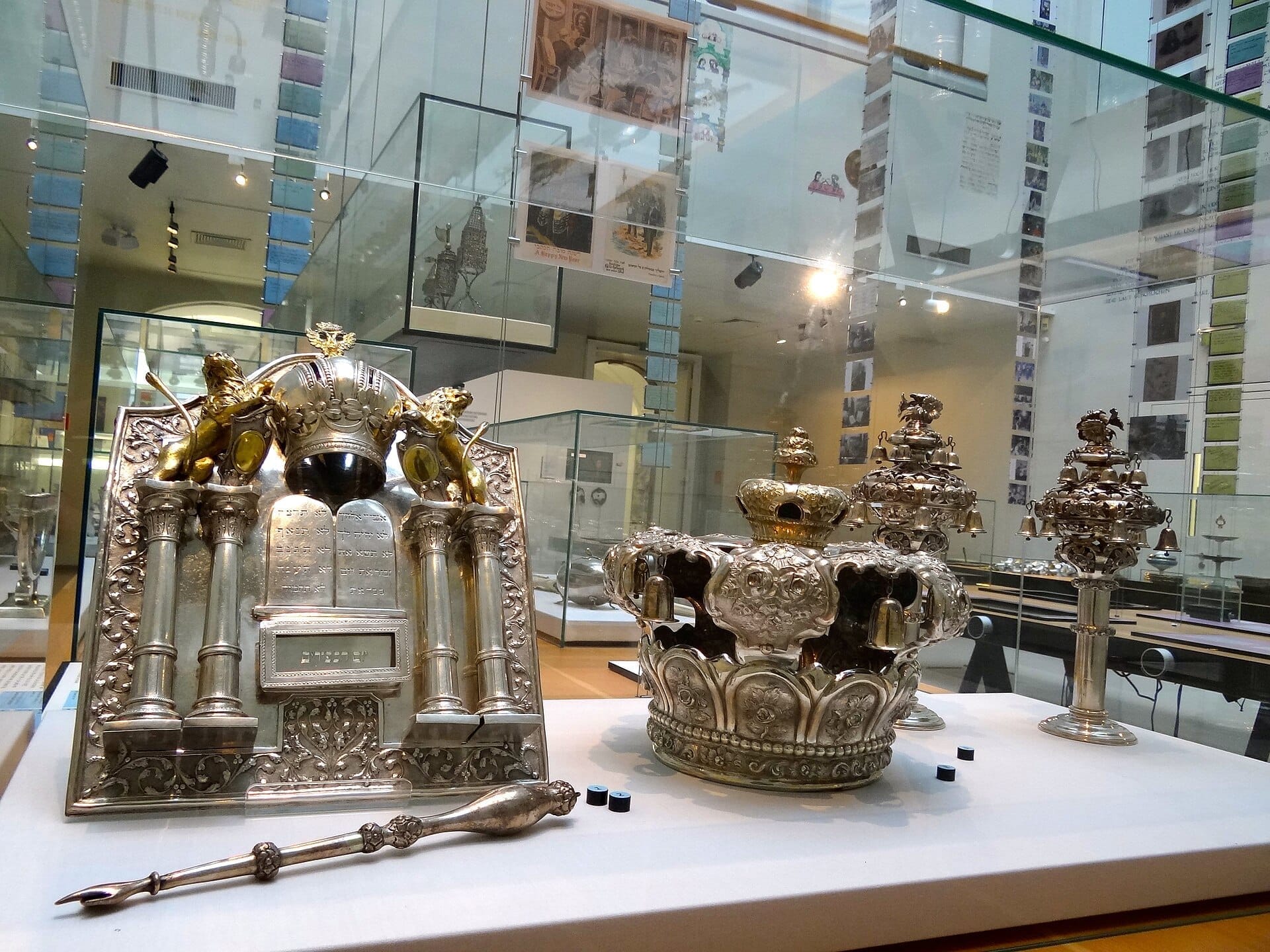
Why This Museum Matters
The Jewish Museum Vienna is not a single building but a two-site institution with distinct characters. The main branch at Palais Eskeles on Dorotheergasse focuses on Jewish history and culture through permanent collections and rotating exhibitions. The second site at Judenplatz, housed in the 15th-century Misrachi House, brings visitors face to face with the excavated remains of Vienna's medieval synagogue, destroyed in the pogrom of 1421. The combined ticket covers both, and the walk between them takes under ten minutes through the cobbled streets of the First District.
What makes this institution historically significant goes beyond its collections. When a predecessor organization was founded in Vienna in 1895, it was recognized as the world's first Jewish museum. That lineage gives the current institution a particular weight: this is not a memorial created in hindsight, but a place with roots in a period when Vienna's Jewish community was one of the most culturally influential in Europe. By 1910, Jews made up roughly nine percent of the city's population and were central to its intellectual, artistic, and commercial life.
💡 Local tip
Buy the combined ticket at whichever site you visit first. It covers both Dorotheergasse and Judenplatz with no time restriction between visits — useful if you want to break the two sites across a morning and an afternoon.
Palais Eskeles: The Main Branch on Dorotheergasse
The Dorotheergasse building occupies a Baroque town palace, originally commissioned by the Eskeles banking family in the 18th century. The architecture alone rewards attention: high ceilinged rooms, ornate plasterwork, and a staircase that speaks to the prosperity of the family who built it. The permanent collection takes a thematic rather than strictly chronological approach to Jewish history in Vienna, using objects, photographs, archival documents, and audio-visual installations to trace life from the medieval period through the Habsburg era, the fin-de-siecle golden age, and the catastrophe of the 1930s and 1940s.
The museum opens Sunday through Friday from 10:00 to 18:00 and is closed on Saturdays, in observance of Shabbat. Mornings on weekdays tend to be quiet; the rooms fill noticeably on Sunday afternoons when it becomes one of the few major cultural institutions in the city still open on the last day of the week. If you want space to read the panels without crowds at your shoulder, arriving at 10:00 on a Tuesday or Wednesday is the most comfortable option.
The temporary exhibitions here tend to be ambitious: recent programmes have addressed topics from the history of Vienna's Jewish press to 20th-century design and art, often drawing connections to broader Viennese cultural history. If you are visiting as part of a broader exploration of Jewish heritage in the city, pairing this museum with a visit to Judenplatz — covered by the same ticket — provides context that neither site fully delivers alone.
Tickets & tours
Live prices and dates from our booking partner. If you book, we may earn a commission at no extra cost to you.
Museum Judenplatz: Archaeology and Memory Underground
The Judenplatz site operates on a different register entirely. Above ground, the square itself is anchored by Rachel Whiteread's Holocaust Memorial, a concrete sculpture in the form of an inverted library whose spines face inward, their titles unreadable. The sculpture was installed in 2000 and remains one of the most unsettling public artworks in Vienna: austere, heavy, and deliberately inaccessible. The surrounding square is quiet on most mornings, the contrast with the nearby tourist crowds on Graben and Kohlmarkt unexpectedly sharp.
Beneath the Misrachi House, excavations carried out in the 1990s uncovered the foundations of the Or Sarua synagogue, destroyed in 1421 during the expulsion and massacre of Vienna's Jewish community known as the Wiener Gesera. The underground exhibition presents these stone remains alongside a detailed multimedia account of medieval Jewish life in the city. The scale model of the original synagogue is particularly useful for understanding what was lost.
Judenplatz opens Sunday through Thursday from 10:00 to 18:00, and Friday from 10:00 to 17:00, also closed on Saturdays. The underground space is compact and can feel crowded when group tours arrive; if you see a tour bus parked nearby, it is worth pausing in the square for fifteen minutes before heading in. Photography of the excavated ruins is generally permitted but flash is not appropriate given the sensitivity of the site.
ℹ️ Good to know
The Wiener Gesera of 1421 resulted in the death or expulsion of Vienna's entire Jewish community. The medieval synagogue uncovered below Judenplatz is one of very few physical traces of that community's presence. This context shapes the tone of the entire exhibition.
How the Two Sites Work Together
Many visitors make the mistake of treating the two sites as interchangeable or skipping Judenplatz in favor of only the main museum. The more rewarding approach is to visit Judenplatz first. Starting underground, with the medieval foundations and the weight of 1421, creates a baseline of historical rupture against which the later exhibitions at Dorotheergasse — covering the Habsburg-era integration of Jews into Viennese society, the flourishing of the late 19th century, and the subsequent destruction under National Socialism — land with considerably more force.
The walk between the two sites takes you through some of the most historically layered streets in the Innere Stadt. This is also the neighborhood where the Hofburg Palace and St. Stephen's Cathedral stand — buildings that represent the Catholic Habsburg power structure against which Vienna's Jewish community always had to negotiate its position. Walking this distance with that history in mind changes how you see the architecture around you.
Practical Details: Getting There, Accessibility, and Timing
Both sites sit within Vienna's historic core and are reachable without any planning difficulty. For Palais Eskeles on Dorotheergasse, take the U1 or U3 to Stephansplatz and walk west for about five minutes. Bus lines 1A (Habsburgergasse stop) and 2A (Plankengasse stop) also stop within a short walk. For Judenplatz, the most direct metro connection is U3 to Herrengasse, from which it is a four-minute walk through the Freyung square.
Accessibility provisions include discounted admission of €13 for visitors with disabilities, with one accompanying person admitted free. Visitors holding specific social or mobility passes are admitted free with a valid photo ID. For precise lift and step-free access details at each building — both are historic structures with limitations — contact the museum directly or check jmw.at before your visit.
Vienna's First District is dense with institutions competing for your time. If you are building a fuller day around Jewish heritage, the museum fits well alongside a walk through the surrounding streets and a stop at one of the area's historic coffee houses. For broader context on the neighborhood, the Innere Stadt area guide covers the surrounding blocks in detail. Those interested in the wider history of Vienna's Jewish community will also find relevant context in the Habsburg imperial history guide.
Photography, Atmosphere, and Honest Expectations
Neither site is built for dramatic photography. The Dorotheergasse interiors are well-lit and the building itself photographs well, but most of the collection — documents, photographs, small objects — does not lend itself to striking images. The Judenplatz excavations are dimly lit by design, and photographs rarely capture the texture of the stone foundations adequately. The Whiteread memorial outside is best photographed in flat light: harsh midday sun creates unflattering contrasts on the concrete surface, while overcast mornings render the sculpture with more of its intended gravity.
The museum's tone is scholarly rather than sensational. Panel texts are thorough, sometimes detailed to the point of requiring real concentration. If you move quickly through museums without reading, you will leave with less than visitors who allow themselves time to stop. Audio guides are available and worthwhile for the Judenplatz site in particular, where the archaeological context benefits from explanation.
⚠️ What to skip
Both sites are closed on Saturdays. This catches many visitors off guard, especially those planning a weekend itinerary. Double-check your visit day before building your schedule around this museum.
Who Will Get the Most From This Visit
Travelers with a particular interest in Jewish history, Habsburg-era Vienna, or the cultural life of Central Europe in the late 19th and early 20th centuries will find this institution genuinely absorbing. The museum also works well for anyone following a broader cultural itinerary through Vienna's museum landscape — it complements but does not duplicate what you will find at the Kunsthistorisches Museum or the Wien Museum, since its focus is specific rather than encyclopedic.
Visitors with limited time who are primarily interested in Viennese imperial grandeur or the visual arts may find this museum less immediately rewarding. It asks for engagement and patience rather than delivering the visual spectacle of a palace or a collection of Old Masters. Children under ten are unlikely to connect with the exhibition format, which relies heavily on text and archival material rather than interactive displays.
Insider Tips
- Visit Judenplatz first, not Dorotheergasse. The medieval excavations and Whiteread memorial set a historical frame that makes everything you see at the main museum land with more impact.
- Sunday morning is one of the best times for Dorotheergasse: many neighboring attractions are closed or crowded, but the museum is open and relatively calm in the first hour after opening.
- The square at Judenplatz is often overlooked as a space to spend time. Arriving ten minutes before the museum opens and sitting with the Whiteread memorial in quiet is a different experience from rushing in with a tour group.
- The audio guide for Judenplatz is genuinely useful — the underground excavation is compact and the wall text alone does not fully convey the spatial relationship between the synagogue ruins and the buildings above. Budget extra time if you use it.
- If you hold a Vienna City Card or are considering the Vienna PASS, check current coverage before purchasing separately. The combined ticket at €15 is fair value for two distinct sites, but pass holders should verify inclusions directly with the pass provider.
Who Is Jewish Museum Vienna For?
- Travelers with a specific interest in Jewish history and Central European heritage
- History-focused visitors exploring the layers of Habsburg Vienna
- Those who want a reflective, quieter museum experience away from the main tourist flow
- Architecture admirers interested in Baroque palaces and medieval archaeological sites in the same visit
- Visitors following a broader cultural itinerary who want context beyond the imperial mainstream
Nearby Attractions
Other things to see while in Innere Stadt (1st District):
- Albertina Museum
Housed in a former Habsburg palace at the edge of the Ringstrasse, the Albertina holds one of the largest and finest graphic art collections in the world. With over one million drawings and prints alongside rotating exhibitions of modern masters, it rewards both the casual visitor and the serious art traveler.
- Austrian National Library (Prunksaal State Hall)
The Prunksaal, or State Hall of the Austrian National Library, is a Baroque masterpiece built for Emperor Charles VI between 1723 and 1726. At roughly 80 metres long and crowned by Daniel Gran's sweeping ceiling frescoes, it is one of the most visually arresting interiors in central Europe, and still holds around 200,000 historic volumes in its carved walnut shelves.
- Burgtheater
The Burgtheater is Austria's national theatre and one of the most significant German-language stages in the world. Its Neo-Renaissance building on Vienna's Ringstraße dates to 1888, and its institutional history stretches back to the court of Empress Maria Theresa. Whether you come for a performance or a guided tour, it rewards attention.
- Café Central
Housed inside the Palais Ferstel in Vienna's historic first district, Café Central has been serving coffee and conversation since 1876. Once the gathering point for Freud, Trotsky, and a constellation of Central European intellectuals, it remains one of the most architecturally remarkable coffeehouses in the world.
Planning a trip? Discover personalized activities with the Nomado app.