Iglesia de Santa Catalina Mártir: Valencia's Gothic-Baroque Landmark
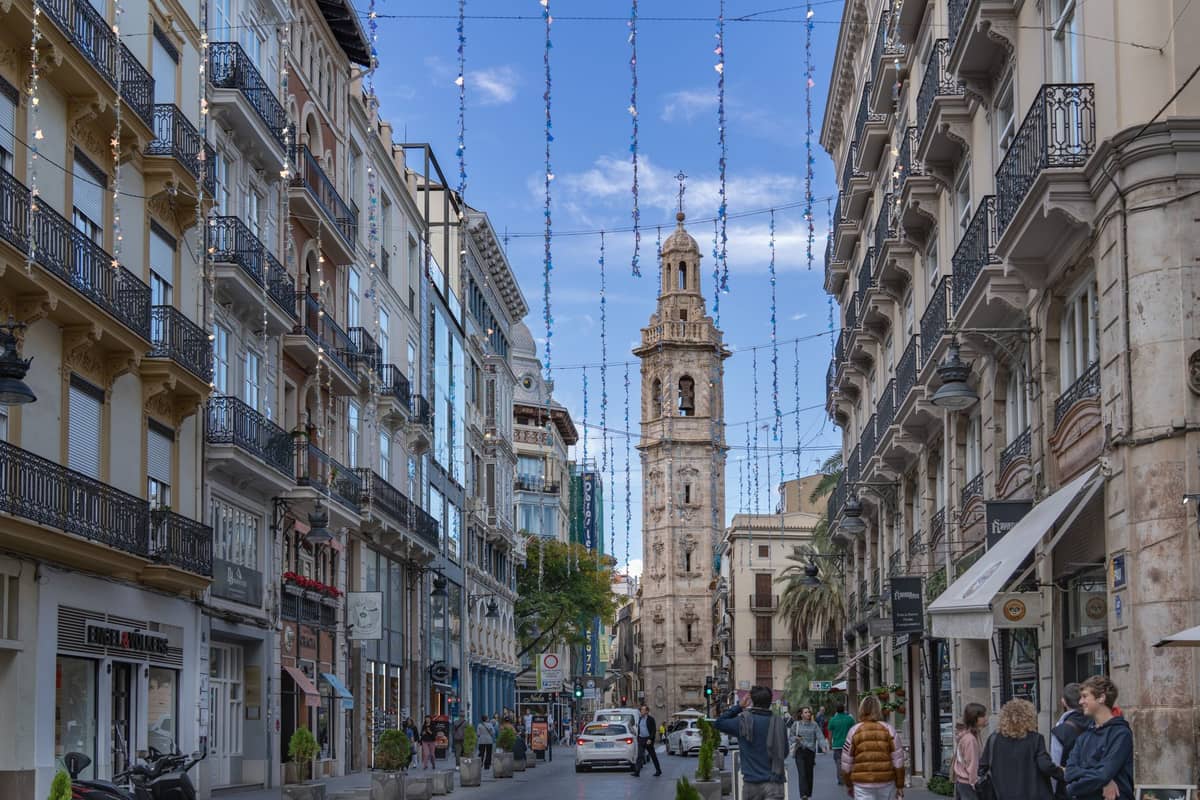
Standing at the southern edge of Plaza de la Reina, the Iglesia de Santa Catalina Mártir is one of Valencia's finest examples of Gothic and Baroque architecture side by side. Its six-sided bell tower is one of the most photographed silhouettes in the old city, and the church itself offers free entry, active worship, and a quiet counterpoint to the busier Cathedral nearby.
Quick Facts
- Location
- Plaza de Santa Catalina s/n, 46001 Valencia (Ciutat Vella)
- Getting There
- On foot from Plaza de la Reina; central city bus stops within 200 m
- Time Needed
- 20–40 minutes for church; add 20 minutes for the tower climb
- Cost
- Church: free. Tower: €2 (verify locally before visiting).
- Best for
- Architecture lovers, photography, anyone exploring the historic centre on foot
- Official website
- www.santacatalinavalencia.es
What Is the Iglesia de Santa Catalina?
The Iglesia de Santa Catalina Mártir is a medieval Catholic church at the heart of Valencia's historic centre, facing the southern end of Plaza de la Reina. Its full name, used in official records and on signage, is Iglesia de Santa Catalina Mártir, though locals and visitors typically shorten it to Santa Catalina. The building is a study in architectural layering: a Gothic nave that was begun in the late 13th century and mainly constructed through the 14th century sits beneath a Baroque bell tower built between 1688 and 1705, and the combination reads like a textbook on six hundred years of Valencian religious building.
The church has been a Temple of Eucharistic Reparation for more than fifty years, administered by the Hermandad de Sacerdotes Operarios Diocesanos. That designation means it operates as both an active place of worship and a historic monument open to visitors, which shapes the atmosphere inside considerably. You are as likely to find a congregation at prayer as a tourist studying the vaulted ceilings, and both coexist without much friction.
ℹ️ Good to know
Church admission is free. The tower costs €2 and is accessed during specific hours (Monday–Saturday, 11:00–13:00; summer adds an afternoon session 17:00–19:00). Both tower hours and prices can change seasonally, so confirm at the door or via the local tourism office before making it your primary reason for being in the area.
The Architecture: Gothic Core, Baroque Crown
The bell tower is the detail that stops people mid-stride. Its hexagonal plan is distinctive in Valencia, and when you stand at the corner of Plaza de la Reina and look southwest, the tower rises clearly above the roofline in a way that feels almost disproportionately elegant. The Baroque ornamentation, applied in the 17th century, brings decorative stone detail to each tier, with pilasters, niches, and a lantern top that catches the late-afternoon light well. Photographers tend to position themselves along Calle de la Paz or from the plaza itself to capture the tower against a clear sky.
The church interior follows Valencian Gothic conventions: a single wide nave with side chapels, pointed arches, and relatively restrained decoration compared to the Cathedral a short walk away. The stone is pale and the natural light is limited, which means the interior feels cooler and darker than the sunny streets outside, a welcome contrast on a warm afternoon. Several of the side chapels retain altarpieces from different periods, and the quality of the painting and gilded woodwork is worth a closer look if the church is not mid-service.
For context on how Santa Catalina fits into Valencia's broader architectural story, the Valencia architecture guide provides a useful overview, and the nearby Catedral de Valencia offers a more extensive Gothic interior if you want to go deeper into the period.
Tickets & tours
Hand-picked options from our booking partner. Prices are indicative; availability and final rates are confirmed when you complete your booking.
Valencia Silk Museum tickets and audio guide
From 7 €Instant confirmationFree cancellationSaint Nicholas Church Entrance Tickets and Audioguide
From 11 €Instant confirmationHistoric Valencia walking tour
From 27 €Instant confirmationFree cancellationNatural thermal springs and Girlfriend Waterfall tour from Valencia
From 89 €Instant confirmationFree cancellation
The Tower Climb: Worth the €2?
The short answer is yes, provided you have a reasonable tolerance for narrow spiral stairs. The tower climb covers several internal flights, and the staircase is tight enough that you will want to let descending visitors pass before continuing up. There is no lift, and the steps are uneven stone, so this is not suitable for anyone with significant mobility limitations or a strong aversion to confined spaces.
From the upper levels, the view orients you within Ciutat Vella in a way that maps cannot. You can see the Cathedral's tower, the rooftop of the Mercado Central, and on clear days the Micalet bell tower rising above the lower skyline. The experience is more intimate than the views from the Torres de Serranos or the Miguelete, but the proximity to Plaza de la Reina means the roofscape you are looking at is dense and genuinely interesting. The tower is not crowded at opening time, which is another point in its favour.
⚠️ What to skip
The tower is not accessible to visitors with mobility impairments. The internal stairs are narrow, steep, and unlit in sections. Children can manage the climb but should be accompanied closely.
How the Experience Changes by Time of Day
Early morning, before 10:00, the plaza in front of Santa Catalina is quiet enough that you can hear pigeons and the distant sound of delivery vehicles in the side streets. The church opens for morning Mass before tourist visiting hours, and the smell of incense occasionally drifts out through the main door. The light is soft and directional, hitting the tower's western faces, which makes this the best window for photographing the exterior without harsh shadows or heavy foot traffic.
By mid-morning, the square fills noticeably. Plaza de la Reina, directly north, becomes one of the busiest pedestrian crossings in the old city, and Santa Catalina sits at the junction where several tourist routes converge. The crowds are not a problem inside the church itself, which remains calmer than the streets. Lunchtime sees the plaza thin out again as people move toward the Mercado Central or nearby restaurants, making the 13:00 tower closing time unfortunate for anyone arriving midday.
Evening, particularly the 19:00–20:00 window, brings a different atmosphere. Vespers or evening prayer may be underway, the interior lighting shifts from natural to artificial, and the crowd demographic changes from tourist-heavy to more local. If you have already seen the church in daylight, an evening return for five minutes costs nothing and feels like a different building.
Location and Getting There
Santa Catalina sits within the historic centre of Valencia, at Plaza de Santa Catalina s/n, 46001. The address is effectively the same block as Plaza de la Reina, and most visitors arrive on foot as part of a broader walk through Ciutat Vella. If you are coming from the main train station or the south of the city centre, the walk takes roughly 10–15 minutes through pedestrian streets.
There is no metro station immediately adjacent, but multiple city bus lines stop within 200 metres on the surrounding streets. Cycling is practical along the routes that flank the historic core, though the pedestrianised streets immediately around the church are not accessible by bike. The area is entirely flat, which makes it easy to reach on foot from almost any direction.
If you are planning a walking route through the old city, this walking tour of Valencia's old city includes Santa Catalina as a natural waypoint between the Cathedral and the Lonja de la Seda.
Surrounding the Church: What Else Is Nearby
The immediate neighbourhood around Santa Catalina is one of the densest concentrations of heritage buildings in Valencia. The Cathedral and El Micalet tower are less than three minutes on foot. The La Lonja de la Seda, a UNESCO World Heritage Site and one of the finest examples of late Gothic civil architecture in Europe, is about five minutes southwest. The Mercado Central is directly across from the Lonja.
The streets between these monuments are lined with cafés, horchata bars, and small shops. Horchatería El Siglo, on the plaza itself, is one of the more established spots for a cold horchata de chufa after the tower climb. The area gets genuinely crowded by late morning during peak season, so if you are combining multiple monuments in this cluster, starting at 09:30 or arriving after 17:00 will make the experience noticeably more comfortable.
Honest Assessment: Is It Worth Your Time?
Santa Catalina is not the most remarkable church in Valencia. The Cathedral interior is larger and richer, the Iglesia de San Nicolás has the most spectacular painted vault ceiling in the city, and the Basílica de la Virgen de los Desamparados carries the greatest religious significance locally. What Santa Catalina offers is something different: an approachable, unhurried stop with a distinctive tower, free access, and a location that puts it directly on the path between the Cathedral and the Lonja de la Seda.
If you are short on time and choosing between monuments in Ciutat Vella, prioritise the Cathedral, the Lonja, and San Nicolás over Santa Catalina for interior interest. But if you are spending a half-day or more in the historic centre, adding twenty minutes here costs nothing and the tower climb adds a viewing perspective that the other nearby monuments do not replicate at the same price.
Visitors who find quiet church interiors rewarding, who are interested in Valencian architectural history, or who want a photography stop with a genuinely distinctive silhouette will get real value here. Visitors expecting elaborate interiors, extensive museum-style interpretation, or tourist infrastructure comparable to the Cathedral will find it underwhelming.
Insider Tips
- The best exterior photograph of the hexagonal tower is often taken from Plaza de la Reina or along Calle de la Paz looking southwest, rather than from the plaza directly in front. These angles show multiple faces of the tower above a quieter foreground.
- If the church door is closed during listed visiting hours, check the side entrance on the lateral street. The main door is sometimes closed during private services while the side access remains open.
- The midday closing of the tower (around 13:00) is firm. Arriving at 12:45 gives you just enough time for the climb if the queue is short, but 11:00–11:30 is the most reliable window.
- The plaza immediately in front of the church is a useful orientation point in the old city: the Cathedral is north, the Lonja is west, and the Mercado Central is slightly further northwest. Using Santa Catalina as a compass anchor helps when the pedestrian streets become confusing.
- In summer, the afternoon tower session (17:00–19:00) exists precisely because midday heat makes the climb uncomfortable. The late-afternoon light from this window also hits the tower's exterior more warmly if you want to photograph it from above.
Who Is Iglesia de Santa Catalina For?
- Architecture and history enthusiasts tracing Valencia's medieval and Baroque heritage
- Photographers wanting the hexagonal tower silhouette against the old city roofscape
- Travellers doing a full walking circuit of Ciutat Vella who want a free and unhurried stop
- Visitors interested in active Catholic worship in a historic setting
- Anyone combining a visit with the Mercado Central, La Lonja de la Seda, or the Cathedral in a single morning
Nearby Attractions
Other things to see while in Centro Histórico:
- Basílica de la Virgen de los Desamparados
The Real Basílica de Nuestra Señora de los Desamparados stands at the heart of Valencia's historic centre, housing the revered image of the city's patron saint. Built between 1652 and 1667, it is free to enter and open every day, making it one of the most accessible and emotionally resonant stops in the old city.
- Catedral de València
Rising above Plaza de la Reina in Valencia's historic centre, the Cathedral of Valencia is a remarkable layered monument built over seven centuries. From a Romanesque doorway to Gothic vaulting, a Baroque facade, and a relic claimed to be the Holy Grail, this is one of Spain's most architecturally complex and historically loaded churches.
- Centre Cultural La Nau
Housed in the University of Valencia's historic headquarters since the late 15th century, Centre Cultural La Nau is a historic landmark in the old town offering free exhibitions, concerts, and theatre. It rewards visitors who slow down and look closely.
- Centre Arqueològic de l'Almoina
Beneath a quiet plaza steps from Valencia Cathedral lies one of Spain's most compelling urban archaeology sites. The Centre Arqueològic de l'Almoina preserves around 2,500 square metres of Roman, Visigothic, and medieval remains, excavated over two decades and now visible through a striking modern structure.