Humboldt Park: Chicago's West Side Green Space With Real Character
Named after Prussian naturalist Alexander von Humboldt and established in 1869, Humboldt Park is a sprawling 197.26-acre public park on Chicago's West Side. With its lagoons, boathouse, fieldhouse, and surrounding neighborhood defined by Puerto Rican cultural landmarks, it offers a very different Chicago experience from the lakefront parks most visitors default to.
Quick Facts
- Location
- 1400 N. Sacramento Ave., Chicago, IL 60622 (West/Northwest Side)
- Getting There
- CTA bus routes along North Ave. and California/Sacramento corridors; no direct 'L' stop at the park
- Time Needed
- 1.5 to 3 hours for a full walk; shorter visits possible
- Cost
- Free entry to park grounds; fees may apply for specific programs or facility rentals
- Best for
- Nature walks, off-the-tourist-trail exploration, cultural context, cycling, local atmosphere
What Humboldt Park Actually Is
Humboldt Park, officially named Humboldt (Alexander Von) Park by the Chicago Park District, is one of the city's older and larger public parks at 197.26 acres. It sits on Chicago's West Side, about four miles west of the Loop, in the community area that shares its name. Most out-of-town visitors never make it here, which is partly why locals prize it.
The park was created in 1869 as part of Chicago's West Park System, a network of green spaces developed in parallel with the more famous South Park System that produced Washington and Jackson Parks. It was named at the request of local residents to honor Alexander von Humboldt (1769–1859), the Prussian naturalist and geographer whose work shaped modern environmental science. By 1907, the boathouse and other major landscape features had been completed.
This is not a manicured showpiece like Millennium Park or a lakefront destination. It is a working neighborhood park with serious green space, open water, and the kind of foot traffic that tells you people actually live with it year-round.
ℹ️ Good to know
Humboldt Park is a free public park. There is no admission charge to walk the grounds, use the paths, or visit the lagoon areas. Some programs, fitness facilities, and event rentals inside the fieldhouse have separate fees.
The Landscape: Lagoons, Meadows, and a Prairie Restoration
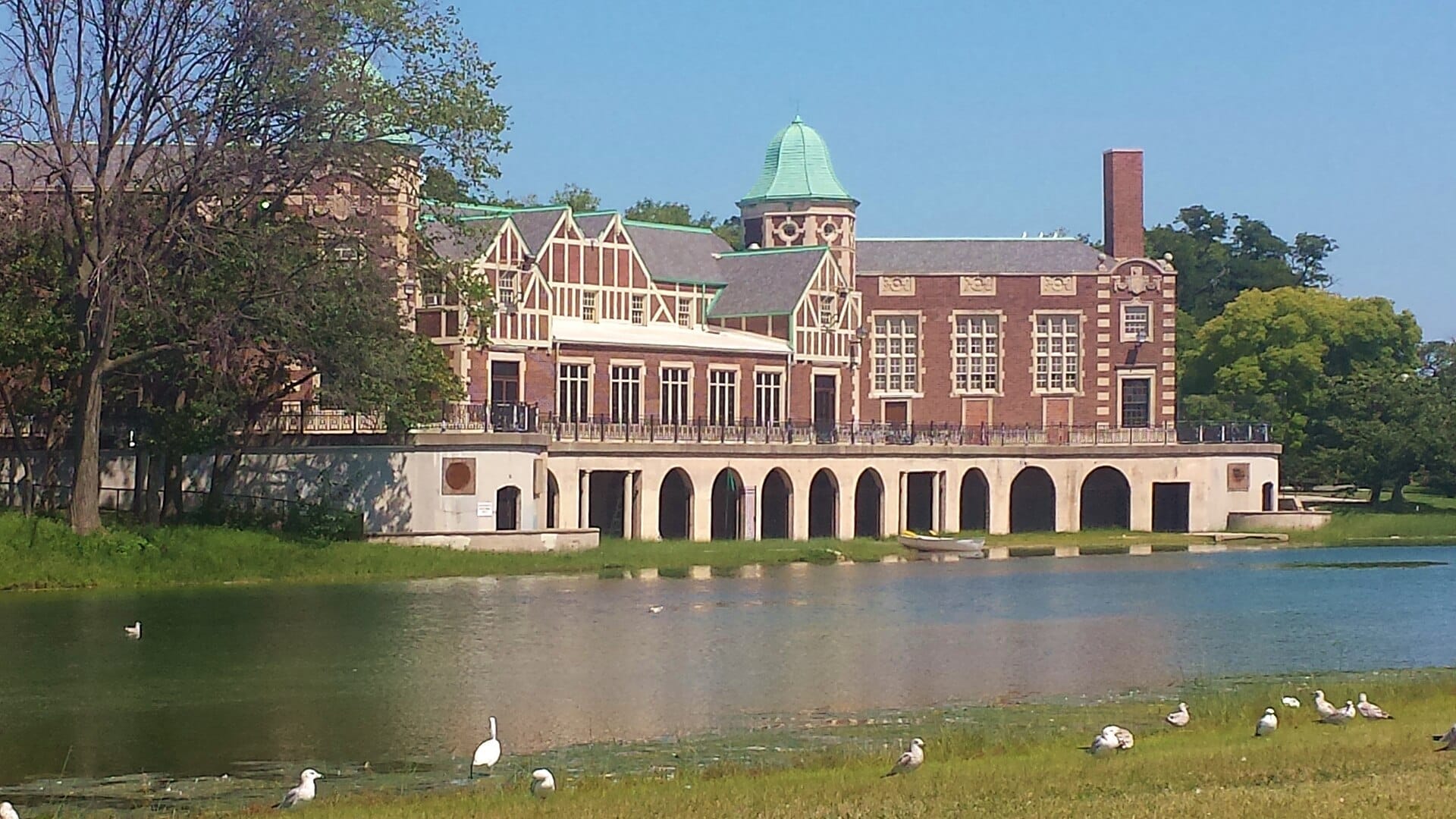
The park's most visually striking feature is its inland beach and lagoon system. The main lagoon stretches across a considerable portion of the park's interior, and in warm months the water reflects the sky in a way that makes the surrounding city feel genuinely distant. The boathouse structure, a historic building from the West Park era, frames the western edge of the lagoon and serves as a reference point when you are navigating the park on foot.
In the early morning, particularly on weekdays, you might find the path around the lagoon nearly empty except for dog walkers, older residents doing laps, and the occasional heron working the shallows. By mid-morning on a summer weekend, the character shifts: families arrive, kids find the water's edge, and the open meadow areas fill with soccer games and cookout setups.
The park also includes a prairie restoration section, which is a less-visited area but worth the detour if you are interested in native Illinois ecosystems. The grasses and wildflowers here look deliberately unkempt compared to the mowed lawns elsewhere in the park, which is the point. In late summer, the prairie blooms with coneflowers and black-eyed Susans, drawing pollinators and, if you look closely, a surprising number of bird species.
💡 Local tip
For the most peaceful experience, arrive before 9 a.m. on a weekday. The lagoon path is quietest then, the light is best for photography, and you can get a real sense of the park's scale without crowds.
Tickets & tours
Hand-picked options from our booking partner. Prices are indicative; availability and final rates are confirmed when you complete your booking.
Go City | Chicago All-Inclusive Pass
From 127 €Instant confirmationFree cancellationiFLY Chicago Lincoln Park indoor skydiving experience
From 126 €Instant confirmationFree cancellationiFLY Chicago Rosemont indoor skydiving tickets
From 117 €Instant confirmationFree cancellationChicago lakefront neighbourhood bike tour
From 18 €Instant confirmationFree cancellation
The Fieldhouse and What's Inside
The park fieldhouse is a substantial building that anchors the recreational side of Humboldt Park. It contains a fitness center, gymnasiums, and meeting rooms, making it a genuine community hub rather than just a backdrop. Chicago Park District programs run out of this building year-round, covering everything from youth sports leagues to adult fitness classes.
For most visitors passing through, the fieldhouse is mainly useful as a restroom stop and a reference point. The building itself has architectural character consistent with the early-twentieth-century civic construction style common across Chicago's historic park system.
Accessibility across the park is uneven. The main paths and fieldhouse are generally usable, but the park covers 197.26 acres and not all areas are equally maintained. Visitors with mobility considerations should contact the park directly or reach out to the Humboldt Park Advisory Council at info@humboldtparkadvisorycouncil.org before visiting.
Cultural Context: The Puerto Rican Community and Paseo Boricua
You cannot discuss Humboldt Park without discussing the neighborhood around it. The Humboldt Park community area has been the symbolic heart of Chicago's Puerto Rican community since the mid-twentieth century. Paseo Boricua, a stretch of Division Street just east of the park, is marked at each end by massive steel Puerto Rican flags installed in 1995. These structures are more than public art. They mark a deliberate claim to cultural geography in a city that has historically displaced communities through urban renewal and gentrification.
Visitors who walk from the park east along Division Street will find Puerto Rican restaurants, bakeries, cultural organizations, and murals. This is one of Chicago's most coherent surviving ethnic commercial corridors, distinct in character from the tourist-oriented stretches of the Magnificent Mile or even the more gallery-focused Pilsen mural corridor to the south.
The park itself hosts several community events across the year, particularly in summer. These include cultural festivals that draw heavily from the neighborhood's Puerto Rican identity. If you visit during one of these events, the park transforms into something much louder and more celebratory than its everyday state, with food vendors, amplified music, and crowd sizes that fill the open meadow areas completely.
💡 Local tip
After the park, walk east on Division Street for 10–15 minutes to reach the Puerto Rican cultural corridor. Several family-run restaurants and bakeries line this stretch, and it gives the park visit meaningful neighborhood context.
Getting There and Practical Logistics
Humboldt Park is not directly served by a CTA 'L' station, which is one reason it sees fewer tourists than parks closer to the rail network. The most practical public transit options involve CTA bus routes along North Avenue or the California and Sacramento corridors. Check current routes and schedules directly on the CTA website before your visit, as service patterns are subject to change.
Rideshare apps like Uber and Lyft work well here and drop-off directly at the park entrance on Sacramento Avenue. If you are building a West Side itinerary, Humboldt Park pairs naturally with a visit to the Garfield Park Conservatory, which is roughly 1.5 miles south and is one of the largest conservatories in the United States. Budget a half-day for both.
Cycling is a strong option. The park has internal paths and connects to Chicago's broader cycling network. Bike parking is available near the fieldhouse. If you are cycling from the North Side, the route down Sacramento Avenue is relatively flat.
Street parking is generally available around the park perimeter, though this varies by day and time. On weekends during summer, parking fills quickly around the most-used park entrances.
Seasonal Variations and Photography
Summer (June through August) is the most active season. The lagoon reflects the sky clearly in the morning before wind picks up, and the prairie restoration area is at its most visually interesting. Temperatures in July average around 23–24°C (mid-70s°F), though heat waves pushing into the low 30s°C (high 80s–90s°F) are common. Shade around the lagoon path provides some relief.
Autumn brings cooler temperatures and genuine color change in the trees framing the lagoon, typically peaking in mid-to-late October. This is arguably the most photogenic season in the park, and crowds are smaller than summer. Spring arrivals in April and May mean the prairie restoration starts showing early green growth, and migratory birds use the park as a stop.
Winter visits are possible but honest assessment suggests the park loses much of its appeal under snow and cold. Chicago winters are genuinely harsh, with January mean temperatures around -3°C (27°F), and the lack of indoor programming visible to casual visitors means there is little reason to make a special trip between December and February unless you want a quiet, atmospheric walk.
⚠️ What to skip
The park is in a West Side neighborhood that, like many Chicago communities away from downtown, has had documented safety concerns. Most visitors exploring the park during daylight hours report no issues. As with anywhere in a large city, use standard urban awareness, especially if visiting near dusk or alone. Check current guidance via the City of Chicago safety resources if you are uncertain.
Who Should Skip This
Visitors with very limited time in Chicago, say one or two days, will likely get more concentrated return from the lakefront parks, Museum Campus, and central neighborhoods. Humboldt Park rewards the kind of visitor who is genuinely interested in Chicago's West Side communities and wants park space that is not designed for tourists. If you are primarily looking for a beautiful waterfront experience, the lakefront parks closer to downtown deliver that more efficiently.
Families visiting Chicago specifically for major attractions are probably better served by the Lincoln Park Zoo or the Maggie Daley Park playground, which offer more structured amenities in higher-footfall neighborhoods.
Insider Tips
- The boathouse is one of the better-preserved examples of early-twentieth-century West Park System architecture in Chicago. Photograph it from the eastern lagoon bank in morning light when the reflection is clearest.
- Division Street east of the park (Paseo Boricua) has several bakeries and lunch spots that are significantly cheaper and more interesting than anything near tourist-oriented neighborhoods. Ask locals for current recommendations as these change over time.
- The prairie restoration section is easy to miss because it does not look like conventional park landscaping. Look for the taller, wilder grasses on the park's interior edges. Late July and August are the peak bloom weeks.
- If you are visiting during a community festival, the park entrance on North Avenue tends to be less congested than the Sacramento Avenue entrance, which fills up quickly.
- The park fieldhouse has water fountains and restrooms that are generally accessible during operating hours. Plan around these if you are visiting with young children or doing a long walk of the full 197 acres.
Who Is Humboldt Park For?
- Travelers who want to experience Chicago neighborhoods beyond the tourist corridor
- Cyclists looking for a West Side route with a destination anchor point
- Visitors interested in Chicago's Puerto Rican cultural history and Paseo Boricua
- Nature and birding enthusiasts, especially during spring migration and late-summer prairie bloom
- Budget travelers: the park, the surrounding neighborhood walk, and the lagoon scenery cost nothing
Nearby Attractions
Combine your visit with:
- Bahá'í House of Worship
The Bahá'í House of Worship in Wilmette, Illinois, is one of the most architecturally singular buildings in North America. Free to enter, open daily, and reachable by CTA from downtown Chicago, it rewards visitors with a 135-foot lace-like dome, meditative silence, and an unusual kind of spiritual calm that transcends denomination.
- Brookfield Zoo Chicago
Brookfield Zoo Chicago is one of the largest and most historically significant zoos in the United States, covering 216 acres about 14 miles west of downtown. With more than 511 species, landmark indoor exhibits, and a genuine conservation mission, it rewards a full day of exploration. But it takes planning to get the most out of it.
- Chicago Air and Water Show
Every August, the Chicago Air and Water Show transforms the lakefront into a grandstand for one of the most spectacular free public events in the United States. Fighter jets, military demonstrations, and precision flying teams perform over Lake Michigan while hundreds of thousands of spectators line the shore from Fullerton to Oak Street.
- Chicago Botanic Garden
A living museum spread across 385 acres and nine islands north of Chicago, the Chicago Botanic Garden offers 27 gardens, four natural areas, and six miles of lake shoreline in Glencoe, Illinois. Whether you visit for a single seasonal bloom or spend a full day exploring Japanese landscapes and native prairies, this guide covers everything you need to plan a worthwhile trip.