Maggie Daley Park: Chicago's Most Versatile Free Park
Maggie Daley Park packs a climbing wall, seasonal skating ribbon, elaborate playground, and sweeping lakefront greenspace into 20 free acres steps from Millennium Park. It works equally well for a quick outdoor break and a full family afternoon.
Quick Facts
- Location
- 337 E. Randolph St., Chicago, IL 60601 (The Loop, next to Millennium Park)
- Getting There
- Walk from Millennium Park area; multiple CTA 'L' and bus lines serve the Loop. Use the CTA trip planner for current routes.
- Time Needed
- 45 minutes (quick visit) to 3+ hours (playground, climbing wall, and skating)
- Cost
- Free park entry; fees apply for climbing wall, mini golf, and skating ribbon (check current rates at maggiedaleypark.com)
- Best for
- Families with kids, outdoor picnics, winter ice skating, architecture lovers
- Official website
- maggiedaleypark.com
What Maggie Daley Park Actually Is
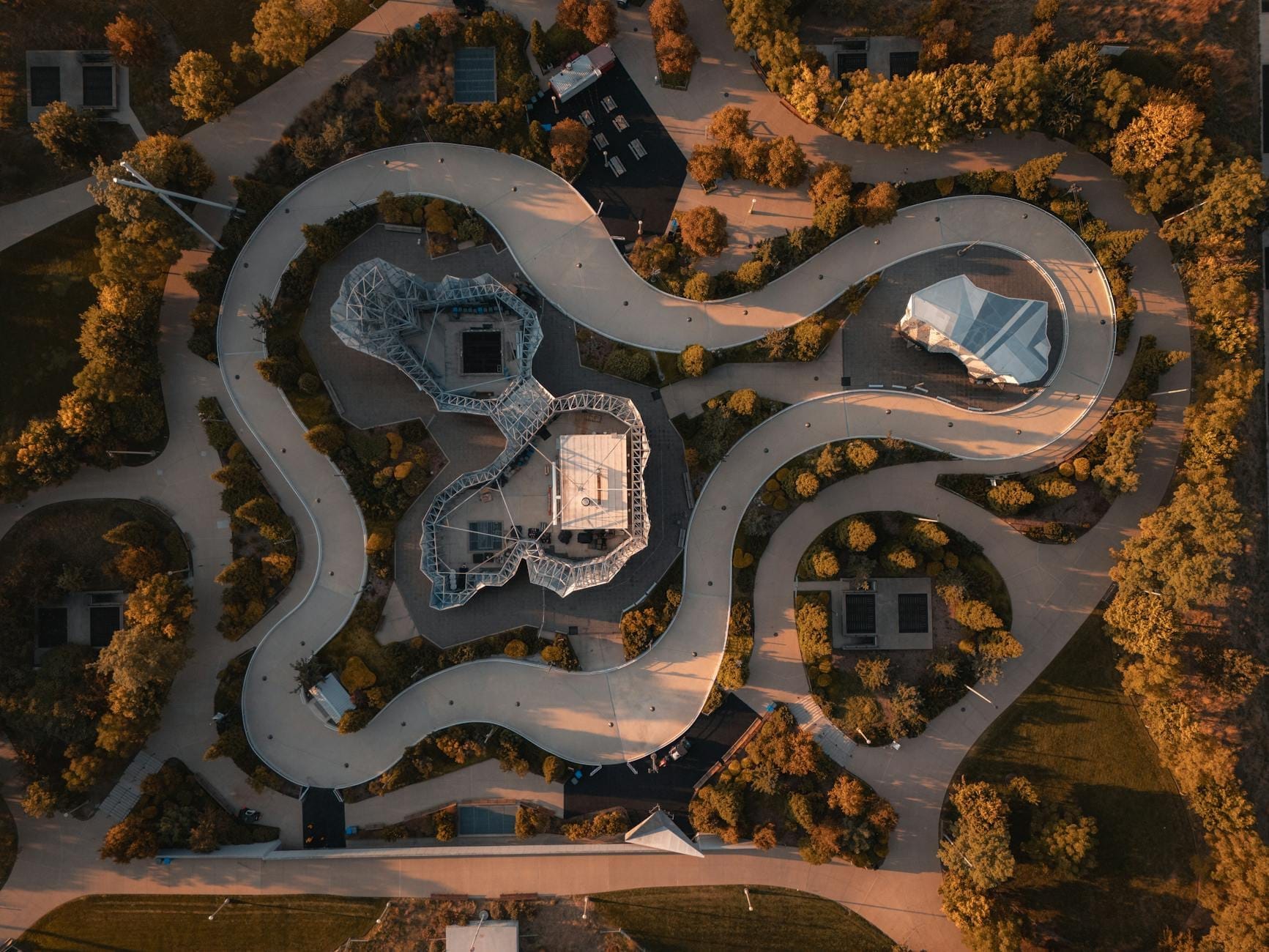
Maggie Daley Park is a 20-acre (81,000 m²) public park operated by the Chicago Park District, substantially completed in late 2014 and officially opened in 2015 on the site of the former Daley Bicentennial Plaza. It sits in the Loop, bounded by Randolph Street, Monroe Street, Columbus Drive, and Lake Shore Drive East, and is connected directly to Millennium Park via the Frank Gehry-designed BP Pedestrian Bridge. The park was designed by Michael Van Valkenburgh Associates and, in a feat of urban engineering, sits atop a 4,000-car underground parking garage.
The park is named after Maggie Daley, the late wife of former mayor Richard M. Daley, who was a committed arts and children's advocate. That commitment shows in the programming: the park is built around active, seasonal uses rather than passive green space. You come here to do something, not just to sit, though there is plenty of room for that too.
ℹ️ Good to know
Park hours are 6:00 am to 11:00 pm, seven days a week. Individual attractions such as the climbing wall, skating ribbon, and mini golf operate on seasonal schedules with their own hours and fees. Check maggiedaleypark.com before your visit, especially outside of summer.
The Playground: Genuinely Impressive, Not Just for Kids
The centerpiece of Maggie Daley Park for most families is the Play Garden, one of the most elaborately designed public playgrounds in the Midwest. It is divided into two zones: one for children under five, and a larger section for older kids. The equipment is not standard municipal fare. Rope structures, a ship-shaped climbing frame, tunnel slides, and spray features create an environment where kids routinely spend two or more hours without showing signs of slowing down.
On summer mornings, the playground fills up by 9:30 am. By midday in July or August, it is at peak capacity, with families crowding the shade structures and spray features providing relief from the heat. If you are visiting with young children and want space to move, arriving before 10 am or after 4 pm on weekdays gives noticeably better experience. Weekend afternoons in summer are the most congested, full stop.
The surfaces throughout the Play Garden are rubber and cushioned, and the layout is largely level with ramp access between zones. Strollers can be parked at the perimeter without issue. There are restrooms and a snack kiosk on-site, though lines at the kiosk get long during peak hours.
Tickets & tours
Hand-picked options from our booking partner. Prices are indicative; availability and final rates are confirmed when you complete your booking.
Go City | Chicago All-Inclusive Pass
From 127 €Instant confirmationFree cancellationiFLY Chicago Lincoln Park indoor skydiving experience
From 126 €Instant confirmationFree cancellationiFLY Chicago Rosemont indoor skydiving tickets
From 117 €Instant confirmationFree cancellationChicago lakefront neighbourhood bike tour
From 18 €Instant confirmationFree cancellation
The Climbing Wall: Unusual for a Free City Park
The climbing wall at Maggie Daley Park is worth calling out specifically because it is not typical park infrastructure. The structure rises to a substantial height and offers routes at varying difficulty levels, making it genuinely challenging for adults as well as kids. A fee applies to use it, and staff are present to manage safety and equipment. Hours are seasonal, so confirm before visiting if climbing is your primary goal.
The wall is visible from the walking paths and draws a consistent crowd of onlookers even among people who are not climbing. It adds a vertical dimension to what is otherwise a flat park that feels architecturally interesting from a distance.
The Skating Ribbon in Winter
In winter, Maggie Daley Park transforms around its most distinctive feature: a winding, figure-eight-shaped skating ribbon that curves through the park's topography. Unlike a standard circular rink, the ribbon follows the landscape, passing under trees and around features, which makes the skating experience feel more like outdoor movement than rink laps. Skate rental is available on-site for a fee.
The ribbon is typically open from late November or early December through early March, depending on temperatures and ice conditions. Evening skating, when the path is lit and the surrounding skyline is visible, is a qualitatively different experience from an afternoon visit. The ambient sound changes too: quieter, with the scrape of blades on ice replacing the summer sounds of children and wind in the grass. If you are visiting Chicago between December and February, this is one of the more genuinely enjoyable free-to-enter outdoor experiences in the city, even accounting for the skate rental cost.
Chicago winters require layered preparation. For general guidance on what to expect and how to dress, the Chicago in winter guide covers conditions, closures, and seasonal tips for visiting the city.
💡 Local tip
For evening skating on the ribbon, arrive at least 20 minutes before you want to skate to allow time for skate rental and fitting. The rental queue slows significantly on weekends after 6 pm.
The Landscape and the Views
The park's terrain is deliberately varied. Gently rolling hills and open lawn areas give way to planted zones with native grasses and perennial garden beds. The planting strategy shifts with the seasons: lush and textured in summer, strikingly skeletal and graphic in winter when the bare branches and seed heads are left standing. This is considered landscape design, not just maintenance, and the park looks intentional year-round.
From the eastern sections of the park, the view across Columbus Drive reaches toward Lake Michigan. From the Randolph Street side, you look west and north toward the Chicago skyline and the towers of the Loop. The BP Pedestrian Bridge, which arches over Columbus Drive into Millennium Park, offers a brief elevated vantage point that shows both parks at once. It is a short walk but worth making.
Maggie Daley Park sits within the broader Grant Park system on Chicago's lakefront. For context on the full lakefront corridor and what surrounds it, the Chicago lakefront guide is useful for planning a longer day outdoors.
The Connection to Millennium Park
The BP Pedestrian Bridge connects Maggie Daley Park directly to Millennium Park, and most visitors to the area treat both parks as a single destination. Millennium Park contains Cloud Gate, the Crown Fountain, and the Jay Pritzker Pavilion, all of which are within a few minutes' walk once you cross the bridge. The two parks have different atmospheres: Millennium Park is denser with iconic public art and attracts more international tourists, while Maggie Daley Park feels more local and activity-focused.
If you are combining both parks in one visit, allow at least three to four hours total. The Millennium Park guide covers what to see on that side of the bridge in detail, including the best angles for photographing Cloud Gate and how to time a visit to the Pritzker Pavilion for live performances.
Photography and Practical Notes
For photography, the most useful times at Maggie Daley Park are early morning in summer (before 8 am, when the light is soft and the park is nearly empty) and the first hour after dusk in winter when the skating ribbon is illuminated. Midday summer light is harsh and the crowds make composition difficult.
The park is accessible via multiple entry points from Randolph Street, Monroe Street, and the pedestrian bridge. Strollers and wheelchairs can navigate most of the park through designated paths, though the terrain is deliberately uneven in sections. If mobility is a concern, the park's official FAQ at maggiedaleypark.com has current accessibility information including which programs provide accommodations.
Dogs are allowed in the park on a leash. There is no dedicated dog run, but the open lawn areas accommodate dogs without issue. The park does not allow alcohol in most areas, which is enforced.
Maggie Daley Park is free to enter, making it one of the more straightforward inclusions on any list of free things to do in Chicago. For families on a tighter travel budget, pairing it with the free-entry Lincoln Park Zoo on the same trip covers a full day without admission costs.
⚠️ What to skip
If you are visiting primarily for the climbing wall, mini golf, or skating ribbon, verify hours and seasonal availability at maggiedaleypark.com before you go. These attractions have limited operating seasons and are not open year-round.
Insider Tips
- The east-facing lawn area near Monroe Street is one of the least-crowded spots in the park even on busy summer days, and it has an unobstructed view toward the lake. It is a better picnic spot than the more central areas near the playground.
- Weekday mornings before 10 am in summer are the best window for visiting with toddlers. You will have the Play Garden largely to yourselves, and the spray features are not yet running at full capacity with crowds.
- The skating ribbon is not flooded like a traditional rink; it is refrigerated pavement. This means the ice quality depends on temperature, and after a warm spell the surface can become rough. Check conditions via the park's social media before making a special trip in marginal weather.
- The underground parking garage beneath the park (entered from Columbus Drive) is one of the most practical parking options for the entire Millennium Park and Grant Park area. It is large enough that you can usually find a spot even when street parking is impossible nearby.
- In late September and October, the park's planted areas shift to autumn colors and seed heads. This is one of the more photogenic times to visit and the crowds are significantly thinner than summer.
Who Is Maggie Daley Park For?
- Families with children of any age, thanks to the age-divided playground and multiple seasonal activities
- Winter visitors looking for outdoor activities beyond indoor museums
- Travelers who want a genuine pause from the city without leaving downtown
- Photography enthusiasts interested in landscape design and skyline backdrops
- Budget travelers: the park is free to enter and surrounded by other free attractions
Nearby Attractions
Other things to see while in The Loop:
- Art Institute of Chicago
One of the largest and most visited art museums in the United States, the Art Institute of Chicago anchors the eastern edge of the Loop with a collection of over 300,000 works spanning 5,000 years. From Georges Seurat's pointillist masterpiece to Grant Wood's American Gothic, the highlights alone demand the better part of a day.
- Buckingham Fountain
The Clarence Buckingham Memorial Fountain is one of the largest decorative fountains in the world, sitting at the heart of Grant Park since 1927. Free to visit during its seasonal run from spring through mid-October, it puts on hourly water displays and a nightly illuminated show that draws crowds from across the city.
- Chicago Architecture Center
Housed in Mies van der Rohe's One Illinois Center on the Chicago River, the Chicago Architecture Center packs nearly 10,000 square feet of exhibition space, a landmark scale model of the city, and access to some of the country's most informative architecture tours. It's the most comprehensive entry point into understanding what makes Chicago's skyline one of the world's most significant.
- Chicago Architecture Foundation River Cruise
The Chicago Architecture Center River Cruise aboard Chicago's First Lady is the most authoritative way to read the city's skyline. In 90 minutes, trained docents walk you through more than 40 landmark buildings across all three branches of the Chicago River, connecting architectural styles to the human decisions that shaped them.