Divoká Šárka Nature Reserve: Prague's Wild Valley Escape
Divoká Šárka is a protected nature reserve on Prague's northwestern edge where limestone gorges, steppe grasslands, and a reservoir beach sit just 30 minutes from the city centre. Entry is free, trails are open year-round, and the landscape shifts dramatically with the seasons.
Quick Facts
- Location
- Evropská / Divoká Šárka, Praha 6 – Vokovice, Prague 6
- Getting There
- Tram 20 or 26 to Divoká Šárka stop (around 30 min from city centre)
- Time Needed
- 2–4 hours for a full loop; 1 hour for a casual valley walk
- Cost
- Free (nature reserve). Džbán beach ~200 CZK/adult, seasonal. Spring pool ~50 CZK/adult, verify locally.
- Best for
- Hikers, swimmers, dog walkers, families, anyone needing a break from the tourist centre
- Official website
- envis.praha.eu/rocenky/chruzemi/cr2_antx/chu13.htm
What Divoká Šárka Actually Is
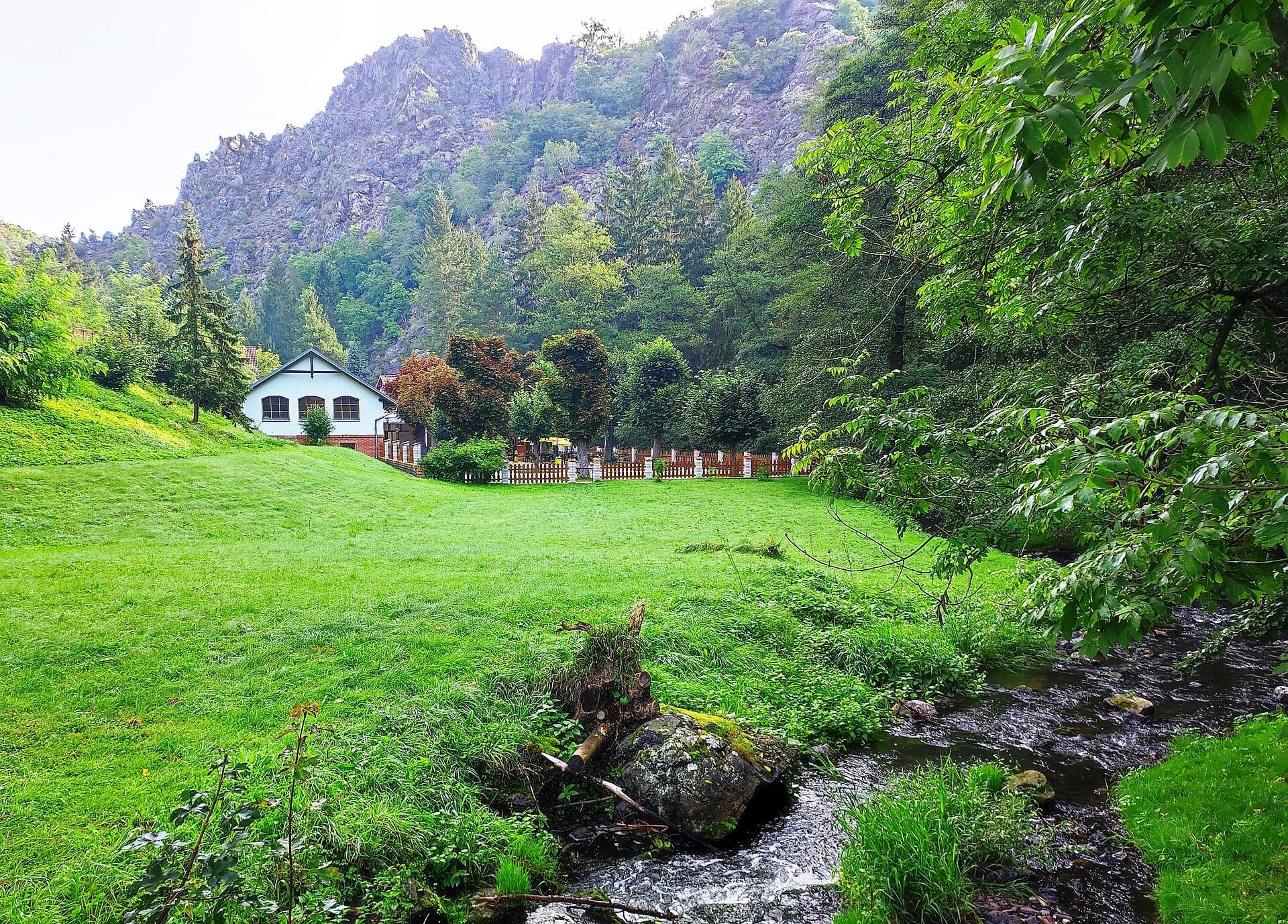
Divoká Šárka Nature Reserve (Přírodní rezervace Divoká Šárka) is a protected gorge valley in the northwestern Prague 6 district, carved by the Šárecký potok brook through limestone and sandstone over millennia. The officially protected core covers 25.346 hectares at elevations between 255 and 360 metres above sea level, though the broader parkland it anchors stretches across roughly 10 square kilometres of rocky slopes, dry steppe grassland, and mixed forest.
It was designated a protected natural area in 1964, making it one of Prague's older urban nature reserves. What makes it unusual for a capital city is how abrupt the transition feels: you step off a tram on Evropská, one of Prague's busiest arterial roads, cross a small footbridge, and within two minutes the city noise drops to almost nothing. The valley folds around you, the road disappears, and you are walking along a rocky streambed with cliff faces rising on either side.
💡 Local tip
Arrive at the Divoká Šárka tram stop and walk downhill from the main road. The transition from urban street to woodland valley takes under three minutes on foot.
The Landscape: Gorge, Grassland, and Water
The lower end of the valley near the tram stop is its most dramatic: narrow, shadowed, and flanked by exposed rock faces that show the geological layering of Proterozoic shales and phyllites. The brook runs along the valley floor, audible before it is visible, and the path runs close enough that you can hear water moving over stones year-round. In summer the canopy closes overhead and the temperature in the gorge drops noticeably compared to the city streets above.
Moving further into the reserve, the terrain opens into dry steppe slopes facing south and southwest. These grassland sections are the ecological core of the protected area, supporting plant species typical of continental steppe environments that are otherwise rare in central Bohemia. In May and June these slopes carry flowering grasses and low herbs; in late summer they turn straw-gold and crunch underfoot. The contrast between the cool, damp gorge floor and the sun-exposed steppe above is something you notice physically within the same short walk.
At the western end of the valley sits the Džbán reservoir, a mid-size artificial lake that functions as a managed summer swimming area from approximately May to September, typically open 10:00 to 19:00. The beach area charges around 200 CZK per adult during peak season (verify current pricing locally before visiting); outside of managed hours and the paid season, the reservoir area is freely accessible. It is a working swimming lake with a sand and grass shoreline, not a polished resort, which suits it to the tone of the rest of the valley.
ℹ️ Good to know
A separate spring-fed pool in the valley has historically charged a small day admission (around 50 CZK adults, 20 CZK children, 40 CZK seniors) with seasonal opening hours. Hours and prices change; check locally before your visit.
Tickets & tours
Hand-picked options from our booking partner. Prices are indicative; availability and final rates are confirmed when you complete your booking.
Self guided tour with interactive city game of Prague
From 5 €Instant confirmationFree cancellationPrague by night city tour
From 27 €Instant confirmationFree cancellationPrague city tour with Vltava River cruise
From 38 €Instant confirmationFree cancellationPrague Castle online audio guide
From 5 €Instant confirmationFree cancellation
How the Experience Changes by Time of Day and Season
Early mornings before 9:00 belong almost entirely to dog walkers and joggers. The light comes in low and angular, catching the cliff faces and the surface of the brook, and the reserve feels genuinely quiet. This is the best time for photography: the crowds that gather at the reservoir on warm afternoons are absent, and the path through the gorge is easy to have to yourself.
On warm weekday afternoons from June through August, the Džbán beach fills with families and young people from the surrounding Prague 6 suburbs. It has the relaxed atmosphere of a neighbourhood swimming spot rather than a tourist attraction: people bring picnics, children jump from the small dock, and the smell of sunscreen mingles with pine resin from the trees on the eastern bank. Weekends push the crowds higher, and by midday the beach area can feel genuinely full.
Winter visits are underused and rewarding in their own way. The valley stays green longer than open parkland because the gorge shelters vegetation from wind, and on clear winter mornings the frost stays on the north-facing slopes until late in the day. Snow in the gorge, when it comes, sits on the rock ledges and turns the streamside path into something that looks nothing like a European capital.
Autumn brings the sharpest colour contrast: the deciduous trees on the valley walls turn orange and rust while the steppe grassland above bleaches pale. September and October are arguably the best months for walking here, with mild temperatures and low visitor numbers outside weekends. For seasonal context across the city, the best time to visit Prague guide covers how shoulder seasons compare across different types of attractions.
Walking the Reserve: A Practical Route
There is no single prescribed path through Divoká Šárka, but the most logical approach is to enter from the eastern end at the Divoká Šárka tram stop and walk the main valley path westward toward the Džbán reservoir. This route stays close to the brook on relatively flat terrain for the first kilometre. The path is surfaced near the entrance and becomes earthen and uneven further in.
From the valley floor, several marked trails climb up the steep northern slopes toward the steppe grassland sections. These require solid footwear: the paths are narrow, loose in dry weather, and slippery after rain. The reward is a view back down into the gorge and across the forested southern slope. Allow an additional 30 to 45 minutes to include one of these uphill circuits before dropping back to the main valley path.
The full walk from the tram stop to Džbán and back takes roughly 90 minutes at a comfortable pace without stopping. If you add the uphill steppe sections and time at the reservoir, a full half-day is reasonable. The reserve connects on its western side to the Šárecké údolí park, allowing longer walks further into the Šárka-Lysolaje Valley if you want to extend the route.
⚠️ What to skip
Wheelchair users and pushchairs: the entrance paths are paved for the first few hundred metres, but the majority of the reserve trails are narrow, steep, and on rough terrain. Most of the reserve is not accessible for wheelchairs or standard strollers.
Getting There and Practical Information
The most direct route from central Prague is tram 20 or 26 to the Divoká Šárka stop, which takes around 30 minutes from the city centre. The stop sits directly at the reserve entrance, making this one of the more straightforward nature escapes from the city. Standard Prague Integrated Transport (PID) ticketing applies; verify current fares with PID before your visit as pricing is updated regularly.
If you are building a half-day around the reserve and want to combine it with another neighbourhood, Prague 6 also holds Letná Park, which is reachable by tram further down the same lines. For a broader look at how Prague's green spaces and parks connect, the Letná Park guide covers another well-regarded outdoor area in the northwest of the city.
The reserve is open 24 hours a day, year-round, with no entry fee. Dogs are welcome under standard city rules: use a leash where signs require it and clean up after your animal. The valley has limited bin provision, so carrying waste out is standard practice for most regular visitors. There are no toilets in the reserve itself; facilities are available at the Džbán beach area during the swimming season.
Mobile coverage is reasonable at the valley entrance but can drop on the deeper trail sections between high cliff walls. Download an offline map before entering if you plan to hike the upper steppe circuits. Bring water, especially in summer: there are no refreshment stands inside the reserve beyond the Džbán beach area.
Honest Assessment: Who Should Visit and Who Should Pass
Divoká Šárka is not an attraction in the conventional sense. There are no buildings to photograph, no audio guides, no queues, and no gift shop. Its value is entirely in the landscape and the contrast it provides with the rest of a Prague itinerary. If your trip is structured around Prague Castle, Charles Bridge, and the Old Town, Divoká Šárka offers a completely different register: no crowds in the gorge, no entrance fee, and the kind of quiet that is genuinely difficult to find in a capital city.
Visitors with limited mobility or those travelling with young children in pushchairs will find the terrain challenging beyond the entrance section. First-time visitors to Prague with only two or three days in the city may reasonably prioritise the historic core over a nature walk. But for anyone staying four or more days, or for travellers who find the tourist-facing centre exhausting, the reserve offers something that no other Prague attraction can replicate.
For other outdoor options that are easier underfoot and closer to the centre, Petřín Hill and the Stromovka Park provide green space with more accessible paths. If you are specifically looking for viewpoints and elevated walks, the best views in Prague guide covers both urban and natural vantage points across the city.
Insider Tips
- Go on a weekday morning in June or September: the reservoir is swimmable, the gorge is cool, and the beach area has space to breathe. Summer weekend afternoons at Džbán can get genuinely crowded with local families.
- The north-facing rock faces in the gorge stay damp longer after rain and can be slippery. Rubber-soled shoes make a real difference on the narrow uphill trails to the steppe sections.
- If you arrive by tram 26, the stop drops you directly at the valley entrance with a clear path downhill into the gorge. No navigation required for the first section.
- The spring-fed pool in the valley is smaller and quieter than Džbán and historically charged less admission. It tends to be cooler and is popular with locals who know the reserve well. Ask at the entrance area or check locally for current opening.
- Winter visits between December and February are genuinely peaceful. The valley holds frost on north-facing slopes and the light in the gorge is low and sharp. You will likely share the path only with dog walkers.
Who Is Divoká Šárka Nature Reserve For?
- Hikers and trail walkers wanting a genuine natural environment close to the city
- Swimmers looking for an affordable outdoor swimming option in summer
- Dog owners seeking a large, off-road walking area with minimal restrictions
- Travellers on multi-day Prague visits who need a break from the historic centre
- Photographers working in natural light, particularly early morning in the gorge
Nearby Attractions
Combine your visit with:
- Český Krumlov
Český Krumlov is a medieval South Bohemian town wrapped in a horseshoe bend of the Vltava River, home to the second-largest castle complex in the Czech Republic and a UNESCO-protected historic centre. It makes for one of the most rewarding day trips or overnight stays from Prague, though it demands some planning to do properly.
- Karlovy Vary
Karlovy Vary (historically Carlsbad) sits in a steep river valley about 120 km west of Prague, its colonnades and pastel-colored Grand Hotels reflected in the Teplá River. A UNESCO World Heritage site and the oldest spa town in Bohemia, it rewards a full day — or longer — with thermal springs, ornate promenades, and an atmosphere unlike anything in the Czech capital.
- Karlštejn Castle
Founded in 1348 by Holy Roman Emperor Charles IV as a treasury for the Imperial Regalia and Bohemian crown jewels, Karlštejn Castle rises from a limestone ridge above a quiet Bohemian village. Roughly 30 km southwest of Prague and 40 minutes by train, it is one of the most architecturally intact Gothic royal complexes in Central Europe. All interior visits are guided tours only, and the hilltop setting demands a 20-minute uphill walk from the station.
- Konopiště Castle
Konopiště Castle sits roughly 45 kilometres south of Prague in the Central Bohemian countryside, a Gothic fortress reborn as a Baroque chateau and the final private residence of Archduke Franz Ferdinand d'Este. Its interiors are frozen in the late 19th century, its rose garden is one of the finest in Bohemia, and the train journey from Prague takes under an hour.