Karlovy Vary: The Czech Republic's Grand Spa Town Worth the Journey from Prague
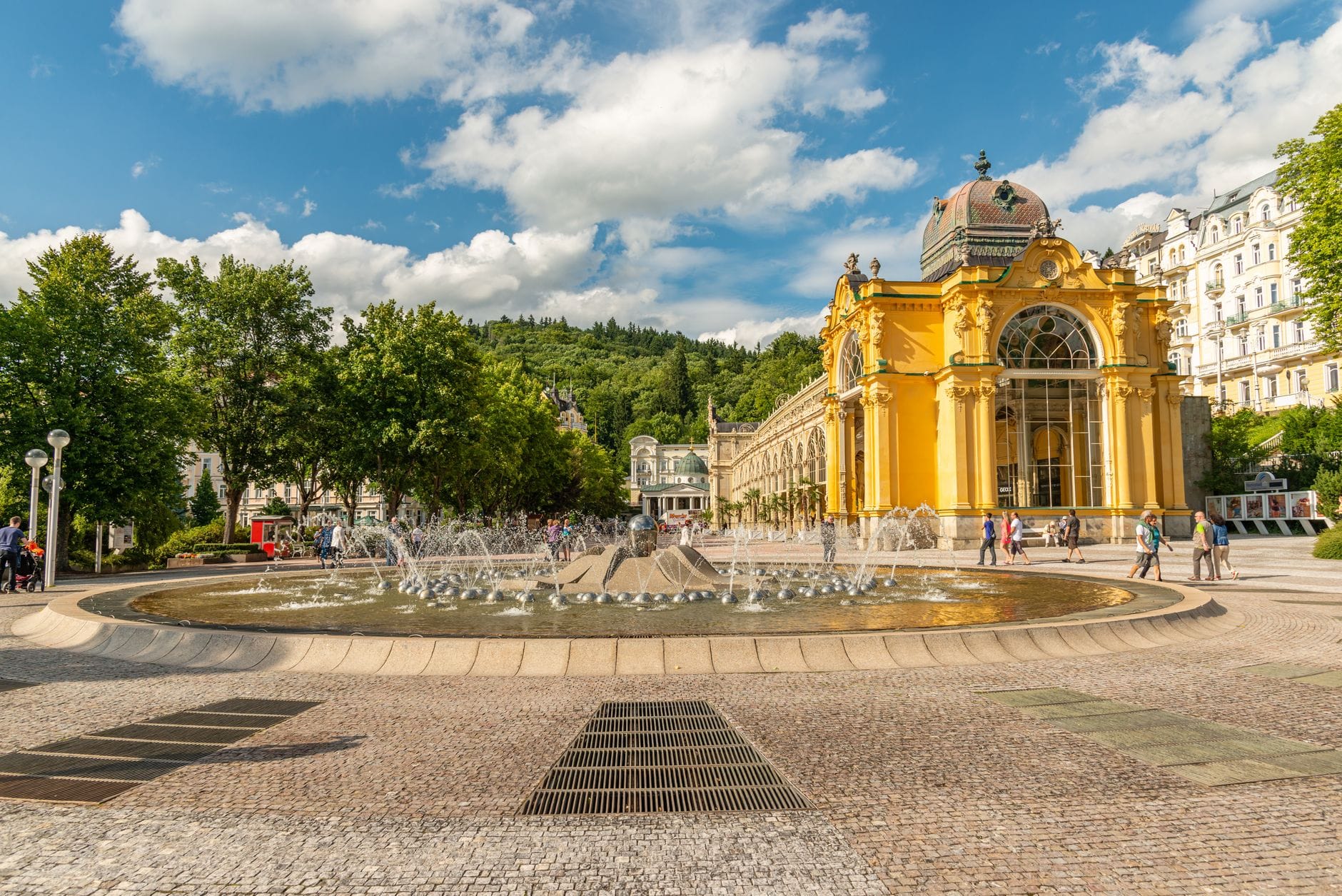
Karlovy Vary (historically Carlsbad) sits in a steep river valley about 120 km west of Prague, its colonnades and pastel-colored Grand Hotels reflected in the Teplá River. A UNESCO World Heritage site and the oldest spa town in Bohemia, it rewards a full day — or longer — with thermal springs, ornate promenades, and an atmosphere unlike anything in the Czech capital.
Quick Facts
- Location
- Karlovy Vary, about 120 km west of Prague, at the confluence of the Teplá and Ohře rivers
- Getting There
- Direct trains from Prague hlavní nádraží to Karlovy Vary station; buses also available — journey times vary by service, check current timetables
- Time Needed
- Full day minimum; overnight stay recommended to experience the spa atmosphere at different hours
- Cost
- Public promenades and colonnades are free; spa treatments, museum entry, and drinking cure sessions are priced separately in CZK — verify with each venue
- Best for
- Architecture lovers, wellness travelers, history enthusiasts, and anyone wanting a complete change of pace from Prague's urban intensity
- Official website
- www.karlovyvary.cz/en
What Karlovy Vary Actually Is
Karlovy Vary is not a single attraction with a ticket booth and a closing time. It is a functioning spa city of roughly 50,000 residents, built around 13 thermal springs used for drinking cures that have drawn European aristocracy, artists, and ailing dignitaries since the 14th century. The German name Karlsbad (Charles' Bath) appears in older travel literature and on some historical maps; both names refer to the same city. The town was granted the status of a free royal town by Charles IV on 14 August 1370, and the name itself translates directly as 'Charles' Bath', commemorating the Bohemian king and Holy Roman Emperor who legendarily discovered the springs.
In 2021, Karlovy Vary became part of the UNESCO World Heritage serial site 'Great Spa Towns of Europe', joining eleven other historic spa cities across seven countries. That designation recognizes not just the springs themselves, but the entire urban ensemble: the colonnades, the grand hotels, the pump rooms, the landscaped promenades — all built over two centuries to serve wealthy visitors seeking thermal cures. The result is one of the most architecturally cohesive spa townscapes in Central Europe.
ℹ️ Good to know
Karlovy Vary is a destination, not a single sight. Budget at least 6–7 hours on the ground to walk the main colonnade circuit, sample the springs, and absorb the atmosphere without rushing. Arriving on the first morning train and returning on a late afternoon service gives you that window comfortably.
The Colonnades: The Heart of the Experience
The spa zone is strung along the narrow Teplá River valley, and the colonnades are its spine. The Mill Colonnade (Mlýnská kolonáda) is the grandest: a neoclassical structure from the 1870s with five springs housed under a long, pillared hall. Early morning, before the tour groups arrive, the only sounds are the gurgle of water through the drinking spigots and the tap of porcelain cups on the stone railing. The smell is sulfurous — distinctly mineral and warm, a sensory signal that something geologically unusual is happening underfoot.
The Hot Spring Colonnade (Vřídelní kolonáda) is where Karlovy Vary's most dramatic feature lives: the Vřídlo geyser, which shoots water at around 72°C up to 12 meters into the air. The current colonnade building dates from the 1970s and is architecturally unremarkable compared to its Belle Époque neighbors, but the geyser itself is genuinely impressive — a continuous, pressurized column of steaming water that never stops. Visitors fill their porcelain cups (sold in shops throughout the spa zone) from cooled taps beside it.
The Market Colonnade (Tržní kolonáda) and the Castle Colonnade (Zámecká kolonáda) are smaller and quieter, worth visiting if you want to move through the full circuit without fighting crowds. The Sadová (Park) Colonnade, at the northern end of the spa district, is a cast-iron structure originally from 1880 and often far less busy than the central colonnades — a good place to linger with a cup if the Mlýnská is packed.
Tickets & tours
Hand-picked options from our booking partner. Prices are indicative; availability and final rates are confirmed when you complete your booking.
Karlovy Vary day trip from Prague
From 85 €Instant confirmationFree cancellationGuided day trip to Karlovy Vary spa town from Prague
From 68 €Instant confirmationFree cancellationKarlovy Vary Tour from Prague with Watchtower and Funicular
From 83 €Instant confirmationFree cancellationKarlovy Vary and Marianske Spa day trip from Prague
From 105 €Instant confirmationFree cancellation
The Thermal Springs: Drinking the Cure
There are 13 numbered hot springs used for drinking cures in Karlovy Vary, each with slightly different mineral composition and temperature. The traditional spa cure involves drinking specific quantities from specific springs over a period of weeks — a regimen historically prescribed for digestive complaints, gout, and metabolic disorders. Day visitors obviously cannot follow a proper cure, but sampling from several springs is part of the experience and costs nothing beyond the price of a porcelain cup.
The taste ranges from mildly salty and pleasantly warm at some springs to sharply metallic and almost unpalatable at others. Spring 12 and the Vřídlo's cooled taps are among the most frequently sampled. Don't expect the water to taste like a spa brochure suggests — it is an acquired taste at best, and genuinely challenging at worst. The small porcelain spa cups with long spouts are sold everywhere in the spa district and make practical, lightweight souvenirs. Glass versions are also widely available.
💡 Local tip
Buy your spa cup at a ceramic shop rather than a colonnade kiosk — the quality varies noticeably and the price range is wide. Avoid novelty versions; the functional long-spouted design is traditional for a reason: it slows your sipping, which is part of the cure protocol.
Walking the Spa District: What You'll See
The spa district occupies a valley so narrow that the grand hotels and treatment houses rise almost vertically from the riverbank. Walking along the promenade from the southern end to the northern tip of the spa zone takes about 25–30 minutes at a relaxed pace, not counting time at colonnades or springs. The main walkway is flat and paved, running beside the Teplá, but ascending to any of the surrounding viewpoints involves a significant uphill effort on paths that are sometimes cobbled and steep.
The architecture along the promenade is the kind that rewards slow walking. The Grand Hotel Pupp, at the southern end, is the most famous: a sprawling yellow Baroque-revival complex that has operated since the early 18th century and appeared in the James Bond film 'Casino Royale' (2006) as the Hotel Splendide. Several other hotels along the promenade date from the late 19th and early 20th century, their facades layered with ornamental stucco, corner towers, and wrought-iron balconies.
The Russian Orthodox Church of St. Peter and Paul (built 1898) sits on a hillside above the spa district and is worth the short climb for both its onion domes and the view back down into the valley. Karlovy Vary's historical visitor list — which included Peter the Great, Goethe, Beethoven, Brahms, and Karl Marx — explains why Russian and German cultural influences are both visible in the city's architecture and institutions. For context on how Czech spa culture evolved, the Prague history guide provides useful background on Bohemia's wider development under Habsburg rule.
Time of Day and Seasonal Differences
Mornings are the best time to be in the spa district. By 7–8 AM, the colonnades are already active with residents and long-stay spa guests who come to drink their prescribed quantities before breakfast — a ritual that feels genuinely different from tourist sightseeing. The light in the valley in the morning hours is soft and filtered; the steam from the springs becomes visible in cooler months. Tour groups from Prague typically arrive late morning and peak between 11 AM and 2 PM, when the colonnades become crowded and the spring queues lengthen.
Afternoons, particularly after 3 PM, see crowds thin again. The late afternoon light hits the hotel facades directly, which is the best condition for photography of the spa district's architecture. By evening, the promenade takes on a different character: quieter, with hotel guests in robes and slippers making their way between spa buildings — a sight that is peculiarly charming and entirely in keeping with the city's function as a working spa resort.
Summer (June through August) brings the highest visitor numbers and the Karlovy Vary International Film Festival, one of the oldest continually running film festivals in the world, held annually in early July. The festival dramatically changes the atmosphere: the city fills, hotel prices rise sharply, and the promenade crowds are thick. Spring (May) and early autumn (September) offer milder crowds and temperatures that make walking comfortable. Winter is quiet but atmospheric — steam from the springs is more dramatic in cold air, and the grand hotels look particularly imposing against bare hillside trees.
⚠️ What to skip
If your visit coincides with the Karlovy Vary International Film Festival (typically early July), book accommodation and transport well in advance. Hotels in the spa zone fill completely and prices reflect demand. Verify exact festival dates each year before planning.
Getting There from Prague
Karlovy Vary is approximately 120 km west of Prague by road. The most straightforward route from Prague is by direct train from Praha hlavní nádraží (Prague Main Station), with services operated by Czech Railways (České dráhy) and some private operators. Journey times vary by service; check current timetables on the Czech Railways website or the IDOS journey planner before your trip, as times and frequencies change seasonally. There are also direct bus services from Prague, which some travelers find faster or more convenient depending on where in the city they start.
Karlovy Vary's main railway station is not in the spa district — it sits above the valley, requiring either a walk downhill or a short local bus connection to reach the colonnades. Factor this into your timing. For broader context on rail and road travel from Prague, the day trips from Prague guide covers Karlovy Vary alongside other key destinations in Bohemia.
Practical Notes: Accessibility, Photography, and What to Bring
The main promenade along the Teplá is flat and paved, making it manageable for most visitors. However, Karlovy Vary's geography works against full accessibility: the city is built on steep hillsides, and reaching viewpoints, hilltop churches, or park areas above the valley floor requires navigating slopes and uneven paths. The colonnades themselves generally have level access, but step-free routes between the different colonnade buildings are not always obvious. Check with individual venues if step-free access is a requirement.
For photography, the Mill Colonnade photographs best from the opposite bank of the Teplá River in the morning, when the light comes from the east. The Hot Spring Colonnade's geyser is best captured with a fast shutter speed to freeze the water column — shooting from ground level at the base of the column emphasizes the height. Wear layers in any season: the valley can be noticeably cooler and damper than surrounding areas, and the colonnades themselves, with their open sides and constant moisture from the springs, feel cool even in summer.
Comfortable walking shoes are more important here than in most Czech day-trip destinations. If you plan to explore the hillside parks and viewpoints above the spa district, treat it as light hiking terrain. The wafer-thin Karlovy Vary spa wafers (oplatky), sold in flat round packages throughout the city, are worth buying — they have been a local specialty since the 19th century and travel well as gifts. For a broader overview of planning a visit to western Bohemia from the capital, see the one-week Prague itinerary which suggests how to incorporate a Karlovy Vary day trip into a longer Czech trip.
Insider Tips
- The Deer Jump Lookout (Jelení skok) — reached by funicular from the Diana Lookout Tower area — gives a view of the entire spa valley that most day visitors miss entirely. The funicular itself is a short ride and the panorama from the top repays the effort many times over.
- Becherovka, the bitter herbal liqueur produced in Karlovy Vary since 1807, can be purchased at the Jan Becher Museum and distillery in the city. The museum tour includes tastings and is far more informative about the drink's history than a bottle bought at a Prague duty-free shop.
- Most day-trippers cluster between the Hot Spring Colonnade and the Mill Colonnade. Walk ten minutes further south to the Grand Hotel Pupp end of the promenade or north to the Sadová Colonnade and the crowds drop significantly.
- If you want to actually use a thermal pool rather than just look at the springs, several spa hotels offer day passes to their thermal facilities without requiring a full spa stay. Prices and availability vary by property and season — contact hotels directly well before your visit.
- The hillside paths above the spa district connect to woodland walking trails that are largely empty even in high season. A 45-minute loop through the forested slopes above the Mill Colonnade gives a completely different perspective on the city and costs nothing.
Who Is Karlovy Vary For?
- Architecture lovers: the Belle Époque and neoclassical colonnade ensemble is among the finest intact spa townscapes in Europe
- Wellness travelers who want to experience authentic Czech spa culture rather than a hotel pool
- History and literary enthusiasts drawn by the city's connections to Goethe, Beethoven, Marx, and Peter the Great
- Photographers seeking a visually distinctive day trip with strong architectural subjects at multiple scales
- Travelers on multi-day Czech itineraries looking for a complete contrast to Prague's urban density
Nearby Attractions
Combine your visit with:
- Český Krumlov
Český Krumlov is a medieval South Bohemian town wrapped in a horseshoe bend of the Vltava River, home to the second-largest castle complex in the Czech Republic and a UNESCO-protected historic centre. It makes for one of the most rewarding day trips or overnight stays from Prague, though it demands some planning to do properly.
- Divoká Šárka Nature Reserve
Divoká Šárka is a protected nature reserve on Prague's northwestern edge where limestone gorges, steppe grasslands, and a reservoir beach sit just 30 minutes from the city centre. Entry is free, trails are open year-round, and the landscape shifts dramatically with the seasons.
- Karlštejn Castle
Founded in 1348 by Holy Roman Emperor Charles IV as a treasury for the Imperial Regalia and Bohemian crown jewels, Karlštejn Castle rises from a limestone ridge above a quiet Bohemian village. Roughly 30 km southwest of Prague and 40 minutes by train, it is one of the most architecturally intact Gothic royal complexes in Central Europe. All interior visits are guided tours only, and the hilltop setting demands a 20-minute uphill walk from the station.
- Konopiště Castle
Konopiště Castle sits roughly 45 kilometres south of Prague in the Central Bohemian countryside, a Gothic fortress reborn as a Baroque chateau and the final private residence of Archduke Franz Ferdinand d'Este. Its interiors are frozen in the late 19th century, its rose garden is one of the finest in Bohemia, and the train journey from Prague takes under an hour.