Stromovka Park: Prague's Royal Green Lung
Stromovka Park (officially Královská obora) is one of Prague's largest and oldest parks, stretching across roughly 95 hectares in the Holešovice and Bubeneč districts. A former royal game reserve dating to the 13th century, it is now freely open around the clock and offers a rare chance to experience Prague at a genuinely unhurried pace.
Quick Facts
- Location
- Královská obora, Praha 6 and Praha 7 – Bubeneč area
- Getting There
- Trams 1, 8, 15, 25 to Výstaviště; trams 6, 12, 17 to nearby Výstaviště Holešovice; Metro Line C to Nádraží Holešovice (about 10–15 min walk)
- Time Needed
- 1–3 hours depending on pace
- Cost
- Free, no tickets required
- Best for
- Families, joggers, cyclists, picnickers, and anyone needing a break from Old Town crowds
- Official website
- prague.eu/en/objevujte/royal-game-reserve-stromovka
What Is Stromovka Park?
Stromovka Park, known officially as Královská obora (Royal Game Reserve), is one of the largest parks in Prague, covering approximately 95 hectares in the Holešovice district of Prague 7. The name Stromovka translates roughly to 'tree place' in Czech, which gives an accurate impression of its character: a broad, leafy expanse of mature trees, open meadows, ponds, and gravel paths that spread quietly through a northern bend of the Vltava.
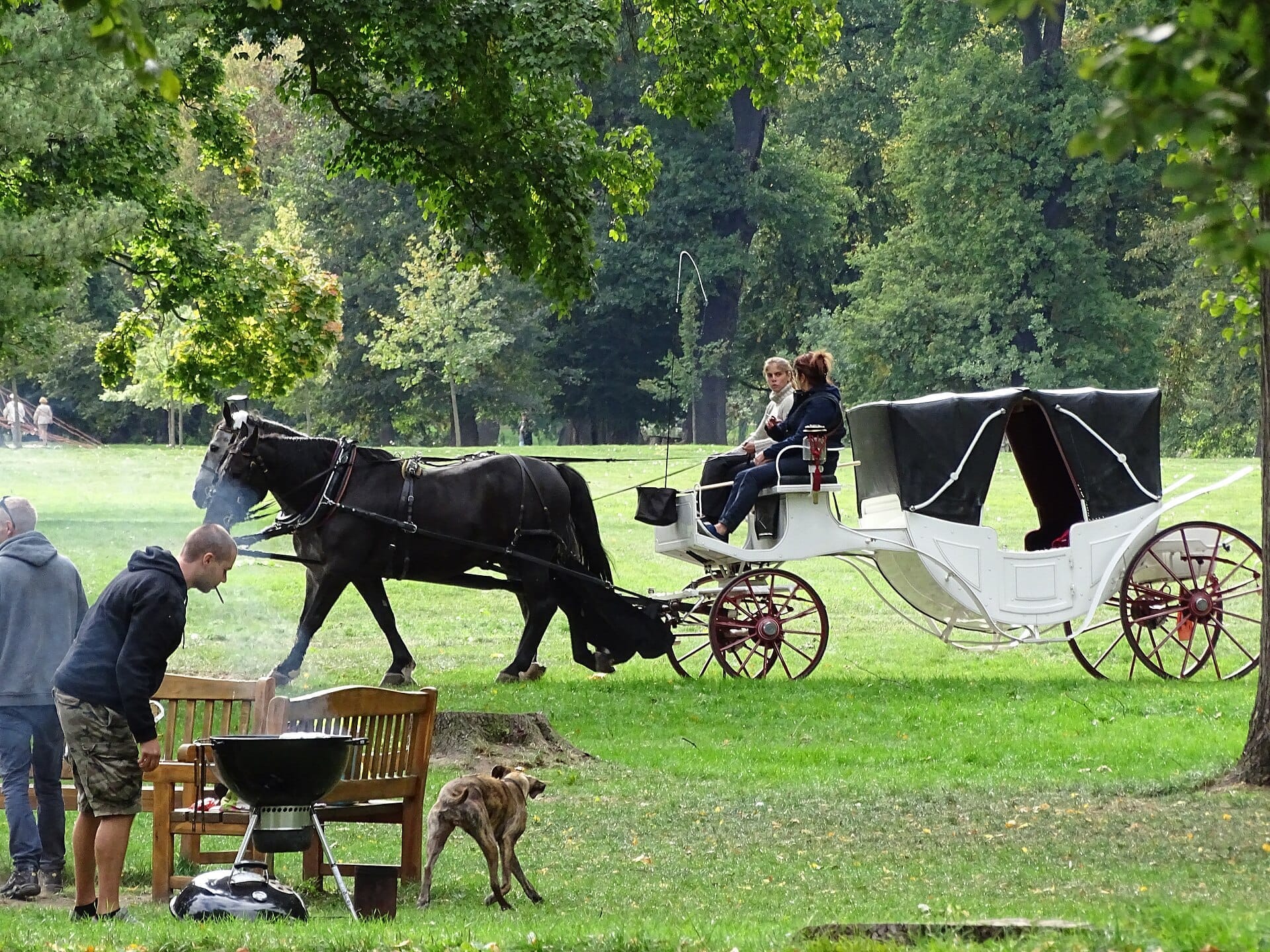
Unlike the manicured formal gardens you find near Prague Castle or Malá Strana, Stromovka has the feel of an English landscape park, loosely structured and easy to wander without a plan. There are no entrance gates, no ticket counters, and no closing time. You can arrive at 7 in the morning to join the runners and dog walkers, or come in the early evening when the light filters low through the tree canopy and families spread out on the grass.
💡 Local tip
Access is straightforward via tram to Výstaviště (the southern entrance), which puts you into the park within a minute of stepping off. This is the most practical approach from central Prague.
A Royal History, Quietly Worn
Stromovka's origins trace back to the 13th century, when King Přemysl Otakar II established it as a royal game reserve. For centuries it served as private hunting grounds for Bohemian kings, stocked with deer and enclosed from the public. The Rudolf II canal, a historic water channel built to feed the park's ponds, is still visible today as a physical reminder of that era.
The park was opened to the general public in 1804, which makes it one of the earlier urban parks in Central Europe to undergo that transition from royal privilege to public use. Since 1988, it has held protected status as a natural monument, which accounts for the strict limits on development within its boundaries. The governor's summer palace (Místodržitelský letohrádek), a historic palace with a 19th-century neo-Gothic rebuilding that sits near the park's centre, is the most architecturally notable building on site.
For travelers who want to understand how Prague's green spaces fit into the city's broader story, Stromovka connects naturally with a wider exploration of the Holešovice neighborhood, a district that has shifted over two centuries from royal grounds and industrial yards to a cultural and residential quarter.
Tickets & tours
Hand-picked options from our booking partner. Prices are indicative; availability and final rates are confirmed when you complete your booking.
Self guided tour with interactive city game of Prague
From 5 €Instant confirmationFree cancellationPrague by night city tour
From 27 €Instant confirmationFree cancellationPrague city tour with Vltava River cruise
From 38 €Instant confirmationFree cancellationPrague Castle online audio guide
From 5 €Instant confirmationFree cancellation
What the Park Actually Looks Like
Arriving through the southern entrance near Výstaviště, the exhibition grounds complex, you cross a short bridge over a channel and walk immediately into shade. The canopy here is dense, formed by plane trees, chestnuts, and oaks with trunks wide enough that two people could not join hands around them. The ground underfoot switches between compacted gravel paths, asphalt strips used by cyclists, and grass worn soft by regular foot traffic.
There are several ponds in the park's central and western areas. Sitting beside one in mid-morning, the main sounds are birdsong, the crunch of passing joggers, and the occasional bark of a dog. These are not ornamental ponds surrounded by benches and signage; they sit in the landscape without ceremony, edged by reeds and overhanging branches. In autumn the reflections in the water are worth stopping for.
The governor's summer palace, positioned roughly in the middle of the park, is used for administrative purposes and is not open for public interior tours, though it's worth pausing at for its neo-Gothic facade. The area immediately around it opens into a wide lawn, one of the best spots for a picnic blanket or an unscheduled stop.
ℹ️ Good to know
Stromovka is listed as a protected natural monument, which means the landscape is managed to preserve its ecological character rather than intensify visitor facilities. Facilities are limited, and cafés or play structures are mostly found around or near the park's periphery.
How the Park Changes Through the Day
Early mornings in Stromovka belong to local residents. From around 7am, the paths fill with joggers following the perimeter loop, dog owners taking their time across the meadows, and older visitors on a steady constitutional. There is no tourist presence at this hour. The air smells of damp earth and cut grass, and the light is best for photography before 9am, especially near the ponds.
Midday on a weekday is relatively calm. Children's laughter appears near the western edge, where a small playground sits close to the Gotthardská entrance. On sunny weekday afternoons, university students from nearby Holešovice tend to occupy the open lawns. Weekends between May and September bring the largest crowds, particularly families and groups with picnic supplies. Even then, the park is large enough that you can find quiet stretches without much effort.
Late afternoon and early evening are arguably the most appealing time to visit. The temperature drops slightly, the light changes quality, and the cycling traffic picks up along the main paths. The park is open through the night, and while it is not lit throughout, the main access routes remain accessible to those who know where they are going.
Practical Walkthrough: Getting There and Moving Around
The most practical approach from central Prague is by tram to the Výstaviště stop. Tram lines 1, 8, 15, and 25 serve this stop directly, and several others including lines 6, 12, and 17 stop at the nearby Výstaviště Holešovice stop. From the Old Town, this journey takes roughly 15 to 20 minutes. If you are coming from the metro, Line C to Nádraží Holešovice leaves you with a 10 to 15 minute walk to the park's eastern entrances.
Inside the park, the layout is open and intuitive rather than grid-like. There are no formal numbered paths, but the main central route runs east to west and connects the two principal entrances. A perimeter loop is popular with runners and covers approximately 3 to 4 kilometers depending on the route. Cyclists share the asphalt paths with pedestrians, so staying to the right is practical rather than optional.
Stromovka's paths are largely paved or compacted gravel, making them accessible for strollers and wheelchair users, though some grassy sections become uneven. For broader context on moving around Prague's parks and neighborhoods by public transport, the guide to getting around Prague covers integrated transport options in detail.
💡 Local tip
Bring water. The park has no café inside its boundaries, though Výstaviště and the streets around the southern entrance have several options for picking up food and drinks before you enter.
Photography and Seasonal Considerations
Autumn is Stromovka's strongest season visually. October in particular turns the canopy into overlapping layers of yellow, orange, and brown, and the low afternoon sun creates long shadows across the leaf-covered paths. Spring brings a different appeal: cherry and chestnut blossoms appear from late March through April, and the meadows recover their green quickly.
Summer visits work well for families and active visitors, though the park can feel crowded on warm weekends. Prague's climate brings occasional heavy afternoon thunderstorms in July and August; these can arrive quickly, so carrying a light layer or small waterproof makes sense. Winter visits offer a different quality: the bare trees reveal the park's structure, frost sometimes coats the pond edges, and the paths are nearly empty.
If you are planning your Prague trip around season and weather, the best time to visit Prague guide breaks down what each season actually offers across the city.
What Stromovka Is Not
Travelers expecting a manicured formal garden with signposted historical features, audio guides, and café service should look elsewhere. Stromovka is a working neighborhood park that happens to have royal origins. The historical layers are present, but they are not interpreted for tourists. There are no information boards at every tree, no costumed guides, and no admission structure that curates your experience.
If you want something closer to a curated green-space experience, the Vrtba Garden in Malá Strana or the Wallenstein Garden offer formal Baroque gardens with tighter design and stronger historical interpretation. Stromovka suits a different purpose.
People who dislike unstructured outdoor time, who require facilities throughout, or who are working through a dense sightseeing itinerary will not get much value here. This is a park for pausing, not a destination with a checklist attached to it.
Insider Tips
- Enter from the Gotthardská gate in the north-west if you want a quieter introduction to the park, away from the Výstaviště exhibition complex and its occasional event crowds.
- The ponds are best photographed in the morning when the water is still and the reflections are clear. By afternoon, wind usually disturbs the surface.
- Stromovka connects conveniently to Letná Park via a pedestrian route through Holešovice to the south; combining both parks makes a good two to three hour walk without retracing steps.
- The Rudolf II canal, the historic water channel dating to the late 16th century, runs along the park's northern edge. Most visitors walk past it without knowing what it is; look for the narrow channel and stone elements near the park's upper perimeter.
- On weekdays in shoulder season (April, May, September, October), the park between 9am and noon is as close to empty as a Prague park gets. If you want the atmosphere of a century-old park without other people in your photographs, this is your window.
Who Is Stromovka Park For?
- Families with young children who need space to run without navigating cobblestones or crowds
- Joggers and cyclists looking for a flat, well-maintained route away from traffic
- Photographers seeking natural light and seasonal foliage rather than architectural subjects
- Travelers with several days in Prague who want a low-key morning before or after visiting Holešovice's cultural venues
- Anyone who finds Prague's historic core overwhelming and needs a full reset
Nearby Attractions
Other things to see while in Holešovice:
- DOX Centre for Contemporary Art
Opened in 2008 inside a converted 19th-century factory in Holešovice, DOX Centre for Contemporary Art is a major venue for international contemporary art, architecture, and design. With around 3,000 m² of exhibition space across renovated industrial halls, it stages politically engaged, visually demanding shows that rarely play it safe.
- Holešovice Market Halls (Pražská tržnice)
The Holešovice Market Halls, officially known as Pražská tržnice, The Holešovice Market Halls, officially known as Pražská tržnice, occupy a large heritage complex in Prague 7 that began life as the city's central slaughterhouse in 1895.. Today the red-brick halls host a year-round farmers market, street food vendors, pop-up events, and independent businesses, offering a slice of everyday Prague that most tourists never reach.
- Letná Beer Garden
Perched on the edge of Letná Park above the Vltava River, the Letná Beer Garden is where Prague locals actually drink in summer. No admission charge, plastic cups of cold Pilsner, and a sweeping view across the city's rooftops — it is one of the most genuinely local outdoor experiences in the Czech capital.
- Letná Park
Letná Park occupies a broad plateau above the Vltava in Prague's Holešovice district, offering panoramic views over the Old Town, a famous open-air beer garden, and kilometers of tree-lined paths. Entry is free and the park is open around the clock.