Costa Verde: Sardinia's Wild Southwest Coast
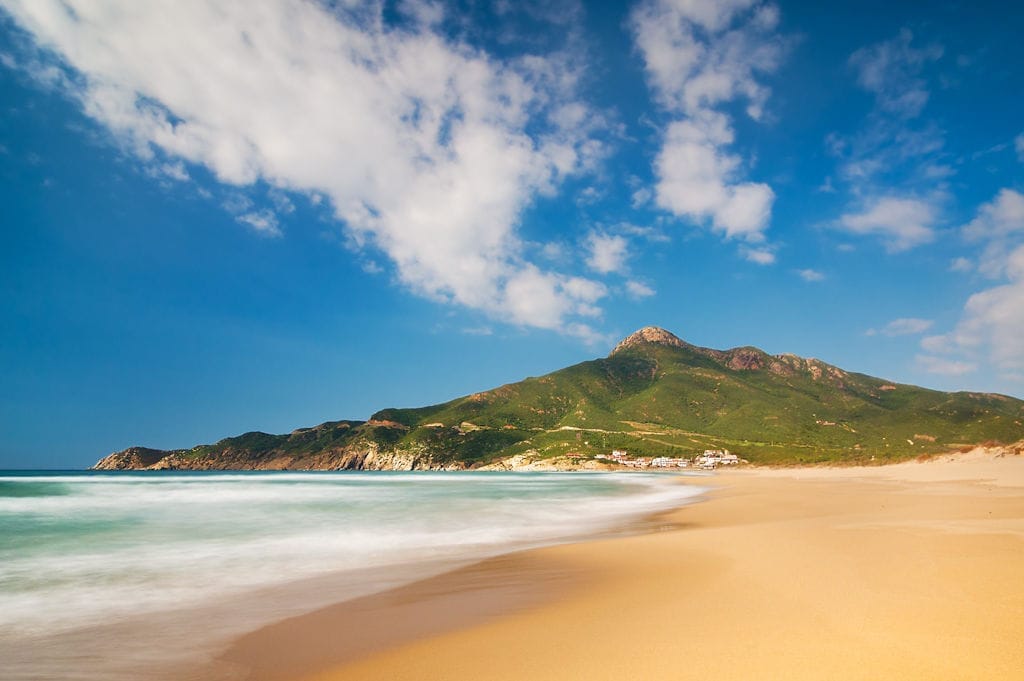
Costa Verde is a 47-kilometre arc of coastline in the Comune di Arbus, in Sardinia's southwest, running from Capo Frasca to Capo Pecora. It holds some of the most remote beaches on the island, including Piscinas, where dunes reach up to 60 metres high, making it one of the largest dune systems in Europe. There are no entry fees, minimal resort infrastructure directly on the beaches, and no public transport. That combination is exactly why it rewards visitors who make the effort to get here.
Quick Facts
- Location
- Comune di Arbus, Provincia del Sud Sardegna, southwestern Sardinia
- Getting There
- Car only. Approx. 79 km / about 1 hr 10 min by car from Cagliari Elmas Airport (CAG). No public transport serves the beaches.
- Time Needed
- Half day to full day per beach; 2+ days to cover the full coast
- Cost
- Free to access the coastline. Some facilities (beach clubs, accommodation, nearby mining park) charge separately.
- Best for
- Landscape photography, off-season beach walking, solitude seekers, dune exploration
- Official website
- www.costaverde.eu
What Is Costa Verde?
Costa Verde is the collective name for roughly 47 kilometres of coastline along the southwest edge of Sardinia, stretching from Capo Frasca in the north to Capo Pecora and Portixeddu in the south. Administratively, most of it falls within the Comune di Arbus. The name itself is relatively recent: it began as the commercial label of a mid-20th-century tourist development at Portu Maga before gradually being adopted to describe the entire coastal strip.
The coast is not designated as a single national park or protected reserve with gates and opening times. It is open terrain, accessible year-round, composed of long sandy beaches, exposed headlands, coastal cliffs, and the extraordinary dune fields that define its character. The key beaches along the route include Pistis, Torre dei Corsari, Porto Palma, Funtanazza, Piscinas, and Scivu. Each has a slightly different personality, and exploring more than two in a single day means spending most of that day in the car on narrow inland roads.
ℹ️ Good to know
A rental car is not optional here. It is the only practical way to reach the beaches from Arbus and to move between them along the coast. Plan your fuel stops in advance: petrol stations in this part of Sardinia are sparse.
Piscinas: The Dune Beach That Earns Its Reputation
Piscinas is the beach that draws most visitors to Costa Verde and, for once, the draw is justified. The dune system here is among the largest in Europe, with formations reaching up to 60 metres, sculpted by the maestrale wind that blows in consistently off the sea. The dunes shift constantly. Walking into them from the shoreline, you quickly lose sight of the water behind rippled ridges of pale sand covered in sparse, wind-flattened vegetation.
The beach itself is wide and long, with clean, pale sand and water that shifts from pale turquoise in the shallows to deep blue further out. In high summer the maestrale makes swimming conditions variable: the wind picks up in the afternoon and the sea can become choppy. Mornings, particularly in June and early September, offer calmer water and softer light. The dunes glow warmly in the hour before sunset, which is when photographers tend to arrive.
There is limited infrastructure at Piscinas: a small beachfront hotel (Hotel Le Dune Piscinas) operates seasonally, along with basic facilities. This is not a beach where you arrive empty-handed. Bring water, food, and sun protection. The walk from any parking area to the waterline crosses sand, not paved ground, and it can take 10 to 20 minutes depending on where you leave the car.
⚠️ What to skip
The road to Piscinas from Arbus is unpaved for a significant stretch. A standard hire car can manage it in dry conditions, but after rain it becomes difficult. Check conditions locally before attempting it in autumn or spring.
Tickets & tours
Hand-picked options from our booking partner. Prices are indicative; availability and final rates are confirmed when you complete your booking.
Sightseeing tour of Costa Smeralda
From 130 €Instant confirmationDolphin-watching experience from Pittulongu with a marine biologist
From 35 €Instant confirmationFree cancellationDolphin watching and snorkeling near Figarolo Island
From 79 €Instant confirmationFree cancellationVineyard Guided Tour and 7 Wine Tasting in Palau
From 84 €Instant confirmationFree cancellation
The Other Beaches: Torre dei Corsari, Funtanazza, and Scivu
Torre dei Corsari sits near the northern end of the Costa Verde stretch and is the most accessible of the group, with a small coastal settlement and some seasonal services nearby. The beach is broad, the water clear, and a Spanish watchtower above the shoreline gives the location its name and adds useful visual context: this coast was historically exposed to raids, and the towers that dot it were built as early-warning posts.
Funtanazza is quieter and less visited. The road in is narrow, the beach is framed by low scrubland, and on weekdays outside of August you can reasonably expect to share it with very few people. The water is calm on still days and the shallow entry makes it a reasonable choice for families with young children, assuming the drive is manageable.
Scivu, in the southern section of the coast, requires a longer drive and sits beneath a backing of dunes nearly as impressive as Piscinas. It is harder to reach and therefore consistently less crowded. The approach road requires patience. The reward is a beach with strong southwest exposure, dramatic light in the late afternoon, and an almost complete absence of commercial noise.
The Mining Heritage of the Hinterland
Costa Verde does not sit in isolation. The hinterland behind the coast is marked by the remains of the Montevecchio mining complex, one of the most significant lead and zinc mining operations in Sardinian history, active from the 19th century until the late 20th century. The Montevecchio mining park preserves the industrial infrastructure of that era and offers guided visits for those interested in the intersection of landscape and labour history. Entry fees apply and hours vary seasonally, so verify with the site directly before visiting. For broader context on Sardinia's industrial past and southern archaeology, the Sulcis and Southwest Coast region holds several related sites.
The presence of mining infrastructure shapes the landscape in ways that are not always immediately obvious at the beach. The road from Montevecchio down to the coast passes through terrain that was heavily worked and then abandoned, with a particular quality of silence that is different from the silence of untouched wilderness. It adds a layer of weight to the visit for those who pay attention to it.
When to Visit and How the Experience Changes by Season
Late June through August brings the most reliable weather and the warmest sea temperatures, but also the highest visitor numbers. Even so, Costa Verde never approaches the crowds of Sardinia's northeast. The beaches here require too much effort to reach for casual tourism to take over. September is widely regarded as the best month for a balanced visit: the sea stays warm, the maestrale is calmer than in midsummer, the crowds thin noticeably, and the afternoon light on the dunes is extraordinary. For more detail on what this part of the year looks like island-wide, the guide to Sardinia in September covers conditions and expectations well.
Outside the main season, from October through May, the coastline is nearly empty. The dunes in particular take on a different quality in winter: the wind is stronger, the light is lower and more directional, and the landscape feels remote. Some facilities close entirely. Hotels and any beach services are seasonal. If you visit in winter, come prepared to be self-sufficient. Road conditions on the unpaved approaches can deteriorate after rain. The Sardinia weather guide provides a reliable breakdown of what to expect month by month.
For photographers, the window between late afternoon and sunset in late summer and autumn is the primary draw: the low sun catches the face of the dunes, the sea behind them picks up the colour shift, and the absence of people creates compositional freedom that is nearly impossible to find on busier coastlines.
💡 Local tip
Arrive at Piscinas by mid-morning in July and August to avoid the worst of the afternoon wind, which can make the dune walk uncomfortable and reduce visibility from blowing sand. In September, the afternoons are calmer and the light is better.
Practical Walkthrough: Getting There and Moving Around
The starting point for most visitors is Cagliari, which has the island's main airport (Cagliari Elmas, IATA: CAG). The drive to the Costa Verde area takes approximately one hour and ten minutes, covering around 79 kilometres via the SS130 and then local roads toward Arbus. The town of Arbus itself is the main inland hub for the coast, and it is worth noting that services, including fuel, are available in town and become scarce once you head toward the sea.
There is no public transport that reaches the Costa Verde beaches. Bus services connect Cagliari with Arbus, but the last stretch to the coast is only manageable by car or, for some sections, by mountain bike for those comfortable on rough roads. Renting a car is the standard approach and, from a practical standpoint, the only realistic one for a multi-beach visit. For broader context on moving around the island, the guide to getting around Sardinia explains the regional transport situation clearly.
Within the coast, the beaches are not connected by a continuous coastal road. The inland route via Arbus and Montevecchio links them, but each beach requires a separate descent toward the sea, often on single-track unpaved roads. A high-clearance vehicle is recommended for the more remote approaches, particularly to Scivu and the southern section of the coast.
On accessibility: the terrain is consistently demanding. The dune beaches involve walking over deep, uneven sand, often for considerable distances. There are no paved paths, no beach wheelchairs available at most locations, and no infrastructure designed for visitors with limited mobility. The coastline is not well-suited for those who cannot manage rough, sandy terrain on foot.
What Costa Verde Is and Is Not
Costa Verde rewards effort. The beaches are exceptional, the dune landscape at Piscinas is on a scale that photographs poorly, and the near-absence of resort infrastructure is rare for a coastline of this quality anywhere in the Mediterranean. If you are comfortable driving on rough roads, self-catering, and accepting the possibility of variable sea conditions, this is one of the most satisfying coastal experiences on the island. For a wider picture of what Sardinia's southwest offers, the Sardinia hidden gems guide includes several destinations in this part of the island.
It is not, however, a polished destination. Do not come expecting beach clubs with sunbeds, reliable Wi-Fi, smooth roads, or easy access to restaurants. The nearest towns with proper services are inland. Families with very young children will find the logistics demanding. Visitors who prefer straightforward beach days without planning effort will likely find the approach frustrating.
Those who already know they enjoy remote beaches in Sardinia will find Costa Verde fits naturally into a broader southwest itinerary. It pairs logically with a visit to Piscinas beach and the area around Pan di Zucchero further down the coast, or with the archaeological sites accessible from Cagliari. A multi-day road trip through the southwest, taking in the coast and its hinterland, makes more sense than a single-day dash from the city.
Insider Tips
- The unpaved road to Piscinas is manageable in a standard hire car during dry summer months but becomes problematic after heavy rain. If you are visiting in May, October, or after any significant rainfall, ask locally in Arbus before you attempt the drive.
- Fuel up in Arbus before heading to the coast. There are no petrol stations on the coastal roads, and the nearest options once you are on the beach access tracks are back in town.
- The dunes at Piscinas are best photographed in the hour before sunset, when the low light creates strong shadow lines across the sand ridges. Most day visitors have left by then, and the beach is quieter.
- If you plan to visit more than two beaches in a day, sketch out your route in advance using the inland road through Arbus and Montevecchio. Trying to navigate between beaches without preparation adds unnecessary time and dead ends.
- The seasonal hotel at Piscinas is one of the very few accommodations directly on the Costa Verde coast. Book it well in advance if you want to stay overnight on the coast itself rather than commuting from Arbus or Cagliari. It closes outside the summer season.
Who Is Costa Verde For?
- Landscape and dune photography, particularly in late summer and early autumn
- Travellers seeking long, uncrowded beaches away from resort infrastructure
- Road trippers building a multi-day southwest Sardinia itinerary
- Naturalists and walkers interested in unusual coastal geomorphology
- Couples or small groups comfortable with self-sufficient, low-facility travel
Nearby Attractions
Other things to see while in Sulcis & the Southwest Coast:
- Carloforte (Isola di San Pietro)
Carloforte is the sole inhabited centre on Isola di San Pietro, a small island off Sardinia's southwestern coast with a strikingly un-Sardinian character. Founded in 1738 by Ligurian settlers from Tabarka, it retains its own dialect, cuisine, and urban architecture — a place that rewards slow exploration rather than quick sightseeing.
- Is Zuddas Caves (Santadi)
Carved into 530-million-year-old Cambrian dolomite beneath Monte Meana, the Is Zuddas Caves near Santadi are among the most geologically significant showcaves in Sardinia. Guided tours of a flat 500-metre route reveal towering stalactites, aragonite helictites, and chambers that once served as an alabaster quarry before local speleologists rescued them for science and tourism in 1971.
- Isola di Sant'Antioco
Sant'Antioco Island sits off Sardinia's southwest coast, connected to the mainland by a bridge over an ancient isthmus. With roots stretching back to Phoenician colonizers in the 8th century BC, it pairs serious archaeology with quiet beaches, a still-functioning fishing port, and some of the least-crowded coastline in the region.
- Museo dell'Arte Mineraria (Iglesias)
Housed in a 1911 Liberty-style technical institute and extending into a real underground training mine, the Museo dell'Arte Mineraria in Iglesias preserves the tools, machinery, and human story of Sardinia's centuries-old mineral industry. It is one of the few places in Europe where you can walk through actual mine tunnels beneath a working school building.