Spiaggia di Piscinas: Where Europe's Tallest Dunes Meet the Sea
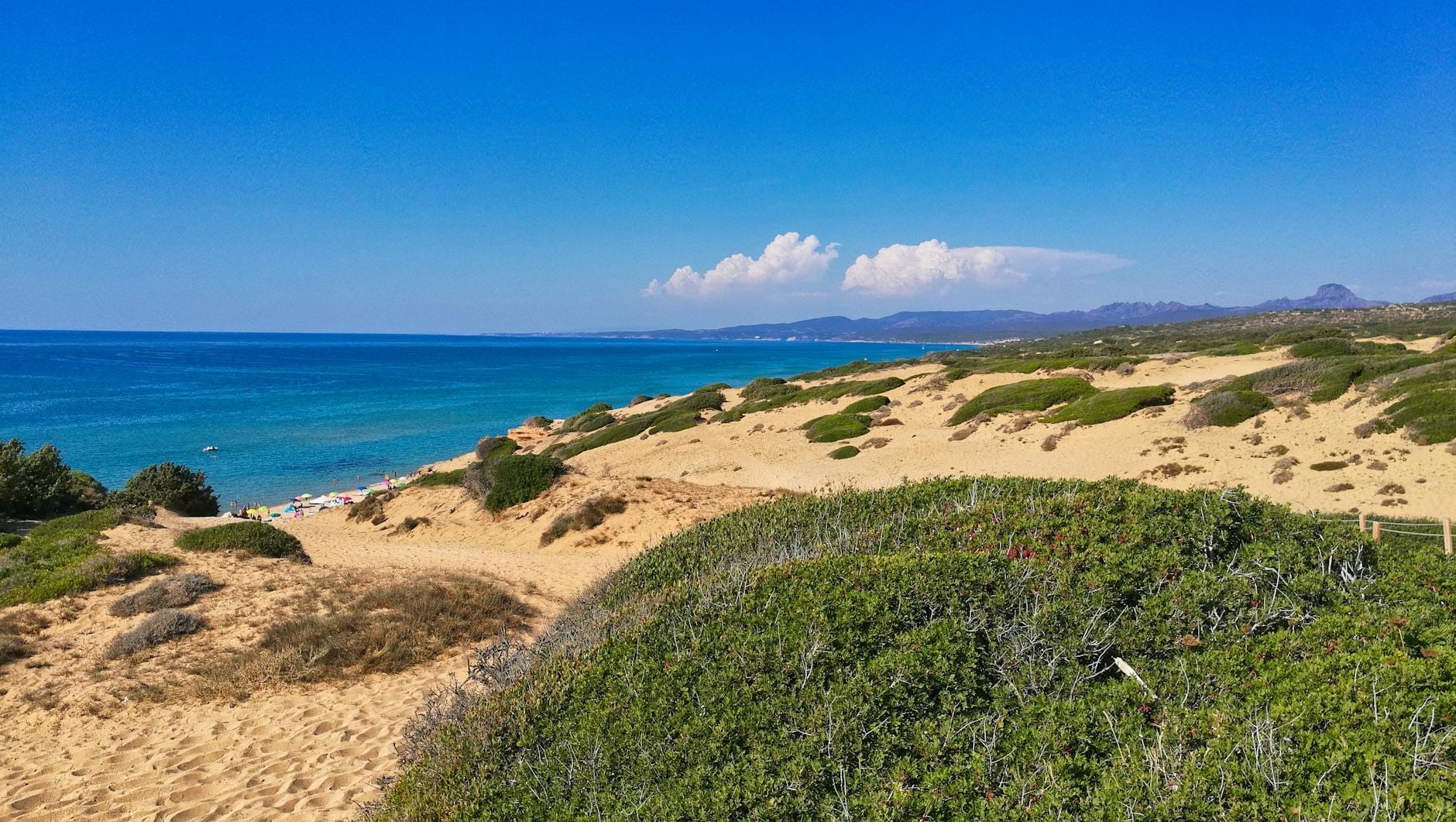
Spiaggia di Piscinas is a roughly four-kilometer stretch of golden beach on Sardinia's remote Costa Verde, backed by a dune system that climbs to roughly 60–100 meters, among the highest active dunes in Europe. There are no hotels on the sand, no beach clubs, and no direct public transport, which is precisely why this place feels like a genuine wilderness.
Quick Facts
- Location
- Arbus, Costa Verde, Province of Sud Sardegna — western Sardinia
- Getting There
- Car only. No public transport. Nearest airport: Cagliari Elmas (CAG), approx. 100–110 km by road. Final roughly 10 km is unpaved road after Ingurtosu on the access route signposted for Piscinas.
- Time Needed
- Half day minimum; a full day rewards those who explore the dunes and walk the beach length
- Cost
- Beach access free. Parking near the beach reportedly around €5/day (verify locally, seasonal rates apply).
- Best for
- Wild swimming, dune hiking, photography, solitude seekers, nature lovers
What Piscinas Actually Is
Spiaggia di Piscinas is not simply a beach. It is a coastal dune system of about 28 square kilometers, where walls of pale gold sand rise to approximately 100 meters above sea level — a scale that stops most first-time visitors in their tracks. The dunes extend about two kilometers inland from the waterline, and the beach itself runs for roughly four kilometers along the shore with no coastal road, no hotels on the sand, and no beach clubs renting parasols in neat rows.
The dune complex at Piscinas is recognized across two European Natura 2000 protected sites: "Da Piscinas a Riu Scivu" (ITB040071) and "Monte Arcuentu e Rio Piscinas" (ITB040031), both classified as Sites of Community Importance under EU habitat directives. The Italian Ministry of Culture also records the site formally as "Spiaggia e Dune di Piscinas." This is not promotional language — Piscinas holds genuine ecological designation at a European level.
ℹ️ Good to know
The dune system at Piscinas is among the highest active coastal dunes in Europe, reaching around 100 meters. They are 'living' dunes, meaning they shift with seasonal winds, so the landscape you see in June will look subtly different in September.
The beach sits within Sardinia's Sulcis and southwest coast region, a part of the island that attracts far fewer visitors than the northeast but contains some of the most dramatic and undeveloped scenery in the Mediterranean. If you are building a Sardinia road trip, the Costa Verde corridor deserves at least one full day.
The Drive In: What to Expect Before You Arrive
Reaching Piscinas requires a car and a degree of patience. From the SS126 state road, you turn off near the junction signposted for Ingurtosu/Piscinas and follow the provincial road through the ghost-town landscape of Ingurtosu, a former silver and lead mining settlement that still carries a faint industrial melancholy in its crumbling administrative buildings. After Ingurtosu, the paved road gives way to about 10 kilometers of unpaved track (sterrata). In dry summer conditions, a standard car handles it without drama, but the corrugated surface means 20 km/h is a realistic speed. Allow at least 30 minutes for this final section.
Alternatively, you can approach via the road from Arbus toward Marina di Arbus/Portu Maga, then follow the signs for Piscinas. This route is a little smoother for part of the way. Either approach, the road eventually deposits you into a small parking area where the vegetation thins, the air takes on a salt-mineral edge, and you can already see the dune ridges rising above the scrub. Paid parking operates here in summer, with fees reportedly around €5 for the day, though you should verify current rates on arrival.
⚠️ What to skip
After rain, the unpaved section from Ingurtosu can develop deep ruts and muddy patches. If you are visiting outside summer, check local road conditions before setting out. A high-clearance vehicle is an advantage in wet weather.
Tickets & tours
Hand-picked options from our booking partner. Prices are indicative; availability and final rates are confirmed when you complete your booking.
Vineyard Guided Tour and 7 Wine Tasting in Palau
From 84 €Instant confirmationFree cancellationFull-Day Sailboat Tour in La Maddalena Archipelago from Cannigione
From 112 €Instant confirmationFree cancellationHiking excursion to the Devil's Saddle
From 35 €Instant confirmationFree cancellationExcursion to the Archaeological site of Nora
From 70 €Instant confirmationFree cancellation
The Beach Itself: Scale, Light, and Silence
The first thing you notice stepping onto Piscinas is the color. The sand is warmer-toned than most Sardinian beaches — closer to amber than white — and it absorbs heat rapidly. By mid-morning in July, walking barefoot on the upper dry sand requires the kind of speed-walking usually reserved for airport terminals. Bring sandals.
The sea color shifts through a spectrum from shallow jade at the water's edge to a deep blue-green further out. The seabed deepens quickly, dropping from around two meters to ten meters within a short distance from shore. This makes for good open-water swimming for confident adults but means Piscinas is not appropriate for young children who need gentle, shallow conditions. There are generally no lifeguards stationed here, and the beach is largely unsupervised outside any limited high-season services.
The five-kilometer beach length means that even on the busiest August weekend, you can walk 15 minutes in either direction from the parking area and find yourself essentially alone. The southern end of the beach, where the Rio Piscinas river meets the sea, is particularly quiet and has a different character: the waterline is softer, the sand wetter, and occasional stands of reed and tamarisk mark the boundary between dune and estuary.
The Dunes: How to Explore Them
From the beach, the dune ridges look like gentle hills. Once you start climbing, the scale recalibrates. The sand is loose and shifts underfoot, so ascending even 40 or 50 meters of dune face requires genuine effort. Wear closed shoes or sturdy sandals if you plan to go above the lower slopes. The reward at the top is a 360-degree view: open sea to the west, the green arc of the Costa Verde headlands to north and south, and the bare reddish hills of the inland mining district behind you.
The dunes are categorized as 'living' or 'mobile,' meaning they shift with the prevailing maestrale wind. In late afternoon, when the wind picks up from the northwest, fine sand moves along the crest ridges in visible streamers. Photographers who time their arrival for the two hours before sunset find the oblique light defining every ripple and shadow across the dune face with unusual clarity.
There are no formal hiking trails marked across the dunes, so navigation is by instinct and bearing. Stay within sight of the sea to avoid disorientation. If you want a more structured approach to Sardinia's wild landscapes, the hiking in Sardinia guide covers more organized routes across the island.
When to Visit: Time of Day and Season
Morning arrivals before 10:00 have the beach almost to themselves and catch the light hitting the dune faces from a low eastern angle, which brings out the texture of the sand in ways that midday sun flattens entirely. The water is typically calmer in the morning before the afternoon maestrale builds. By early afternoon the wind is often strong enough to make sitting on the upper beach uncomfortable without a windbreak.
June and September are the months that offer the most balanced experience: warm enough for comfortable swimming, far fewer visitors than July and August, and the scrubby coastal vegetation still in reasonable condition rather than bleached brown. July and August bring crowds relative to the beach's capacity (which is larger than most, so 'crowded' is still far quieter than popular Sardinian beaches), intense heat on the dunes, and the parking area can fill by 10:00 on weekends. October sees the maestrale arrive with more force, and while the dunes look spectacular in autumn light, sea conditions deteriorate and swimming becomes inadvisable for most.
💡 Local tip
Arrive before 9:30 in high season. The track from Ingurtosu is single-lane in several sections, and a queue of cars heading the same direction makes the journey considerably more stressful than arriving early and having it to yourself.
For a full picture of seasonal conditions across the island, the best time to visit Sardinia guide breaks down each month in detail.
Facilities, Practicalities, and Who Should Skip This Beach
Infrastructure at Piscinas is minimal by design and by circumstance. In summer, a small bar-restaurant and basic services operate near the parking area — the Hotel Le Dune, a historic property in the former mining area, has a restaurant that travelers can sometimes use without staying. Outside July and August, you should bring all your own food and water. There are no toilets on the beach itself. The shade is limited to the tamarisk scrub fringing the dune base.
Accessibility is restricted. The unpaved approach road rules out standard coaches, motorbikes with limited clearance, and any traveler who cannot manage a rough 10 km drive. On the beach itself, the deep loose sand makes wheelchair access effectively impossible beyond the firm wet sand near the waterline. The dunes are entirely inaccessible for anyone with limited mobility.
Travelers who want spectacular Sardinian coastline without a difficult road should consider other options along the southwest. The best beaches in Sardinia guide includes alternatives with better access and more facilities — including beaches around Spiaggia di Chia further south on the same coastline.
Families with toddlers or anyone who needs shallow, calm, serviced water should not come here. The seabed profile, the absence of lifeguards, and the general remoteness make Piscinas a beach for adults who are comfortable with self-sufficiency. It is not overhyped in the sense of being disappointing on arrival, but it is sometimes described online as simply a 'beautiful beach,' which undersells the physical challenge of reaching and exploring it.
Photography Tips and the Best Light
The dune-beach combination gives Piscinas unusual photographic range for a single location. Wide-angle shots from high on the dunes looking west toward the sea, with afternoon light streaming across the sand ridges, produce images that look almost North African in character. Close-up macro photography of the dune grasses (mostly ammophila and other pioneer species stabilizing the lower dune slopes) works well in morning light when the wind is low.
Drone photography is subject to Italian regulations in protected Natura 2000 areas. Verify current rules before flying. The site designation means that restrictions can apply, and enforcement does occur in Sardinia's protected coastal zones during peak season.
Insider Tips
- The stretch of beach south of the Rio Piscinas river mouth sees fewer visitors even in August, because most people park and head directly west onto the closest sand. Walk south for 20 minutes along the waterline and you will often have a kilometer of shore entirely to yourself.
- The former mining settlement of Ingurtosu, on the approach road, is worth a slow 10-minute stop. The abandoned early 20th-century administrative buildings are in photogenic decay, and no one stops there because everyone is focused on the beach ahead.
- Bring at least two liters of water per person more than you think you need. The dune climb in summer heat is significantly more demanding than it looks from the beach, and dehydration is a real risk at Piscinas in July and August.
- The small Hotel Le Dune property has a restaurant that occasionally serves non-guests at lunch. Call ahead if you want to eat there rather than depending on it; it is not a reliable fallback.
- The beach faces directly west, which means the last hour before sunset is the best swimming light and the coolest air temperature of the day. Many visitors leave by 16:00 as the wind picks up, so late afternoon often returns the beach to something close to solitude.
Who Is Spiaggia di Piscinas For?
- Independent travelers comfortable with remote locations and self-sufficient day trips
- Landscape and nature photographers seeking dramatic dune and coastal light
- Swimmers who prefer open, uncrowded water without beach club infrastructure
- Walkers and dune hikers who want physical engagement with the landscape
- Travelers interested in European coastal ecology and protected dune systems
Nearby Attractions
Other things to see while in Sulcis & the Southwest Coast:
- Carloforte (Isola di San Pietro)
Carloforte is the sole inhabited centre on Isola di San Pietro, a small island off Sardinia's southwestern coast with a strikingly un-Sardinian character. Founded in 1738 by Ligurian settlers from Tabarka, it retains its own dialect, cuisine, and urban architecture — a place that rewards slow exploration rather than quick sightseeing.
- Costa Verde
Costa Verde is a 47-kilometre arc of coastline in the Comune di Arbus, in Sardinia's southwest, running from Capo Frasca to Capo Pecora. It holds some of the most remote beaches on the island, including Piscinas, where dunes reach up to 60 metres high, making it one of the largest dune systems in Europe. There are no entry fees, minimal resort infrastructure directly on the beaches, and no public transport. That combination is exactly why it rewards visitors who make the effort to get here.
- Is Zuddas Caves (Santadi)
Carved into 530-million-year-old Cambrian dolomite beneath Monte Meana, the Is Zuddas Caves near Santadi are among the most geologically significant showcaves in Sardinia. Guided tours of a flat 500-metre route reveal towering stalactites, aragonite helictites, and chambers that once served as an alabaster quarry before local speleologists rescued them for science and tourism in 1971.
- Isola di Sant'Antioco
Sant'Antioco Island sits off Sardinia's southwest coast, connected to the mainland by a bridge over an ancient isthmus. With roots stretching back to Phoenician colonizers in the 8th century BC, it pairs serious archaeology with quiet beaches, a still-functioning fishing port, and some of the least-crowded coastline in the region.