Pan di Zucchero: Sardinia's Towering Sea Stack Near Masua
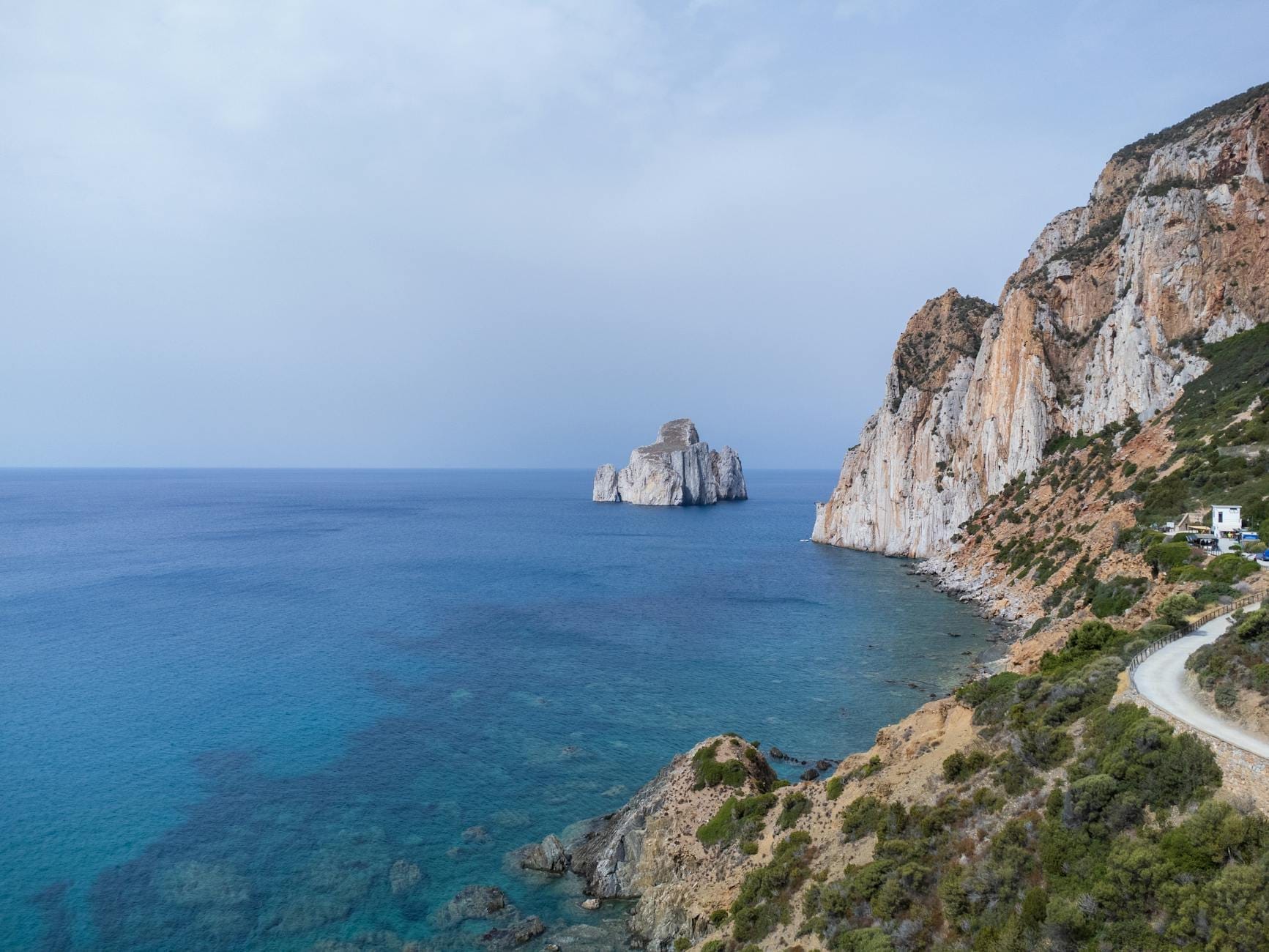
At 133 metres, Pan di Zucchero is the tallest sea stack in Italy, rising from the turquoise waters off Masua in the Sulcis-Iglesias coast of southwest Sardinia. Accessible only by boat, it rewards visitors with sea caves, exceptional snorkelling, and one of the most striking geological formations on the island.
Quick Facts
- Location
- Off the coast of Masua, Municipality of Iglesias, Sulcis-Iglesias, SW Sardinia
- Getting There
- Drive SP 83 provincial road to Masua; boats depart from Masua beach
- Time Needed
- 2–4 hours including boat trip; add half a day if snorkelling or visiting Porto Flavia
- Cost
- Free to view from shore; boat excursion operators charge a fee (verify current rates)
- Best for
- Geology enthusiasts, snorkellers, photographers, boat trip lovers
- Official website
- portal.sardegnasira.it/pan-di-zucchero
What Is Pan di Zucchero?
Pan di Zucchero, whose name translates from Italian as 'Sugar Loaf', is a freestanding limestone sea stack rising 133 metres from the sea just off the coast of Masua in southwestern Sardinia. With a surface area of approximately 3.72 hectares, it is the tallest sea stack in Italy and one of the most visually arresting geological formations in the entire Mediterranean. Officially listed as the 'Pan di Zucchero Faraglioni di Masua' and declared a Natural Monument, the stack is a protected site under regional environmental law.
The rock has been named on maps and in documents since at least the 18th century, when the distinctive silhouette made it a useful landmark for navigators working the mineral-rich coast between Iglesias and Portoscuso. That coastal strip was heavily mined for zinc, lead, and silver for much of the 19th and early 20th centuries, and the juxtaposition of industrial heritage and raw geological drama is central to understanding this part of Sardinia.
The stack sits within the broader Sulcis-Iglesias mining district, a landscape where rusted machinery, abandoned headframes, and clifftop mineral loading facilities Porto Flavia share the shoreline with some of the clearest water you will find on the island. The contrast is not incidental — it is the defining character of this coast.
Getting to Masua and Reaching the Stack
The base point for any visit is the small coastal locality of Masua, reached by following the SP 83 provincial road to its end. The road winds through the Iglesias hinterland before descending dramatically to the sea, and the final kilometres offer a series of elevated viewpoints where the full profile of Pan di Zucchero comes into view above the waterline. Pull over at one of these informal lookouts before you descend — the panoramic angle from the cliffs is arguably better than anything you will get at sea level.
💡 Local tip
The cliff-top view of Pan di Zucchero from the road above Masua is free, unrestricted, and excellent for photography, especially in the morning when the light falls on the seaward face of the stack. You do not need a boat to experience the spectacle — though the boat trip adds a great deal.
The stack itself is reachable only by sea. Boat excursions depart from Masua beach, run by small local operators who offer short trips around the base of the stack, into the sea caves beneath it, and sometimes onward to neighbouring coves. The crossing takes only a few minutes but the scale of the rock changes entirely once you are at water level, looking up at 133 metres of sheer pale limestone. Operators and pricing change seasonally, so verify availability and current rates before you arrive — this is not a year-round service and off-season visits may require arranging private boat hire.
⚠️ What to skip
There is no permanent ferry or ticketed boat service to Pan di Zucchero. In shoulder months (May, early June, October) boat operators may have limited schedules or require advance notice. Arriving without a booking in low season risks finding nobody on the beach.
Tickets & tours
Hand-picked options from our booking partner. Prices are indicative; availability and final rates are confirmed when you complete your booking.
Visit to a Local Cheese-Making Company with Workshop in Dolianova
From 72 €Instant confirmationFree cancellationVineyard Guided Tour and 7 Wine Tasting in Palau
From 84 €Instant confirmationFree cancellationFull-Day Sailboat Tour in La Maddalena Archipelago from Cannigione
From 112 €Instant confirmationFree cancellationHiking excursion to the Devil's Saddle
From 35 €Instant confirmationFree cancellation
The Boat Experience: What to Expect at Water Level
Approaching Pan di Zucchero by dinghy in calm conditions is one of those rare moments when a natural landmark exceeds expectation. The water around the base is extraordinarily clear, ranging from pale turquoise over the sandy shallows to deep blue-green where the rock drops away. At close range, the scale of the stack becomes physical rather than visual — the wind sounds different, the smell of salt and wet rock intensifies, and the birds nesting on the upper ledges are audible long before you can see them.
The sea caves beneath the stack are the highlight for most visitors. Some are large enough for a small boat to enter slowly, and the refraction of light through clear water onto cave ceilings produces an effect that photographs poorly but stays with you. The limestone walls inside are streaked in ochre, white, and dark grey, pocked with erosion hollows and crusted with marine growth at the waterline.
Snorkellers who enter the water around the base find a rocky seafloor covered in sea urchins, starfish, and various reef fish at shallow depths. The visibility is typically excellent in summer and early autumn. Strong swimmers sometimes free-dive along the rock face where the depth increases quickly. The water temperature is comfortable for swimming from approximately June through September, peaking at around 25–26°C in August.
💡 Local tip
Bring your own snorkel mask. Boat operators at Masua do not consistently offer equipment rental. A mask and fins pack small and transform the experience entirely if you plan to get in the water.
Best Time to Visit
Early morning in June or September produces the best combination of conditions: light that catches the west-facing rock face without the harsh bleaching of midday, sea conditions that are calm enough for easy boat access, and crowds that are manageable rather than overwhelming. July and August see the beach at Masua fill quickly, parking becomes a genuine problem on the single approach road, and boat operators run back-to-back trips at pace rather than lingering near the caves.
For those with flexibility, May and September are the clearest argument for shoulder-season travel in this part of the island. The water is already warm enough to swim in May, boat operators are active, and the surrounding coastline feels spacious. The September conditions on the Sulcis coast are particularly good for this type of excursion — sea temperatures remain high, summer crowds have thinned, and the low afternoon sun turns the stack a warm amber.
Winter visits are possible from a practical standpoint — the viewpoints above Masua are accessible year-round and require nothing more than a short drive. But the boat experience is unavailable in poor weather, and the narrow road to Masua can be complicated after heavy autumn rain. November through March is objectively a lesser experience unless geological scenery alone is sufficient motivation.
Combining Pan di Zucchero with the Surrounding Area
The Masua area rewards a full day rather than a single-focus stop. Porto Flavia, the extraordinary cliff-cut mining port constructed in the 1920s, is located just a short drive along the same coastal road and offers guided tours into the tunnels and out onto the loading platforms above the sea. The Porto Flavia mineral loading facility is one of the most unusual industrial heritage sites in Sardinia and pairs logically with Pan di Zucchero as a half-day itinerary.
Further along the coast, the beach at Masua beach itself is a fine stretch of coarse golden sand backed by the characteristic dark cliffs of the mining coast. It is not a manicured resort beach — there are no sun lounger concessions or restaurants immediately adjacent — which many visitors prefer. Pack food and water if you are planning a full day.
The town of Iglesias, roughly 20 kilometres inland, functions as the southwest coastpractical base for this part of the southwest coast. It has a handsome historic centre with a Spanish colonial character, reasonable accommodation options, and decent restaurants serving local Sulcis food. If you are planning a broader exploration of the Sulcis and southwest coast, Iglesias is the logical overnight base.
Photography Notes
Pan di Zucchero is a photogenic subject under almost any conditions, but the variables matter. The stack faces roughly westward from the Masua coastline, which means direct sunlight on the seaward face occurs in the afternoon and evening. The classic composition — stack framed against sky with turquoise water in the foreground — works best in late afternoon light when the limestone glows warm against a deepening blue sea.
From the cliff-top viewpoints above the road, a wide or standard lens captures the full height and the relationship between stack and coastline. From the boat, an ultra-wide lens gets disorienting at close range because the rock fills the frame; a mid-range focal length allows the surrounding water and sky to give scale. Polarising filters are useful given the high reflectivity of the sea surface. Drone flights are subject to Italian aviation regulations and the site's protected status — check current CAA and regional rules before flying.
Practical Access and Accessibility
There is no public transport to Masua. A car or scooter is essential, and the SP 83 road is driveable in a standard vehicle, though it is narrow in places and requires care on hairpin bends when approaching the coast. Parking at Masua beach is limited and fills quickly on summer mornings from late June onwards. Arriving by 9:00 is advisable in July and August.
The cliff-top viewpoints along the road are accessible on foot from pull-off points and require no particular fitness level. The boat trip involves stepping into a small open dinghy from a beach — manageable for most people but unsuitable for those with significant mobility limitations or who are uncomfortable on small boats in open water. There is no wheelchair or pushchair access to the boat departure point across the beach surface.
For visitors combining this with a broader road trip through southwestern Sardinia, note that the road network in this part of the island has no motorways — Sardinia is the only Italian region without one. Travel times between towns are longer than maps suggest. Budget generously.
Insider Tips
- The highest viewpoint above Masua, reached by parking on the roadside before the final descent to the beach, gives a cleaner photographic angle on Pan di Zucchero than any position at sea level. It is also the only vantage point where you can frame the stack alongside the Porto Flavia cliff face in a single wide shot.
- Boat operators at Masua sometimes offer early-morning departures before the main tourist wave arrives — ask locally the day before and negotiate a first-departure slot. The caves see far less boat traffic before 9:30 and the light inside is softer.
- The beach at Masua has no shade structures. A parasol or beach tent is not a luxury here in July and August — the surrounding cliffs reflect heat and the beach faces west, meaning direct afternoon sun with no natural shelter.
- The SP 83 road from Iglesias to Masua passes through the abandoned mining landscape of the Iglesiente. Several ruined processing facilities are visible from the road and worth a brief stop — they are not fenced or signposted as attractions but add considerable context to the coastline.
- If boat operators are unavailable on arrival, the snorkelling directly off Masua beach (away from boat traffic) is worthwhile in its own right. The shallow rocky reef at the southern end of the beach holds sea urchins, wrasse, and octopus at accessible depths.
Who Is Pan di Zucchero For?
- Geology and landscape photographers looking for a distinctive coastal subject
- Snorkellers and swimmers seeking clear, uncrowded water with interesting underwater terrain
- Travellers combining natural and industrial heritage — Pan di Zucchero and Porto Flavia make a natural pair
- Road trippers exploring the southwest coast who want a focal point for a coastal half-day
- Families with older children comfortable on small boats and in open water
Nearby Attractions
Other things to see while in Sulcis & the Southwest Coast:
- Carloforte (Isola di San Pietro)
Carloforte is the sole inhabited centre on Isola di San Pietro, a small island off Sardinia's southwestern coast with a strikingly un-Sardinian character. Founded in 1738 by Ligurian settlers from Tabarka, it retains its own dialect, cuisine, and urban architecture — a place that rewards slow exploration rather than quick sightseeing.
- Costa Verde
Costa Verde is a 47-kilometre arc of coastline in the Comune di Arbus, in Sardinia's southwest, running from Capo Frasca to Capo Pecora. It holds some of the most remote beaches on the island, including Piscinas, where dunes reach up to 60 metres high, making it one of the largest dune systems in Europe. There are no entry fees, minimal resort infrastructure directly on the beaches, and no public transport. That combination is exactly why it rewards visitors who make the effort to get here.
- Is Zuddas Caves (Santadi)
Carved into 530-million-year-old Cambrian dolomite beneath Monte Meana, the Is Zuddas Caves near Santadi are among the most geologically significant showcaves in Sardinia. Guided tours of a flat 500-metre route reveal towering stalactites, aragonite helictites, and chambers that once served as an alabaster quarry before local speleologists rescued them for science and tourism in 1971.
- Isola di Sant'Antioco
Sant'Antioco Island sits off Sardinia's southwest coast, connected to the mainland by a bridge over an ancient isthmus. With roots stretching back to Phoenician colonizers in the 8th century BC, it pairs serious archaeology with quiet beaches, a still-functioning fishing port, and some of the least-crowded coastline in the region.