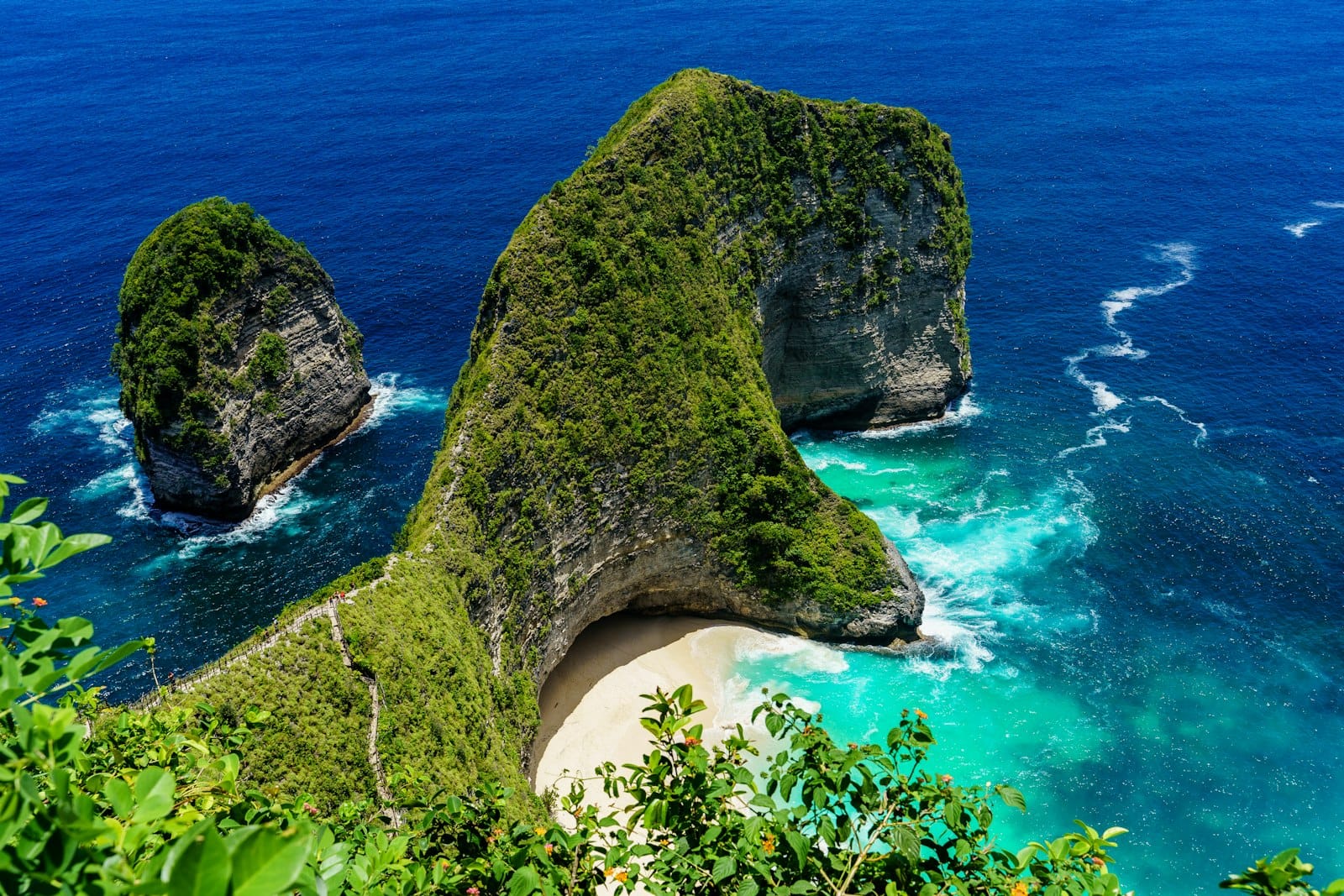
Nusa Penida is a rugged limestone island southeast of Bali, known for vertiginous clifftop viewpoints, pristine beaches, and some of the best diving in the Indonesian archipelago. It sits about 30-45 minutes by fast boat from Sanur and rewards visitors willing to handle rough roads and minimal infrastructure with scenery that has no equivalent on the main island.
Nusa Penida is the largest of the three Nusa islands off Bali's southeastern coast, and it feels like a different country entirely. Where Bali proper is increasingly manicured and tourist-ready, Nusa Penida remains raw: clifftops that drop without warning into the Indian Ocean, roads that dissolve into gravel halfway up a hillside, and beaches that require a sweaty hike down a steep staircase before you earn the view. That difficulty is precisely the point.
Orientation
Nusa Penida lies roughly 20 kilometres southeast of mainland Bali, separated from it by the Badung Strait. The island covers around 202 square kilometres and is noticeably larger than its siblings, Nusa Lembongan and Nusa Ceningan, which sit just off its northwestern tip. All boat traffic arrives at Toyapakeh on the northwest coast or Sampalan on the north coast, the island's small administrative centre. These two ports are your entry points and the only areas with anything resembling town infrastructure.
The island divides broadly into two zones. The west and southwest coast is where almost all the signature viewpoints are located: Kelingking Beach, Angel's Billabong, Broken Beach (Pasih Uug), and Crystal Bay. The east coast around Atuh Beach and Diamond Beach offers equally dramatic scenery with far fewer visitors on any given day. The interior is a high limestone plateau of farming villages, Hindu temples, and dirt tracks that can test even experienced riders. There are no traffic lights, no town centres to speak of outside Sampalan, and no street grid to navigate by.
If you are basing yourself in Bali and planning a day trip, most visitors cross from Sanur, which is the main departure hub on the mainland. The crossing takes between 30 and 45 minutes on a fast boat, depending on conditions. Boats also depart from Kusamba and Padang Bai further east. Understanding which port you leave from matters when planning your return, since sea conditions can change quickly and some operators adjust routes without much notice.
ℹ️ Good to know
Most fast boats from Sanur to Toyapakeh depart between 7:00 and 9:00 AM. Returning boats typically leave Toyapakeh between 3:00 and 5:00 PM. If you miss the last departure, you are spending the night — which is not necessarily a bad thing, but it requires a plan.
Character and Atmosphere
Nusa Penida has none of the resort polish you find in Seminyak or Nusa Dua. The roads in the west are steep, narrow, and pocked with craters. Motorbikes negotiate hairpin bends with sheer drops on one side and no guardrails. The villages smell of incense, livestock, and salt air. Most accommodation is simple: fan rooms, cold showers, and the sound of roosters at 5 AM. For travellers who find this kind of rawness energising rather than inconvenient, the island delivers an intensity that the main island increasingly struggles to offer.
Mornings on Nusa Penida have a particular quality. The light over the Badung Strait is soft and pale before 8 AM, the air noticeably cooler than Bali proper, and the clifftop viewpoints are relatively empty if you arrive before the first wave of day-tripper boats. By 10 AM, the popular spots like Kelingking and Broken Beach fill rapidly. Midday on the west coast is brutal: high sun, little shade, and crowds at the main viewpoints. The light softens again from around 4 PM and the views across the water become exceptional in the hour before sunset.
After dark, the island quiets dramatically. There is no nightlife infrastructure of note. The north coast near Toyapakeh has a handful of warung restaurants and small guesthouses where travellers gather over cold Bintangs and share route recommendations. The east coast near Atuh is even quieter: you may find yourself at a clifftop restaurant with no other guests, watching the stars over an ocean with no light pollution for hundreds of kilometres.
What to See and Do
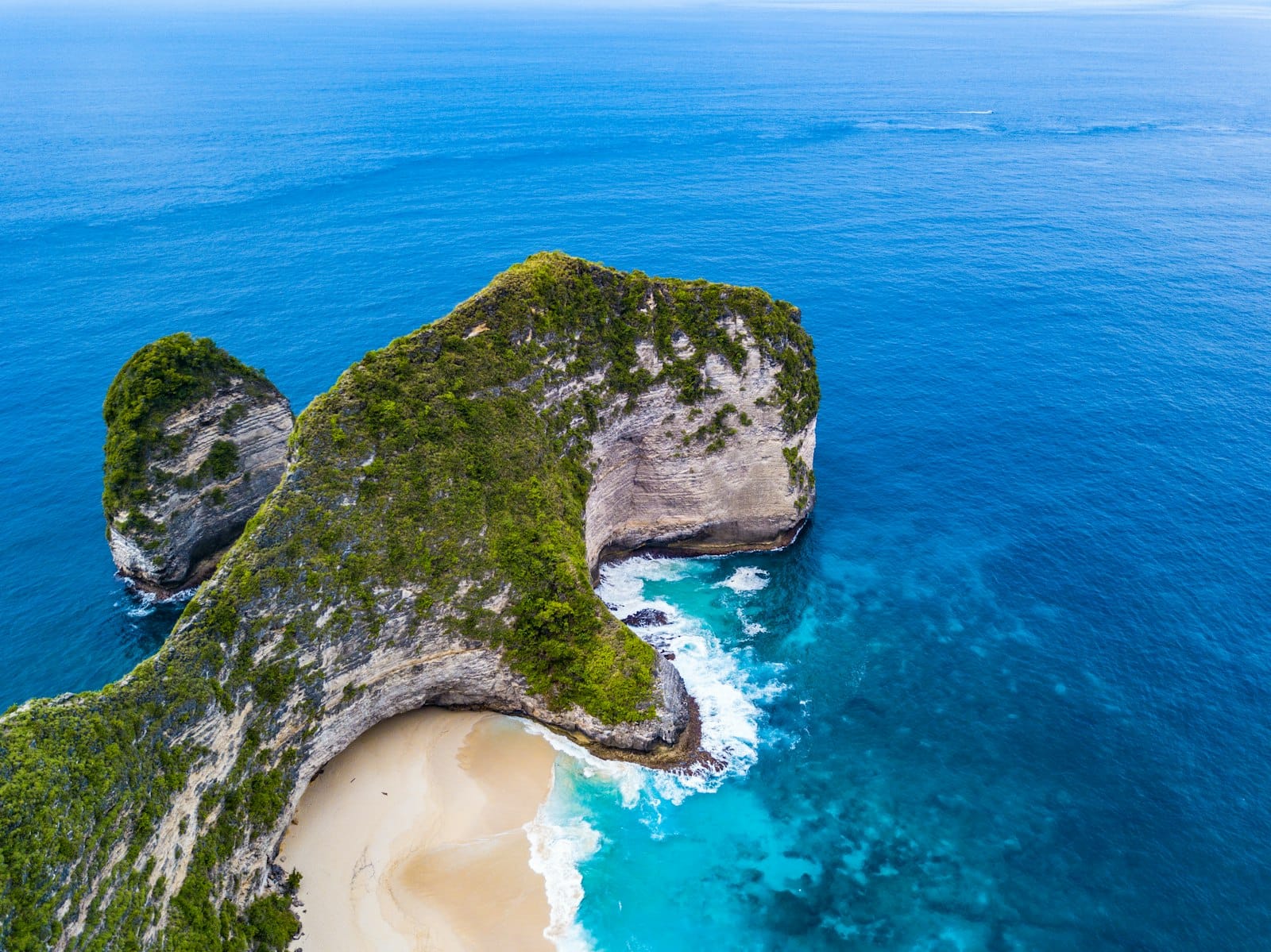
The island's most photographed feature is Kelingking Beach, on the southwest coast. The viewpoint sits at the top of a cliff shaped, from above, like a tyrannosaurus rex, and the turquoise water below is almost violent in its colour. A steep, rope-assisted trail descends to the beach itself, taking around 40 minutes down and closer to an hour back up. The descent is physically demanding and slippery after rain. The view from the clifftop is worth the boat ride alone.
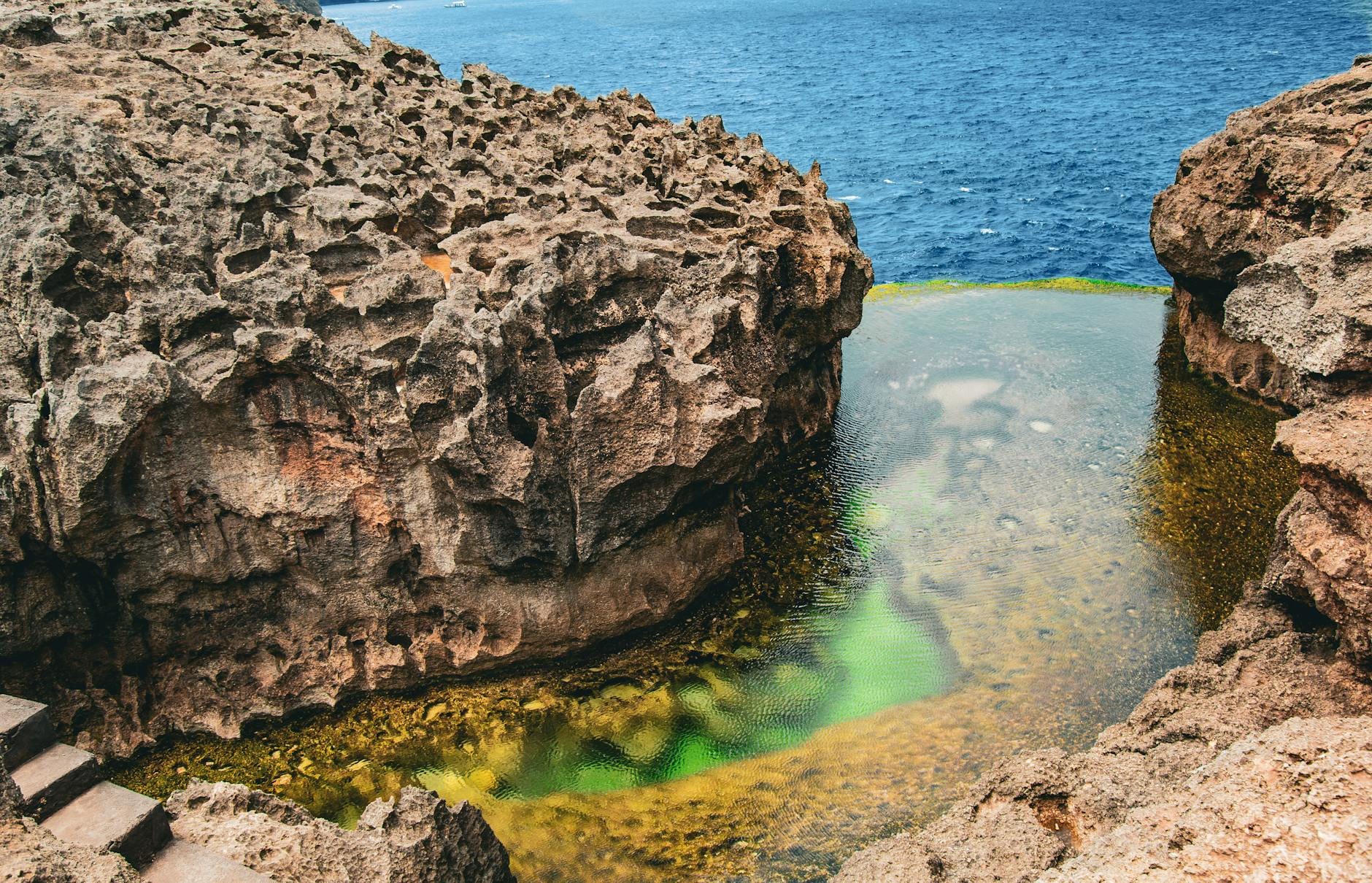
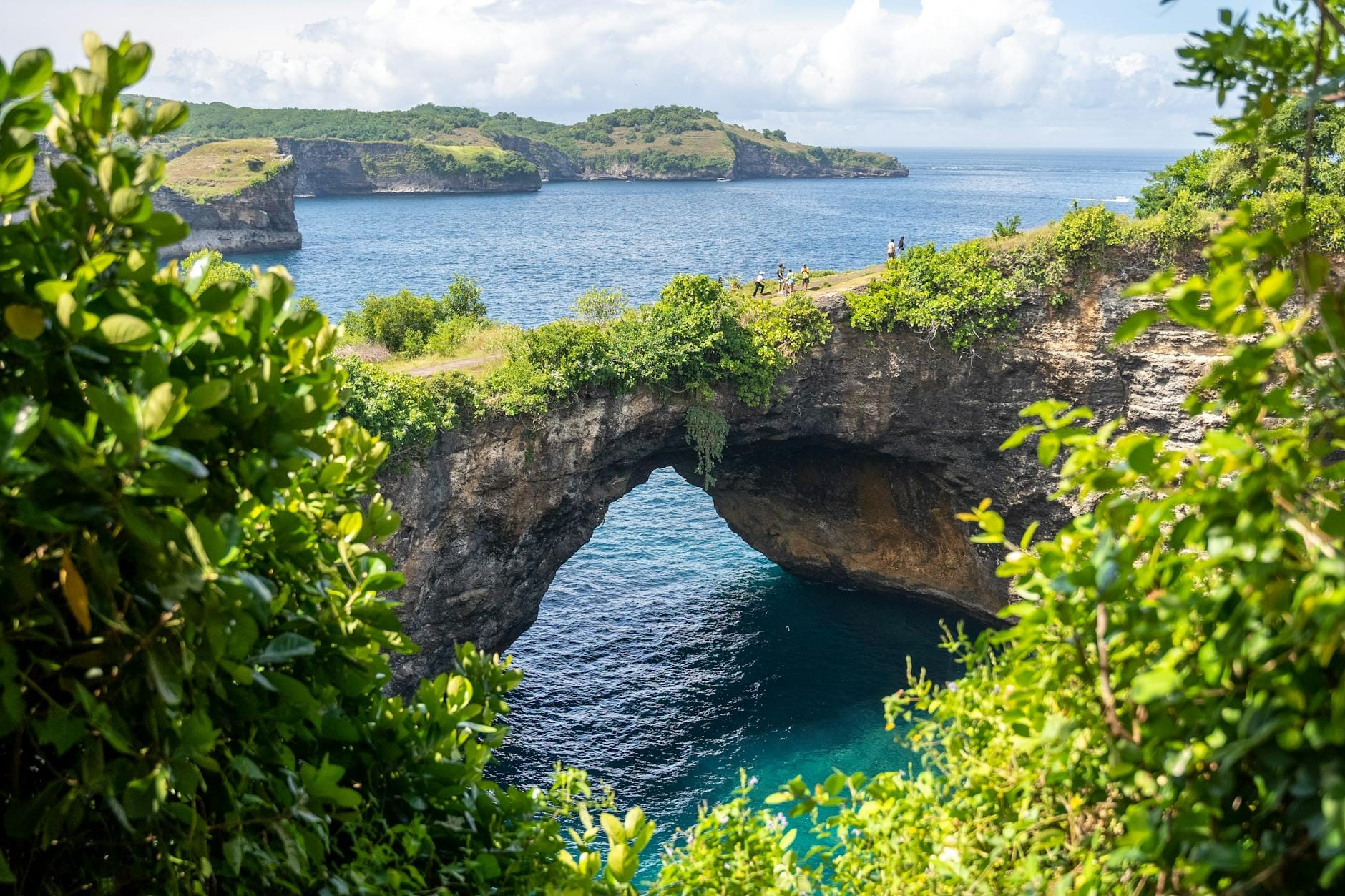
A few kilometres north along the same coastline, Broken Beach is a natural archway carved through limestone by centuries of wave action, enclosing a circular saltwater pool. Adjacent to it, Angel's Billabong is a shallow tidal rock pool that fills with turquoise water at low tide and creates one of the island's most photographed images. Both sites can be visited in a single stop and are accessible without a long hike, which explains their popularity with day-trippers.
Crystal Bay, on the west coast, is the primary beach for swimming and snorkelling. The water is clear, the bay protected, and resident mola mola (oceanic sunfish) pass through these waters between July and October, making it one of the most reliable places in the world to dive with the species. Several dive operators are based at the beach. The bay also faces west, making it one of the best sunset spots on the island.
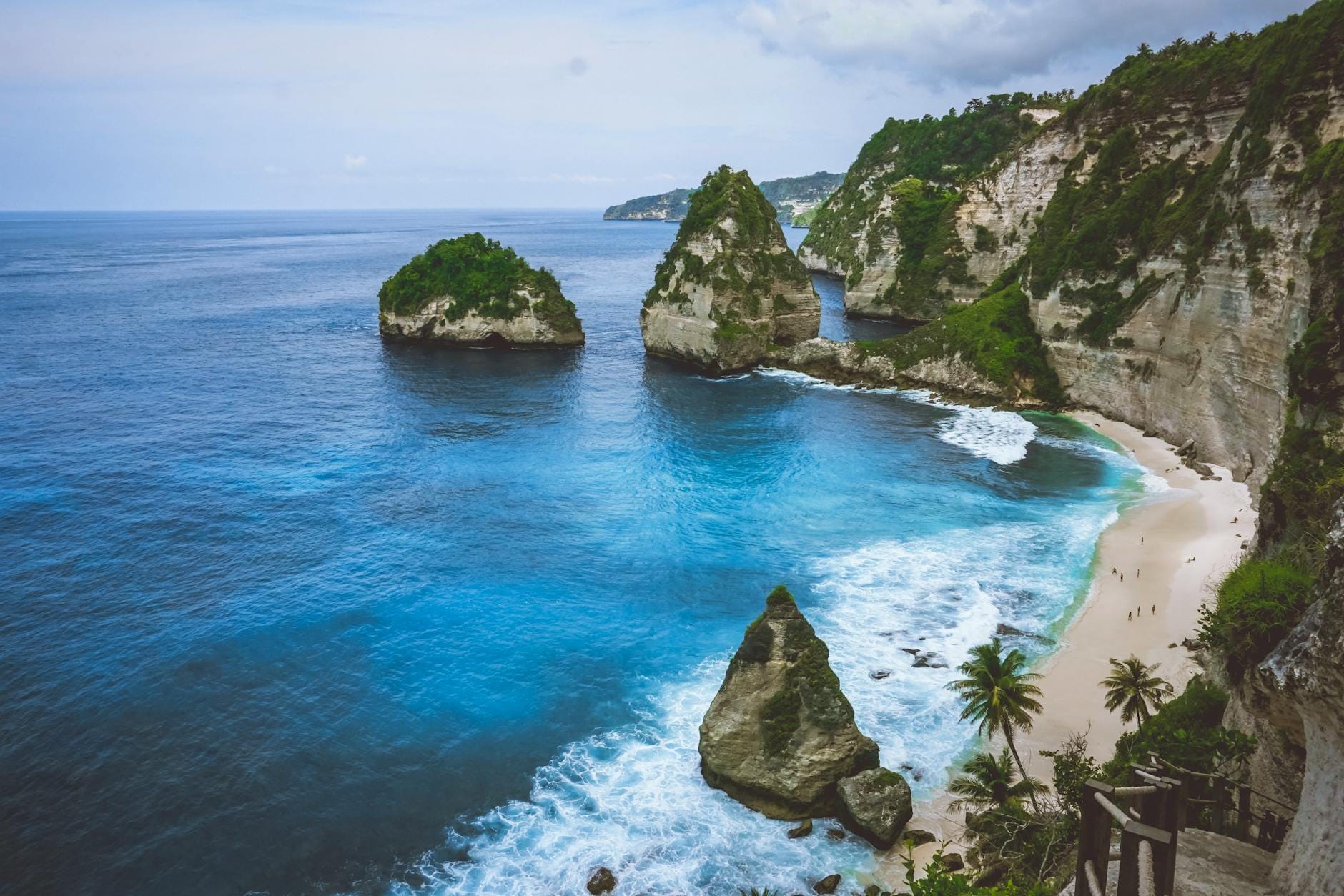
The east coast rewards the extra travel time. Diamond Beach sits at the base of a cliff reached by a steep zigzag staircase and has finer sand and fewer people than any of the west coast spots on a typical day. Atuh Beach nearby is similarly dramatic, with limestone sea stacks rising from the water just offshore. Teletubbies Hill in the north, a series of rounded green hills above Bunga Mekar village, offers an entirely different landscape: soft, rolling, and almost surreal in its geometry.
Kelingking Beach viewpoint and descent trail (southwest coast)
Broken Beach natural archway and Angel's Billabong tidal pool
Crystal Bay swimming, snorkelling, and mola mola diving (July to October)
Diamond Beach and Atuh Beach on the east coast
Teletubbies Hill panorama above Bunga Mekar village
Pura Dalem Ped temple complex near Toyapakeh
Goa Giri Putri, a sacred cave temple in the island's interior
⚠️ What to skip
Swimming conditions on the south and west coasts are frequently dangerous. Strong currents, sudden swells, and uneven sea floors make several beaches unsuitable for swimming even when they look calm. Always check local advice before entering the water, and never swim alone at unfenced clifftop beaches.
Eating and Drinking
The food scene on Nusa Penida is functional rather than exceptional, at least by Bali's standards. Most visitors eat at warung restaurants, small family-run stalls serving nasi campur, mie goreng, grilled fish, and fresh juices at prices significantly lower than the Bali mainland. Around Toyapakeh port and Sampalan, several warung line the main roads and open from early morning to accommodate day-trippers who arrive hungry and leave before dinner.
Closer to the main viewpoints on the west coast, small cafes and warung have appeared to serve the tourist circuit. Quality varies. The fresher the fish, the better the meal, and Nusa Penida's fishing villages do produce excellent grilled seafood. If you ask where locals eat rather than heading to the places with English-language signs by the viewpoints, you will generally eat better and pay less.
Accommodation restaurants on the north coast have improved in recent years, with a few guesthouses offering proper menus of Indonesian and Western food. There are no fine dining establishments and no coffee culture of the kind you find in Canggu or Ubud. Expect cold beer, fresh coconuts, and simple, honest food. That is the correct register for the island.
💡 Local tip
Carry cash. ATMs exist in Sampalan town and near Toyapakeh port but run out of money regularly, particularly on weekends when day-tripper numbers peak. Card payment is rare outside larger guesthouses. Bring more rupiah than you think you need from the Bali mainland.
Getting There and Around
Fast boats from Sanur beach are the primary route to Nusa Penida. Multiple operators, including Rocky Fast Cruise, Maruti Express, and several others, run services throughout the morning. The journey takes 30 to 45 minutes and tickets cost between IDR 150,000 and 250,000 each way depending on the operator and season. Boats land at Toyapakeh on the northwest coast. Book in advance during peak season (July, August, and the Christmas period) as boats fill quickly.
Getting around the island is the single biggest logistical challenge. Roads in the west are steep and in poor condition. The standard approach is to rent a scooter at Toyapakeh port or book a driver for the day. Scooter rental costs around IDR 80,000 to 120,000 per day, but the west coast roads are genuinely dangerous for inexperienced riders: hairpin descents, gravel sections, and no crash barriers. A private driver with a small jeep costs more, around IDR 500,000 to 800,000 for a full day, but provides air conditioning, local knowledge, and considerably more safety margin.
If you are visiting on a day trip from Bali, it is worth organising a driver in advance rather than negotiating at the port, where prices are higher and vehicle quality variable. Several Bali-based tour operators offer full-day packages that include the fast boat, driver, and entrance fees to the major sites. These can represent good value if your time is limited.
Nusa Penida pairs naturally with a broader exploration of Bali's southern coast. Many visitors cross from Kuta or the Seminyak area, staying a night or two before returning to the main island. Those combining Nusa Penida with the Nusa Dua peninsula should note that Sanur is the nearest practical departure point from both areas, roughly 20 minutes by taxi from Nusa Dua.
Where to Stay
Staying overnight on Nusa Penida transforms the experience significantly. The day-tripper hordes leave on the afternoon boats and the island's rhythm changes: quieter roads, cooler temperatures, and access to viewpoints at dawn before anyone else arrives. Accommodation is concentrated along the north coast between Toyapakeh and Sampalan, which is also the flattest and most accessible part of the island.
Options range from bare-bones guesthouses with fan rooms and shared bathrooms at the budget end (around IDR 150,000 to 250,000 per night) to mid-range bungalow resorts with pools and sea views (around IDR 600,000 to 1,500,000 per night). A handful of higher-end properties have appeared on the hillsides above Crystal Bay, with infinity pools and direct views across the strait. These are not luxury by Bali mainland standards but represent a significant step up from the island's typical offering.
For the east coast beaches, accommodation is sparse but growing. A few eco-lodges and small guesthouses near Atuh Beach offer the quietest nights on the island. If silence and dramatic scenery are your priorities, this is the part of Nusa Penida worth considering. Factor in the road conditions: reaching the east coast from Toyapakeh takes 45 to 60 minutes on rough roads, so stock up on supplies before you go.
Before finalising your trip, check the best months to visit Bali to understand how sea conditions, rainfall, and crowds affect the Nusa islands. The dry season from May to September is generally the most reliable for boat crossings and outdoor exploration, though July and August bring peak crowds to the main viewpoints. For broader itinerary building, the things to do in Bali guide helps you prioritize what to pair with Nusa Penida.
ℹ️ Good to know
Nusa Lembongan, the smaller island to the northwest, offers more polished infrastructure, better dining, and easier road conditions. If Nusa Penida sounds too rough for your travel style, Lembongan is the more comfortable alternative — and boats connect the two islands in around 15 minutes.
Nusa Penida Compared to the Rest of Bali
Nusa Penida occupies a specific place in a Bali itinerary. It is not a place for nightlife, restaurant hopping, or cultural immersion in the way that Ubud is. It is not a surf beach destination like Canggu. What it offers instead is physical drama: landscapes that feel genuinely remote and require genuine effort to reach, in a region where that kind of experience is increasingly scarce.
The island's tourism infrastructure has expanded rapidly in the last five years. Viewpoints that were unknown a decade ago now feature in every Bali itinerary. This growth has brought better accommodation and faster boats, but also crowding at peak sites and a corresponding scramble by operators to monetise access. Entrance fees now apply at most of the major viewpoints. The fees are reasonable by international standards, but the management of crowds at narrow clifftop areas is inconsistent.
None of this cancels the island's appeal. If you spend one or two nights, wake before 7 AM, and prioritise the east coast on your second day, you can find versions of Nusa Penida that feel nothing like the crowds at Kelingking by midday. The island rewards timing and patience more than almost anywhere else in the Bali region.
For travellers building a broader Bali trip, the island works best as a two to three night excursion from a base in Jimbaran or the southern peninsula, from which Sanur is an easy 30-minute drive. Read more about planning your time across the island in our Bali travel planning guide.
TL;DR
Nusa Penida is a rugged limestone island 30~45 minutes by fast boat from Sanur, with dramatic clifftop viewpoints, pristine beaches, and world-class diving — but minimal infrastructure and rough roads.
Best for: travellers who want raw natural scenery, serious divers (especially mola mola season July to October), and anyone willing to do a little physical work for genuinely spectacular views.
Not ideal for: first-time travellers with tight itineraries, anyone uncomfortable on scooters or rough roads, or those expecting the polished resort experience of Nusa Dua or Seminyak.
Stay at least one night to access viewpoints before the day-tripper crowds arrive and to explore the quieter east coast around Diamond Beach and Atuh Beach.
Carry enough cash, organise transport before arrival if possible, and check sea conditions before planning your schedule — the Badung Strait can be choppy outside the dry season.
Bali's weather, crowds, and costs vary dramatically throughout the year. This guide breaks down every month so you can choose the right time based on your priorities, not just the travel brochure version.
From ancient sea temples and volcano sunrise treks to hidden beaches and Nusa Penida's dramatic cliffs, this guide covers 20 of the best things to do in Bali with a deep dive on each, honest opinions and planning advice.
Choosing where to stay in Bali can make or break your trip. From the surf-soaked lanes of Canggu to the rice-field serenity of Ubud and the polished resorts of Nusa Dua, this guide cuts through the noise and matches every travel style to the right neighborhood.