Kelingking Beach: Nusa Penida's T-Rex Cliff
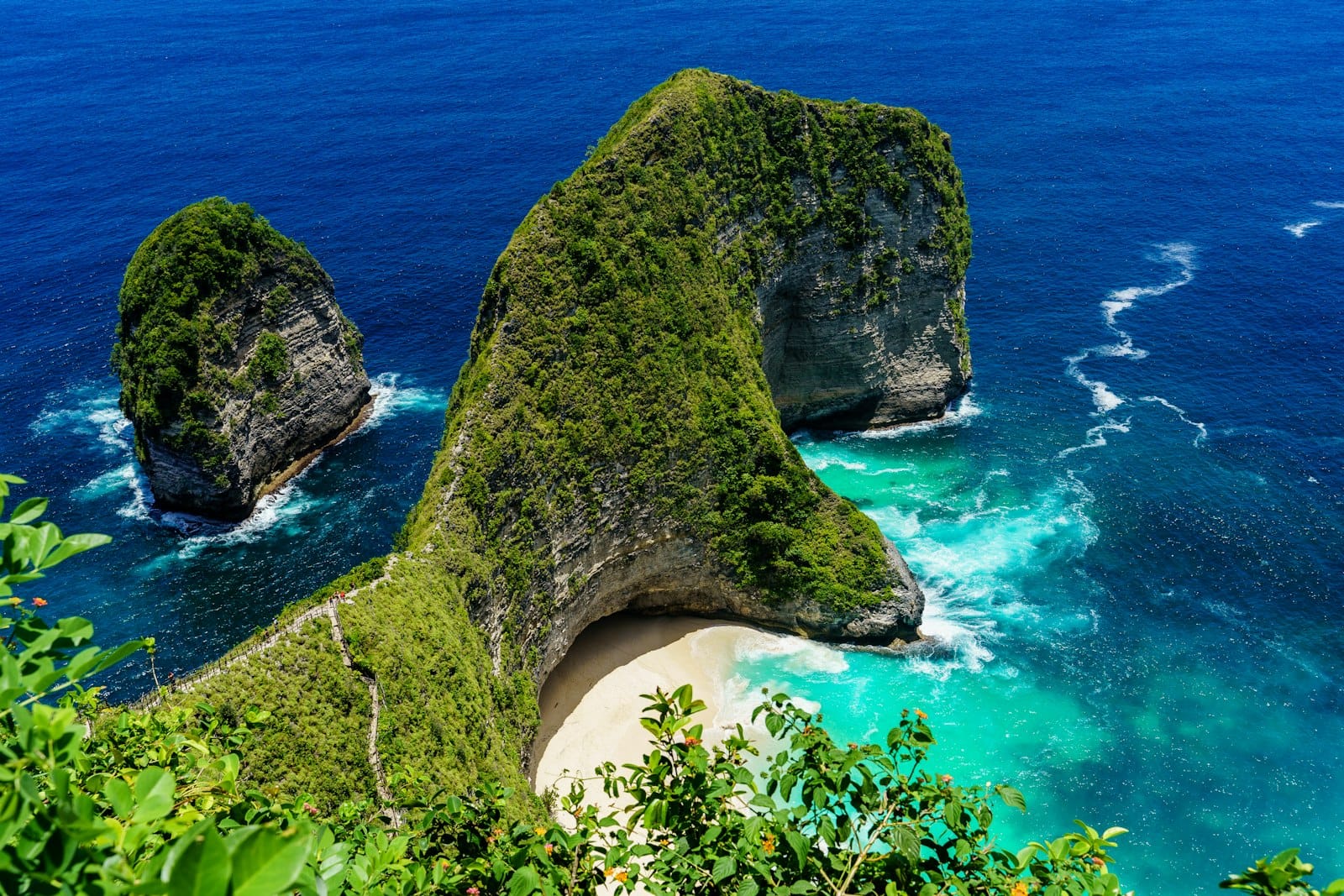
Kelingking Beach is a white sand cove at the base of a towering limestone cliff formation on Nusa Penida's west coast. Seen from above, the cliff resembles a Tyrannosaurus rex in profile, and it has become one of the most photographed coastal landscapes in Indonesia. The descent to the beach is steep, demanding, and not for everyone.
Quick Facts
- Location
- West coast of Nusa Penida island, about 45-60 minutes by road from Toyapakeh harbor
- Getting There
- Fast boat from Sanur to Nusa Penida (30-45 min), then car or scooter. Hire a driver for safety on the island's rough roads.
- Time Needed
- 1 to 3 hours. Viewpoint only: 30 minutes. Descent to beach: add 2 hours round trip.
- Cost
- IDR 25,000 per person entrance fee (since September 2026). Parking IDR 5,000 (motorbike) / IDR 10,000 (car). Fast boat from Sanur varies by operator.
- Best for
- Cliff-top photography, dramatic coastal scenery, adventurous hikers
What Kelingking Beach Is
Kelingking Beach sits on the west coast of Nusa Penida, a limestone island roughly 45 minutes by fast boat from Bali's mainland. The beach itself is a small cove of white sand at the base of a cliff that drops more than 150 meters to the water. What made this spot famous is the shape of the cliff when viewed from the overlook above: the promontory extends into the sea in a profile that resembles a Tyrannosaurus rex, complete with head, spine, and tail. The resemblance is genuine, not a stretch of the imagination, and it photographs well from multiple angles.
The turquoise water at the base of the cliff is striking from above, particularly when the light is right in the morning. The contrast between the pale sand, the blue-green water, and the grey-brown limestone is what makes every photo of this place look enhanced even when it has not been.
⚠️ What to skip
Swimming at Kelingking Beach is prohibited due to extremely dangerous currents and powerful waves. Drownings have occurred here despite the ban. Treat the beach as a viewpoint and hiking destination, not a swimming spot.
The Viewpoint: What Most Visitors Come For
The clifftop viewpoint is the main attraction for the majority of visitors, and for good reason. The view down and out across the T-Rex formation is genuinely spectacular. There are several viewing positions along the cliff edge, some with basic safety railings and others with nothing between you and the drop. The main overlook area has been improved in recent years with better paths and fencing, but it still feels exposed.
The viewpoint gets crowded between 10:00 AM and 2:00 PM, when day-trip tours from Bali arrive in groups. Arriving before 8:00 AM gives you the space and the light. Early morning produces soft golden tones on the cliff face and fewer people in your frame. Late afternoon light is also beautiful, but by that time the day-trippers have usually departed and the last boats back to Bali leave in the early afternoon, so only overnight visitors on Nusa Penida typically see sunset here.
💡 Local tip
If you are visiting Nusa Penida as a day trip, arrive at Kelingking first thing in the morning before heading to other sites. The viewpoint is best in early light and worst in midday crowds.
Tickets & tours
Live prices and dates from our booking partner. If you book, we may earn a commission at no extra cost to you.
The Descent: A Steep, Serious Scramble
The trail from the viewpoint down to the beach is steep, unshaded, and physically demanding. It takes approximately 30 to 60 minutes to descend and 60-80 minutes to climb back up. The path is narrow, with loose soil and rock in sections, and uses makeshift bamboo handrails and ropes in the steepest parts. This is not a maintained hiking trail by any reasonable standard. It is a scramble that requires reasonable fitness, proper footwear, and enough water to sustain you in tropical heat.
The beach at the bottom is beautiful and far less crowded than the viewpoint above, because most visitors choose not to make the trip down. The sand is white and the cove is sheltered enough that it feels peaceful. But remember: the water is off-limits for swimming, and the only way out is back up the way you came.
Getting to Kelingking from Bali
Fast boats to Nusa Penida depart from Sanur on Bali's east coast. The crossing takes 30 to 45 minutes depending on the operator and sea conditions. From Nusa Penida's main harbors (Toyapakeh or Banjar Nyuh), Kelingking Beach is about 45 to 60 minutes by car or scooter. The roads on Nusa Penida are narrow, steep, and poorly maintained in sections. Hiring a local driver is strongly recommended over self-driving a scooter, particularly for first-time visitors. Most day-trip packages from Bali include a driver and combine Kelingking with Angel's Billabong and Broken Beach.
What to Bring and What to Know
Wear proper closed-toe shoes or hiking sandals with grip. Flip-flops on the descent trail are a recipe for a fall. Bring at least one liter of water per person, more if you plan to descend to the beach. Sunscreen and a hat are essential, as there is no shade on the trail or at the viewpoint. The site has basic toilet facilities and a few warungs selling snacks and drinks near the parking area.
The dry season (April through October) offers the most reliable conditions for visiting. During the wet season, the trail can become slippery and boat crossings to Nusa Penida may be cancelled on rough days.
Who Should Visit and Who Should Not
The viewpoint is accessible to almost anyone who can handle a short walk on uneven ground. It is one of the most visually dramatic coastal landscapes in Southeast Asia and rewards the effort of getting to Nusa Penida. The descent to the beach is a different proposition: it requires fitness, nerve, and appropriate gear. Travelers with knee problems, vertigo, or limited mobility should stay at the top, where the views are arguably better anyway. Children can visit the viewpoint with supervision but should not attempt the descent.
Insider Tips
- The best photo angle of the T-Rex formation is from the viewpoint slightly to the left (west) of the main overlook platform. This gives you the full profile including the tail.
- If you descend to the beach, start early. The trail has no shade and the afternoon heat makes the climb back up significantly harder.
- Staying overnight on Nusa Penida lets you visit Kelingking at sunrise and sunset, when day-trippers are not present. Accommodation on the island is basic but improving.
- Drone photography at Kelingking produces stunning results but check current regulations. Enforcement of drone rules on Nusa Penida has increased.
Who Is Kelingking Beach For?
- Photographers seeking one of Indonesia's most dramatic coastal compositions
- Adventurous hikers who want a challenging descent to a remote beach
- Day-trippers from Bali looking for Nusa Penida's signature viewpoint
- Geology and nature enthusiasts drawn to dramatic limestone cliff formations
- Instagram and social media travelers looking for an iconic Bali shot
Nearby Attractions
Other things to see while in Nusa Penida:
- Angel's Billabong
Angel's Billabong is a natural rock pool on Nusa Penida's western coast where ocean water flows into a cliff-edge basin, creating a calm, clear pool that appears to merge with the sea beyond. At low tide, the water is still enough to wade in. At high tide, waves surge into the pool with enough force to make it genuinely dangerous.
- Broken Beach
Broken Beach (Pasih Uug) is a circular cove on Nusa Penida's western coast where a collapsed sea cave has created a natural stone archway through which the ocean flows in and out. The result is a landlocked bay surrounded by cliffs, with turquoise water swirling beneath the arch. You view it from above; there is no beach access.
- Diamond Beach
Diamond Beach on Nusa Penida's eastern coast is a crescent of white sand framed by jagged limestone pinnacles that emerge from the water like cathedral spires. A dramatic staircase carved directly into the cliff face connects the overlook to the beach below, making it one of the most photogenic descents in Bali.
Planning a trip? Discover personalized activities with the Nomado app.