Angel's Billabong: Nusa Penida's Natural Infinity Pool
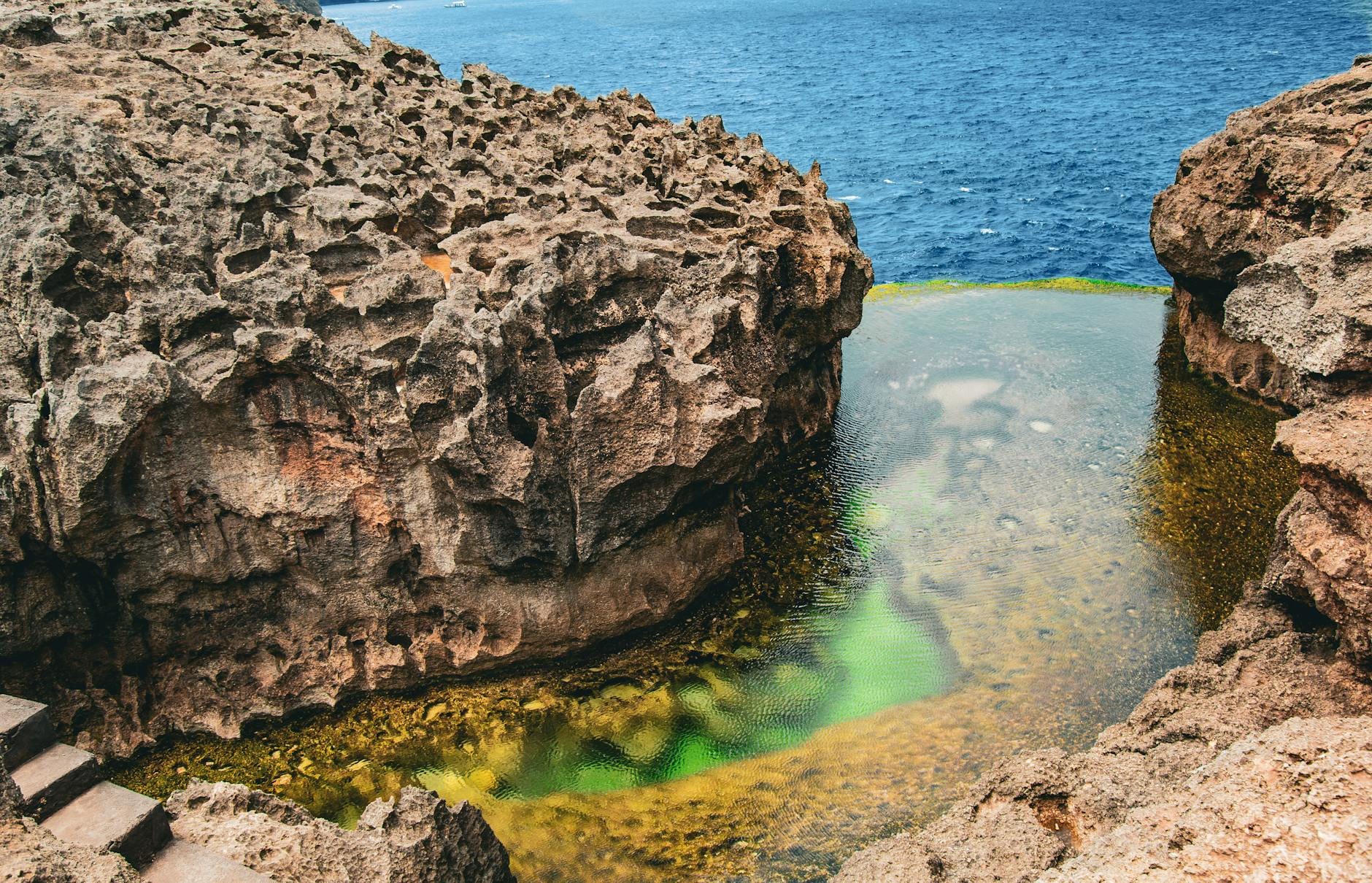
Angel's Billabong is a natural rock pool on Nusa Penida's western coast where ocean water flows into a cliff-edge basin, creating a calm, clear pool that appears to merge with the sea beyond. At low tide, the water is still enough to wade in. At high tide, waves surge into the pool with enough force to make it genuinely dangerous.
Quick Facts
- Location
- West coast of Nusa Penida, adjacent to Broken Beach.
- Getting There
- Fast boat from Sanur to Nusa Penida, then car or scooter. Hire a driver for the rough inland roads.
- Time Needed
- 30 to 45 minutes at the site. Usually combined with Broken Beach (Short walk away).
- Cost
- IDR 25,000 per person covers both Angel's Billabong and Broken Beach (since September 2026). Parking IDR 5,000 (motorbike) / IDR 10,000 (car).
- Best for
- Natural pool photography, coastal geology, combining with Broken Beach
What Angel's Billabong Is
Angel's Billabong is a tidal rock pool on the western coast of Nusa Penida, formed where ocean erosion has carved a basin into the cliff-edge limestone. At low tide, seawater fills the pool to about waist depth and the surface becomes still and clear, creating a natural infinity pool effect where the water appears to merge with the Indian Ocean just beyond the rock rim. The exposed rock around the pool is streaked with green and gold from algae and mineral deposits, and the whole formation looks like something designed rather than eroded.
The pool is not large. It occupies roughly the area of a hotel swimming pool, and on busy days it can feel crowded with visitors trying to photograph the same angle. But the visual effect is genuinely striking, and the clarity of the water on calm, low-tide mornings is remarkable.
⚠️ What to skip
Angel's Billabong is only safe to enter at low tide. At high tide and during rough seas, waves surge over the rock rim into the pool with enough force to sweep a person into the ocean. Fatalities have occurred here, often during selfies near edges. Check tide conditions before wading in, and leave immediately if waves begin entering the pool.
The Tidal Reality: Why Timing Matters
The experience at Angel's Billabong is entirely tide-dependent. At low tide, the pool is calm, the water is clear, and wading in for a photograph or a swim is possible and popular. As the tide rises, the ocean begins sending waves over the rock rim and into the pool. The transition from safe to dangerous can happen within minutes, and the rocks around the pool are slippery and offer limited grip.
Check the tide chart for Nusa Penida before your visit. The ideal window is during the lowest two hours of the tide cycle on a day without significant swell. Morning low tides are preferred because the light is better for photography and the site is less crowded.
Tickets & tours
Live prices and dates from our booking partner. If you book, we may earn a commission at no extra cost to you.
Bali Private Car Rental With Driver
From 29 €Instant confirmationFree cancellationBest of Ubud private day tour
From 16 €Instant confirmationFree cancellationBali sunrise gate heaven full-day tour
From 53 €Instant confirmationFree cancellationCustomizable Full-Day Tour of Bali with Private Driver
From 16 €Instant confirmationFree cancellation
How to Visit: Combined with Broken Beach
Angel's Billabong and Broken Beach are a short distance apart and connected by a coastal path that takes roughly 10 minutes to walk. Every visitor to one should see the other, and most Nusa Penida day-trip itineraries combine both sites with Kelingking Beach as the western-coast trio.
The parking area and warungs serve both sites. Basic toilet facilities are available. The path between the two is flat but unshaded, so bring sun protection. The total time to see both Angel's Billabong and Broken Beach comfortably is about an hour.
💡 Local tip
Visit Angel's Billabong first, then walk to Broken Beach. The billabong is more tide-sensitive, so prioritize hitting it at low tide. Broken Beach looks impressive regardless of tidal conditions.
Photography
The classic shot is taken from the cliff edge looking down into the pool, capturing the contrast between the clear, still water and the churning ocean beyond the rock rim. The green and gold mineral streaks on the exposed rock add color that most photographers do not need to enhance. Morning light produces the most vivid colors in the pool, and a polarizing filter helps cut surface glare to show the pool bottom and the underwater rock textures.
Who Should Visit
Angel's Billabong is worth a stop for anyone already visiting Nusa Penida's western coast sites. It is a short visit, not a destination that justifies a trip on its own. The natural pool is photogenic and unusual, and the geology of the cliff edge is interesting to anyone who appreciates coastal formations. Visitors who are uncomfortable near exposed cliff edges or who have young children should stay well back from the pool rim and the cliff edges, which have limited safety barriers.
Insider Tips
- The pool is most photogenic in the first two hours after sunrise, when the low-angle light penetrates the water and illuminates the mineral-streaked rock beneath.
- Do not enter the pool if you can see waves cresting over the rock rim. The transition from calm to dangerous is fast and the rocks offer no grip.
- A polarizing filter or the polarizer mode on your phone camera dramatically improves photos by removing surface glare and revealing the pool's true color.
- The area around the pool is slippery even when dry. Wear shoes with grip, not flip-flops.
Who Is Angel's Billabong For?
- Photographers seeking unusual natural formations and clear tidal pools
- Day-trippers combining Nusa Penida's western coast sites in a single itinerary
- Nature and geology enthusiasts interested in coastal erosion and tidal formations
- Couples looking for a dramatic, photogenic Bali experience off the main island
- Travelers who enjoy brief, visually impactful stops between longer activities
Nearby Attractions
Other things to see while in Nusa Penida:
- Broken Beach
Broken Beach (Pasih Uug) is a circular cove on Nusa Penida's western coast where a collapsed sea cave has created a natural stone archway through which the ocean flows in and out. The result is a landlocked bay surrounded by cliffs, with turquoise water swirling beneath the arch. You view it from above; there is no beach access.
- Kelingking Beach
Kelingking Beach is a white sand cove at the base of a towering limestone cliff formation on Nusa Penida's west coast. Seen from above, the cliff resembles a Tyrannosaurus rex in profile, and it has become one of the most photographed coastal landscapes in Indonesia. The descent to the beach is steep, demanding, and not for everyone.
- Diamond Beach
Diamond Beach on Nusa Penida's eastern coast is a crescent of white sand framed by jagged limestone pinnacles that emerge from the water like cathedral spires. A dramatic staircase carved directly into the cliff face connects the overlook to the beach below, making it one of the most photogenic descents in Bali.
Planning a trip? Discover personalized activities with the Nomado app.