Chicago St. Patrick's Day: River Dyeing, Parades & Everything You Need to Know
Chicago turns the river green every St. Patrick's Day in one of America's most spectacular civic traditions. This guide covers the river dyeing history, best viewing spots, parade logistics, neighborhood celebrations, and practical tips for making the most of the city's biggest Irish-American holiday.
Plan and book this trip
Tools from our partner Travelpayouts help you compare flights and hotels. If you book through them, we may earn a commission at no extra cost to you.
Flights
Hotels map
TL;DR
- The Chicago River has been dyed green most St. Patrick's Days since 1962, using a secret vegetable-based dye applied by the Chicago Journeymen Plumbers Local Union.
- Best free viewing spots are along the Riverwalk between Columbus Drive and State Street, and from Upper Wacker Drive bridges. Arrive by 9 AM or earlier.
- Two parades run on the same day: a downtown parade along Columbus Drive and a South Side Irish Parade in Beverly. See our Chicago neighborhoods guide to plan where to base yourself.
- March weather in Chicago averages around 38°F (3.5°C), so dress in serious layers, not just a shamrock headband.
- Bars across River North, the Loop, and Lincoln Park open as early as 7 AM on St. Patrick's Day. Book restaurant reservations weeks in advance.
The River Dyeing: History, Science, and What to Expect
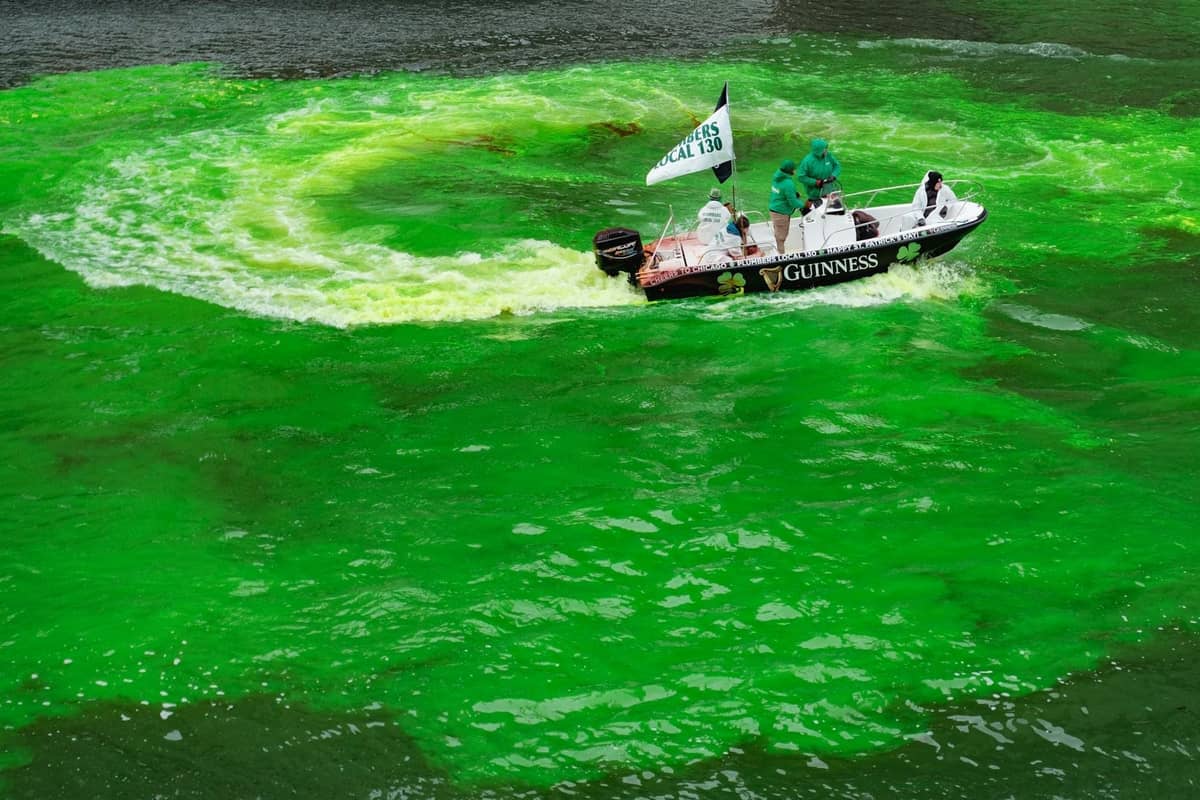
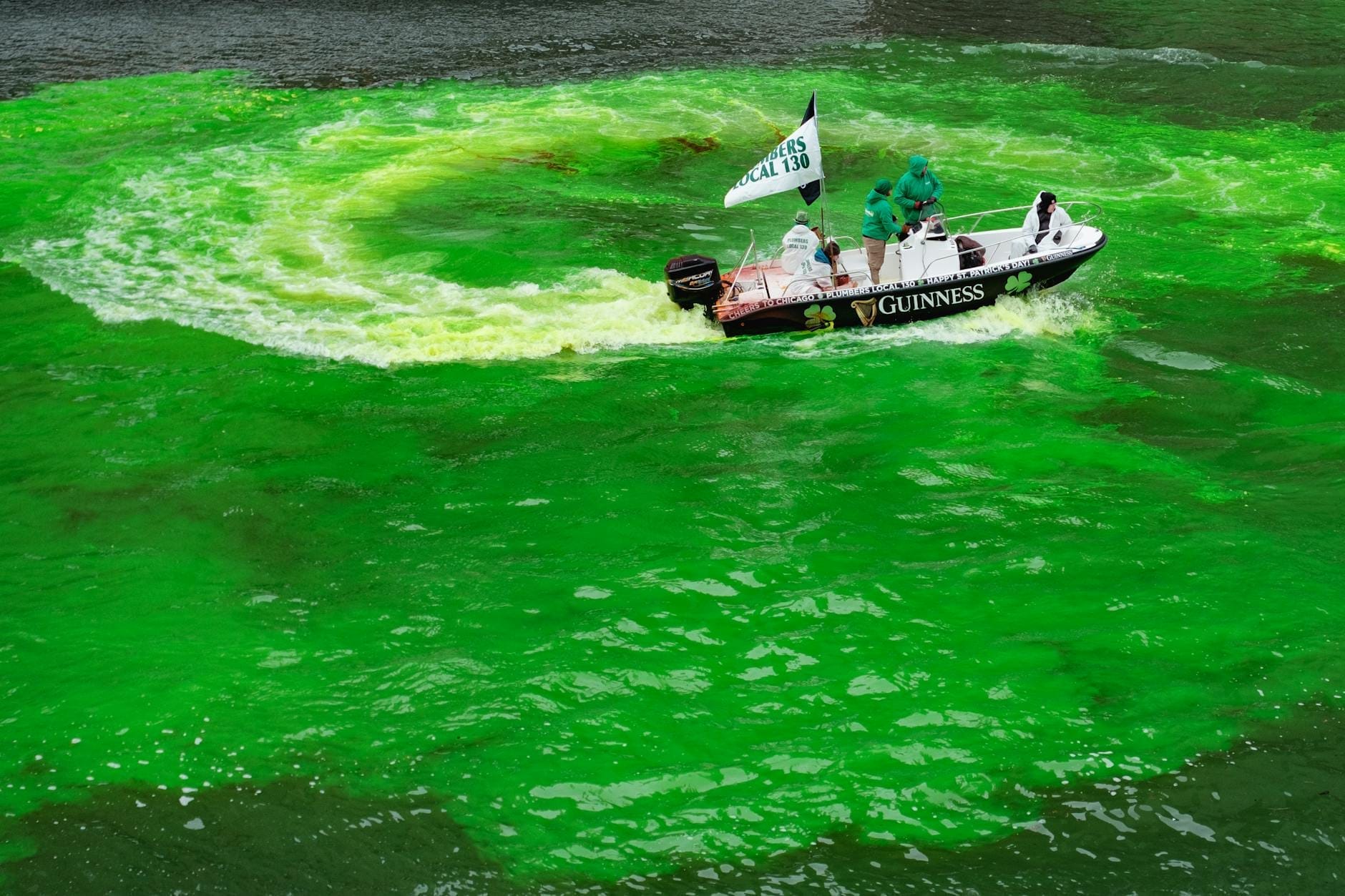
The Chicago River green tradition started in 1962 and remains one of the most photographed moments in the city's calendar year. The dyeing is carried out by the Chicago Journeymen Plumbers Local Union, who have performed the ritual most years since. Two motorboats work the river in tandem: one disperses a powdered dye across the water's surface, while the second stirs the river to distribute the color. Within minutes, the river shifts from its usual murky olive to a vivid emerald green.
The dye itself is vegetable-based and described by organizers as eco‑friendly and non-toxic, though its exact formula is closely guarded. Reported quantities vary depending on the source and the year, ranging from around 40 pounds applied over roughly 45 minutes to estimates of up to 100 pounds total. One common misconception worth clearing up: it is not Lake Michigan that gets dyed. The practice was redirected to the Chicago River specifically, and it is not ordinary green paint being poured in. The color typically persists for at least a day, sometimes two to three days depending on wind, water flow, and rainfall.
✨ Pro tip
The dyeing usually happens in the morning on the Saturday before St. Patrick's Day (March 17), though in some years it has been held on March 17 itself or adjusted for scheduling. Exact timing shifts year to year, so check the official schedule from the city or Choose Chicago before you plan your arrival time. Most years, the dye hits the water somewhere between 9 AM and 10 AM.
Best Spots to Watch the River Turn Green
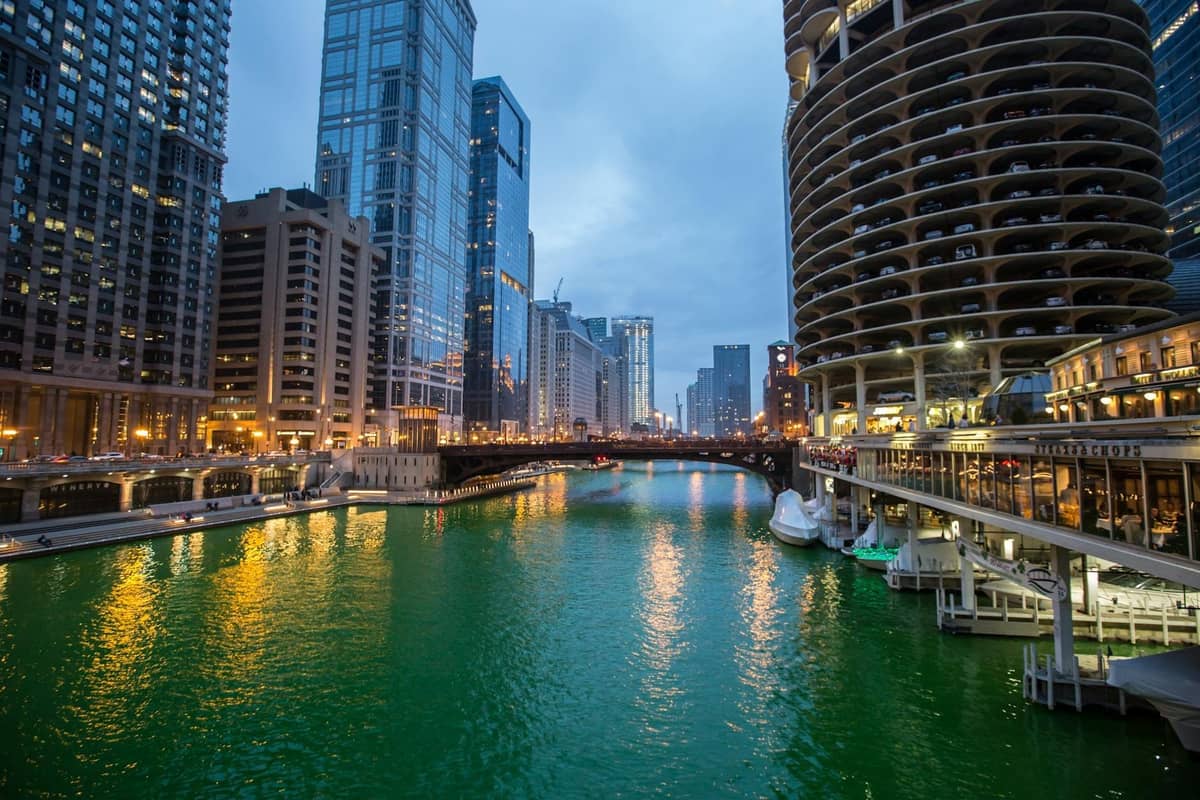
The prime viewing corridor runs from Columbus Drive to State Street along the Chicago Riverwalk. This stretch puts you at water level and gives an unobstructed view of the boats working the dye into the current. It fills up fast. If you want a front-row spot here, arrive by 8:30 AM at the latest.
- Chicago Riverwalk (Columbus Dr to State St) Ground-level views right above the water. Best for photos. Gets extremely crowded by 9 AM.
- Upper Wacker Drive bridges Elevated vantage points over the river with less crush than the Riverwalk. Good for wider shots showing the city skyline framing the green water.
- Michigan Avenue Bridge (DuSable Bridge) Iconic backdrop with Tribune Tower and Wrigley Building in frame. Expect dense crowds but spectacular compositions.
- State Street Bridge Slightly less packed than Michigan Avenue but still excellent sightlines along the dyed stretch.
- River North hotel rooftops and bars Several bars along the river open early and charge a cover for rooftop or window access. More expensive, but warm and guaranteed sightlines.
⚠️ What to skip
The Riverwalk path itself may have restricted sections on event day. The city occasionally cordons off portions for safety or event logistics. Check the Chicago Park District and city event pages in the week before your visit to confirm access.
The Parades: Downtown and South Side
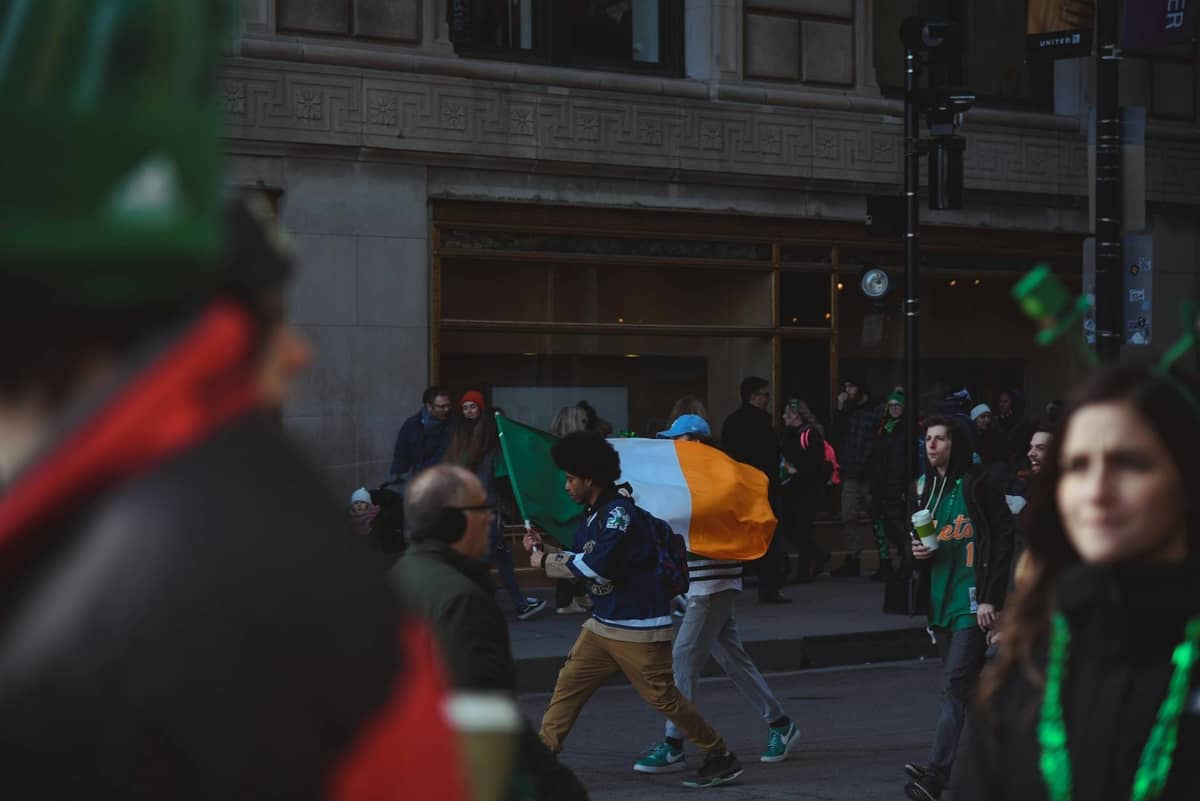
Chicago runs two separate St. Patrick's Day parades, and knowing which one you want to attend makes a real difference in your experience.
The downtown parade is the larger and more famous of the two, typically running along Columbus Drive through Grant Park. It draws massive crowds and features marching bands, floats, Irish step dancers, and politicians. Seating along Columbus Drive fills up well before the parade starts, so arrive at least 90 minutes early if you want a front position. The parade and the river dyeing are usually scheduled on the same Saturday, making it possible to catch both in one morning if you plan your positioning carefully.
The South Side Irish Parade runs through the Beverly neighborhood on Western Avenue, roughly between 103rd and 115th Streets. It has a distinctly different character: more neighborhood, more families, and a genuine community feel that the downtown event, for all its spectacle, cannot replicate. Many locals with Irish heritage consider this the more authentic of the two. It is generally scheduled on a Sunday in March, often the Sunday closest to March 17 but occasionally on a different nearby date.
💡 Local tip
If you are traveling specifically for St. Patrick's Day, book accommodation months in advance. Hotels anywhere near the Loop, River North, and the South Side parade route sell out or spike in price dramatically. Check our guide on where to stay in Chicago for neighborhood-by-neighborhood options.
Where to Celebrate: Bars, Neighborhoods, and Restaurants
St. Patrick's Day bar culture in Chicago is serious business. River NorthRiver North is the epicenter, with dozens of bars opening as early as 7 AM and running green-beer specials all day. Expect cover charges at most places, queues that start before 8 AM at popular spots, and capacity limits that mean arriving late can lock you out entirely.
For a slightly less chaotic experience, Lincoln Park and Old Town offer a good density of Irish-themed and Irish-owned bars with a somewhat more manageable crowd. The Old Town Ale House and similar spots along Wells Street have been celebrating the holiday for decades. If you want to extend the evening, Chicago's nightlife guide covers the broader bar landscape across neighborhoods.
- Book any sit-down restaurant reservation at least 3-4 weeks out for St. Patrick's Day weekend
- Many bars add a mandatory cover charge on St. Patrick's Day, typically $10-30 depending on the venue and whether it includes a drink
- Millennium Park and Grant Park areas get extremely crowded after the parade ends, roughly between noon and 2 PM
- The CTA often runs modified, higher-frequency service on St. Patrick's Day weekend but expect packed trains after the parade and during evening bar closings
- Rideshare surge pricing can be significant during peak departure times: late morning after the dyeing and late evening. Budget accordingly.
What to Wear and How to Prepare for March in Chicago
March is genuinely cold in Chicago. Using NOAA's 1991-2020 climate normals, the average March temperature sits around 3.5°C (38°F), but wind chill from Lake Michigan regularly makes it feel several degrees colder. Rain and even light snow are possible. Wearing green is essentially compulsory for the social atmosphere, but wearing green over inadequate clothing is a rookie mistake.
Layer a thermal base with a fleece or wool mid-layer, add a waterproof outer shell, and treat the green elements as an accessory: a green hat, scarf, or jacket that also happens to keep you warm. Waterproof boots matter more than most people anticipate, especially if you are standing on the Riverwalk for an extended period on damp pavement. Hand warmers are worth throwing in a pocket.
ℹ️ Good to know
If you want to check conditions before heading out, note that Chicago Central Standard Time is UTC-6 in winter and shifts to Central Daylight Time (UTC-5) in mid-March, right around St. Patrick's Day. The time change means St. Patrick's Day morning can feel particularly early if you are traveling from the East Coast.
Getting Around on St. Patrick's Day
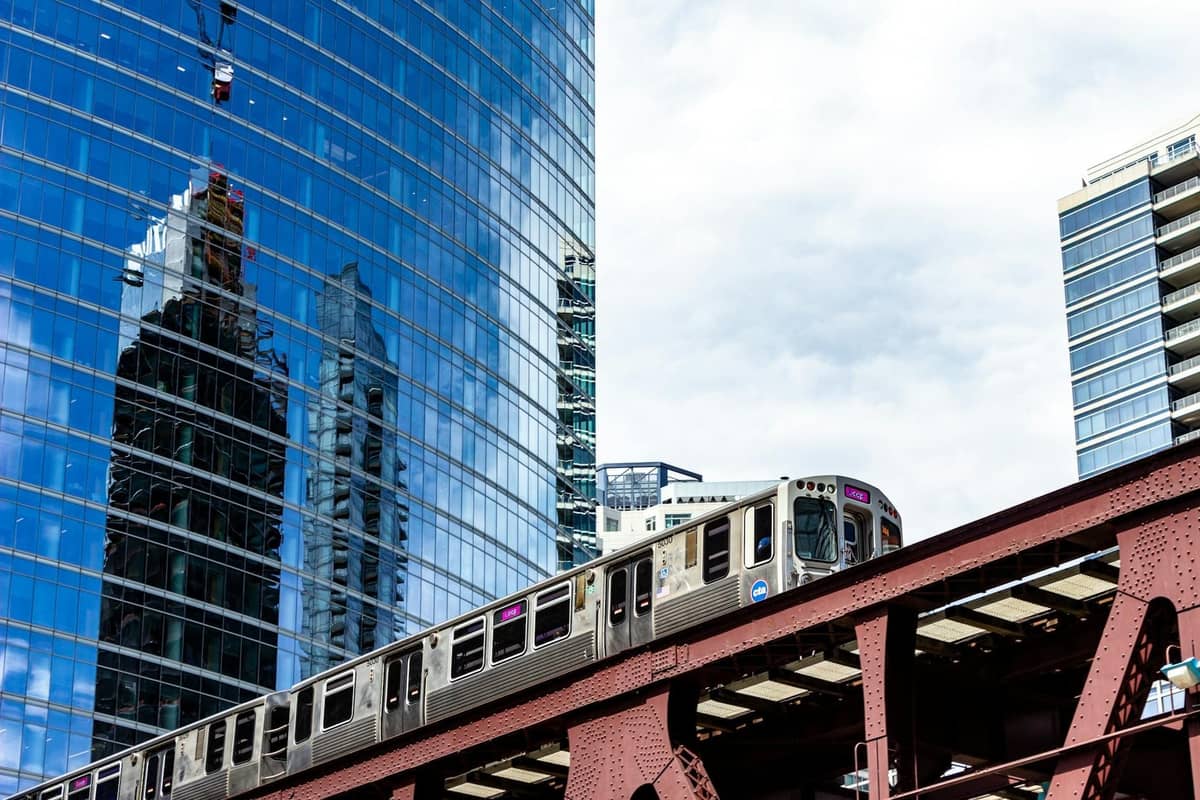
Driving downtown on St. Patrick's Day is strongly inadvisable. Street closures for the parade route and the sheer volume of pedestrians make it impractical. The CTA's Blue Line connects O'Hare Airport to downtown in about 40-45 minutes; the Orange Line connects Midway Airport to the Loop in around 25-30 minutes. For day-of logistics, Chicago's transit guide has detailed route and fare information.
For the South Side Parade in Beverly, the Metra Rock Island District Line runs to the 103rd Street (Beverly Hills) and 111th Street (Morgan Park) stations, putting you close to the parade route without the hassle of driving and parking. If you are using rideshare apps, stage your pickups and drop-offs a few blocks from the main crowd to avoid surge pricing hotspots.
St. Patrick's Day also lines up well with exploring other parts of the city before or after the main events. The Chicago Architecture Foundation River Cruise runs on the same waterway that gets dyed green, and while it does not operate during the dyeing itself, it is a worthwhile context-setter for understanding the river's central role in the city's layout. For a full itinerary that incorporates the holiday, see our Chicago weekend guide.
FAQ
What time does the Chicago River get dyed green?
The dyeing typically happens in the late morning, often between 9 AM and 10 AM, on the Saturday before or on St. Patrick's Day. The exact time is announced by organizers and can vary year to year. Plan to be at your viewing spot by 8:30 AM at the latest to secure a good position.
Is the dye used in the Chicago River safe for the environment?
The dye is described by organizers as vegetable-based and non-toxic. Its exact formula is kept secret by the Chicago Journeymen Plumbers Local Union, who have performed the dyeing since 1962. Environmental advocacy groups have raised questions over the years, but city officials and organizers maintain it poses no harm to the river's ecosystem.
How long does the Chicago River stay green?
The green color typically lasts at least one full day, sometimes two to three days depending on rainfall, wind, and water flow through the river system. If you miss the dyeing itself, the river may still show significant color the following morning.
Are there two different St. Patrick's Day parades in Chicago?
Yes. The downtown Chicago parade runs along Columbus Drive through Grant Park and is the larger, more tourist-facing event. The South Side Irish Parade runs through the Beverly neighborhood on Western Avenue and has a more community-oriented character. Both typically fall on the same weekend, with the South Side parade often on the Sunday.
What is the best neighborhood to stay in for Chicago St. Patrick's Day?
River North and the Loop put you closest to both the river dyeing and the downtown parade, making logistics simple. Lincoln Park is a good alternative with easier access to neighborhood bars and slightly less chaos. The South Side is worth considering if you plan to attend the Beverly parade, but requires more advance planning for accommodation. Book at least 8-10 weeks ahead for any centrally located hotel.