Chicago Weekend Guide: How to Make the Most of 2 Days in the City
Two days in Chicago is enough to hit the architectural landmarks, world-class museums, and legendary food scene — if you plan smart. This guide breaks down exactly how to spend a Chicago weekend, from Saturday morning at Millennium Park to Sunday dinner in the West Loop, with honest tips on what's worth your limited time.
Plan and book this trip
Tools from our partner Travelpayouts help you compare flights and hotels. If you book through them, we may earn a commission at no extra cost to you.
Flights
Hotels map
TL;DR
- Two days is enough to cover the Loop's core sights, one neighborhood, and a major museum — but only if you pre-book timed tickets for places like Skydeck Chicago and the Art Institute.
- Use the CTA Blue or Orange Line from the airport — both connect directly to downtown. Check the getting around Chicago guide for fare and transit details.
- Late May through early June and September are the sweet spots: weather is mild, crowds are lighter than peak summer, and boat tours are running.
- The Chicago CityPASS can save money if you're hitting four or more major paid attractions — run the math before you buy.
- Neighborhoods like Wicker Park, Pilsen, and Hyde Park require CTA or rideshare — they are not walkable from downtown in a single day.
Understanding the Layout Before You Arrive
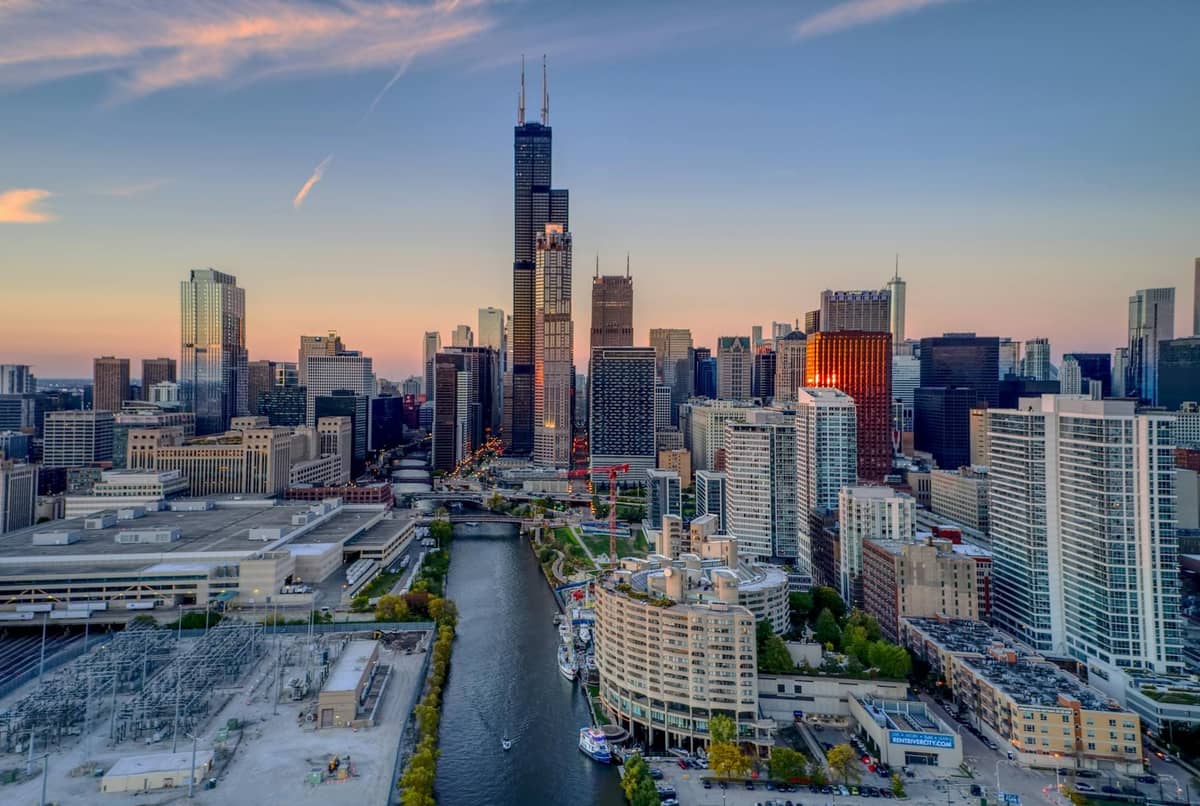
Chicago's 228 square miles can feel overwhelming on a short trip, so the first step is understanding what's actually reachable in a weekend. The Loop, the central business district, covers roughly 2.8 square kilometers and contains most of what first-time visitors want to see: Millennium Park, the Art Institute of Chicago, the Chicago Riverwalk, and the elevated 'L' train tracks that gave the neighborhood its name. Almost everything else requires transport.
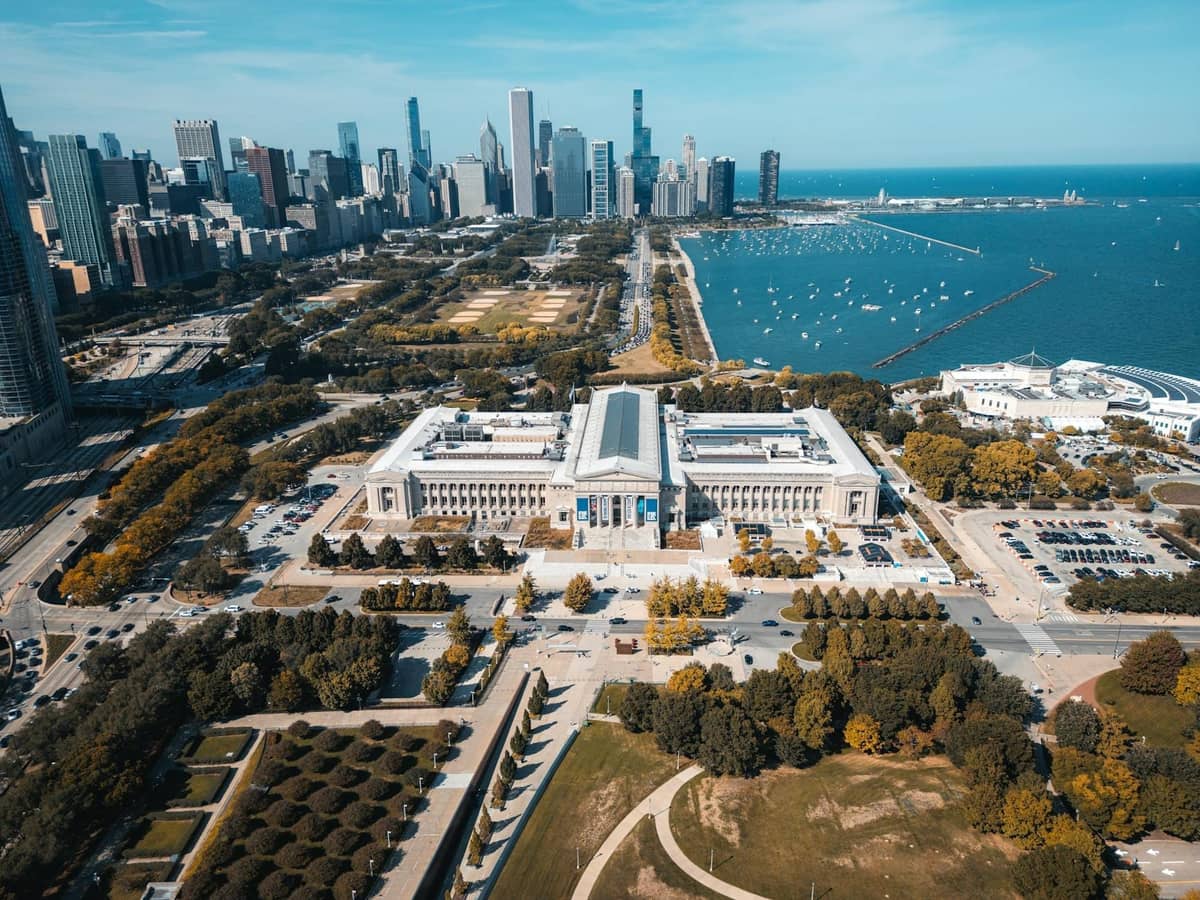
North of the Loop, the Magnificent Mile stretches along North Michigan Avenue into Streeterville and River North, where you'll find the 360 Chicago observation deck, Navy Pier, and some of the city's best hotel options. The Museum Campus sits directly south of the Loop along the lakefront, clustering the Field Museum, Shedd Aquarium, and Adler Planetarium within a short walk of each other.
💡 Local tip
If you're flying into O'Hare (ORD), the CTA Blue Line drops you at Clark/Lake in the Loop in about 40-50 minutes for a standard fare. From Midway (MDW), the Orange Line reaches the Loop in 25-30 minutes. Both are significantly cheaper than taxis or rideshare and avoid traffic entirely.
Day 1: The Loop, Lakefront, and the River
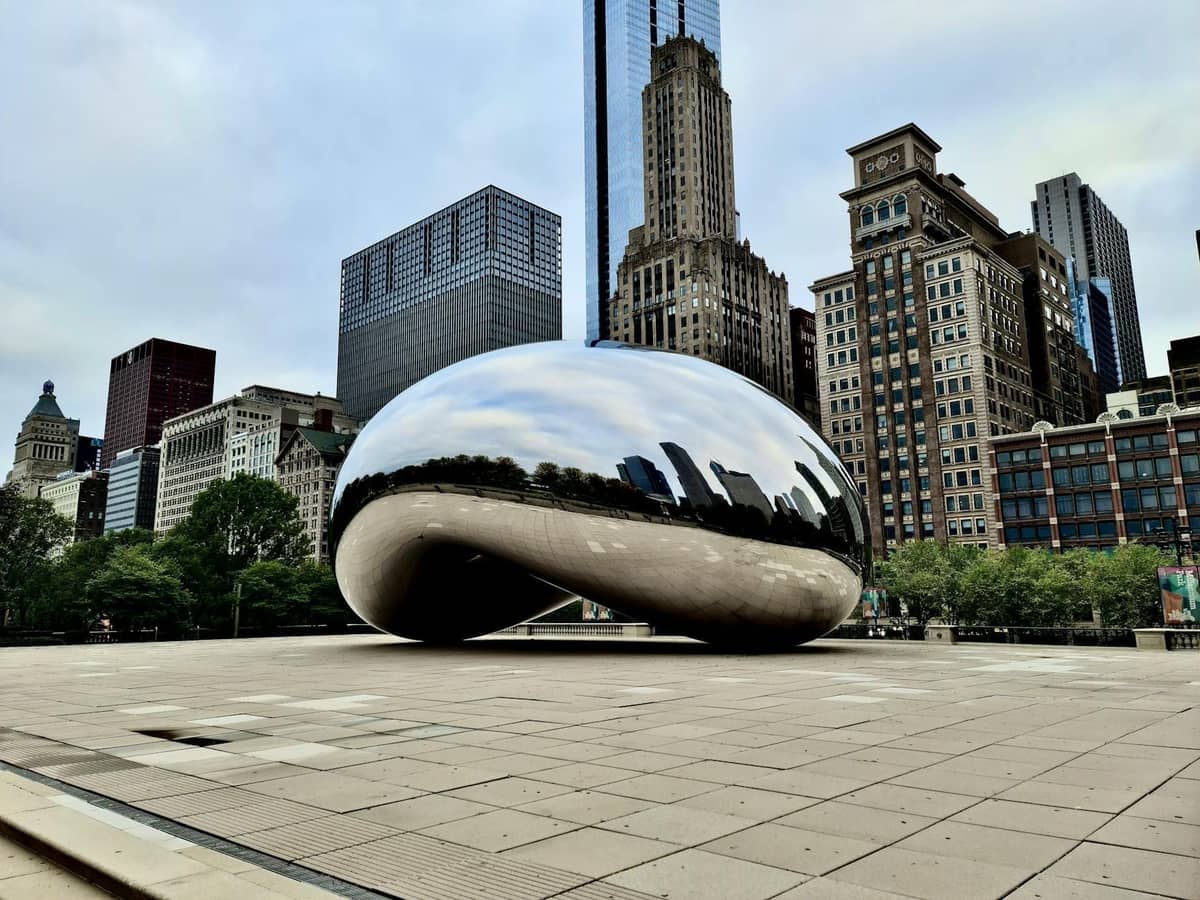
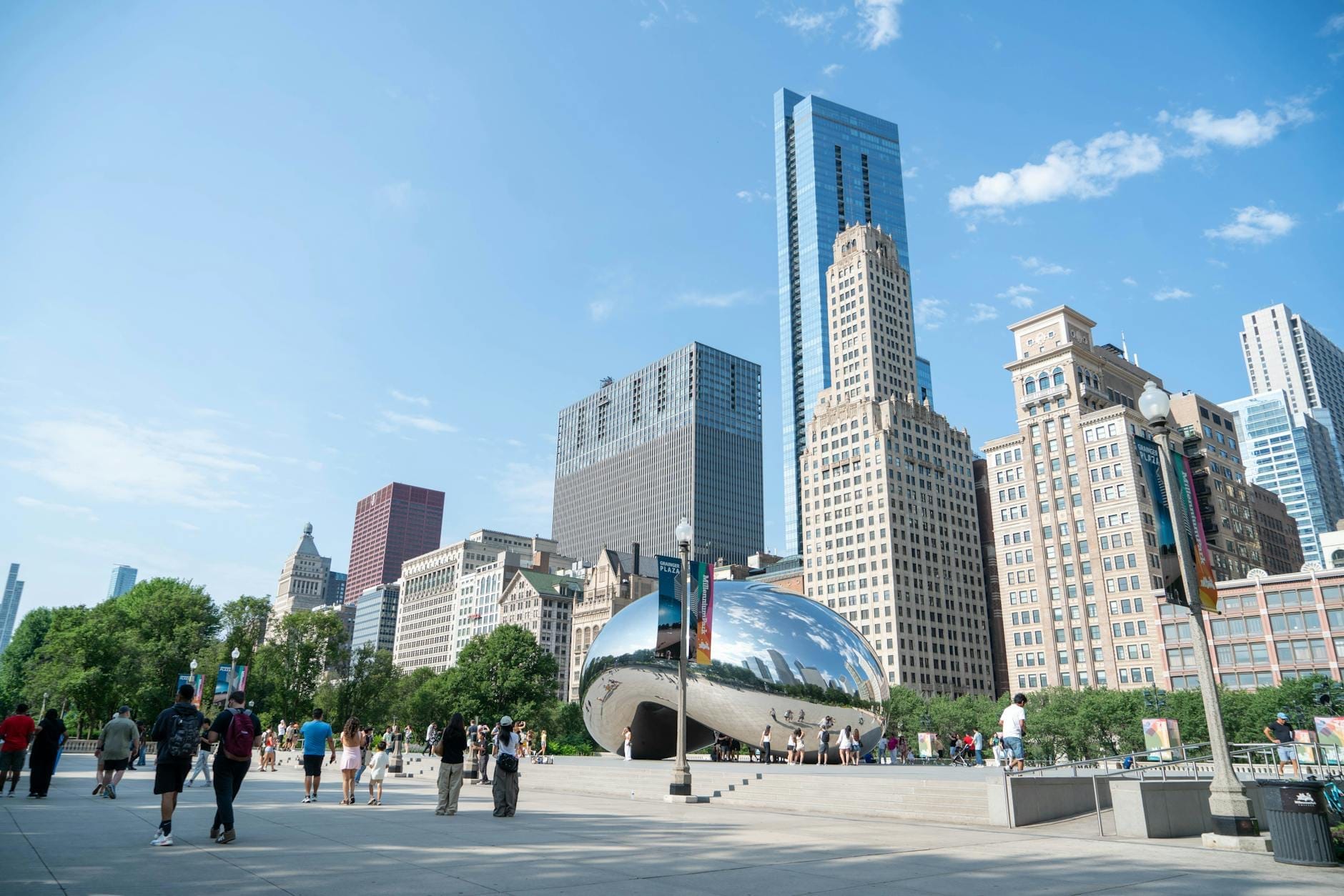
Start Saturday morning at Millennium Park before 9 a.m. The Cloud Gate sculpture (universally called 'The Bean') draws crowds fast on weekends, and the reflective surface loses its appeal when 200 people are pressed around it. The park opens at 6 a.m. on most days and admission is free. From there, walk south through the park to the Jay Pritzker Pavilion, where free concerts run on summer evenings. The Crown Fountain on the western edge is worth a look — two 50-foot glass brick towers project video faces that occasionally 'spit' water, a detail that delights children and baffles adults in equal measure.
By mid-morning, head to the Art Institute of Chicago, one of the largest art museums in the United States, with a collection spanning over 5,000 years. The Impressionist and Post-Impressionist galleries on the second floor of the Modern Wing are consistently the most visited — Georges Seurat's 'A Sunday on La Grande Jatte' alone justifies the trip. Budget at least two hours. Timed entry tickets are available online; buying in advance is strongly recommended on summer weekends when walk-up availability can run out.
After the museum, walk west to the Chicago Riverwalk for lunch. The Chicago Riverwalk runs along the south bank of the Chicago River from Lake Shore Drive to Lake Street, lined with restaurants, kayak rentals, and open-air seating. It's also the departure point for architectural boat tours, which should be on your afternoon agenda.
An architectural river cruise is one of the genuinely irreplaceable Chicago experiences. The Chicago Architecture Foundation River Cruise runs 90-minute narrated tours that cover over 50 buildings. Tours depart multiple times daily from April through November; advance booking is essential on weekends. If the CAF cruise is sold out, other operators like Shoreline Sightseeing run similar routes. Evening cruises offer a different perspective as the glass towers catch the last light.
⚠️ What to skip
Boat tour operators run seasonally. Most scale back or suspend operations in December through March due to cold and wind. If you're visiting in winter, confirm schedules directly with operators before building your itinerary around a river cruise.
For Saturday evening, consider the West Loop and Fulton Market district for dinner. This former meatpacking area, about a 15-minute walk or short rideshare from the Loop, has become one of the densest concentrations of serious restaurants in the city. Reservations are necessary at most of the top spots — book ahead. If you want a more spontaneous option, the strip along Randolph Street has enough variety that you can usually find a seat somewhere without planning.
Day 2: Museum Campus, Neighborhoods, and a View
Sunday should start with a decision: museums or neighborhoods. Trying to do both thoroughly in a single day usually results in doing neither well. The Museum Campus path makes sense for first-timers, science and nature enthusiasts, or anyone traveling with children. The neighborhood path suits repeat visitors or travelers more interested in local culture, food markets, and street-level Chicago.
- Museum Campus Route Take the 146 bus or a short rideshare to the Field Museum, which requires at least 3 hours to do justice to its natural history collections. If time allows, the Shedd Aquarium next door is worth an additional 2 hours, especially for families. The Adler Planetarium at the far end of the campus has the best unobstructed skyline views in the city — the lakefront panorama from its entrance steps is worth the trip even if you skip the exhibits.
- Neighborhood Route Take the Blue Line to Wicker Park/Damen for a morning of independent shops, coffee, and brunch. Or head south on the Red Line to Hyde Park, where the Museum of Science and Industry and the Frank Lloyd Wright-designed Robie House coexist with University of Chicago campus architecture and the Institute for the Study of Ancient Cultures. Pilsen, accessible via the Pink Line, offers the National Museum of Mexican Art (free admission) and some of the best mural street art in the city.
Whichever route you take, save Sunday afternoon for an observation deck. The debate between Skydeck Chicago at Willis Tower and the 360 Chicago Observation Deck comes down to what you want to see. Willis Tower's Skydeck is on the 103rd floor (412 meters) above ground with glass-floored Ledge boxes that extend out over the street — it's higher and more dramatic, but consistently busier. The 360 Chicago deck on 875 N Michigan Avenue sits at the 94th floor and has better direct views of Lake Michigan. Both require timed entry; book online before your trip.
✨ Pro tip
For the best skyline photography, visit an observation deck in the late afternoon on a clear day — roughly 3-5 p.m. in summer, when the light hits the glass towers from the west and the lake turns deep blue. Avoid overcast mornings, when the view flattens.
Getting Around Without a Car
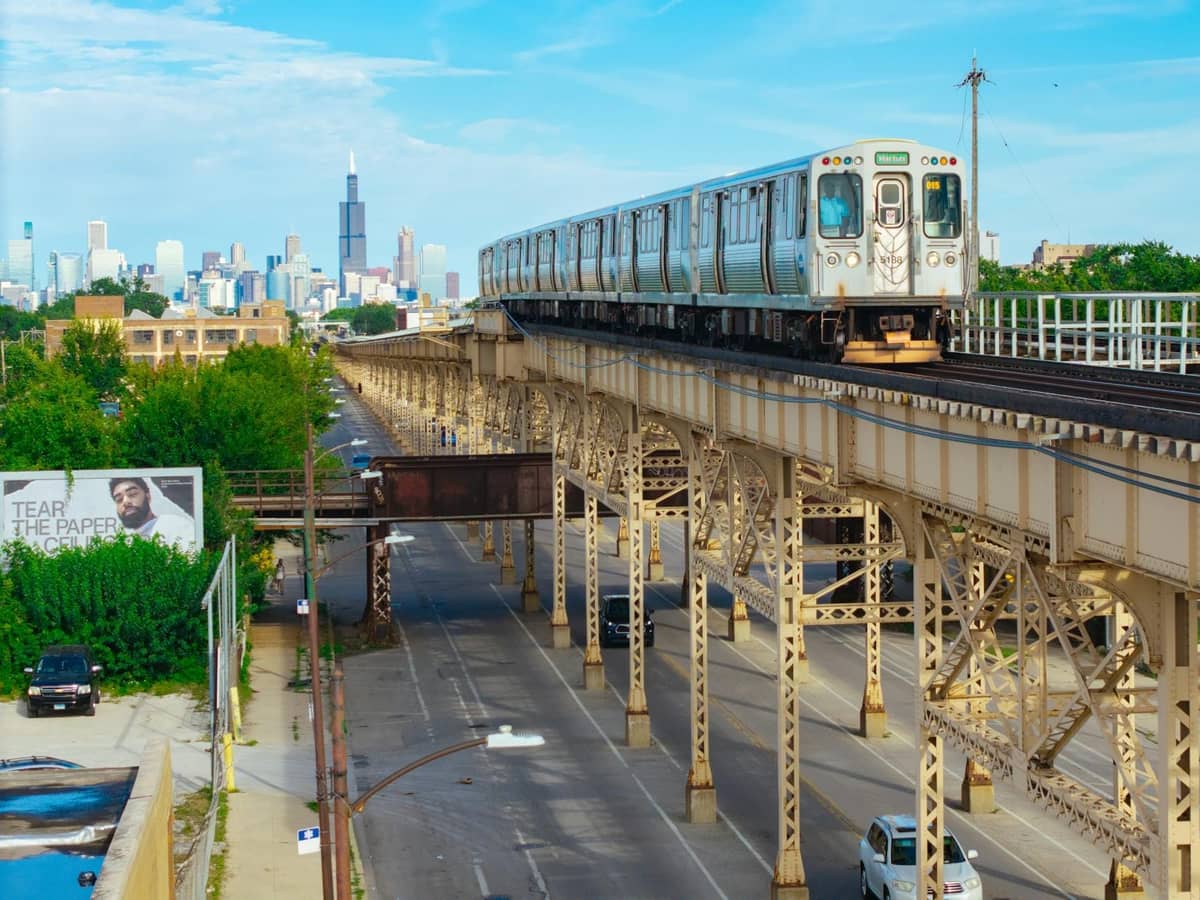
Chicago's CTA 'L' train system covers eight lines and 145 stations, and for a weekend visitor focused on core sights, it handles almost everything you need. The Red Line is the most useful for tourists, running from the Howard station in the north through the Loop and south toward the Museum of Science and Industry area. The Blue Line connects O'Hare directly to downtown. The Orange Line does the same from Midway.
Ventura cards (Ventra is the CTA's contactless payment system) can be loaded with cash value or a day/week pass. A 1-day unlimited pass covers all CTA buses and trains for 24 hours; a 3-day pass may make more financial sense for a weekend visit if you plan to ride frequently. Tap-to-pay with a credit or debit card also works at all 'L' turnstiles. For areas the 'L' doesn't efficiently reach, Uber and Lyft are consistently available throughout the city.
- Red Line: North Side neighborhoods, Loop, Museum Campus access
- Blue Line: O'Hare Airport, Wicker Park, Logan Square
- Orange Line: Midway Airport, Pilsen-adjacent
- Pink Line: Pilsen (18th Street station)
- Green Line: West Side
Where to Eat on a 2-Day Visit
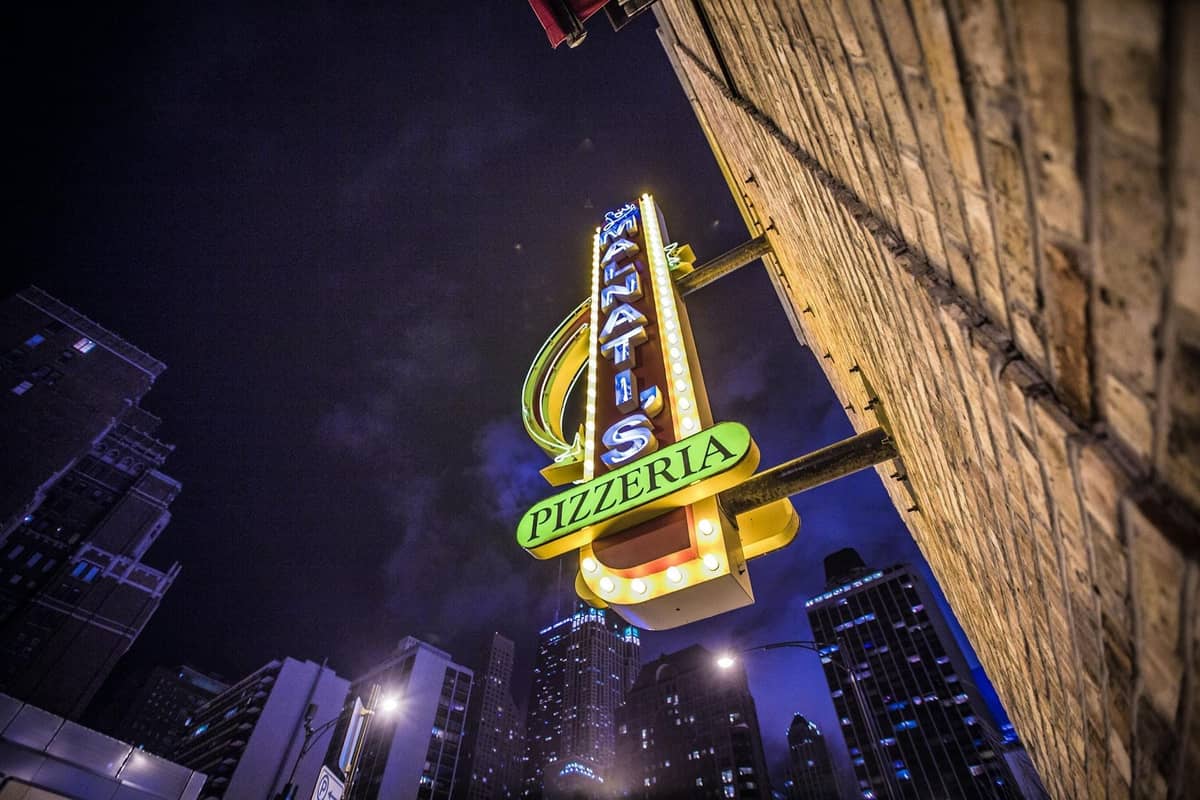
A Chicago weekend without eating seriously is a missed opportunity. Deep dish pizza is the obvious starting point, but treat it as a one-meal experience rather than a recurring theme — it's rich enough that once per trip is usually right. Lou Malnati's and Giordano's both have downtown locations
Beyond the deep dish, Chicago's food scene is genuinely strong across a wide range. The Chicago-style hot dog (no ketchup, ever) is a legitimate cultural institution — Portillo's downtown handles the tourist volume efficiently. For a broader look at what the city does well across neighborhoods and cuisines, the full Chicago food guide covers the range from Michelin-starred spots to counter-service classics.
Practical Details: What to Know Before You Go
Chicago sits on Central Time (CST, UTC-6; CDT, UTC-5 during daylight saving). The city's tap water meets federal safety standards according to the Chicago Department of Water Management, though travelers staying in older buildings may want to ask about lead service lines. The U.S. standard electrical outlet is 120V/60Hz with Type A/B plugs. International visitors will need a plug adapter and, depending on their devices, possibly a voltage converter.
Tipping is standard in Chicago restaurants: 18-20% is the baseline expectation for sit-down service, with 15% considered the lower end for adequate service. Many terminals now show suggested tip percentages on card readers, including for counter service — this is a prompt, not a requirement, but the social expectation is real. For taxis, 15-20% is typical. Rideshare apps handle tipping within the app after the trip.
- Emergency services: dial 911. Non-emergency city services: 311.
- Chicago area codes: 312 (downtown), 773 (rest of city), 872 (overlay).
- Currency: USD only. ATMs are widely available throughout the Loop and tourist areas.
- Visa Waiver Program countries can visit for up to 90 days with an approved ESTA. Non-VWP nationals need a B-1/B-2 visa. Verify current requirements at travel.state.gov before booking.
- Most major attractions are closed or have reduced hours on Thanksgiving and Christmas Day — check official sites if visiting during holidays.
ℹ️ Good to know
The best months for a Chicago weekend trip are May-June and September-early October. Summer (July-August) brings excellent lakefront weather but peak crowds and higher hotel rates. Winter visits are workable — most indoor attractions stay open year-round — but temperatures regularly drop below freezing and wind chill off Lake Michigan can be sharp. Budget for layers.
FAQ
Is 2 days enough to see Chicago?
Two days is enough to cover the Loop highlights (Millennium Park, the Art Institute, a river cruise), one major museum, and one or two neighborhoods — if you plan ahead and pre-book timed tickets. Chicago is a large, multi-neighborhood city; a 2-day trip won't cover everything, but focused planning makes for a satisfying visit. First-timers should prioritize the Loop and Museum Campus rather than spreading too thin across the city.
What is the best area to stay in Chicago for a weekend visit?
The Loop and the Near North Side (including River North and the Magnificent Mile) put you within walking distance of the majority of weekend sights and have the most hotel inventory. River North tends to have a wider range of price points and better restaurant access. If you prioritize nightlife, Lincoln Park or Wicker Park are solid alternatives with good CTA access back downtown.
Should I get the Chicago CityPASS for a 2-day trip?
The CityPASS makes financial sense if you plan to visit four or more of the bundled attractions (typically Shedd Aquarium, Field Museum, Skydeck Chicago, Adler Planetarium, and Art Institute or 360 Chicago). Run the math against individual ticket prices before buying — if you're only hitting two or three major paid sites, individual tickets will likely be cheaper. Also note that some bundled attractions require separate timed reservations even with the pass.
What is the cheapest way to get from O'Hare to downtown Chicago?
The CTA Blue Line is consistently the cheapest option, connecting O'Hare station to downtown (Clark/Lake) in approximately 35-45 minutes. The fare is higher than standard CTA trips but significantly less expensive than taxis or rideshare. Taxis and Uber/Lyft to downtown from O'Hare typically run into the range of several tens of dollars depending on traffic and surge pricing.
What should I realistically skip on a 2-day Chicago trip?
Skip trying to visit more than one or two outlying neighborhoods in a single day. Hyde Park, Pilsen, and Wicker Park each warrant at least half a day to appreciate properly — cramming all three into a Sunday is a recipe for feeling rushed everywhere. Also be realistic about observation deck queues: if you haven't pre-booked, factor in potential waits of 30-60 minutes on busy weekend days. Navy Pier, while popular, is largely a commercial entertainment complex and is the attraction most likely to disappoint serious city explorers.