Central Vietnam Itinerary: Da Nang, Hoi An & Hue (The Definitive Guide)
Central Vietnam's Da Nang–Hoi An–Hue corridor packs beaches, UNESCO heritage, and mountain scenery into a compact region. This guide gives you the routes, timings, seasonal advice, and practical details to plan a trip that actually works.
Tickets & tours
Live prices and dates from our booking partner. If you book, we may earn a commission at no extra cost to you.
TL;DR
- Plan at least 5 days for all three cities — 7 days is the sweet spot for a relaxed pace without feeling rushed.
- Da Nang is your best base and transport hub: fly into Da Nang International Airport (DAD) and use it as the starting point for day trips to Hoi An and excursions north toward Hue.
- The dry season (February to August) gives the best beach and mountain conditions; March to May is ideal for avoiding both peak crowds and rain.
- The Hai Van Pass road between Da Nang and Hue is one of the most scenic drives in Vietnam — do it by motorbike or car, not by train. See the Hai Van Pass for logistics.
- Hoi An floods badly in October and November — avoid staying there during typhoon season if your trip coincides with it.
How Much Time Do You Actually Need?

The central Vietnam corridor is deceptively compact on a map. Da Nang to Hoi An is roughly 30 km — about 40 to 60 minutes by car or shuttle depending on traffic. Da Nang to Hue is around 100 km, but the mountain road adds time, especially if you stop at the pass. Most first-time visitors dramatically underestimate how much there is to see, and two or three days is simply not enough to do the region justice.
- 3 days (minimum) Da Nang and Hoi An only. You can cover the main highlights — My Khe Beach, Marble Mountains, and Hoi An Ancient Town — but you'll feel rushed and miss Hue entirely.
- 5 days (recommended minimum for all three cities) Two days in Da Nang (including a half-day in Hoi An), one travel day via Hai Van Pass to Hue, and two days in Hue for the Imperial City and royal tombs. Tight, but workable.
- 7 days (ideal for first-timers) Comfortable pacing across all three cities with room for Ba Na Hills, a Hoi An cooking class, a Perfume River cruise in Hue, and at least one beach afternoon.
- 8+ days (for thorough exploration) Allows My Son Sanctuary from Hoi An, a full day at Ba Na Hills, overnight in Lang Co, or a day trip to the DMZ from Hue. Best for travelers who want to go beyond the checklist.
⚠️ What to skip
Many international flight connections route through Da Nang with same-day arrivals. Don't schedule a full sightseeing day on arrival day — jet lag and airport logistics will cost you half of it. Build in a buffer evening, especially if you're connecting through Hanoi or Ho Chi Minh City.
When to Go: Seasons, Crowds, and the Flood Risk Nobody Mentions
Central Vietnam has a tropical monsoon climate, but the regional weather pattern is counterintuitive compared to the rest of the country. When the south is dry, central Vietnam can be wet — and vice versa. The rainy season here runs roughly September through December (some years extending into January), which is out of sync with Ho Chi Minh City's dry season and Hanoi's cooler months.
The best window for this itinerary is March through May. The sea has calmed after the winter swell, temperatures sit comfortably in the mid-20s Celsius, and crowds are noticeably lighter than in summer. Views from the Hai Van Pass are typically clear, and Hoi An's ancient town is at its photogenic best without the July–August tour group saturation.
- February to May (Best Overall) Dry, warm, lower crowds than summer. March and April are particularly reliable for beach and mountain visibility. Sea temperatures around 24–27°C.
- June to August (Peak Season) Hot (up to 35°C), very sunny, minimal rain — ideal beach weather. Da Nang gets packed, especially at My Khe Beach. Book accommodation 4–6 weeks ahead. The annual Da Nang International Fireworks Festival runs during this window.
- September to November (Rainy Season — Proceed Carefully) Lower prices and fewer tourists, but Hoi An floods regularly during this period. October and November are the highest risk months. Hue is also prone to serious flooding. Not recommended for first-time visitors.
- December to January (Shoulder/Cool Season) Cooler and occasionally rainy, but Hue and Da Nang are quieter. Chinese New Year (Tet) in late January or February brings domestic travel surges — accommodation fills fast and prices spike.
ℹ️ Good to know
The Hai Van Pass (Đèo Hải Vân) sits at about 500 m elevation and creates a genuine climate divide: Da Nang and areas south tend to be sunnier and drier, while Hue and areas north of the pass are wetter and cooler. It's possible to have clear skies in Da Nang and rain in Hue on the same day.
Da Nang: What to Prioritize (and What to Skip)

Da Nang is a centrally governed municipality of around 1.27 million people — Vietnam's fourth-largest city and the main transport hub for central Vietnam. It sits at the mouth of the Han River on the South China Sea, with about 60 km of coastline in the municipality. For most travelers, Da Nang is a base rather than a destination in itself, but that undersells it. My Khe Beach is genuinely one of the best urban beaches in Southeast Asia: wide, clean, and long enough that it never feels crowded outside peak summer weekends.
Allow at least one full day for the Marble Mountains (Ngũ Hành Sơn) in Ngu Hanh Son District — five limestone peaks containing pagodas, caves, and Hindu and Buddhist shrines. Entry is around 40,000–60,000 VND and the elevator to the summit is an extra 15,000–25,000 VND. Go in the morning before tour groups arrive, ideally before 9 a.m. Budget two hours minimum; three if you explore all caves.
The Golden Bridge at Ba Na Hills is genuinely spectacular — a pedestrian bridge held aloft by giant stone hands at around 1,400 m elevation. It warrants the day trip, but go in on the economics first: the Ba Na Hills cable car and resort admission runs around 900,000–1,050,000 VND per adult (prices fluctuate, check Sun World's official site before booking). Budget a full day and check the weather forecast. Cloud cover at that altitude can obscure the views entirely.
The Dragon Bridge fire and water show happens every Friday, Saturday, and Sunday at 9:00 PM. and draws large crowds along the riverbank. It's worth watching once, but arrive 20–30 minutes early to get a decent viewing spot. The bridge itself is worth crossing any evening for views of the illuminated Han River. For a broader overview of what Da Nang offers beyond the beach, the complete Da Nang attractions guide covers everything with current pricing.
💡 Local tip
Da Nang's Son Tra Peninsula (Bán đảo Sơn Trà) is one of the most underrated parts of the city. The road to the Lady Buddha statue offers forest, sea views, and red-shanked douc langurs — an endangered primate species found here in the wild. It's a 20–30 minute drive from the city center and most visitors skip it entirely in favor of Ba Na Hills.
Hoi An: How Long to Stay and What's Worth It

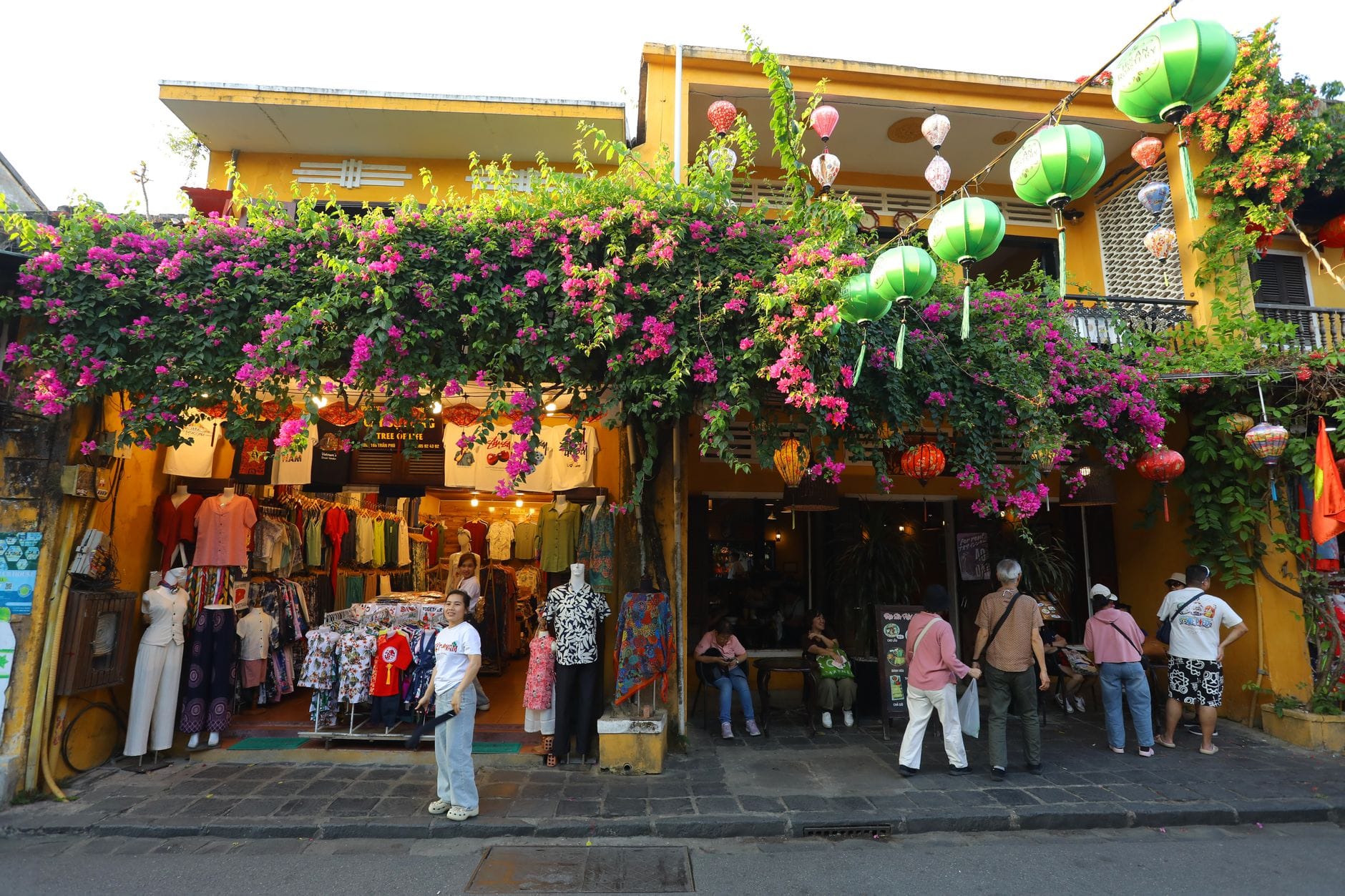
Hoi An Ancient Town (Phố cổ Hội An) is a UNESCO World Heritage Site and one of the best-preserved trading ports in Southeast Asia. The old town is compact — most of the main sights are walkable within 30 minutes — but the town rewards slower exploration. Two full days is the minimum to feel like you've actually absorbed the place rather than just photographed it. Getting from Da Nang to Hoi An takes 40 to 60 minutes by taxi or shuttle (around 200,000–350,000 VND depending on vehicle type and route).
The ancient town entry ticket (around 150,000 VND) gives access to five heritage sites from a selection of pagodas, assembly halls, and the covered Japanese Covered Bridge. It's honest value, but be aware that the ticket booths are at the perimeter of the pedestrian zone — you buy before entering, not inside. Evenings in Hoi An, when the lanterns are lit along the Thu Bon River, are the primary draw for most visitors. The Hoi An Full Moon Lantern Festival on the 14th of each lunar month (when electric lights are switched off) is a different experience entirely and worth timing your trip around if possible.
An Bang Beach, about 4 km from the old town by bicycle, is the local alternative to the busier resort beaches closer to Da Nang. It's less developed, lined with informal beach bars, and significantly less crowded from September to May. Cycling from the old town along the rice paddy routes takes 15–20 minutes and is one of the genuinely enjoyable ways to move between the two. My Son Sanctuary — a complex of Hindu temples from the Cham kingdom dating to the 4th century — is about about 70 km from Hoi An and works well as a half-day trip. Arrive at opening (7 a.m.) to beat the tour buses.
The Hai Van Pass Route: Da Nang to Hue
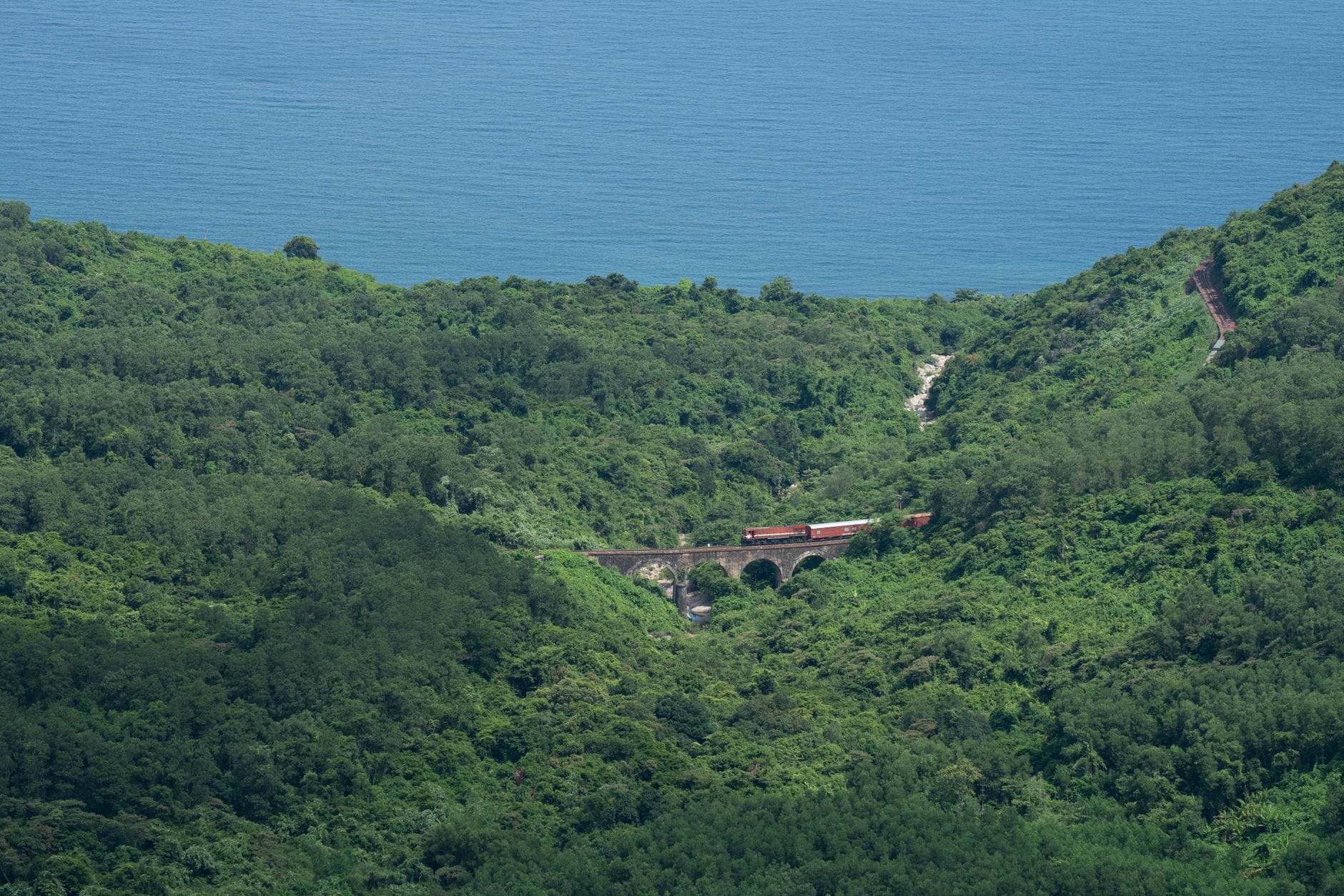
The Hai Van Pass (Đèo Hải Vân, meaning 'Ocean Cloud Pass') runs across a spur of the Truong Son Mountains at around 500 m above sea level, separating Da Nang from Thua Thien Hue province to the north. The road offers sweeping views over Lang Co Bay — one of the most photographed coastal views in Vietnam — and the ancient Hai Van Gate at the summit dates to the Nguyen dynasty (early 19th century). The drive from Da Nang to the summit takes about 45 minutes; continuing to Hue adds another 90 minutes.
The standard question is whether to do this by motorbike, private car, or train. The train passes through the Hai Van Gate section via a tunnel and misses the views entirely — the Hai Van Tunnel (completed 2005) takes road traffic under the mountain, so if you're in a bus or private car using the highway, you'll also miss the pass. You have to specifically request the old mountain road. The motorbike option gives you full flexibility and is the best way to stop at the gate and viewpoints, but requires a degree of riding confidence — the road has tight curves, can be slippery when wet, and is not suitable for inexperienced riders.
Hue: Imperial Capital, Royal Tombs, and River Cruises
Hue (Thừa Thiên Huế) served as Vietnam's imperial capital under the Nguyen dynasty from 1802 to 1945, and the UNESCO-listed Complex of Hué Monuments reflects that heritage across a large area on both banks of the Perfume River (Sông Hương). The Imperial Citadel and its inner Forbidden Purple City are the core attraction and require three to four hours to explore properly. Admission is around 200,000 VND; a combined ticket covering the citadel and several royal tombs is available and offers better value if you plan to visit multiple sites.
The royal tombs are spread across the southern riverbank, 5–15 km from the city center, and each has a distinct character. Khai Dinh's tomb (built 1920–1931) is the most visually striking, with a fusion of Vietnamese and European architectural elements and intricate mosaic work. Minh Mang's tomb is the grandest in scale, set in landscaped gardens. Tu Duc's is the most romantic and peaceful. Visiting all three in one day is possible but exhausting; two tombs plus the citadel is a better single-day pacing. A Perfume River boat cruise connects several sites and provides a worthwhile change of pace — half-day cruises run around 100,000–200,000 VND per person on group boats.
✨ Pro tip
Hue is widely considered the culinary capital of central Vietnam. Bún bò Huế (spicy beef noodle soup), bánh khoái (crispy rice crepe), and bánh bèo (steamed rice cakes) are regional dishes you won't find at their best anywhere else in the country. Dong Ba Market near the Citadel has reliable street food stalls from early morning. Don't leave Hue without eating properly — the food alone justifies a full extra day.
Getting Around and Practical Logistics

Da Nang International Airport (IATA: DAD) is the gateway for this entire region. It sits within the city's urban area, roughly 3–5 km from the central Hai Chau district. Taxis and ride-hailing apps (Grab is the dominant platform) are both widely available for airport transfers. For a full breakdown of transport options from the airport, the Da Nang airport guide covers taxi ranks, app-based options, and typical fare ranges.
Between Da Nang and Hoi An, shared shuttles operated by hotels and guesthouses cost around 80,000–150,000 VND per person and are the easiest option for most travelers. Taxis or Grab cars give flexibility but cost around 200,000–350,000 VND for the full trip. For moving around Da Nang itself, the getting around Da Nang guide covers motorbike rental, public buses, and ride-hailing in more detail. Between Da Nang and Hue, the train is comfortable and scenic (the stretch north of Da Nang along the coastline before the tunnel is genuinely beautiful); the journey takes around 2 to 3 hours on express trains.
- Currency: Vietnamese đồng (VND). ATMs are widely available in all three cities. Cards accepted at most hotels and larger restaurants but carry cash for markets, street food, and local transport.
- Emergency numbers (Vietnam-wide): Police 113, Fire 114, Ambulance 115.
- Electricity: 220V, 50Hz. Plugs are typically Type A, C, or F — a universal adapter covers all.
- Tap water: Not safe to drink. Buy bottled water or use a filtered bottle — it's an easy and cheap fix.
- Language: Vietnamese is the official language. English is widely spoken in tourist areas of Da Nang, Hoi An, and Hue. Learning a few basic phrases (cảm ơn for thank you, xin chào for hello) goes a long way.
- Visas: Vietnam's e-visa covers many nationalities for stays up to 90 days. Verify current entry requirements via Vietnam's official immigration portal before booking — rules change periodically.
FAQ
What is the best order to visit Da Nang, Hoi An, and Hue?
Most travelers fly into Da Nang, spend time in the city and make a day trip or overnight to Hoi An, then travel north to Hue via the Hai Van Pass before flying out from Hue or returning to Da Nang. The reverse (Da Nang to Hue first, then Hoi An) also works well and lets you drive the pass southbound with the sea views to your right. There's no wrong order — it depends on where your flights are and which city you want to finish in.
How do I get from Da Nang to Hoi An?
The most common options are shared shuttle (80,000–150,000 VND per person, organized through your hotel), Grab car (200,000–350,000 VND for the full car), or private taxi. The journey takes 40 to 60 minutes depending on traffic. There is no direct public bus that runs door-to-door, though local buses exist on this route. Motorbike is also an option for riders comfortable with Vietnamese traffic.
Is 5 days enough for central Vietnam?
Five days covers Da Nang, Hoi An, and Hue at a workable pace — roughly two days in Da Nang (including a Hoi An day trip), one travel day to Hue via the pass, and two days in Hue. You'll hit the main highlights but won't have much downtime. If you want Ba Na Hills, My Son Sanctuary, and a slower Hoi An experience, push to 7 days.
What is the best time of year to visit central Vietnam?
March to May is the most consistently reliable window: dry, warm, clear skies at the pass and on the coast, and lower crowds than summer. June to August is the peak beach season with reliable sunshine but higher prices and more tourists, especially in Hoi An. Avoid October and November if you're planning to stay in Hoi An — flooding is a real risk and can disrupt the ancient town significantly.
Can I do a day trip to Hoi An from Da Nang?
Yes, and it's one of the most common trips on this itinerary. A day trip gives you time to walk the ancient town, eat lunch along the waterfront, and visit a beach. However, Hoi An is significantly better experienced over two days, especially if you want to do a cooking class, visit My Son Sanctuary, or spend time at An Bang Beach without rushing.
Tickets & tours
Live prices and dates from our booking partner. If you book, we may earn a commission at no extra cost to you.
Planning a trip? Discover personalized activities with the Nomado app.